
How Beauty Brands Build a Lipstick Shade Range for Different Markets
Here’s the deal: how to choose a lipstick color sounds simple, but scaling across markets breaks fast—shades shift, consistency slips.
In its 2025 technical brief, Topfeel Beauty engineers state airless systems preserve formula integrity across climates.
That’s why packaging isn’t a shell—it’s the difference between shade success and failure.
Key Points in Bloom: How to Choose a Lipstick Color with Confidence
→ Undertone Harmony: Match pigments to warm, cool or neutral skin types using color theory and pH‐sensitive tests.
→ Formulation Resilience: Evaluate viscosity, oxidation sensitivity and packaging (airless pumps, BPA-free plastics) for stable shade delivery across climates.
→ Sampling Ergonomics: Design custom-molded applicators and leak-tested kits for flawless in-store trials and consistent color experiences.
→ Global-Local Balance: Standardize core ranges with ISO-certified logistics while adapting regional palettes for cultural preferences and seasonal trends.
Global Vs. Local Shade Segmentation
Getting real about how to choose a lipstick color can feel messy when trends move fast and skin tones vary wildly. This guide breaks it down in a chill, practical way, blending global consistency with local flavor so you can actually pick a shade that works, not just looks cute online.
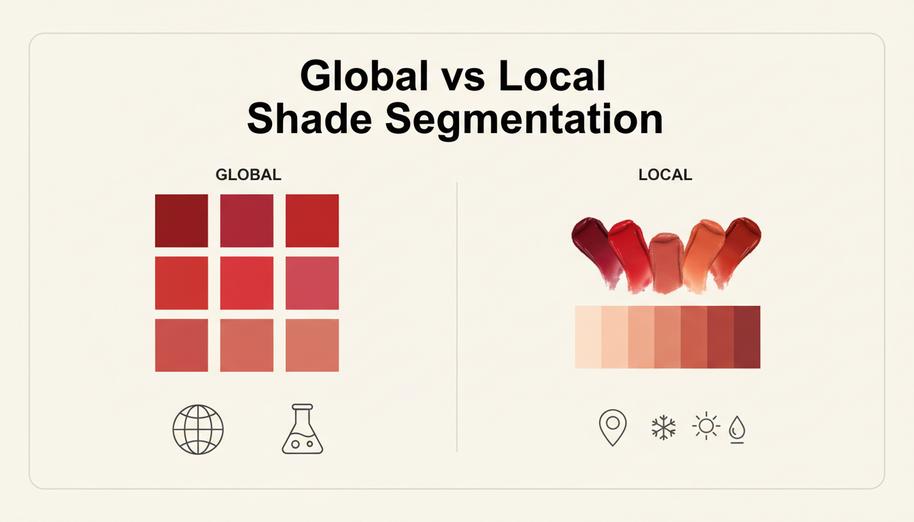
Global Segmentation
When brands scale a standardized palette across borders, the goal is simple: make universal shades that don’t flop on different faces. That’s where understanding how to choose a lipstick color becomes less guesswork and more system.
-
Core logic behind a core collection:
-
Shade mapping
- Undertone calibration across diverse skin tones
- Lab colorimetry aligned with international trends
-
Manufacturing sync
- Injection consistency for batch stability
- ISO-backed pigment dispersion
-
Market alignment
- Built for the global consumer
- Reflecting shared market commonalities
-
-
What this means for you:
- “How to choose a lipstick color” shifts toward reliable picks
- Fewer surprises when buying online
- Shades behave similarly across regions
Topfeel Beauty leans into this model by refining a tight edit of shades that actually translate well across lighting, climate, and undertones. If you’re stuck on how to choose lipstick color in a fast, low-risk way, global segmentation is your shortcut.
“Consumers are increasingly favoring dependable shade systems that reduce mismatch across digital and in-store experiences.” — McKinsey Beauty Insights, 2025
Local Segmentation
Now flip it. Local segmentation zooms in, adjusting tones for regional preferences and subtle cultural nuances that global palettes can miss.
Quick hits:
- Climate shifts texture and wear
- Skin undertones vary more than broad categories suggest
- Local trends move faster than global cycles
Here’s how to choose a lipstick color with a local mindset:
- Start with your environment
Heat, humidity, even pollution can change how pigment sits.
- Read the room
- Soft corals in one region
- Deep berries in another
These reflect market specificities, not random hype.
- Match your demographic lane
- Age group
- Style culture
- Occasion habits tied to specific demographics
- Customize your palette
Brands like Topfeel Beauty adapt with customized palettes that feel made for the local consumer, not just shipped to them.
Short version? If global gives you safety, local gives you personality. The sweet spot in how to choose a lipstick color is knowing when to trust each approach—and mixing both when it counts.
How To Choose A Lipstick Color?
Finding your vibe with lipstick can feel tricky, but it gets easier once you break down how to choose a lipstick color into undertones, formulas, and how shades are actually made and matched.
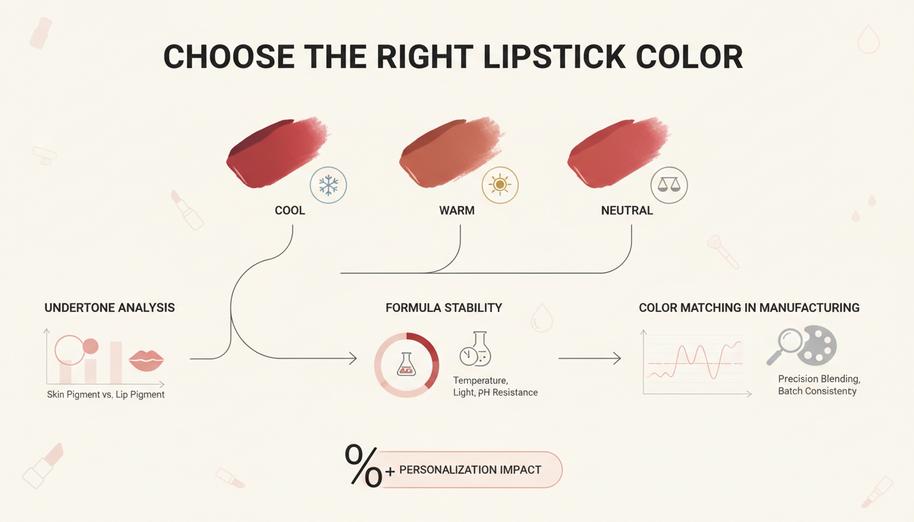
Matching Skin Undertones with Color Theory
When people ask how to choose a lipstick color, it often starts with reading your Skin and Undertones correctly. Here’s a clean way to map it out without overthinking:
-
Identify your base
-
1.1 Check veins
- Blue/purple → cool Undertones
- Green → warm Undertones
- Mixed → neutral
-
1.2 Observe Complexion shifts in sunlight
- Golden cast = warm
- Pink flush = cool
-
-
Align with Color theory
- 2.1 Warm Hue: coral, terracotta
- 2.2 Cool Hue: berry, plum
- 2.3 Neutral: balanced rose tones
-
Fine-tune Shade selection
- 3.1 Adjust Saturation for day vs night
- 3.2 Factor in natural Pigmentation
Topfeel Beauty often simplifies how to choose a lipstick color by pre-mapping tones to undertones, so you’re not guessing mid-aisle. Explore our oem lips makeup solutions to see how we structure these shade libraries.
“Color-personalization trends are driving over 35% of cosmetic purchase decisions globally,” notes a 2025 McKinsey beauty insights update.
Evaluating Formulation Stability Across Regions
Knowing how to choose a lipstick color isn’t just about shade; Formulation matters more than people expect. A bold red can fail if Stability drops in heat.
- Hot Regional climates → watch for sweating
- Humid zones → check Texture drag and slip
- Cold regions → avoid cracking from stiff wax blends
Short breakdowns help:
Sticky feel? Likely poor Pigment dispersion.
Fading fast? Weak binders affecting Shelf life.
Smudging? Environmental factors + oil imbalance.
Topfeel Beauty tests across shipping and storage conditions, so how to choose a lipstick color also includes picking something that actually stays put.
Leveraging Color Matching in Custom Molding
Here’s where how to choose a lipstick color meets production reality. Brands don’t just “pick” shades—they engineer them.
Step flow:
- Scan target shade → digital Color matching
- Adjust Pigment consistency during batching
- Refine via Molding process
- Lock results into scalable manufacturing
Quick hits:
• Better Precision = fewer shade mismatches
• Smart Customization = wider skin compatibility
• Cleaner Product design = consistent finish
Topfeel Beauty uses advanced custom solutions so the color you test is the color you keep—no weird surprises after purchase.
If you’re still wondering how to choose a lipstick color, think of it as a mix of undertone logic, real-world wear, and how well that shade survives the journey from lab to lips.
5 Consumer Insights Driving Shade Design
Picking a shade isn’t just vibes—it’s part culture, part chemistry, part timing. If you’ve ever wondered how to choose a lipstick color, or even just how to choose lipstick that feels right, these insights break it down in a real-world way. From color preference to wear comfort, this is how brands like Topfeel Beauty tune shades people actually love.
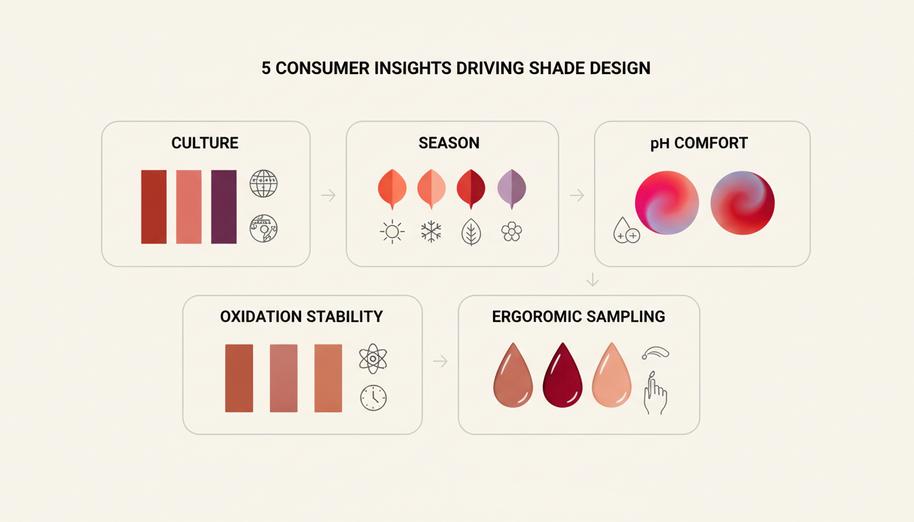
Cultural Color Symbolism and Preference
When thinking about how to choose a lipstick color, start with cultural context—it shapes perception more than trends do.
- Red can signal power in one region, romance in another
- Nude tones vary widely by aesthetic and tradition
- Berry shades often reflect modern preference
Nested view of influence:
-
Symbolism
- Meaning in festivals
- Social signals in daily wear
-
Regional shifts
- Urban vs rural perception
- Climate-linked aesthetic
Topfeel Beauty adapts shade libraries by mapping cultural symbolism to local demand, making “how to choose lipstick” less guessy and more intuitive.
“Color preference in beauty remains deeply tied to cultural identity and localized meaning,” — McKinsey Beauty Report, 2025
Seasonal Trends Impacting Shade Popularity
Shade demand moves in cycles, so how to choose lipstick changes with the calendar.
- Spring: soft pinks, fresh coral (seasonal trends)
- Summer: bright reds, glossy finishes (popularity)
- Fall: brick, terracotta (consumer demand)
- Winter: deep plum, wine (forecasting)
Short bursts:
Warm weather = lighter feel.
Cold months = richer payoff.
Topfeel Beauty aligns launches with cyclical trends, helping users answer “how to choose a lipstick color” without overthinking.
pH Level Considerations for Wear Comfort
Comfort matters as much as color. A wrong pH can ruin even the perfect shade.
- Balanced formulation reduces irritation
- Skin-friendly chemistry improves wearability
- Smooth sensation keeps reapplication easy
Quick flow:
Check skin → Match pH → Test feel → Commit
Oxidation Sensitivity and Longevity Expectations
Ever notice color turning darker? That’s oxidation affecting pigment and stability.
| Factor | Impact on Color | Longevity |
|---|---|---|
| Air exposure | High color-shift | Low |
| Formula base | Medium | Medium |
| Packaging | Low | High |
Topfeel Beauty uses airtight systems to boost durability, so when you learn how to choose a lipstick color, it stays true all day.
Ergonomics of Shade Sampling Experiences
Testing shades should feel easy, not messy.
- Hygienic sampling tools
- Smooth application edges
- Clear display for quick interaction
Nested usability:
-
Ergonomics
- Grip comfort
- Swipe control
-
User experience
- Clean try-ons
- Fast shade compare
Small details shape big decisions—especially when figuring out how to choose lipstick in-store.
Poor Sampling? Optimize Your Shade Kit
Choosing shades shouldn’t feel like guesswork. When people ask how to choose a lipstick color, they often overlook how the kit itself shapes that decision. A smart setup from Topfeel Beauty makes lipstick color selection smoother, faster, and way less messy.
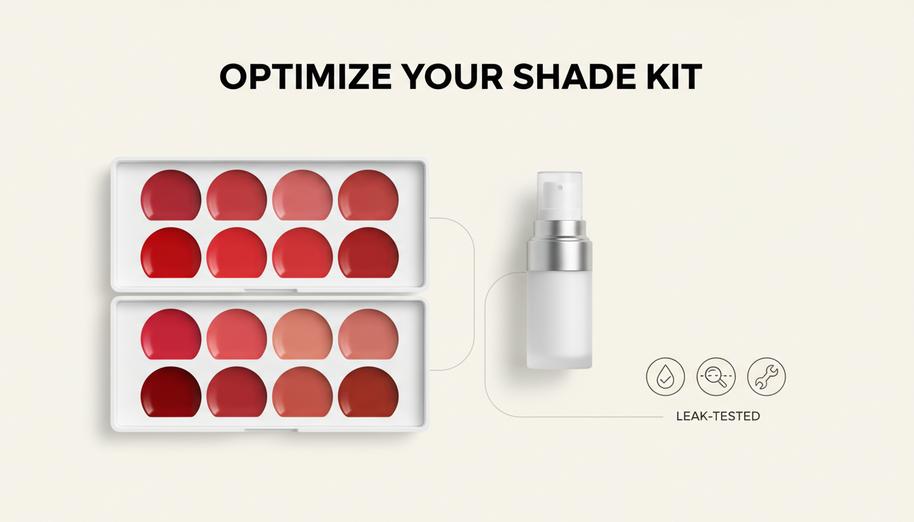
Streamline Tooling with Custom Molded Inserts
A messy kit kills flow. Clean tooling and sharp design fix that fast.
-
Core idea:
-
Build custom molded inserts that match each shade unit
- Align spacing for quick grab-and-test
- Reduce product smearing during handling
-
Improve manufacturing rhythm
- Faster production cycles
- Less wasted material
-
- Start with user behavior
- Map shade placement logic
- Prototype insert layout
- Test handling speed
When figuring out how to choose a lipstick color, users move quickly between tones. A tight insert layout keeps that motion fluid. Topfeel Beauty uses precision inserts so every shade stays exactly where it should—no sliding, no mix-ups.
Short takeaways:
- Better layout = faster lipstick color choice
- Cleaner inserts = easier lipstick color matching
- Smart tooling = less confusion when choosing lipstick shade
Increase Refillability Using Airless Pump Systems
Refillable airless pump systems change how people interact with packaging.
-
Key upgrades:
- Vacuum-sealed components
- Smooth, controlled dispensing
- Higher sustainability
Steps that matter:
- Lock formula inside airless chamber
- Push product upward via piston
- Prevent air exposure
- Enable refill swap without contamination
For anyone learning how to choose a lipstick color, freshness matters. Old samples lie. Airless systems keep shades true, so lipstick color selection stays accurate over time.
Quick hits:
- Cleaner formula feel
- Reliable shade testing
- Less waste, more reuse
Topfeel Beauty integrates refillability so users can test more shades without tossing half-used packs.
Validate Kit Consistency Through Leak Testing
If a kit leaks, trust disappears instantly. Strong testing protects quality.
-
Validation flow:
-
Pre-check integrity
- Seal strength
- Pressure tolerance
-
Run leak inspection
- Simulated transport shake
- Temperature shifts
-
Confirm kit consistency
- Batch alignment
- Fill accuracy
-
• No leaks
• No shade distortion
• No user doubt
How to choose a lipstick color depends on reliable samples. If shades bleed or dry out, decisions go wrong. That’s why Topfeel Beauty applies strict validation—so every lipstick color choice comes from a true, stable sample.
In short bursts:
Accurate kits.
Consistent shades.
Better decisions.
And yeah, choosing lipstick color suddenly feels a lot less like a gamble.
Bulk Airless Packaging: Streamlining Lipstick Launches
Launching a lipstick line isn’t just about shades; it’s also about how smooth the packaging game runs. While figuring out how to choose a lipstick color matters for consumers, brands need packaging that’s safe, scalable, and consistent—so every shade lands perfectly in hand and on lips.
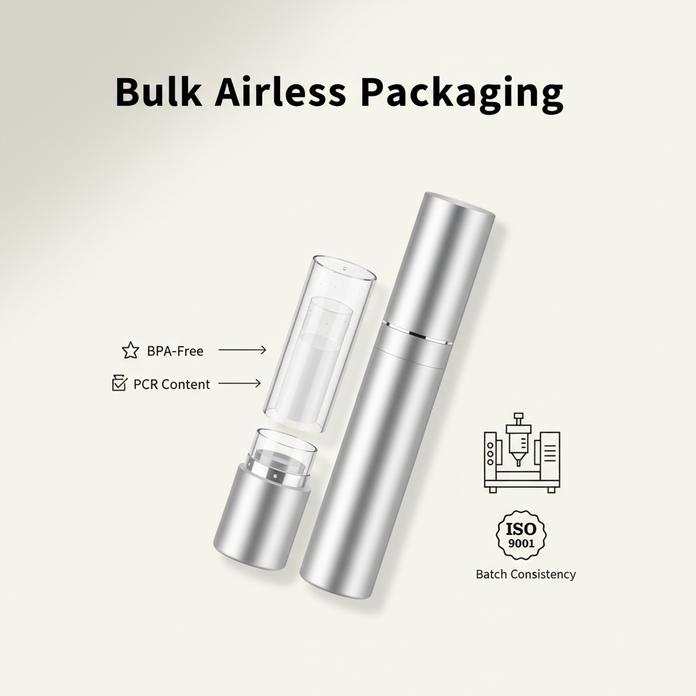
BPA-Free Plastic and PCR Content Choices
Picking materials isn’t just technical—it shapes how people feel about your product when deciding how to choose a lipstick color.
-
Core material logic:
-
material selection
- prioritize BPA-free plastic for consumer safety
- blend PCR material to increase recycled content
-
sustainability layer:
- reduce environmental impact
- support sustainable packaging claims consumers actually trust
-
-
Practical pairing flow:
- Choose base: PP or PET depending on texture compatibility
- Add PCR percentage without risking stability
- Test formula + pack interaction
-
Why it matters in real use:
- shade lovers thinking about how to choose a lipstick color often connect clean formulas with clean packaging
- a safer tube quietly boosts purchase confidence
Topfeel Beauty aligns these choices with market-ready designs that don’t feel “eco” at the expense of style.
Injection Molding for High Production Capacity
Scaling fast matters when a trending shade suddenly spikes after people search how to choose a lipstick color online.
-
Production backbone:
-
injection molding
- enables high volume production
- ensures tight tolerances
-
tooling design
- affects finish, closure feel, and alignment
-
automation
- reduces defects
- improves manufacturing efficiency
-
-
Step flow:
- Prototype mold → validate dimensions
- Optimize cycle time → boost production capacity
- Integrate assembly line → full process optimization
-
Outcome snapshots:
- smoother twist mechanisms
- consistent bullet alignment
- faster restock cycles when a lipstick shade trend explodes
Ensuring ISO Certification and Batch Consistency
Consistency is low-key everything. A customer figuring out how to choose a lipstick color expects shade #305 today to match the one next month.
-
Quality framework:
-
ISO certification
- anchors manufacturing standards
-
quality assurance
- backed by documented systems
-
regulatory compliance
- ensures global sellability
-
-
Control structure:
-
Batch level:
- monitor batch consistency
- maintain traceability
-
Product level:
- enforce quality control
- secure product uniformity
-
-
Multi-step safeguard:
- Raw material verification
- In-line inspection during filling
- Final compatibility and wear testing
Topfeel Beauty keeps this tight so every unit feels identical—no surprises, just reliable color delivery when customers act on how to choose a lipstick color decisions.
Neutral Vs. Bold Ranges: ROI Differences
A smart take on how to choose a lipstick color often starts with range strategy. From safe everyday picks to high-impact shades, each path shifts sales rhythm, risk, and brand voice in real ways.
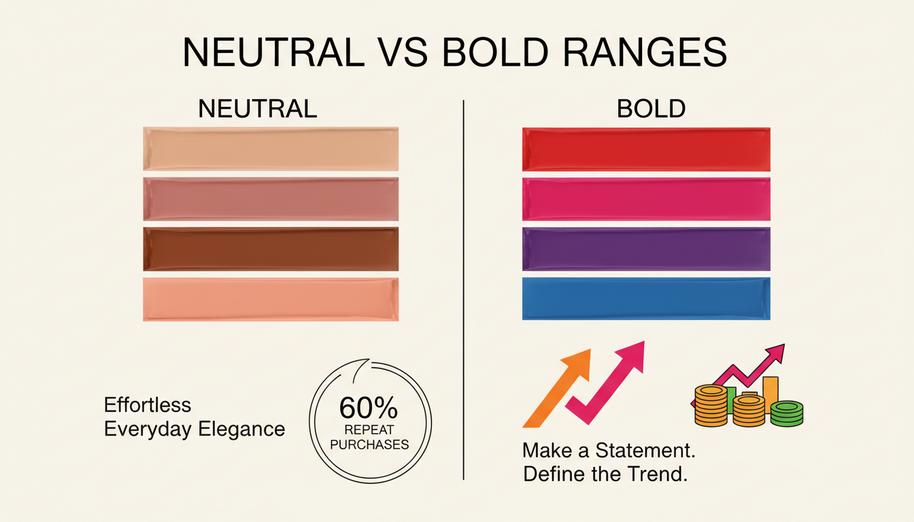
Neutral Ranges
“Across 2025 color cosmetics reports, neutral shades continue to anchor over 60% of repeat purchases due to cross-occasion wearability,” noted in a recent retail insights brief by a global beauty analytics firm.
When thinking about how to choose a lipstick color for steady revenue, neutral families carry the load. Think Nude, Beige, soft Mauve, warm Brown, and gentle Peach—the kind of Everyday tones that flex with any Skin tone or subtle Undertone shift.
-
Core advantages
- Stable demand across regions
- Easier inventory planning
- Lower return rates tied to mismatch
- Product planning
-
Shade mapping by Undertone
- Cool: pink-leaning Mauve
- Warm: caramel Brown
-
Range depth
- Light to deep Nude spectrum
- Seasonal tweaks, not overhauls
- Operations
-
Forecasting cycles
- Longer runs, fewer rush orders
-
Retail fit
- Suits mass and pro channels
- Consumer behavior
-
Repeat buying
- “my go-to” effect
-
Low-risk trials
- easy answer to how to choose lipstick color daily
Short notes: calm palette, reliable turns, quiet profit. If someone asks how to choose a lipstick color for work or school, this is the safe lane. Topfeel Beauty leans on these shades to keep shelves moving without drama.
Bold Ranges
Now flip it—how to choose a lipstick color when you want attention. Enter Red, electric Pink, deep Purple, bright Orange, and striking Blue. These Statement shades ride Trend waves and push Pigment intensity.
-
Why they matter
- Brand identity pops fast
- Social buzz and trend hooks
- Higher margin potential per drop
- Development flow
-
Trend scan
- runway cues, creator spikes
-
Rapid prototyping
- test Pigment payoff, wear
- Supply chain
-
Agile batches
- small runs, quick restocks
-
Risk control
- markdown planning baked in
- Selling moments
-
Launch bursts
- limited drops of Red/Purple
-
Content loops
- tutorials on how to choose a lipstick color for nights out
Quick hits: louder shades, faster cycles, sharper risks. If you’re guiding someone on how to choose lipstick color for a party, push Orange or Blue with confidence. Topfeel Beauty uses these spikes to spark attention, then rotates before fatigue sets in.
References
- color theory – byrdie.com/Byrdie
- pH – ncbi.nlm.nih.gov/NIH
- oxidation – cen.acs.org/Chemical & Engineering News
- BPA-free plastics – fda.gov/FDA
- seasonal trends – allure.com/Allure
- international trends – cosmopolitan.com/Cosmopolitan
- McKinsey Beauty Insights – mckinsey.com/McKinsey & Company
- Skin undertones – healthline.com/Healthline
- market specificities – cosmeticsbusiness.com/Cosmetics Business
- cultural symbolism – businessoffashion.com/Business of Fashion
- sustainability – packagingdigest.com/Packaging Digest
- recycled content – epa.gov/EPA
- ISO certification – iso.org/ISO
- consumer demand – harpersbazaar.com/Harper’s Bazaar
- Regional climates – vogue.co.uk/Vogue UK
Post time: Jul-17-2026