
Is It Safe? The Real Facts on What Lipstick Is Made Of
Concerns about what lipstick is made of keep buyers up at night, especially when safety headlines hit too close.
Topfeel product engineers in 2025 emphasize formulations rely on controlled pigments, cosmetic-grade waxes, and strict GMP processes to maintain safety and consistency.
Smart sourcing separates safe products from risks.
Quick Answers to What Lipstick Is Made Of
- Foundation Layers: Carnauba wax, beeswax and ozokerite build structure, gloss and moldability.
- Vibrant Shades: Iron oxides, titanium dioxide and carmine ensure stable, even pigmentation.
- Silky Emollients: Jojoba oil, shea butter and vitamin E hydrate, smooth application and add antioxidant protection.
- Structuring Agents: Microcrystalline wax, stearic acid and silica control hardness, viscosity and bullet integrity.
- Safety Checks: Verify GMP sourcing, test for heavy metals, microbiological purity and compliance with FDA/EU regulations.
What Lipstick Is Made Of: Main Components
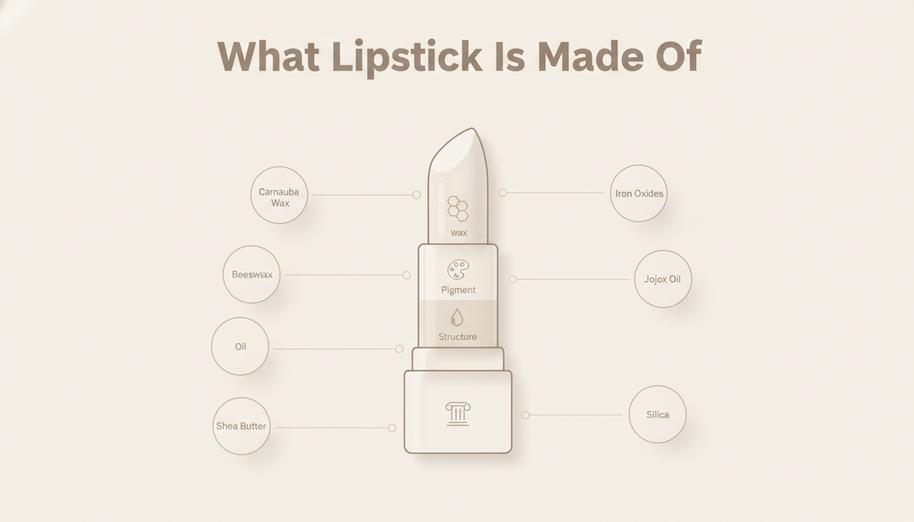
Curious about what lipstick is made of when you swipe that bold red on? It’s not magic—it’s a smart blend of wax, pigment, oils, and stabilizers. If you’ve ever wondered what lipstick is made of and why it feels creamy yet firm, this breakdown keeps it real and easy to follow.
Foundation Layers: Carnauba Wax, Beeswax, Ozokerite
When people ask what lipstick is made of, the answer starts with the foundation layer—mostly wax.
-
Key base materials:
- Carnauba wax
- Beeswax
- Ozokerite
-
Carnauba wax
- Adds shine
- Raises melting point
-
Beeswax
- Improves grip on lips
- Supports smooth payoff
-
Ozokerite
- Boosts mold strength
- Keeps the base stable
In production at Topfeel, melting and cooling are tightly controlled so the base holds its shape without cracking. That’s the backbone of what lipstick is made of.
Vibrant Shades from Iron Oxides and Carmine
Color answers the second half of what lipstick is made of.
-
Pigment choices:
- Iron oxides
- Carmine
- Titanium dioxide
Processing flow:
- Grind the colorant into fine particles.
- Disperse evenly into oil.
- Homogenize for smooth texture.
A good shade isn’t just pretty; it’s stable, fade-resistant, and safe for daily wear. That’s how a vibrant red stays bold.
Silky Emollients: Jojoba Oil, Shea Butter, Vitamin E
The soft glide comes from emollient blends:
- Jojoba oil
- Shea butter
- Vitamin E
These ingredients:
- Lock in moisture
- Improve slip
- Add antioxidant care
Soft lips, zero drag. That’s a big part of lipstick ingredients that people actually feel.
Structuring Agents: Microcrystalline Wax, Stearic Acid, Silica
To finish what lipstick is made of, structure matters.
• Microcrystalline wax strengthens the stick
• Stearic acid balances hardness
• Silica refines texture
Together, each structuring agent manages break resistance and smooth payout. Brands like Topfeel fine-tune every texture detail so the bullet stays firm in the tube yet glides like butter on contact.
4 Red Flags In Cosmetic Ingredient Lists
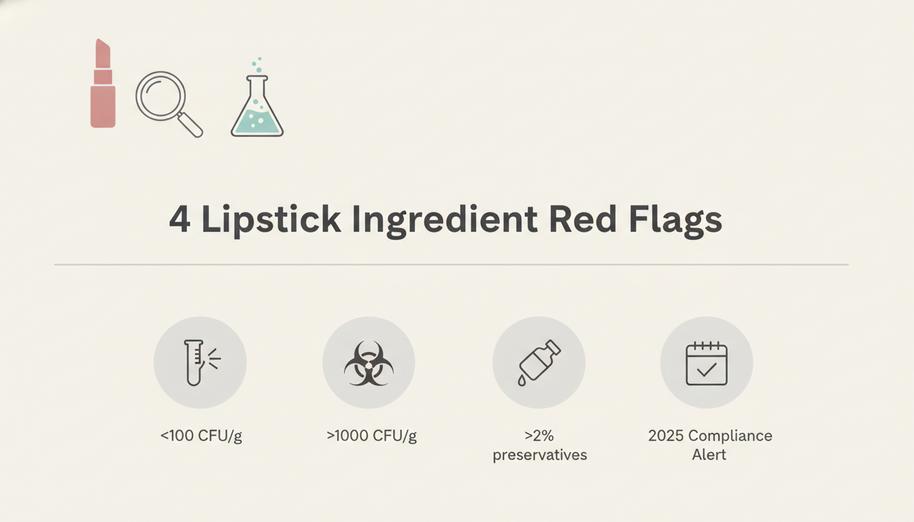
Before asking what lipstick is made of, take a beat and scan the ingredient list. What is lipstick made of, really? Not just wax and color. If you’ve ever wondered what lipstick is made of and how safe it feels on your lips, these red flags matter.
Undisclosed Mineral Oil Variants
If you’re checking what lipstick is made of, pay attention to how mineral oil shows up.
-
Common labels:
- paraffinum liquidum
- petrolatum
- petroleum jelly
- generic hydrocarbon blends
Now dig deeper:
-
Label Clarity
-
a. Transparent INCI naming
- i. Clear % disclosure
- ii. Source identification
-
b. Vague naming
- i. “Emollients” without origin
- ii. Blended mineral oil derivatives
-
-
Texture & Safety Signals
- a. Over-occlusive feel
- b. Heavy shine masking poor refinement
- c. Weak ingredient transparency
When asking what lipstick is made of, remember: high-grade emollients feel smooth, not greasy. Brands like Topfeel highlight traceable raw materials, which builds real cosmetic safety trust.
Short version? If the ingredient list feels fuzzy, that’s your cue.
Excess Preservatives and Microbiological Purity Issues
Ever wondered what lipstick is made of when it smells oddly sharp? Look at the preservatives.
• High levels of parabens
• Multiple formaldehyde releasers
• Long chemical chains stacked together
Then evaluate hygiene signals:
-
Manufacturing Quality
- a. GMP adherence
- b. Clean water systems
- c. Controlled bacteria counts
-
Risk Indicators
- a. Repeated preservative layering
- b. History of microbial contamination
- c. Frequent cosmetic spoilage
| Indicator | Ideal Standard | Risk Level | Consumer Impact |
|---|---|---|---|
| Total aerobic count | >1000 CFU/gIrritation risk | ||
| Yeast & mold | >100 CFU/gFungi growth | ||
| Preservative % | 0.5–1% typical | >2% stacked | Sensitivity |
| Stability test | 3–6 months | Failed | Reduced product safety |
According to 2025 updates from Cosmetics Europe,
“Microbiological quality remains one of the top compliance issues in small-batch color cosmetics across global markets.”
When thinking about what lipstick is made of, clean production beats over-preserving every time.
Hidden Heavy Metals in Pigments
Color is fun. Heavy metals are not.
When checking what lipstick is made of, scan pigment sources:
- Lead
- Cadmium
- Arsenic
- Chromium
Here’s how risks usually stack:
-
Pigment Sourcing
- a. Certified color additives
- b. Third-party purity testing
-
Refinement Process
- a. Particle filtration
- b. Metal residue screening
-
Compliance Benchmarks
- a. FDA trace limits
- b. EU Cosmetics Regulation thresholds
Poorly refined pigments can cause cosmetic contamination. Topfeel applies batch-level screening, which matters when people seriously ask, what is lipstick made of and is it safe for daily wear?
If lab data isn’t shared, stay cautious.
Unapproved Synthetic Fluorphlogopite Usage
Shimmer sells. But what lipstick is made of when that glow looks too flashy?
Look for synthetic fluorphlogopite, often marketed as premium mica or eco-friendly glitter.
-
Ingredient Approval
- a. Listed under valid cosmetic regulations
- b. Verified as approved colorant
-
Purity Checks
- a. Absence of heavy metals
- b. Clean synthetic minerals sourcing
-
Risk Flags
- a. No documentation
- b. Cross-border unapproved ingredients
- c. Vague “shimmer blend” wording
✓ Approved synthetic shimmer
✗ Mystery sparkle powder
When someone asks what lipstick is made of, the answer should be clear, compliant, and safe. Flashy finishes are fine. Hidden shortcuts aren’t.
Retail Buyers: Vet Formulas Before Ordering
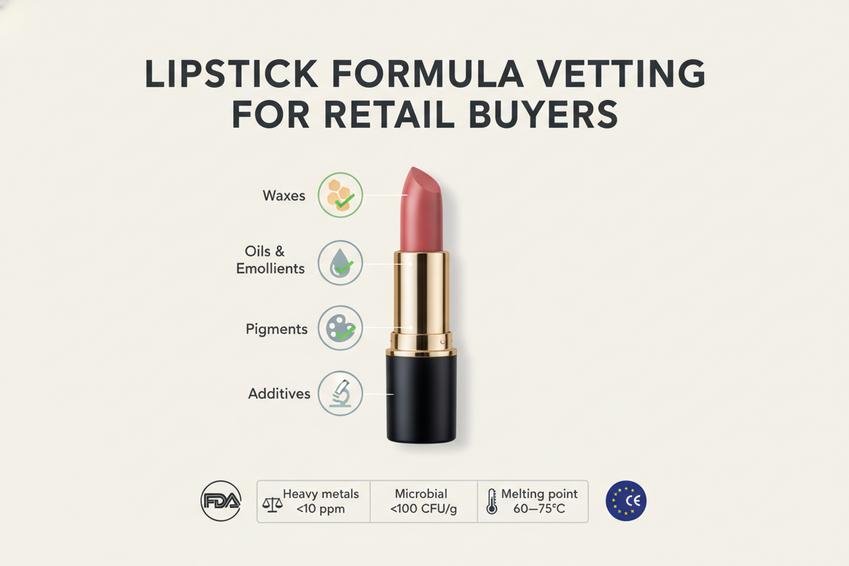
Retail buyers often ask what lipstick is made of before signing a PO—and that’s smart. From pigments to waxes, knowing what lipstick is made of protects margins and brand trust. If you’ve ever wondered what is lipstick made of, this guide keeps it real and practical.
FDA Regulations and EU Cosmetics Compliance
Understanding what lipstick is made of starts with regulatory alignment.
-
United States
-
- Ingredient review
- Check ingredient approval status
- Screen for restricted substances
- Documentation
- Safety substantiation files
- Accurate labeling requirements
-
Manufacturing
- Verified GMP standards
- Internal compliance audits
-
-
European Union
-
- Formal safety assessment
- Complete Product Information File
-
Ongoing review
- Updates to banned ingredient lists
-
As McKinsey’s 2025 beauty outlook notes:
“Regulatory transparency is now a purchase driver, not just a compliance task.”
If buyers can’t explain what lipstick is made of, retailers hesitate. Brands like Topfeel align formulas with both FDA and EU frameworks, making cross-border sourcing smoother.
Critical Quality Control Parameters to Request
When checking what lipstick is made of, request proof, not promises.
- stability testing
- microbial purity
- heavy metal limits
- color consistency
Key lab indicators:
| Parameter | Standard Range | Risk if Out of Spec |
|---|---|---|
| Heavy Metals | Regulatory recall | |
| Microbial Count | Safety failure | |
| Melting Point | 60–75°C | Breakage/bleeding |
Then go deeper:
-
Raw stage
- Verify raw material specifications
-
Bulk stage
- Confirm texture analysis and pH balance
-
Finished goods
- Validate shelf life validation
That’s how you confidently answer what is lipstick made of—and prove it.
Packaging Components That Impact Shelf Appeal
Even if buyers know what lipstick is made of, packaging seals the deal.
-
Primary packaging
- Bullet mold precision
- Secure closure mechanism
-
Secondary packaging
- Carton durability
- Clean barcoding
-
★ Visual test under retail lighting
Quick reality check. Customers judge within seconds.
Packaging materials must meet material safety standards, while design aesthetics drive impulse buys. The right applicator type and smooth twist-up feel boost repeat sales.
Topfeel pairs formula clarity about what lipstick is made of with shelf-ready packaging that survives shipping and still looks premium on display.
References
- ISO 22716:2007 Cosmetics — Good Manufacturing Practices (GMP) – iso.org / ISO
- Carnauba Wax for Skin: The Complete Guide – byrdie.com / Byrdie
- Beeswax Uses and Benefits – healthline.com / Healthline
- Iron Oxides – paulaschoice.com / Paula’s Choice
- Carmine in Makeup: What It Is and Why It’s Used – byrdie.com / Byrdie
- What are the benefits of jojoba oil? – medicalnewstoday.com / Medical News Today
- Shea Butter Benefits for Skin and Hair – clevelandclinic.org / Cleveland Clinic
- Vitamin E and Skin Health – oregonstate.edu / Linus Pauling Institute
- Mineral Oil for Skin: The Complete Guide – byrdie.com / Byrdie
- Parabens in Cosmetics – fda.gov / FDA
- Microbiological Safety and Cosmetics – fda.gov / FDA
- Lead in Cosmetics and Other Formulations – fda.gov / FDA
- Synthetic Fluorphlogopite – paulaschoice.com / Paula’s Choice
- Cosmetics Guidance & Regulation – fda.gov / FDA
- Cosmetics Legislation – ec.europa.eu / European Commission
Post time: Jun-15-2026