

Coconut Oil Lip Gloss: Moisturizing Shine or Sticky Trend?
Lip gloss with coconut oil is blowing up, but here’s the catch: shine sells, stickiness kills. Brands chasing that dewy glow can end up with formulas that feel like syrup, and customers notice fast.
The real game isn’t coconut oil itself, it’s how you build around it. Get the balance right, and you’ve got smooth, high-shine gloss people actually wear, not wipe off again today.
Quick Insights: Lip Gloss with Coconut Oil
➔ Deep Hydration Blend: Coconut oil and shea butter lock in moisture for soft, supple lips.
➔ Shine & Slip Balance: Vitamin E, jojoba oil, and beeswax create high gloss without tacky residue.
➔ Wear & Performance: Castor oil boosts adhesion for long-lasting, feather-free coverage.
➔ Clean vs. Classic: Plant-based coconut formulas offer natural nourishment versus mineral oil’s inert shine.
➔ Private-Label Edge: Source organic coconut oil, fine-tune pigment ratios, and secure packaging with tamper-evident seals.
5 Benefits Of Lip Gloss With Coconut Oil Formula
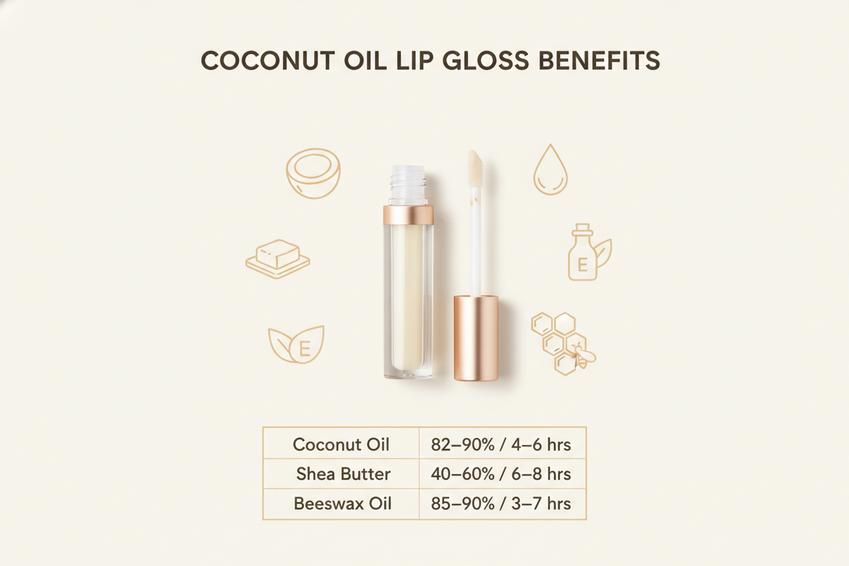
A good lip gloss with coconut oil does more than shine—it treats your lips right. From deep hydration to glossy shine, this coconut oil lip gloss formula blends comfort with style. If you’re into lip gloss coconut oil lovers swear by, here’s why it works so well.
Deep Hydration: Coconut Oil & Shea Butter Fusion
When lip gloss with coconut oil meets shea butter, serious moisture happens. This lip gloss with coconut oil formula focuses on layered hydration and lasting conditioning.
- coconut oil for fatty-acid rich nourishing
- shea butter for dense emollient comfort
- reinforced moisture barrier support
- Absorption into the upper lip layer
- Softening through natural emollient action
- Ongoing hydration retention
Ingredient Hydration Performance Overview
| Ingredient | Fatty Acid Content (%) | Moisture Retention (hrs) | Skin Compatibility |
|---|---|---|---|
| Coconut Oil | 82–90 | 4–6 | High |
| Shea Butter | 40–60 | 6–8 | Very High |
| Castor Oil | 85–90 | 3–5 | High |
| Beeswax | — | 5–7 (seal effect) | High |
At Topfeel, the lip gloss coconut oil blend is tuned so hydration feels light, not heavy. The result? A lip gloss with coconut oil that keeps lips smooth without that sticky overload.
High Shine Boost from Vitamin E and Jojoba Oil
Gloss is all about that instant shine, but not the greasy kind. This coconut oil lip gloss pairs vitamin E with jojoba oil to build clean luster and soft radiance.
- Boosted surface glow
- Lightweight gloss layer
- Antioxidant enhancement
★ Smooth feel
★ Visible shine
★ Fresh-looking lips
Short and sweet:
Soft glow.
Clear radiance.
Healthy-looking gloss.
The balance inside this lip gloss with coconut oil keeps the shine reflective while vitamin E supports surface care.
Long-Lasting Wear with Castor Oil Enrichment
A solid lip gloss with coconut oil needs real longevity. That’s where castor oil steps in with strong adherence and natural film-forming support.
Process flow:
- Castor oil increases viscosity.
- The gloss grips better for longer wear.
- Even coverage improves duration.
Results most users notice:
- Reduced feathering
- Better lasting power
- Stable glossy layer
Topfeel fine-tunes the coconut oil lip gloss texture so the enrichment feels plush but never heavy. This lip gloss with coconut oil sticks around—without drying your lips out.
Nourishing Emollient Touch of Beeswax Blend
The beeswax blend adds quiet strength. It builds a thin protective layer while supporting emollience and long-term nourishment.
Main functions:
- Seal in moisture
- Improve product texture
- Add subtle conditioning
Step-by-step effect:
- Melt-on contact
- Even surface coating
- Locked-in softness
This lip gloss coconut oil formula feels structured yet flexible. The blend supports comfort, so lips stay soft instead of waxy.
Smooth Application through Optimized Pigment Ratios
Color matters, but so does application. In a well-balanced lip gloss with coconut oil, the pigment to oil ratio controls smoothness and spreadability.
Core balance factors:
-
Oil phase for glide
- coconut oil slip
- jojoba oil flexibility
-
Color phase for tone
- Fine-milled pigment
- Stable consistency
Application flow:
- Contact
- Even glide
- Uniform texture
No streaks. No clumps. Just steady consistency and a clean tinted finish. A properly crafted lip gloss with coconut oil makes daily wear easy—and honestly, kind of addictive.
Is Lip Gloss With Coconut Oil Too Sticky?
A good lip gloss with coconut oil should feel smooth, not gluey. Still, some users say their gloss feels heavy or drags across the lips. The truth usually sits in the formula balance. Let’s break down how coconut oil, waxes, and lightweight oils shape the final texture and feel.
Does Coconut Oil Alone Cause a Tacky Feel?
Used alone, coconut oil rarely creates real stickiness. It’s a semi-solid oil with a melting point around 24–26°C, so it softens fast on contact with skin. What people call a tacky feel is often excess application or poor blending in a lip gloss base.
Key points about this ingredient when used alone:
- Lightweight but slightly occlusive
- Melts quickly on warm lips
- Can feel greasy if over-applied
- Pure coconut oil = low drag, medium shine
- Blended oil phase = smoother texture
- Poor dispersion = uneven glide
In a standard lip gloss with coconut oil, texture depends on ratio, not hype. A coconut-based lip gloss without structural balance may migrate outside the lip line. That’s glide, not glue.
Balancing Beeswax and Jojoba Oil for Slip
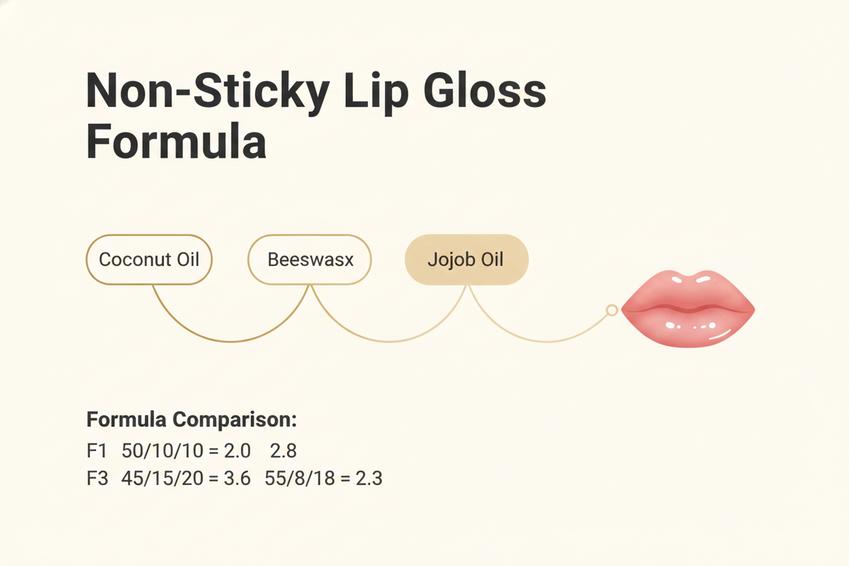
The magic happens in formulation. Beeswax adds structure. Jojoba oil boosts slip. Balance keeps the texture plush instead of sticky.
Below is a simplified comparison used in lab testing for lip gloss with coconut oil systems:
| Formula Code | Coconut Oil (%) | Beeswax (%) | Jojoba Oil (%) | Sensory Stickiness (1–5) |
|---|---|---|---|---|
| F1 | 60 | 5 | 10 | 2.0 |
| F2 | 50 | 10 | 15 | 2.8 |
| F3 | 45 | 15 | 20 | 3.6 |
| F4 | 55 | 8 | 18 | 2.3 |
Notice how higher beeswax without enough jojoba oil raises drag. In nested formulation logic:
-
Oil Phase
- Coconut oil → shine + cushion
- Jojoba oil → fast-absorbing slip
-
Structuring Phase
-
Beeswax
- Controls viscosity
- Prevents separation
-
-
Sensory Outcome
-
Balanced ratio
- Smooth glide
- Reduced stickiness
-
Brands like Topfeel fine-tune this balance so a coconut lip gloss feels glossy, not gummy.
Formulation Hacks for a Non-Sticky Finish
Creating a non-sticky lip gloss with coconut oil takes smart tweaks, not guesswork.
• Lower total wax below 12% for lighter feel
• Add 3–5% lightweight esters to cut drag
• Mix at controlled cooling speeds
Here’s a practical sequence labs follow:
- Heat oil phase gently
- Add structuring agents slowly
- Homogenize for uniform texture
- Cool with steady agitation
Short truths from the bench:
Light oils matter.
Viscosity defines comfort.
Balance beats trend claims.
A well-designed lip gloss with coconut oil should feel plush, smooth, and wearable all day. That’s the standard companies like Topfeel aim for—shine without the sticky drama.
Lip Gloss With Coconut Oil Vs. Mineral Oil Showdown
Choosing between lip gloss with coconut oil and mineral-based shine can feel like picking sides in a beauty debate. One leans natural, the other leans practical. Let’s break down texture, hydration, and everyday wear in a real-world way.
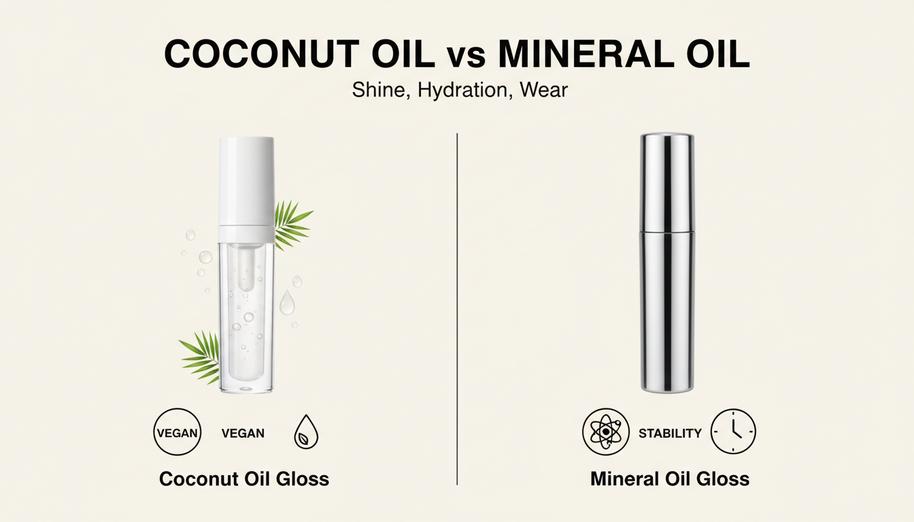
Coconut Oil Lip Gloss
A good lip gloss with coconut oil isn’t just about shine. It’s about comfort. The mix of coconut, oil, and smooth gloss texture gives lips steady hydration without feeling heavy.
- Soft glow
- Light moisturizing layer
- Subtle tropical vibe
- Clean finish
- Plant-based appeal
- Everyday shine
• Vegan friendly
Long wear feels breathable, not sticky.
Short take? It’s the “your lips but better” vibe.
It suits dry climates.
It layers well over balm.
Here’s how brands like Topfeel approach lip gloss with coconut oil:
-
Ingredient Philosophy
-
Plant-forward focus
- Cold-pressed coconut oil for deeper hydration
- Minimal synthetic fillers
-
Clean beauty alignment
- Vegan positioning
- Cruelty-free messaging
-
-
Performance Design
-
Texture balance
- Lightweight oil slip
- Non-greasy shine
-
Lip feel
- Cushion effect
- Smooth lip surface
-
A 2025 Mintel beauty report noted:
“Consumers increasingly favor plant-based lip products that combine visible shine with perceived skin benefits.”
That’s exactly why lip gloss with coconut oil keeps trending. Topfeel taps into that demand with flexible formulas that blend coconut oil gloss appeal and modern shelf stability.
Mineral Oil Lip Gloss
Mineral oil lip gloss plays a different game. Derived from petroleum, this synthetic emollient creates uniform texture and reliable shine.
- High gloss finish
- Budget-friendly base
- Long shelf life
The feel is slick.
The glow is bold.
The cost is lower.
Production often follows a clear path:
- Refined mineral oil base
- Pigment blending
- Flavor infusion
- Stability testing
For mass retail, that consistency matters. Yet compared to lip gloss with coconut oil, it lacks the nurturing angle. No plant story. No natural moisturizing claim.
Some users love the glassy look. Others prefer the softer vibe of a lip gloss with coconut oil formula.
Topfeel works with both bases, but market demand keeps pushing lip gloss with coconut oil forward. Clean shine is having its moment.
3 Tips To Private Label Lip Gloss With Coconut Oil
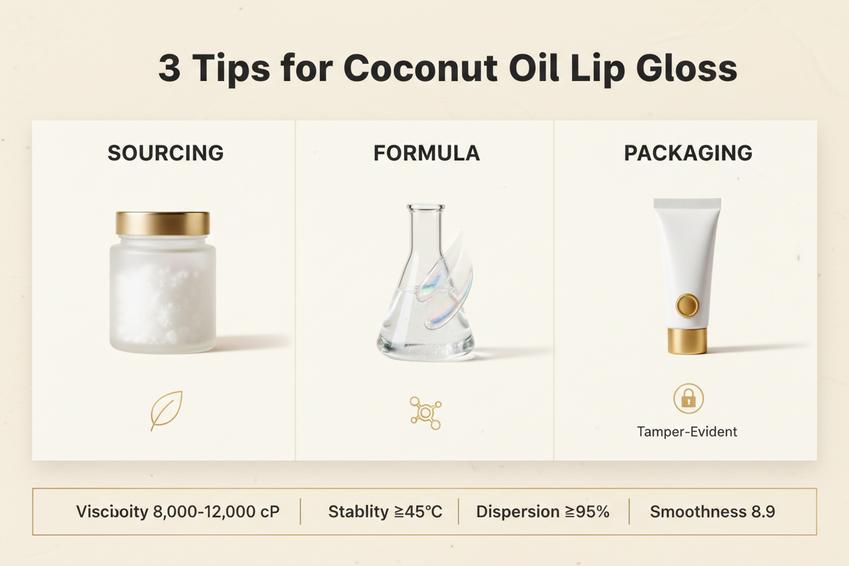
Launching a lip gloss with coconut oil isn’t just about shine—it’s about texture, trust, and shelf appeal. If you want a coconut oil lip gloss that actually sells, these tips keep things practical and market-ready.
Tip 1: Ingredient Sourcing for Pure, Organic Coconut Oil
Creating a standout lip gloss with coconut oil begins at the raw material level. The quality of virgin coconut oil shapes texture, stability, and even customer loyalty.
-
Raw Material Selection
1.1 Virgin coconut oil standards
- Choose cold-pressed extraction to retain nutrients and natural scent.
- Confirm organic certification from recognized bodies (USDA Organic, ECOCERT).
- Request documentation on sustainable sourcing practices.
1.2 Supplier Assessment
-
Conduct structured supplier vetting:
- Audit manufacturing facilities.
- Verify GMP compliance.
- Review export documentation.
-
Require third-party purity testing for heavy metals and microbial limits.
-
Quality Assurance Framework
2.1 Internal quality control checklist
- Appearance: clear to milky white
- Odor: clean coconut profile
- Melting point consistency
2.2 Regulatory Alignment
- FDA cosmetic compliance
- Ingredient INCI transparency
According to Grand View Research (2025 update), natural and organic lip products continue to outpace conventional lip categories, driven by clean-label demand and ingredient traceability.
Brands like Topfeel build their lip gloss with coconut oil programs around traceable sourcing and documented testing—because clean beauty isn’t hype anymore, it’s expected.
A coconut oil lip gloss that starts pure stays premium.
Tip 2: Formula Customization for Smooth Application
A good lip gloss with coconut oil should glide, not drag. It should shine, not feel sticky. That balance comes from sharp formulation development.
Start with the base:
- Blend emollient blend ratios for cushion and slip.
- Add viscosity modifiers for structure.
- Check ingredient compatibility before scaling.
Then refine:
- Improve pigment dispersion for even color.
- Run sensory evaluation panels for real feedback.
- Adjust for texture optimization and a true non-sticky feel.
Here’s a simplified lab reference table used during prototype testing:
| Parameter | Target Range | Test Method | Result Example |
|---|---|---|---|
| Viscosity (cP) | 8,000–12,000 | Brookfield Viscometer | 9,450 |
| Melting Stability (°C) | ≥ 45 | Stability Chamber | 47 |
| Pigment Dispersion (%) | ≥ 95 | Microscopic Analysis | 96.8 |
| Sensory Smoothness Score | 8–10 | Panel Evaluation | 8.9 |
Long wear isn’t about adding more wax. It’s about balance. A well-tuned lip gloss coconut oil base keeps shine flexible, never heavy.
When developing a lip gloss with coconut oil, small tweaks—0.2% here, 0.5% there—change everything. That’s why experienced labs like Topfeel run multiple pilot batches before locking the final spec.
Tip 3: Packaging Design with Tamper-Evident Seal
Even the best coconut oil lip gloss won’t move if the packaging feels cheap. Presentation drives first impressions; safety keeps repeat buyers.
-
Container Engineering
1.1 Smart container selection
- PET or glass based on positioning
- Compatibility with oil-based formulas
1.2 Packaging materials testing
- Leakage checks
- Oil migration evaluation
-
Applicator & User Experience
2.1 Applicator type
- Doe-foot for classic gloss
- Brush tip for high-shine finishes
2.2 Functional Design
- Secure cap torque control
- Smooth neck wiper insertion
-
Compliance & Protection
3.1 Tamper-proof seal integration
- Shrink band or inner stopper
- Visual break indicator
3.2 Clear label design
- INCI list accuracy
- Batch code placement
- Claims aligned with regulatory compliance
A lip gloss with coconut oil signals natural care. Back that promise with airtight packaging and verified product safety.
When the gloss looks good, feels right, and arrives sealed tight, customers don’t overthink it. They swipe—and come back for more.
Gloss Formulation Scenario: Lab Testing
Creating a high-performing lip gloss with coconut oil is not guesswork; it’s lab-driven, hands-on, and a little obsessive—in a good way. From early batch blending to final quality assurance, every move shapes texture, shine, and shelf life. When developing coconut oil lip gloss formulas, consistency and safety always come first.
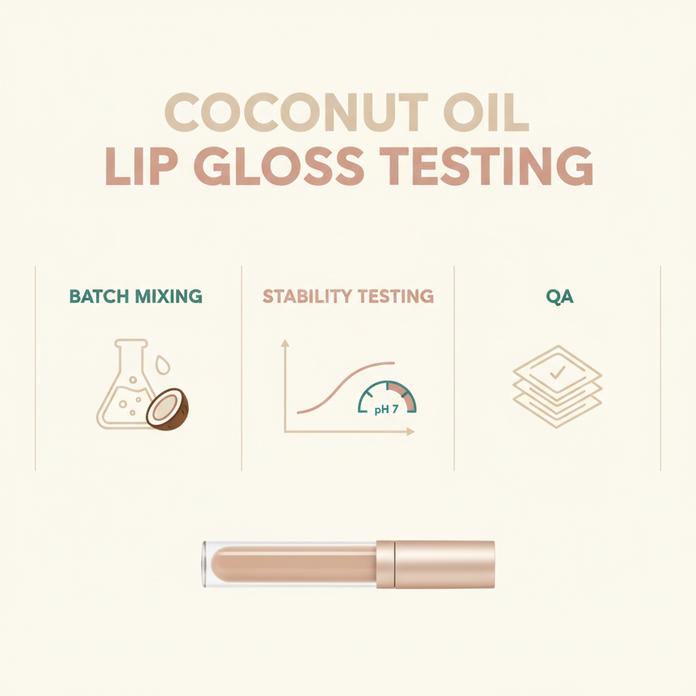
Batch Mixing and Scale-Up Production Trial
Developing a stable lip gloss with coconut oil starts with tight control over the formulation and ingredients.
-
Core lab checks include:
- batch weight accuracy
- controlled mixing temperature
- repeatable process timing
- Small-scale trial run
- Pilot production validation
- Controlled scale-up simulation
The flow typically follows:
-
Raw Material Prep
- Inspect coconut-derived emollients
- Verify oil purity and melting point
-
Lab Batch Execution
- Combine phases under timed mixing cycles
- Observe gloss payoff and glide
-
Scale-Up Review
- Replicate process under higher volume stress
- Compare texture against benchmark lip gloss with coconut oil
Texture matters. A coconut oil gloss should feel smooth, not greasy. Short pause. Quick swipe test. If shine drops after scaling, the formulation is adjusted before moving forward.
At Topfeel, scale-up trials for lip gloss with coconut oil focus on shine retention and even pigment spread, ensuring coconut-infused lip gloss stays consistent from lab to factory floor.
Stability Testing for Viscosity Measurement & pH Balance
Stability is where a good coconut oil lip gloss proves it can last.
- stability chambers track heat and cold cycles
- viscosity readings confirm flow behavior
- pH balance checks protect lip comfort
The testing rhythm moves like this:
-
Environmental Exposure
- 4°C cooling
- 25°C room storage
- 45°C accelerated aging
-
Analytical Review
- Measure viscosity shift
- Confirm pH balance range
- Inspect formulation stability
-
Performance Validation
- Re-test glide of lip gloss with coconut oil
- Evaluate shine after time-lapse storage
A 2025 Mintel beauty report noted:
“Long-wear lip products with natural oil positioning continue to gain trust when stability claims are clinically supported.”
That’s why every measurement links back to product integrity and realistic shelf life. If thickness drifts or scent shifts, the formula goes back for tuning. No shortcuts.
Quality Assurance: Microbiological and Leak Testing
Safety isn’t flashy, but it’s everything.
• microbiological screening
• leak testing under pressure
• packaging seal verification
Quality control unfolds in layers:
-
Microbial Safety
- Swab sampling
- Incubation for microbial growth
- contamination risk review
-
Packaging Stress Test
- Cap torque checks
- Drop simulation
- Seal integrity for packaging integrity
-
Compliance Review
- Align with safety standards
- Document testing protocols
A clean lip gloss with coconut oil must stay clean from filling line to makeup bag. If a tube leaks, oxygen creeps in. If contamination appears, the entire batch is rejected.
The goal is simple: safe shine, stable texture, zero drama. That’s how a coconut oil lip gloss earns trust—one controlled test at a time.
References
- shea butter – pubchem.ncbi.nlm.nih.gov
- fatty-acid – lpi.oregonstate.edu
- vitamin E – ods.od.nih.gov
- jojoba oil – pubchem.ncbi.nlm.nih.gov
- castor oil – pubchem.ncbi.nlm.nih.gov
- beeswax – fao.org
- mineral oil – pubchem.ncbi.nlm.nih.gov
- Mintel – mintel.com
- USDA Organic – usda.gov
- ECOCERT – ecocert.com
- GMP compliance – fda.gov
- FDA cosmetic compliance – fda.gov
- INCI – personalcarecouncil.org
- Grand View Research – grandviewresearch.com
Post time: Jun-30-2026