
How Long Does Lip Blushing Last?
Lip Blushing sells a dream of soft, lasting color, yet fade can creep in fast when pigment quality and formulation cut corners behind the scenes.
For clinics and brands, longevity isn’t luck; it’s product engineering that keeps clients happy, cuts touch-ups, and protects your reputation over time.
Rosy Revelations: Lip Blushing Key Points
➔ Understand Micro-Pigmentation: A dermal pen or machine deposits pigment at controlled depths for natural, lasting color.
➔ Optimize Formulation: Premium pigments in a balanced carrier-emollient blend, stabilized with preservatives, ensure vibrancy and safety.
➔ Aftercare Matters: Gentle cleansing, humectant-rich balms, broad-spectrum SPF, and minimal friction support healing and pigment retention.
➔ Schedule Touch-Ups: Plan a 6–8 week follow-up, adjust for seasonal UV exposure, and maintain annual or biannual sessions based on lip anatomy and fade rates.
What Is Lip Blushing Exactly?
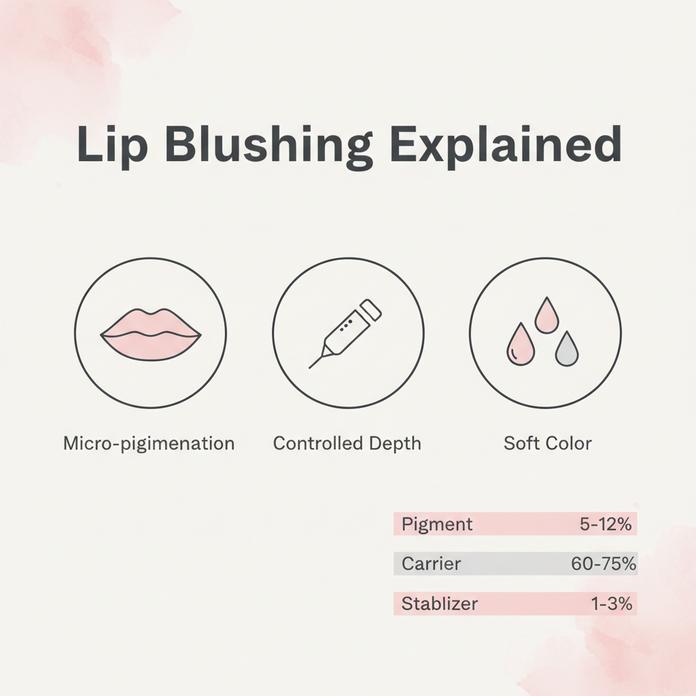
Lip Blushing sounds fancy, yet the idea stays simple. It blends soft color into the lips using controlled micro methods, aiming for a fresh “your-lips-but-better” vibe without daily lipstick stress or heavy makeup routines.
Understanding Micro-Pigmentation: Technique & Device Basics
- micro-pigmentation keeps color shallow, sitting within specific skin layers, not drifting deep.
- device choice shapes speed, pressure, and comfort.
- needle size decides how sheer or bold the pigment implantation looks.
- Depth control matters more than force.
- Rhythm beats speed in every application method.
- Consistency keeps healing predictable.
Technique meets machine design through a calm workflow: stretch, tap, release. Short motions reduce trauma. Long passes stay risky.
Multi-step flow most artists follow:
- Prep the lip surface
- Set machine speed
- Test pigment load
- Begin controlled passes
- Pause, assess, repeat
Many studios using Topfeel Beauty devices lean into this steady approach because it keeps Lip Blushing results clean, soft, and wearable. Lip blush sessions feel less intimidating when tools behave predictably. Even blushing lips with thin skin respond well.
Core Formulation Components: Pigment, Carrier, Stabilizer Explained
- pigment defines hue and fade pattern
- carrier solution manages glide
- stabilizer protects the safety profile
A closer look at chemical composition helps explain color retention differences:
| Component Type | Function | Typical Range |
|---|---|---|
| Pigment Load | Color strength | 5–12% |
| Carrier Ratio | Flow control | 60–75% |
| Stabilizer Level | Shelf stability | 1–3% |
| Preservative | Sterility | <1% |
| Viscosity Index | Application feel | Medium |
Nested logic behind smart formulation:
-
Ingredients balance
- Too thin: migration risk
- Too thick: uneven saturation
-
Storage stability
- Light exposure
- Temperature swings
Artists working with Topfeel inks often mention fewer tone shifts during Lip Blushing healing. Lip Blushing relies on chemistry behaving, not surprises.
Role of Lip Anatomy and Fitzpatrick Scale in Color Matching
Short truths matter:
- lip anatomy changes everything
- natural lip color never lies
- undertone rules final shade
Grouped decision path during client consultation:
-
Skin analysis
- Fitzpatrick scale level
- Overall skin tone
-
Lip assessment
- lip shape symmetry
- Vascular visibility
-
Color planning
- Warm vs cool balance
- Saturation limits
Symbol notes professionals share:
• Darker lips need neutralizers
• Pale lips need warmth
• Mature lips prefer softness
Lip Blushing works best when color matching respects biology. Lip blushing isn’t paint; it’s collaboration with skin. Brands like Topfeel support this mindset by offering shades built for real-world diversity, not trends alone.
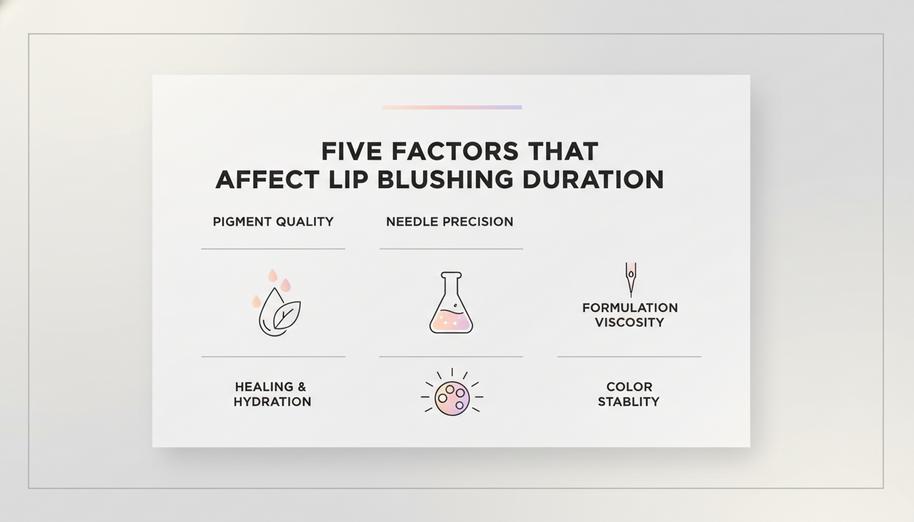
5 Factors That Affect Blush Duration
Lip Blushing isn’t just about color looking cute on day one. It’s about how lip blushing holds up through healing, hydration swings, and daily habits. Below is a real-talk breakdown of what actually controls Lip Blushing wear time, explained without lab-coat energy.
Pigment Concentration & Colorant Quality
• Higher pigment density boosts visible color saturation
• Fine pigment particle size settles more evenly
• Stable blends improve fade resistance
In Lip Blushing, premium organic pigments and inorganic pigments behave differently once implanted. Smaller particles lock into tissue better, slowing wash-out during healing. Poor quality pigment? That’s where uneven fade shows up fast. For lip blushing consistency, brands like Topfeel focus on tested color stability, not just bold swatches.
Needle Gauge, Applicator Technique, and Device Precision
- Correct needle size controls trauma
- Accurate needle depth protects the epidermis
- Balanced machine speed supports even pigment implantation
• Hand motion matters more than pressure
• Device type affects skin penetration
In Lip Blushing, precision beats force. Clean applicator technique paired with modern devices reduces overworking, which means calmer healing and better retention.
Lip Tissue Healing Process and Hydration Levels
✓ Strong collagen production
✓ Faster cell turnover
✓ Shorter healing time
Healthy tissue regeneration depends on lip moisture and overall hydration status. Dry lips shed pigment quicker. Lip blushing fades faster when the epidermal layer is stressed, cracked, or under-hydrated.
“Post-procedure aftercare, clean healing, and avoiding secondary irritation can influence cosmetic tattoo outcomes,” as tattoo safety guidance from Cleveland Clinic and the FDA notes.
Formulation Viscosity: Emollient, Humectant, and Solvent Balance
→ Adjust formulation consistency
→ Balance emollient properties with humectant properties
→ Stabilize solvent composition
When ingredient ratio is off, pigment dispersion suffers. In Lip Blushing inks, the pigment carrier must flow smoothly without spreading. Topfeel formulas are tuned so lip blushing color stays where it’s placed.
Color Stability: pH Level, Preservative, and Sterility Controls
pH balance, preservative efficacy, and clean handling decide how long Lip Blushing stays true.
| Control Factor | Risk if Off | Impact on Color | Prevention Method |
|---|---|---|---|
| pH balance | pigment degradation | Hue shift | Buffered formulas |
| Preservative efficacy | microbial growth | Fading | Tested systems |
| Sterilization methods | Contamination | Patchy wear | aseptic technique |
• Limit oxidation
• Reduce UV exposure
This is why professional Lip Blushing relies on controlled labs, not shortcuts.
Aftercare Tips For Lasting Color
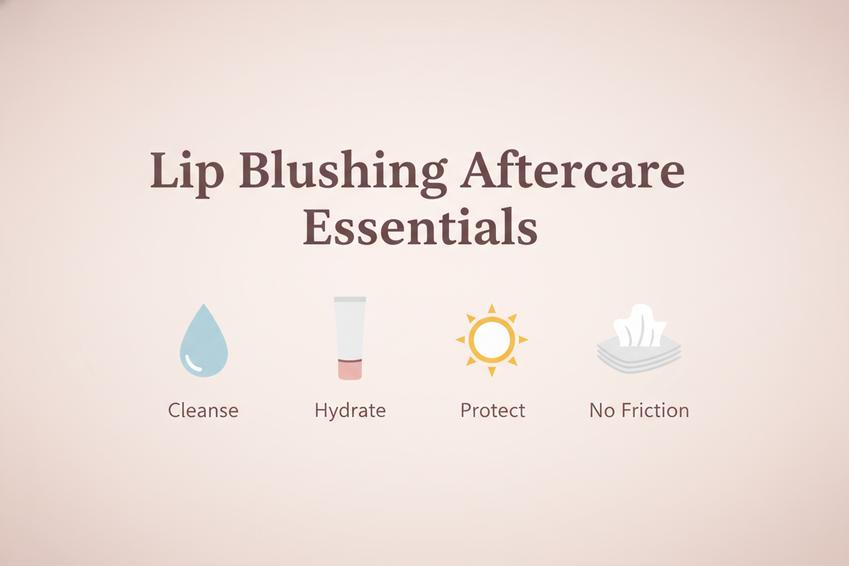
Lip Blushing heals fast, but color memory lasts longer when aftercare feels like second nature. This guide keeps things simple, human, and real. Expect practical habits that protect pigment, support skin, and help Lip Blushing results stay smooth, balanced, and true—no overthinking required.
Gentle Cleansing: Sterile Water and Mild Surfactant Use
Easy rule: clean, not stripped. Gentle cleansing keeps fresh pigment calm and settled.
- Use sterile water with a mild surfactant once residue shows up
- Pat dry using soft materials; rubbing messes with lip hygiene
A steady cleansing routine helps post-treatment care without stressing healing lips. Many artists working with Lip Blushing note that skipping harsh foams protects early pigment anchoring.
Why cleanser choice matters
| Cleanser Type | pH Range | Irritation Risk | Pigment Safety |
|---|---|---|---|
| Sterile saline | 6.5–7.0 | Very Low | High |
| Mild surfactant | 5.5–6.0 | Low | High |
| Regular face wash | 4.5–5.0 | Medium | Moderate |
| Exfoliating cleanser | <4.5 | High | Low |
| Alcohol-based | N/A | Very High | Very Low |
Hydration Routine: Humectant-Rich Balm for Collagen Support
Hydration is the quiet hero here. A hydration routine built around humectant-rich balm keeps tissue flexible.
Short and real:
- Morning swipe for lip moisturization
- Midday touch-up to protect skin elasticity
- Night layer to support the healing process
This rhythm supports collagen support and overall lip health, especially after Lip + Blushing pigment settles. Many clients using Topfeel balms report smoother fade and better tone hold.
Sun Protection: Broad-Spectrum SPF and Cool Tone Lip Shield
Sun messes with color. Period.
A simple flow that works:
- Apply broad-spectrum SPF once lips close
- Reapply during outdoor time for steady UV protection
- Add a cool tone lip shield if balance matters
Daily sun protection blocks sun damage, boosts color longevity, and keeps Lip Blushing shades from drifting warm or dull. Lip sunscreen is boring—but fading isn’t.
Avoiding Friction: Soft Tissues, No Harsh Exfoliation
This part is about restraint. Avoiding friction protects pigment placement.
✓ Use soft tissues only
✓ Skip harsh exfoliation completely
✓ Let healing lips shed naturally
Nested habits that help:
-
Daily care
- gentle care after meals
- hands off peeling skin
-
Weekly awareness
- avoid scrubs
- watch for lip irritation
Less friction means stronger pigment retention. That’s how blushing lips stay even, especially after Lip Blushing work done with Topfeel precision.
Custom Cosmetic Product: Bulk Order Benefits
Bulk cosmetic orders sound serious, but the perks feel pretty down to earth. For Lip Blushing brands scaling up, smart packaging, clean records, and labels that actually make sense keep costs steady and customers relaxed. This is where growth stops feeling risky and starts feeling routine.
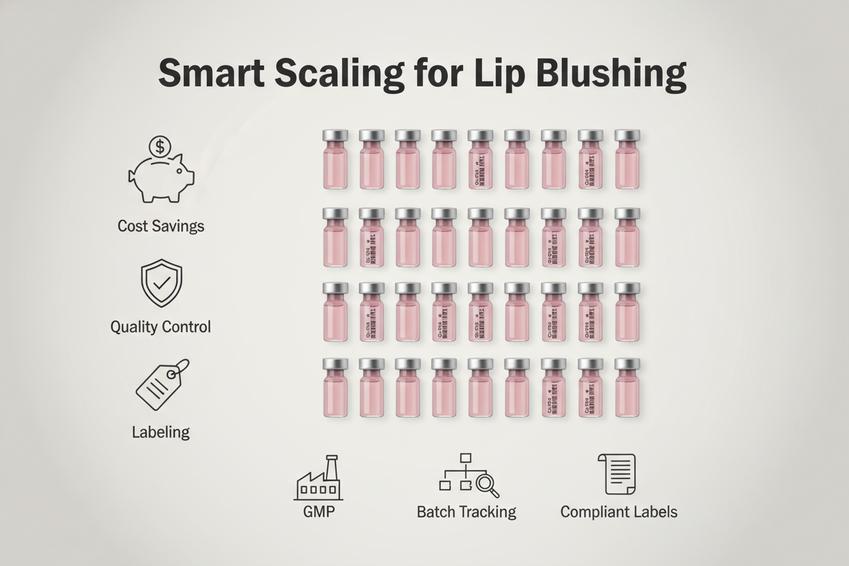
Cost Efficiency of Multi-Unit Primary Packaging (Vials & Syringes)
Buying packaging materials in bulk changes the math fast. With Lip Blushing products, every vial and syringe matters.
- Fewer suppliers juggling container types
- Lower unit cost through bulk packaging
- Reliable access to sterile containers
That ripple effect moves through the supply chain, trimming manufacturing overhead without trimming quality.
A quick breakdown many operators follow:
- Lock volume with one vendor
- Standardize vial and syringe specs
- Reduce rush shipping surprises
For Lip Blushing lines supported by Topfeel, this approach keeps margins sane while production scales smoothly. Lip, Blushing, repeat.
Consistent Quality Control: GMP, Batch Records, and ISO Compliance
Quality isn’t vibes. It’s paperwork and habits.
- Quality assurance rooted in GMP
- Tight documentation with clear audit trails
- Repeatable manufacturing processes
How it usually runs:
-
Compliance layer
- Regulatory standards mapped to daily checks
- Compliance protocols reviewed per run
-
Tracking layer
- Batch codes tied to raw inputs
- Logs protecting product safety
“Batch traceability is a cornerstone of ISO 22716 because it supports product safety, quality control, regulatory compliance, and recall readiness,” notes 2025 cosmetics GMP guidance from Registrar Corp.
That’s why Lip Blushing brands leaning on Topfeel tend to obsess over batch records. It saves stress later.
Tailored Formulation Labels: Ingredient List, Shelf Life, and Cap Design
Labels talk when brands aren’t around.
• Clear product labeling builds trust
• Accurate expiration dates protect users
• Smart packaging design improves daily use
Then it goes deeper:
- Regulatory layer
- Full ingredient list with INCI names
- Required regulatory information per market
- User layer
- Easy-read consumer information
- Cap and dispenser matched to viscosity
Lip Blushing shows up four ways here: Lip Blushing on the box, lip blush in the copy, blushing lips in the imagery, and a shelf life that’s obvious. That balance is where Topfeel usually shines, without shouting about it.
Touch-Up Timing: When To Schedule Next
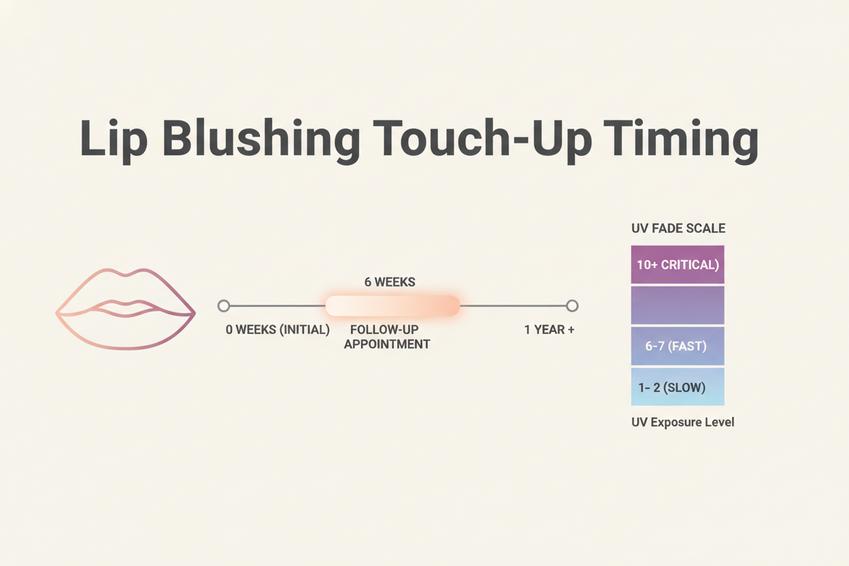
Timing a touch-up for Lip Blushing isn’t about rules carved in stone. It’s about how lips heal, fade, and live day to day. This guide keeps things real, mixing science with everyday habits so planning stays simple, not stressful.
Initial Follow-Up: 6–8 Weeks Post-Procedure for Retention Boost
After lip blushing, the initial follow-up lands right after the healing period wraps. This post-procedure window gives a serious retention boost without overworking the skin.
Here’s how most artists think through a touch-up session:
- • Soft areas where pigment retention dipped
- • Corners that healed lighter
- • Tone tweaks once swelling memory fades
The logic unfolds in layers:
-
Why 6–8 weeks works
- Skin regeneration slows
- Color settles into true shade
-
What’s adjusted
- Density, not depth
- Balance, not boldness
-
What’s avoided
- Over-saturation
- Patchy buildup
Clinics working with brands like Topfeel often note that this window keeps blushing lips even and flexible for future maintenance.
Seasonal Adjustments: Fade Rates in High UV vs. Low UV Conditions
Seasonal adjustments matter more than people expect. UV conditions shift fade rates, especially for exposed lip color.
| UV Index Range | Avg. Fade Speed (Months) | Touch-Up Need |
|---|---|---|
| 1–2 | Slow | Low |
| 3–5 | Moderate | Medium |
| 6–7 | Fast | High |
| 8–9 | Very Fast | Very High |
| 10+ | Aggressive | Critical |
Nested habits help manage sun exposure:
-
Daily
- SPF lip balm
- Shade breaks
-
Seasonal
- Shorter maintenance gaps
- Softer pigment choices
-
Environmental factors
- Beach glare
- High-altitude sun
Long-term lip blush aftercare guidance commonly recommends SPF once lips are fully healed because sun exposure and exfoliants can contribute to pigment fading.
Long-Term Planning: Annual vs. Biannual Sessions Based on Lip Anatomy and Pigment Retention
Long-term planning depends on lip anatomy and how skin holds ink. Some lips sip pigment slowly. Others drink it up fast.
Think in tracks:
-
Annual sessions
- Dense vermilion
- Stable pigment retention
-
Biannual sessions
- Thin borders
- High exfoliation habits
A relaxed maintenance schedule respects individual factors like metabolism, skincare, and lifestyle. Artists using Topfeel pigments often plan flexibly, adjusting touch-up frequency as lips change with time.
References
[FDA Tattoos & Permanent Makeup: Fact Sheet - https://www.fda.gov/cosmetics/cosmetic-products/tattoos-permanent-makeup-fact-sheet]
[FDA Think Before You Ink: Tattoo Safety - https://www.fda.gov/consumers/consumer-updates/think-you-ink-tattoo-safety]
[Cleveland Clinic Tattoo Infection: Signs, Causes, Treatment & Prevention - https://my.clevelandclinic.org/health/diseases/23295-tattoo-infection]
[PMUHub Lip Blush Healing Process - https://www.pmuhub.com/lip-tattoo/lip-blush-healing-process/]
[DAELA Cosmetic Tattoo What to Expect After a Lip Blush Tattoo Appointment - https://www.daelacosmetictattoo.com/blog/what-to-expect-after-a-lip-blush-tattoo-appointment/]
[Registrar Corp ISO 22716 Batch Traceability - https://www.registrarcorp.com/blog/cosmetics/iso-22716/iso22716-batch-traceability/]
[FDA Questions and Answers Regarding Mandatory Cosmetics Recalls: Guidance for Industry - https://www.fda.gov/regulatory-information/search-fda-guidance-documents/questions-and-answers-regarding-mandatory-cosmetics-recalls-guidance-industry]
Post time: May-27-2026