
Does Makeup Go Bad?
Returns piling up from funky formulas? See why does makeup go bad—and how smart formulation and packaging save your private label profits.
Does makeup go bad? Yeah—and when it does, it hits your bottom line fast: returns, complaints, and products that just sit there looking off.
That weird smell, separated foundation, dried mascara—customers notice, and they don’t forgive easily; your brand takes the hit.
Engineers at Topfeel Beauty, a full-service cosmetic manufacturer, stress shelf life starts in formulation and packaging choices, not simply after production.
Quick Answers: Does Makeup Go Bad?
➔ Check for changes in smell, texture, or color—mascara clumps, foundation separates, powders lose pigment.
➔ Follow general PAO guidelines: mascara 3–6 months, lipstick 12–24 months, setting powder up to 2 years.
➔ Mind formulation and packaging: water-based and jars spoil faster; airless pumps and sealed tubes last longer.
➔ Store in a cool, dry spot, clean applicators regularly, rotate stock FIFO, and consider a mini fridge for natural or cream formulas.
Does Makeup Go Bad After Opening?
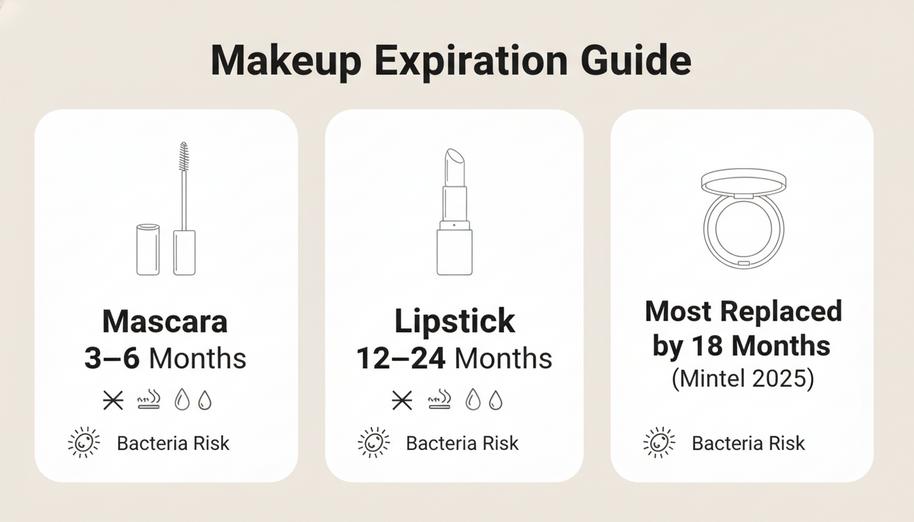
Makeup doesn’t last forever, and yes—does makeup go bad is a legit question. If you’ve ever wondered, “does makeup go bad after opening?” or “can makeup expire in my drawer?”—you’re not alone. Let’s break it down.
Signs Your Mascara Has Turned
If you keep asking, does makeup go bad, start with mascara. It’s the quickest to spoil.
-
Texture Changes
- Clumping shows formula breakdown.
- Thick, dry strokes signal spoilage.
- Excess flaking means unstable binders.
-
Sensory Warnings
- Sharp or sour odor
- Burning or irritation
- Watery separation
-
Safety Risks
- Tube pumping traps bacteria.
- Old wands spread contamination.
- Eye redness hints at possible infection.
Quick checklist:
- Toss after 3–6 months
- Never share
- Close tightly
If you’re thinking, does makeup go bad that fast? With mascara—yes.
How Long Lipstick Really Lasts
Lipstick fans often ask, does makeup go bad in bullets and tubes? The answer depends on shelf life and storage.
A closer look:
-
Formula Stability
- Oils oxidize → odd odor
- Wax shifts → rough texture
- Fading pigment → uneven color
-
Visible Clues
- Surface sweating
- Color darkening
- Noticeable dryness
-
Timeline
- Average expiration: 12–24 months
According to 2025 global beauty retail insights from Mintel, consumers increasingly replace lip products within 18 months due to hygiene concerns and formula sensitivity shifts.
So yes, does makeup go bad on your lips? Eventually. Especially in humid bathrooms.
When Powder Products Lose Their Power
Powder seems safe, so people assume makeup doesn’t expire. Not exactly.
- Hard pan forms from oil transfer.
- Crumbling texture weakens efficacy.
- Faded pigment reduces impact.
- Poor oil control shows binder fatigue.
Minimal microbial risk doesn’t mean zero change. Hygiene still matters.
If you’re still wondering, does makeup go bad in pressed palettes—the answer is slower, but yes. Smart private label manufacturers like Topfeel Beauty focus on formula stability, yet even high-quality powder products need mindful storage.
Bottom line? If you’re repeatedly asking does makeup go bad, trust your senses. Smell it. Swipe it. If it feels off, it probably is.
Factors Affecting Makeup Shelf Life
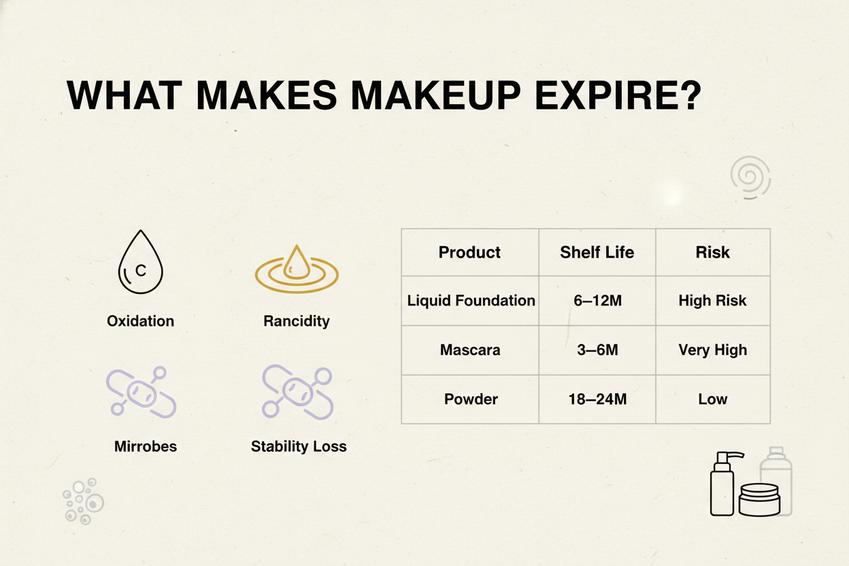
You’ve probably asked yourself at some point, does makeup go bad? Short answer: yes. The longer answer depends on ingredients, air, microbes, and even the packaging. If you’ve ever wondered does old makeup go bad faster or how do you know if makeup expires, this breakdown keeps it real.
Ingredient Breakdown and Stability
When people ask, does makeup go bad, the story usually starts with the formulation. Different ingredients age in different ways, and not all chemicals are built for the long haul.
-
At the core level:
-
Active components
- Vitamin C and similar antioxidants oxidize quickly, reducing efficacy.
- Retinoids lose stability under light and heat.
-
Base materials
- Natural oils can trigger degradation through rancidity.
- Mineral pigments are more stable but may separate from binders.
-
Protective system
- Preservatives slow spoilage, yet weaken over time.
- Weak preservative systems increase the chance makeup expires early.
-
- Oxidation lowers performance.
- Hydrolysis breaks down water-sensitive compounds.
- UV exposure accelerates chemical shifts.
Mintel’s 2025 Global Beauty Report notes that “formulas featuring unstable actives like pure vitamin C show measurable potency decline within months once opened.”
So yes, does makeup go bad because of ingredients alone? Often, yes. If the internal stability fails, everything else follows.
Air Exposure and Oxidation
Every time you open a compact or twist a cap, oxygen rushes in. Small action. Big effect.
Here’s what usually happens:
- Oxidation kicks off chemical reactions.
- Volatiles evaporate.
- Texture change starts creeping in.
You might notice:
- A slight color change
- A thicker or separated consistency
- A faint sour smell (early rancidity)
- Air enters the container.
- Reactive ingredients bind with oxygen.
- Pigments darken; oils destabilize.
- Texture change becomes visible.
Does makeup go bad faster in liquids? Usually yes. Creams and foundations contain more air-sensitive components. Powder products resist oxidation better, but repeated exposure still matters.
If you’re asking, does old makeup go bad just from sitting there—not exactly. It’s the repeated air contact that speeds up the process.
Microbial Growth Risks
Now to the part people ignore: microbes. If a product contains water, it’s a potential playground for bacteria, fungi, and other microbes.
-
Risk factors:
- Direct finger dipping
- Sharing products
- Storing in humid bathrooms
Under the surface:
-
Contamination pathway
- Skin contact introduces bacteria
- Warm environments support growth
-
Defense system
- Preservatives reduce microbial load
- Poor hygiene weakens protection
-
Outcome
- Skin irritation
- Possible infection
Typical Microbial Growth Timeline (Opened Products)
| Product Type | Water Content (%) | Avg. Safe Use (Months) | Contamination Risk Level |
|---|---|---|---|
| Liquid Foundation | 40–60% | 6–12 | High |
| Cream Concealer | 30–50% | 6–9 | Medium–High |
| Powder Blush | <5% | 18–24 | Low |
| Mascara | 50–70% | 3–6 | Very High |
Does makeup go bad due to microbes alone? Absolutely. Once contamination crosses safe levels, the formula isn’t just less effective—it can irritate skin.
Packaging Design Impacts
The container matters more than most people think.
Consider this quick breakdown:
- Airless pump → limits oxygen exposure
- Squeeze tube → reduces hand contact
- Open jar → higher contamination risk
- Doe-foot dispenser → repeated air and skin contact
Look closer:
-
Protection level
- Airtight systems preserve stability.
- Loose caps weaken the seal.
-
Material quality
- Opaque material shields light-sensitive chemicals.
- Clear packaging increases oxidation risk.
-
User behavior
- Double-dipping tools
- Leaving lids slightly open
Does makeup go bad faster in jars? In many cases, yes. Less protection means more exposure to air and microbes.
So when someone asks again, does makeup go bad or how long before makeup expires, the honest answer is this: it’s not random. It’s chemistry, oxygen, hygiene, and smart—or not-so-smart—packaging choices working behind the scenes.
3 Reasons Makeup Goes Bad Faster
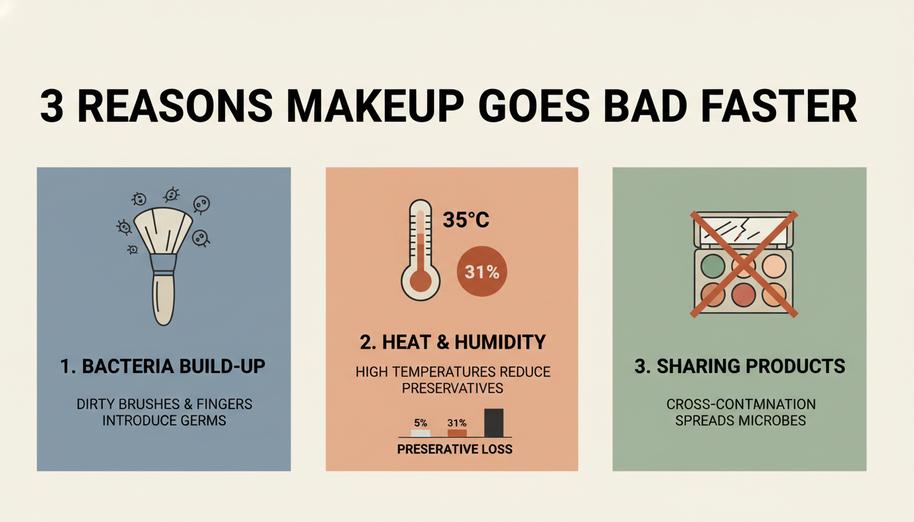
Makeup lovers ask it all the time: does makeup go bad even before the expiry date? Short answer—yes. Storage habits, hygiene, and daily routines matter more than you think. If you’ve ever wondered why makeup goes bad quickly, these three culprits explain it clearly.
Bacterial Contamination from Brushes
When asking does makeup go bad, start with your tools. Brushes carry bacteria, oils, and leftover pigment straight back into products.
-
How contamination begins
- Skin oils mix with foundation during application.
- Unwashed bristles trap microbes.
- Closed containers create ideal growth conditions.
-
What happens inside the formula
- Preservatives weaken over time.
- Rising bacteria levels increase risk of infection.
- Texture shifts—clumping, odor, separation.
-
Prevention routine
- Clean brushes weekly.
- Air-dry fully before reuse.
- Store tools away from damp areas.
Manufacturers like Topfeel Beauty design custom formulas with stable preservative systems, yet even premium makeup can go bad if beauty tools care slips.
Heat and Humidity Accelerators
If you’re still wondering, does makeup go bad faster in summer? Yes—and here’s why.
- High temperature melts waxes.
- Excess moisture fuels microbial activity.
- Poor storage weakens preservatives.
Scientific stability tests show clear differences:
| Environment | Avg. Temp (°C) | Relative Humidity | Preservative Loss (%) | Spoilage Risk Level |
|---|---|---|---|---|
| Cool Drawer | 18 | 40% | 5% | Low |
| Bedroom Shelf | 22 | 50% | 9% | Moderate |
| Bathroom Cabinet | 27 | 75% | 18% | High |
| Car Interior | 35 | 60% | 25% | Very High |
| Beach Bag | 38 | 70% | 31% | Extreme |
When heat rises, degradation speeds up. That’s often when people realize their makeup did go bad earlier than expected. Keep products in a dry, stable environment—Topfeel Beauty packaging (developed in collaboration with Topfeelpack) is built to reduce exposure, but placement still matters.
Cross-Contamination in Shared Palettes
Still asking, does makeup go bad if shared? Sharing increases cross-contamination fast.
-
Transfer chain
- One user introduces germs.
- Brushes move across multiple shades.
- Oils spread through the entire palettes.
-
Risk factors
- Frequent sharing among multiple users
- Damp applicators
- Layered cream products
-
Long-term impact
- Faster formula breakdown
- Visible surface hardening
- Higher chance of irritation
If you’ve ever questioned, does your makeup go bad sooner in group settings, the answer is usually yes. Limit transfer, sanitize surfaces, and avoid communal testers. Even high-quality lines developed by Topfeel Beauty benefit from smart handling.
6 Storage Hacks for Lasting Makeup
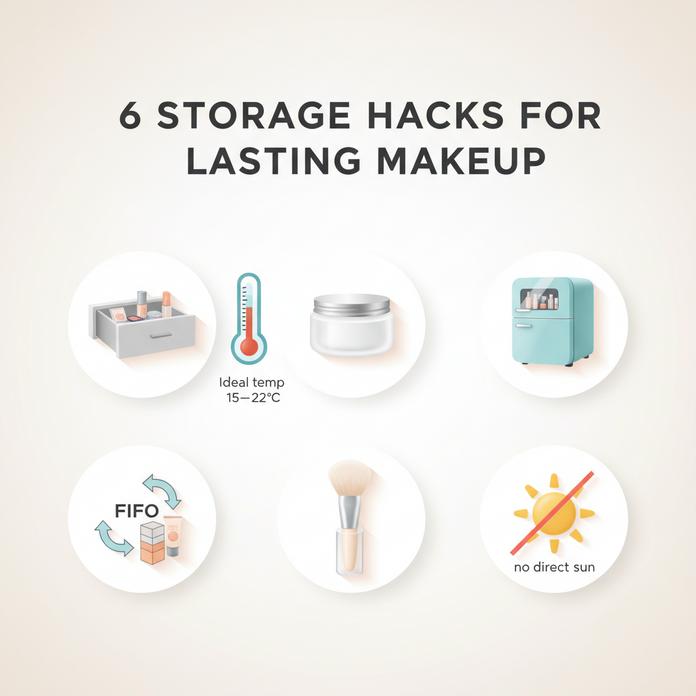
Makeup lovers ask it all the time: does makeup go bad? Short answer—yes, it can. If you’ve ever wondered does makeup go bad in heat or how long before makeup products expire, storage plays a huge role. Here’s how to slow product degradation and protect shelf life.
Keep Products in a Cool, Dry Place
Heat and humidity speed up product degradation, so smart storage conditions matter. If you’re asking, does makeup go bad faster in summer, the answer is usually yes.
- Store makeup products in a cool environment
- Choose a consistently dry place
- Maintain steady temperature control
Nested routine that works:
-
Pick the right spot
- Away from bathrooms (high humidity)
- Inside drawers, not windowsills
-
Monitor climate
- Ideal range: 15–22°C
- Avoid temperature swings
-
Track shelf life
- Check open-jar symbols
- Label purchase dates
Use Airtight Containers for Creams
Cream formulas are more exposed to oxidation prevention issues and bacterial growth. If you’re thinking, does makeup go bad after opening, air exposure is a big reason.
“Improper storage remains one of the leading causes of premature cosmetic spoilage,” notes a 2025 preservation update from the International Federation of Societies of Cosmetic Chemists.
Smart storage flow:
-
Inspect cream products
- Look for separation
- Smell changes
-
Transfer only if needed
- Use sterile cosmetic containers
- Ensure true airtight storage
-
Protect product integrity
- Limit finger dipping
- Reduce moisture loss
Store in Mini Fridge for Longevity
A mini refrigerator can extend product lifespan, especially for formulas with active ingredients. Still wondering, does makeup go bad in normal drawers? Sometimes quicker than you’d think.
-
Best for cosmetic preservation
- Serums
- Natural foundations
- Eye creams
Cool temperatures support product stability and overall freshness without freezing emulsions.
Rotate Stock with First-In, First-Out
If you keep asking, does makeup go bad even unopened, yes—eventually. That’s why inventory management matters.
Simple FIFO method plan:
-
Organize by expiration dates
- Front: older stock
- Back: new purchases
-
Track freshness tracking
- Monthly check
- Toss expired items
-
Reduce waste
- Smarter product usage
- Better stock organization
Clean Applicators After Every Use
Dirty makeup applicators transfer oil and bacteria back into products. That’s when people notice changes and ask again, does makeup go bad this fast?
Hygiene checklist:
- Wash cosmetic brushes weekly
- Spot-clean daily
- Air-dry completely
Good tool maintenance supports skin health and prevents contamination.
Avoid Direct Sunlight on Palettes
Direct UV radiation breaks down pigment stability and weakens product integrity. If you’ve wondered, does makeup go bad in sunlight, absolutely.
Protection routine:
-
Choose a shaded storage location
- No windowsills
- No car dashboards
-
Shield from heat damage
- Use opaque cases
-
Preserve color fading resistance
Treat storage seriously, and you won’t have to keep asking, does makeup go bad every time you open your drawer.
Expired Foundation? Quick Fixes Inside
Ever opened your makeup bag and wondered, does makeup go bad or is it still safe to swipe on? You’re not alone. From foundation texture shifts to strange smells, figuring out when a cosmetic product is past its prime can feel confusing. Let’s break down what actually helps—and when to stop asking “does makeup go bad?” and just let it go.
Revive Texture with a Drop of Serum
If you’re staring at separated foundation and thinking, does makeup go bad or just dry out?, check carefully:
- Changes in texture but no odd smell
- No shift in consistency color
- Same skin reaction as usual
You can try this:
- Pump a small amount of foundation onto a clean palette.
- Add one drop of lightweight serum.
- Mix gently to revive spreadability.
For better results:
- Use a hydrating cosmetic product serum
- Keep tools sanitized
- Test on jawline before full-face use
If scent or shade changes, stop. That’s usually a sign makeup expires for real. When people ask, does makeup go bad even if it looks fine?—odor tells the truth.
Adjust Formula with Non-Comedogenic Oils
Dry, patchy finish doesn’t always mean makeup expiration. Still, does makeup go bad over time? Yes—especially if air keeps hitting the bottle.
To safely adjust a tired formula:
- Choose a light non-comedogenic oil
- Add a single drop per pump
- Blend fully before applying to skin
Why this works:
- Oil can smooth dry ingredient balance
- It improves glide
- It reduces flaking
But remember:
- If irritation starts, discard
- If separation keeps happening, replace
- If smell shifts, assume contamination
Sometimes asking “does makeup go bad?” means checking your storage habits too.
When to Simply Toss and Replace
At some point, no mixing trick saves expired makeup. If you notice:
- Sour scent
- Darkened color
- Itchy reaction
Here’s the deeper check:
- Look at the PAO symbol and shelf life.
- Consider exposure to heat and air.
- Think about possible bacteria growth or contamination.
Makeup expiration is real. Does makeup go bad even unopened? Yes, slowly. And once compromised, safety beats saving money. When in doubt, discard and replace—your skin deserves better than guessing.
High-End vs. Drugstore: Which Expires Sooner?
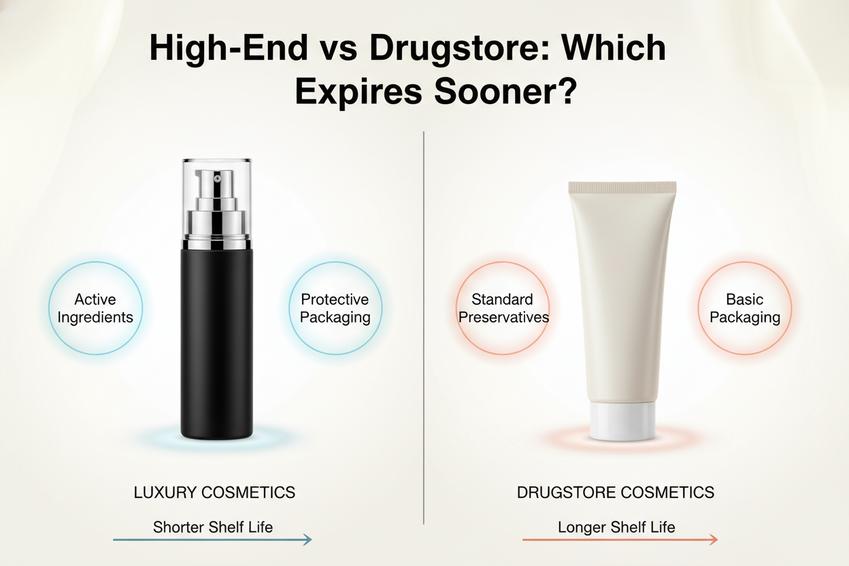
Makeup lovers ask it all the time: does makeup go bad, and if so, does price change the answer? From luxury counters to pharmacy aisles, formulas age differently. Let’s break down how packaging, ingredients, and daily habits affect how makeup expires.
High-End Makeup
High-end products often highlight premium ingredients and advanced formulations, which can shift how fast makeup can go bad after opening. If you’ve wondered, does makeup go bad faster when actives are involved, here’s how it plays out:
-
Formula Design
-
Active focus
- Vitamins and botanical extracts may oxidize sooner.
- Fewer heavy preservative systems can mean closer monitoring of product stability.
-
Texture goals
- Silky finishes sometimes rely on delicate emulsions.
- Air exposure can disrupt product stability over time.
-
-
Packaging Standards
-
Protective packaging
- Airless pumps
- UV-coated bottles
- Tight-seal caps
-
Storage impact
- Less oxygen slows product degradation.
- Cleaner dispensing reduces contamination.
-
-
Quality Expectations
- Strict quality standards support safer shelf life.
- Yet once opened, even luxury makeup can expire.
So, does makeup go bad in a designer compact? Yes. It may last well unopened, but after breaking the seal, shelf life depends on care.
Drugstore Makeup
Drugstore lines lean on common ingredients and standard preservatives, often built for stability in mass production. If you ask, does makeup go bad faster because it’s affordable, not necessarily.
• Stronger preservative blends can extend shelf life.
• Simpler formulas reduce reaction risks.
• Basic packaging may allow more air in.
Here’s the real-life flow:
-
Production scale
- Cost-focused sourcing
- Cost-effective formulations
-
Shelf presence
- Longer warehouse storage
- Variable temperature exposure
-
At-home use
- Twist caps loosen over time
- Increased product degradation
Some drugstore items show a shorter shelf life once opened due to lighter packaging seals. Still, many are surprisingly steady. So when people ask, does makeup go bad, or can cosmetics expire sitting in a drawer? Yes, makeup does expire. Price alone doesn’t decide it. How you store it often does.
References
[1] When to Throw Away Makeup – allure.com
[2] When to Throw Away Mascara – healthline.com
[3] Eye Makeup Safety FAQ – mayoclinic.org
[4] Global Consumer Trends – mintel.com
[5] How to Fix Hard Pan Makeup – byrdie.com
[6] How Vitamin C Works – paulaschoice.com
[7] Does Foundation Expire – elle.com
[8] Makeup Expiration Decoding – webmd.com
[9] Shelf Life and Expiration Dating of Cosmetics – fda.gov
[10] How to Clean Makeup Brushes – cosmopolitan.com
[11] Skincare Fridge Guide – harpersbazaar.com
[12] The Danger of Sharing Makeup – refinery29.com
[13] When Does Makeup Expire – byrdie.com
[14] International Federation of Societies of Cosmetic Chemists – ifscc.org
[15] The Best Skincare Fridges – vogue.com
[16] Does Lipstick Expire – harpersbazaar.com
Post time: Jun-04-2026