
Do You Put Concealer on Before or After Foundation?
When concealer and foundation stop feuding, your brand wins—turn flawless layering into a billion‑dollar private label love story.
Concealer, foundation — the beauty world’s favorite sibling rivalry. One goes on before the other… or does it? Get it wrong and suddenly your under-eyes crease like yesterday’s laundry, your breakout’s still waving hello, and your base looks cakey by lunch. For brands building a complexion line, this isn’t small talk. It’s product chemistry in action.
Think of it like painting a wall. You wouldn’t slap on touch‑up paint before priming the surface. Foundation sets the stage; concealer fine‑tunes the spotlight. Makeup artists have said it for years: “Perfect the canvas, then perfect the detail.”
And the stakes are real. According to Grand View Research, the global face makeup market was valued at over $37 billion in 2022, with demand driven by high‑performance, long‑wear formulas. Consumers expect coverage that survives office lights and iPhone flash.
So the question isn’t just application order. It’s how smart formulation turns layering into loyalty.
Quick Answers: Concealer, Foundation Fusion
➔ Prime Your Canvas: Start with foundation to even out texture and color, revealing precise areas needing extra coverage.
➔ Layer Smartly: Choose your foundation type—liquid, cream, or powder—to enhance concealer blendability and minimize product buildup.
➔ Lock and Set: Lightly press powder foundation over concealed spots for shine control, creaseless wear, and camera-ready finish.
How Different Foundations Play With Concealer
Great makeup isn’t luck. It’s how your concealer and foundation talk to each other on the skin. Get that combo right, and your base makeup just hits different.
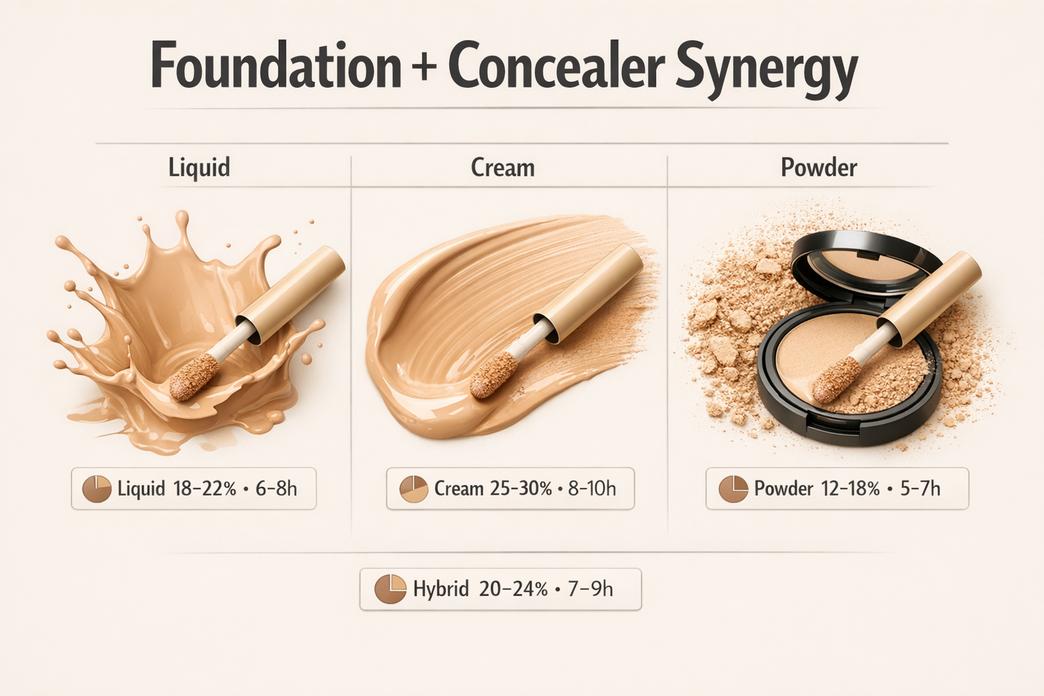
Liquid Foundations and Concealer Synergy
When working with liquid foundation, balance is everything. The fluid texture boosts blendability, so your concealer melts right in instead of sitting on top.
- For dry skin type, hydrating liquid formulas prevent cakiness.
- For combo skin, lightweight layers improve coverage without heaviness.
- Smart application technique—tap, don’t drag—keeps a seamless finish.
To make concealer and foundation sync smoothly:
- Apply a thin layer of liquid base.
- Let it set for 30–60 seconds.
- Add concealer only where extra coverage is needed.
- Press gently with a damp sponge.
At Topfeel Beauty, lightweight liquid foundation formulas are designed to flex with facial movement, so your foundation and cover-up don’t crack by midday.
Cream Foundation’s Coverage Boost for Concealer
With cream foundation, pigment is richer and texture thicker. That changes how you use concealer.
- Full coverage reduces the need for heavy spot correction.
- Strong blemish coverage means less layering.
- Dense texture improves longevity.
Performance Snapshot
| Formula Type | Pigment % | Avg. Wear (hrs) | Best For | Finish |
|---|---|---|---|---|
| Liquid | 18–22% | 6–8 | Normal/Dry | Natural |
| Cream | 25–30% | 8–10 | Normal/Combo | Skin-like |
| Powder | 12–18% | 5–7 | Oily | Matte |
| Hybrid Balm | 20–24% | 7–9 | All Skin | Soft Matte |
When using cream base products:
- Tap concealer and foundation together on blemishes.
- Blend edges outward to smooth texture.
- Keep under-eyes lighter to avoid creasing.
Topfeel Beauty’s liquid foundation range pairs easily with spot correctors, making foundation and concealer layering feel effortless.
Powder Foundations: Setting Concealer Flawlessly
For oily days, powder foundation steps in strong. It controls shine and supports oil control without extra setting powder overload.
To keep things crease-free:
- Apply liquid or cream concealer sparingly.
- Let it settle.
- Press powder foundation base gently with a dense brush.
- Focus on T-zone and under-eyes.
A soft matte finish locks everything in, extending longevity while keeping concealer and foundation from sliding. Used right, powder base products don’t just set makeup—they level it up.
4 Reasons To Apply Concealer After Foundation
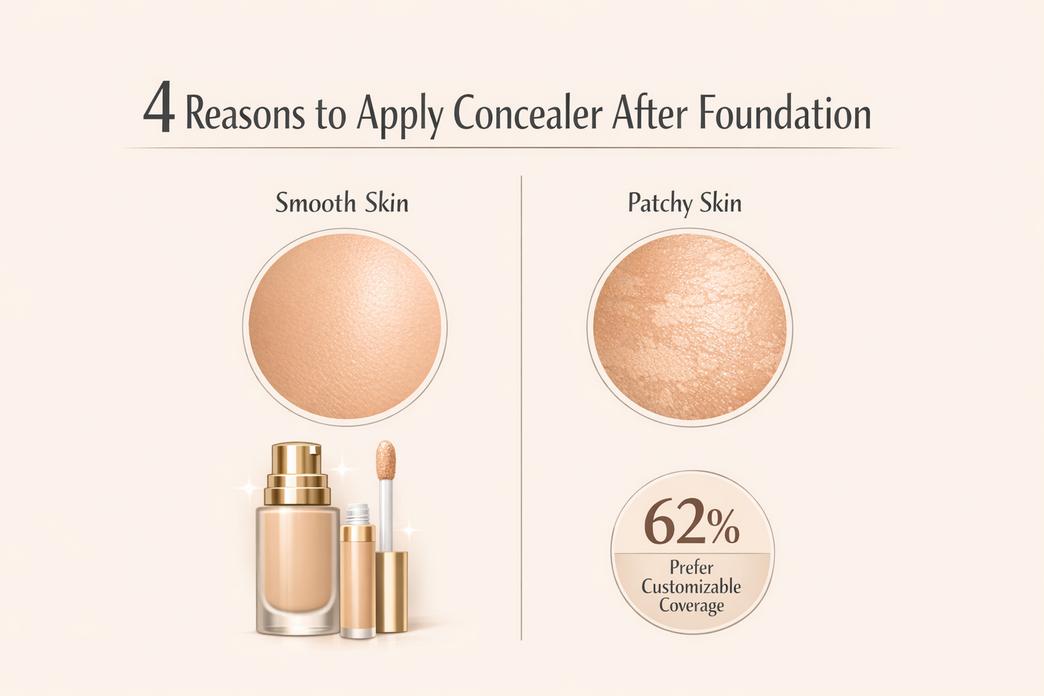
Getting the order right with concealer and foundation can totally change your makeup game. When the base goes on before spot coverage, skin looks smoother, lighter, and way more natural under real-life lighting.
Even Base Prevents Concealer Caking
When foundation creates an even base, your concealer has something smooth to sit on. That simple switch improves application, boosts smoothness, and protects overall texture.
- How foundation improves evenness
- Surface leveling
- Fills minor pores
- Softens dry patches
- Tone balancing
- Reduces visible redness
- Minimizes shadow contrast
- Surface leveling
- Why concealer cakes without foundation
- Uneven skin texture
- Dry flakes grab pigment
- Fine lines trap excess product
- Thick direct layering
- Heavy spot coverage
- Reduced blendability
- Uneven skin texture
- What happens after reversing the order
- Thinner concealer layers
- Better glide during blending
- More natural foundation and concealer fusion
A smooth foundation base keeps the concealer from clinging where it shouldn’t. The result? Clean, breathable skin instead of patchy buildup.
Adjust Coverage Only Where Needed
Once foundation is blended, you can clearly see which blemishes or imperfections still need help. That’s where smart targeted application comes in.
- Precision coverage workflow
- Step 1: Apply sheer-to-medium foundation
- Step 2: Assess under natural light
- Step 3: Dot concealer only on visible concerns
- Coverage control layers
- Base Layer
- Light coverage for tone
- Correction Layer
- Focused concealer on redness
- Spot treatment on breakouts
- Refinement Layer
- Micro-blending for seamless edges
- Base Layer
According to a 2025 Euromonitor beauty consumer update, over 62% of makeup users prefer “customizable coverage that feels lightweight but precise,” highlighting the shift toward selective layering instead of full heavy masking.
Less product. More precision. That’s how modern foundation and concealer routines stay fresh instead of cakey.
Smooth Color Correction Without Overdoing
Color correction works best when it’s subtle. After foundation evens out undertones, you often need less brightening than you think.
Here’s the sweet spot:
- Neutralize redness with a tiny tap of concealer
- Lightly brighten dark circles
- Blend outward for a soft natural finish
| Skin Concern | After Foundation Visibility (%) | Concealer Needed (Thin Layer mm) | Blend Time (Seconds) |
|---|---|---|---|
| Mild Redness | 40% | 0.2 mm | 15 |
| Dark Circles | 55% | 0.3 mm | 20 |
| Pigmentation Spot | 60% | 0.4 mm | 25 |
When blending is done over an already balanced base, color correction feels light, not layered. Many pro artists working with custom solutions build coverage this way to avoid thick under-eye buildup. The combo of makeup base plus spot concealer simply looks more skin-like.
Longer-Lasting Finish Under Studio Lights
Under studio lights, shine and creasing show up fast. The right order boosts durability and keeps your finish intact.
- Apply thin foundation across the face.
- Press in concealer only where extra coverage is needed.
- Gently tap to lock product into the skin.
- Set lightly for extended long-lasting wear.
This layering improves product grip and reduces breakdown from heat exposure. In professional makeup settings, artists often rely on this sequence for photo shoots and filming. Topfeel Beauty follows the same logic in product testing to ensure makeup setting performance holds up under bright light.
A balanced foundation and concealer routine doesn’t just look good at home. It survives cameras, flash, and long days without sliding off.
Camera-Ready Skin: Concealer X Foundation Tips
Getting camera-ready skin isn’t about piling on concealer and foundation. It’s about smart concealer application, smooth foundation application, and knowing how these two work together. When your base makeup flows in the right order, blends with the right tools, and reflects light the right way, your skin just hits different on camera.
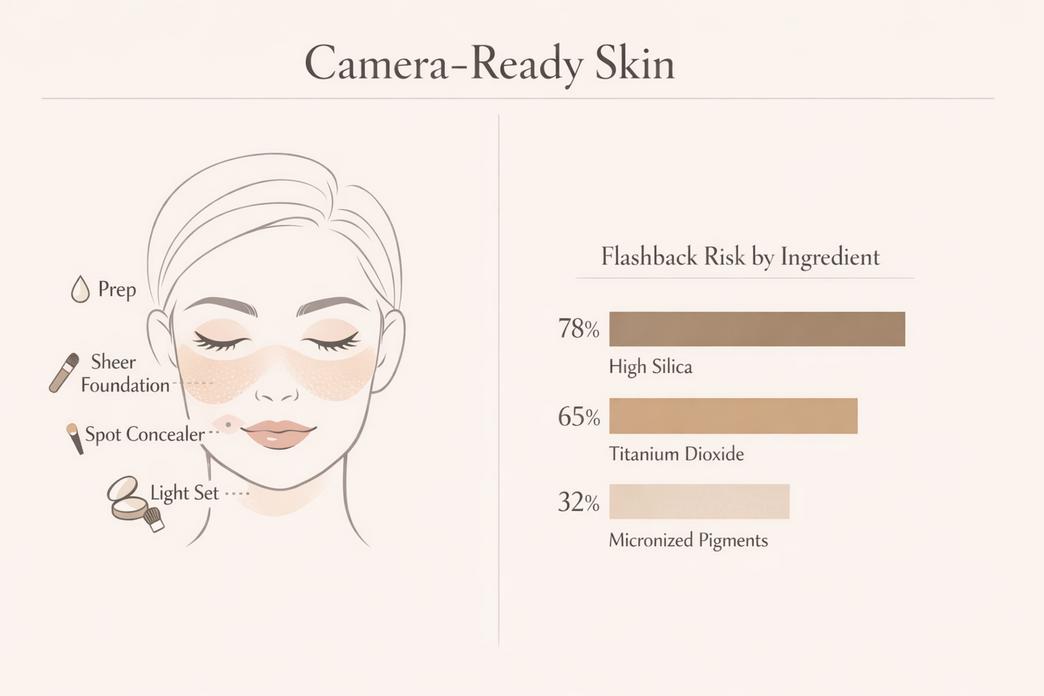
Mastering Layer Order for Flawless Photos
When working with concealer, foundation, the makeup order decides everything. A clean layering technique keeps texture low and glow natural.
-
Base Preparation
1.1 Skin Prep
- Light moisturizer for balance
- Thin primer layer where pores show
1.2 Sheer foundation application
- Use a thin veil of foundation
- Focus on overall tone, not coverage
-
Targeted Correction
2.1 Spot concealer application
- Dab only where needed
- Blend edges into base makeup
2.2 Build Gradually
- Add a second thin layer instead of one thick coat
-
Lock and Refine
3.1 Micro-setting
- Press setting powder lightly on T-zone
3.2 Final Check
- Step into natural light
- Adjust for true skin perfection and a flawless finish
At Topfeel Beauty, face product textures are designed for flexible layering, so your foundation and concealer never feel heavy on HD cameras.
Choosing the Right Brush for Seamless Blending
Tools can make or break your seamless blend. A good foundation brush spreads product evenly, while a precise concealer brush handles detail work.
- Dense buffing brush → smooth, even coverage
- Small synthetic brush → controlled makeup application
- Damp sponge → soft-focus finish
Try this quick routine:
- Apply foundation with circular motions using your favorite blending tools.
- Tap concealer under eyes and around the nose.
- Press with a sponge to melt everything together.
Short strokes. Light pressure. No dragging.
Topfeel Beauty recommends pairing beauty tools with lightweight base makeup for that natural skin vibe. The right blending tools reduce streaks and prevent product buildup, keeping your concealer and foundation looking like real skin, just better.
Brightening Key Areas Without Flashback
Flashback happens when light reflection bounces off certain ingredients. Smart product choice keeps your photo-ready makeup safe under strong camera flash.
Key Zones for Targeted Application
-
Under-Eye Area
1.1 Use lightweight pro conceal
1.2 Avoid high SPF formulas
1.3 Set lightly for a soft brightening effect
-
T-Zone
2.1 Minimal powder
2.2 Press, don’t bake
2.3 Check shine under direct light
Ingredient Impact Overview:
| Ingredient Type | Light Reflection Index (%) | Flashback Risk Level |
|---|---|---|
| High Silica Powder | 78% | High |
| Titanium Dioxide SPF | 65% | Medium-High |
| Micronized Pigments | 32% | Low |
Stick to balanced formulas when combining concealer, foundation, and setting powder. A controlled amount of base makeup, thoughtful layering, and smart ingredient choices help you avoid flashback and keep that clean, bright finish every time the camera clicks.
FAQs
How do liquid foundations enhance concealer performance for private label lines?
A liquid foundation feels like skin at rest, calm and hydrated.
- Soft slip helps concealer melt instead of sitting on top
- Reduces the “tired-eye” look under daily stress
- Fewer blending errors, fewer production warnings — unlike an Undefined array key “candidates” moment in formulation testing
In short, the base listens; the concealer follows.
Why is concealer applied after foundation in professional makeup systems?
Foundation sets the emotional tone of the face; concealer corrects the details.
- Coverage becomes intentional, not heavy
- Caking fades, confidence stays
- Labs gain consistency, avoiding “Trying to access array offset on value of type null” surprises during batch reviews
A calm order creates a calm result.
How do powder foundations support concealer longevity?
Powder behaves like discipline. It holds everything in place.
- ○ Absorbs excess shine
- ○ Locks concealer into skin movement
- ○ Guards against creasing during long days
When balance is off, even systems throw Deprecated: str_replace() warnings — skin does the same.
How can brands avoid concealer flashback under studio lights?
Flashback feels like being seen too harshly. Formulas should protect, not expose.
Short guidance paired with lab reality:
| Focus area | Human result |
|---|---|
| Low or no SPF | Natural photos, relaxed expressions |
| Silica-free blends | No white cast under pressure |
| Stable testing | Fewer “Trying to access array offset on value of type null” failures |
When concealer and foundation respect light, faces stay honest and unafraid.
References
- Face Makeup Market Size & Trends – grandviewresearch.com
- How to Apply Concealer Like a Pro – healthline.com
- The Best Pore Minimizers of 2024 – byrdie.com
- How to Find Your Foundation Shade – allure.com
- Beauty and Personal Care Industry Reports – euromonitor.com
- Color Correcting Makeup Tips – cosmopolitan.com
- How to Make Your Makeup Last All Day – vogue.com
- The Best Makeup Brushes for Every Step – glamour.com
- A Guide to Every Single Type of Makeup Brush – realsimple.com
- How to Avoid Makeup Flashback in Photos – teenvogue.com
- Sunscreen Guide: SPF Explained – skincancer.org
- What Is Baking Makeup? – harpersbazaar.com
- How to Manage Oily Skin – webmd.com
- What Is Silica in Makeup? – self.com
Post time: Apr-20-2026