
Cosmetics Marketing Strategy: 7 Growth Levers for Beauty Brands
A cosmetics marketing strategy shapes a private label order before the first carton ships. Poor positioning, formulation, claims, or packaging can turn inventory into shelf décor.
The goal is to match compliance, manufacturing, distribution, and repeat demand with the brand promise.
Key Points Crescendo: Cosmetics Marketing Strategy
➔ Leverage growth phases from digital awareness to loyal advocacy by combining targeted ads, UGC, and sustainable design.
➔ Audit compliance and refine formulations for substantiated paraben-free, vegan, and skin-compatibility positioning.
➔ Ensure omni-channel readiness by syncing DTC, wholesale, retail, and marketplaces with unified inventory, pricing, and sustainability standards.
➔ Amplify social proof through authentic influencer collaborations, diverse user-generated content, and verified testimonials under EU and FDA regulations.
From Awareness To Loyalty: 7 Growth Phases
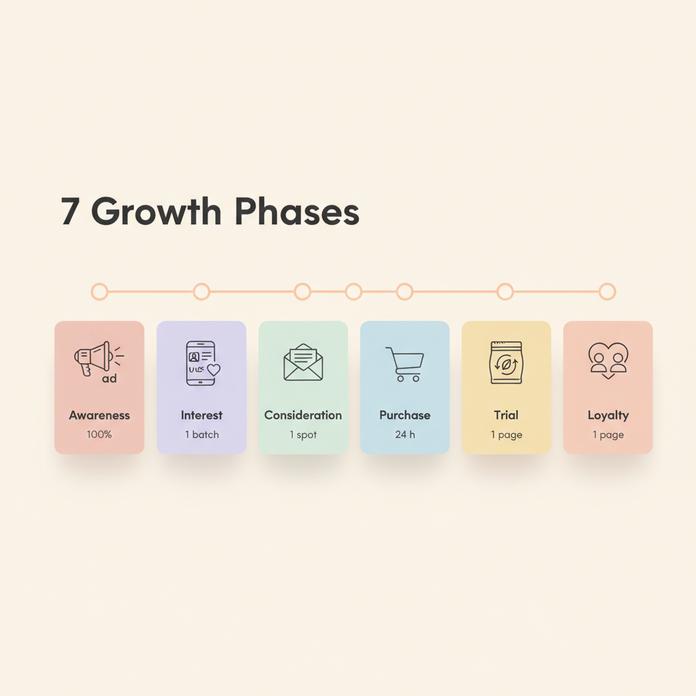
A strong cosmetics marketing strategy connects discovery, trust, purchase, and repeat use.
Initial Exposure through Digital Advertising
- Build online visibility where discovery already happens.Keep the cosmetics marketing strategy focused on clean-beauty choices, inclusive shades, and clear product differences.
- Use audience targeting across search and social ad platforms.
- Balance reach with qualified impression goals.
Engaging Gen Z Consumers with User-Generated Content
- Spark social engagement with the Gen Z audience.Smart community building can turn useful posts into social proof when permissions and disclosures are clear.
- Invite tutorials, wear tests, and honest user content.
- Let authenticity lead rather than overly polished scripts.
Consideration Driven by Content Creation and Email Marketing
Useful educational content can explain cosmetic ingredients and routines without getting too technical. Pair it with segmented email campaigns, practical newsletters, and friendly product education so interested shoppers keep moving.
Conversion via Direct-to-Consumer Platforms and Wholesale Partnerships
Make buying simple through fast e-commerce platforms and clear direct sales paths. Selected retail partnerships and wholesale channels can widen access when pricing and availability stay aligned.
Onboarding Sensitive Skin Users with Clear Formula Information
- Build user trust through ingredient transparency and claim language that distinguishes cosmetics from products intended to treat disease.
- Explain formula claims, test scope, and suitability limits clearly.
- Track onboarding checks:
| Check | Target | Review |
|---|---|---|
| Label accuracy | 100% | 1 batch |
| Patch area | 1 spot | 24 h |
| Guidance coverage | 100% | 1 page |
Retention through Sustainable Packaging and Refillable Design
Sustainable packaging and refillable products can give shoppers a reason to return. Compare broader beauty-industry sustainability challenges with the EPA sustainable materials hierarchy, then make replenishment easy.
Advocacy by Nurturing Ethical Shoppers and Beauty Enthusiasts
- Grow brand advocacy around visible values.Keep enthusiast engagement active so loyal shoppers can become genuine customer champions.
- Support ethical consumerism with clear cruelty-free policies.
- Encourage word-of-mouth through referrals and the beauty community.
- Build loyalty into the brief: Topfeel Beauty’s private-label route can combine market-ready formulas with customizable branding, helping teams connect awareness, conversion, replenishment, and advocacy around one workable product concept.
Review custom solutions to decide which launch route best supports the full customer journey.
5 Steps To Refine Your Cosmetics Marketing Strategy
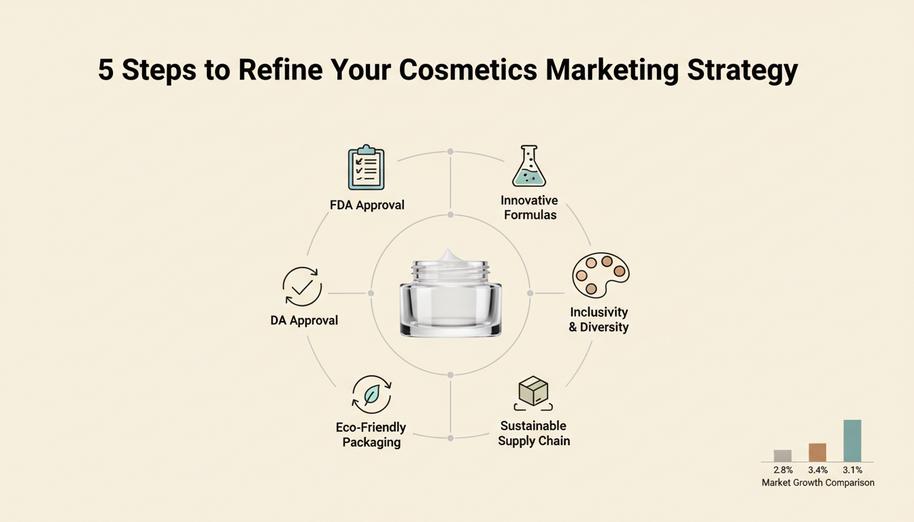
A sharper cosmetics marketing strategy starts before ads go live. Product rules, formulas, audience fit, sourcing, and packaging shape performance.
Step 1 – Audit Your Product Compliance with FDA Guidelines
Build your cosmetics strategy on product compliance, not catchy claims alone.
- Regulatory review
- Check labels against current FDA cosmetics requirements and applicable legal requirements.
- Review cosmetic versus drug claims; therapeutic claims can change FDA oversight.
- Internal controls
- Document ingredient substantiation, complaint handling, and quality control.
- Use each regulatory audit to verify guidelines adherence, including applicable MoCRA requirements.
Step 2 – Optimize Formulations for Paraben-free and Vegan Appeal
Clean positioning needs substance behind it. Strong formulation optimization connects performance with buyer preferences.
- Formula choices
- Evaluate paraben-free ingredients where they suit preservation needs.
- Define standards for vegan products and verify ingredient sourcing.
- Market fit
- Test ethical formulations rather than treating “clean beauty” as a catch-all safety claim.
- Keep product development focused on stability and real-world performance, using product creativity and multi-use product thinking without outrunning the brief.
Step 3 – Segment Millennial Buyers and Diverse Skin Tones
A cosmetics marketing strategy works better when market segmentation reflects actual shoppers.
| Buyer test | Age range | Shades tested | Campaign CTR |
|---|---|---|---|
| A | 29–34 | 12 | 2.8% |
| B | 35–40 | 24 | 3.4% |
| C | 41–45 | 36 | 3.1% |
- Audience signals
- Combine demographic analysis with purchase behavior and consumer insights.
- For millennial consumers, test creative instead of assuming one shared taste.
- Representation
- Audit diverse skin tones across shade development and imagery.
- Let inclusivity marketing serve the real target audience, not just look good on paper.
Step 4 – Streamline Raw Material Sourcing and Quality Assurance
Reliable beauty marketing falls flat if stock or formulas keep changing.
- Supply control
- Strengthen raw material sourcing through documented supplier vetting.
- Set material standards for identity, purity, and consistency.
- Scale control
- Link ingredient procurement with supply chain management.
- Track quality assurance and production efficiency as order volume grows. Compare evidence, documentation, and process control against a qualified-manufacturer checklist and the scope of ISO 22716.
Step 5 – Innovate Packaging Using Recyclable Materials
Finish the cosmetics marketing strategy with packaging customers can use easily and understand quickly.
- Design priorities
- Explore recyclable materials and sustainable packaging without weakening product protection; the EPA recycling overview also emphasizes designing products and packaging with recycled inputs and future recovery in mind.
- Use material science to check compatibility, durability, and recyclability rather than relying on a single environmental attribute.
- Marketing priorities
- Make packaging innovation visible through clear claims that follow the FTC Green Guides, not vague green language.
- Balance eco-friendly design, environmental impact, cost, and product presentation.
Refine the whole strategy: Coordinate compliance, formula, audience, sourcing, and packaging through Topfeel Beauty’s consultation, sampling, production, QC, and delivery process. Initial formulation samples are described as taking 3-7 days, creating an early review point.
The OEM/ODM workflow shows the route; teams can contact Topfeel Beauty through the inquiry page to discuss the five-part checklist and sampling.
Is Your Cosmetics Marketing Strategy Omni-Channel Ready?
A strong cosmetics marketing strategy connects where customers browse, buy, and reorder while keeping prices, stock, service, and brand values consistent.
How does your DTC e-commerce platform integrate with specialty beauty retailers?
Your DTC e-commerce platform can become the data hub for a connected channel strategy, rather than competing with store partners.
- Customer connection
- Share demand trends and product preferences with specialty retailers.
- Use those insights to shape launches across sales channels.
- Commercial alignment
- Coordinate inventory, promotions, and pricing through reliable integration, including local inventory data that helps connect online discovery with store availability.
- Keep the customer experience familiar online and in-store.
A joined-up approach helps shoppers avoid price or availability gaps.
Are mass market retailers aligned with your brand’s sustainability focus?
Getting onto more shelves sounds great, but reach should fit your brand values.
- Screen mass market retailers for:Review potential retail partnerships through a corporate social responsibility lens before expanding distribution.
- sustainability standards and packaging policies;
- ethical sourcing expectations;
- measurable environmental impact goals.
Can online marketplaces support contract manufacturing scalability?
Marketplace growth can move fast, so production needs an equally clear plan.
- Demand signals
- Feed online marketplaces forecasts into supply chain management.
- Match orders with contract manufacturing and available production capacity.
- Growth controls
- Adjust fulfillment and logistics as sales rise.
- Plan scalability before geographic expansion creates stock pressure.
Connect cosmetics-factory planning with marketplace demand so growth does not create avoidable excess stock.
Will logistics optimization ensure consistency across all channels?
Good logistics optimization is mostly invisible to customers, and that’s the point.
- Build one distribution network
- Maintain shared inventory management and stock visibility.
- Set a common fulfillment strategy for retail, marketplaces, and DTC.
- Protect channel consistency
- Apply clear delivery and quality standards across the supply chain.
- Monitor the delivery experience and fix recurring gaps.
Plan channels before volume: A single launch forecast should coordinate DTC, retail, marketplace, and logistics assumptions before production decisions harden.
Topfeel Beauty describes a 45-day mass-production lead time after deposit and final approval. Review private-label routes and use the contact page to prepare a channel forecast, approval calendar, and replenishment plan.
How To Leverage Social Proof In Cosmetics Marketing
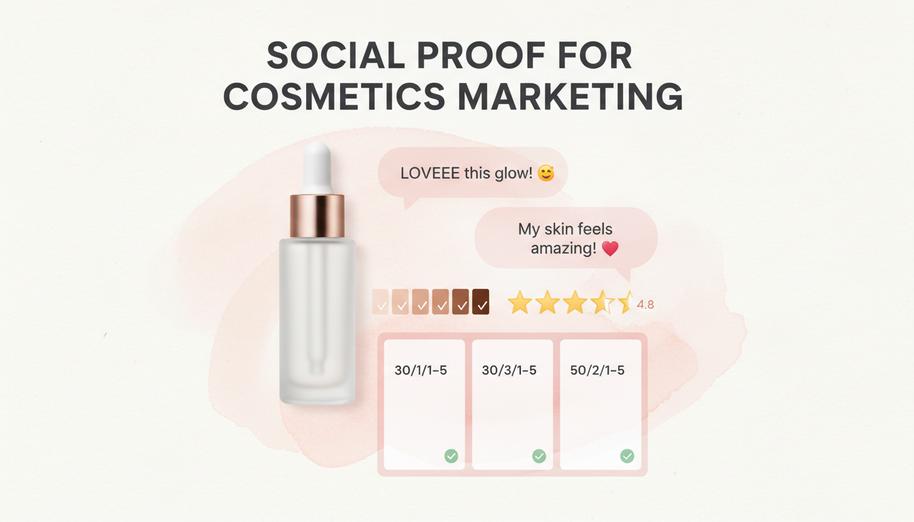
Social proof makes a cosmetics marketing strategy feel more like advice from real people. Credible voices, visible results, and accurate claims matter.
Partner with Beauty Enthusiasts for Authentic Influencer Collaborations
A strong cosmetics marketing strategy starts with an influencer whose audience already values their beauty advice.
- Choose the right voices:
- Prioritize a genuine enthusiast with relevant routines and product knowledge.
- Check previous content for realistic demonstrations, not just follower counts.
- Build the relationship:
- Give creators room to explain texture, application, and wear in their own words.
- Keep each collaboration and paid partnership transparent under the FTC Endorsement Guides. That preserves authenticity while keeping marketing relatable.
Showcase Gen Z Consumers’ Reviews in Social Media Campaigns
A Gen Z-focused cosmetics marketing strategy works better when a real consumer voice supports the product story. Short, specific feedback is easy to understand and share.
- Collect verified Gen Z feedback.
- Ask about feel, use, finish, and repeat purchase intent.
- Obtain permission before reusing a review or testimonial.
- Adapt it for social media.
- Match each comment with product footage.
- Track digital engagement across the campaign without changing what the reviewer meant.
Encourage Diverse Skin Tones in User-Generated Content
Diversity should provide shoppers with genuinely useful product information.
- Build broader representation:
- Invite customers across each skin tone range to contribute user-generated content.
- Encourage natural-light swatches and close-up visual demonstrations.
- Support inclusion:
- Keep editing consistent so shade comparisons remain useful.
- Feature varied content from the wider community, rather than treating one person as representative of everyone.
Ensure Labeling Accuracy to Validate Testimonials under EU Regulations
In the EU, testimonial wording should not turn a customer experience into an unsupported product claim. Strong compliance connects promotional statements with accurate labeling, evidence, and clear transparency.
A simple evidence plan can help teams test claims before publication:
| Evidence check | Participants | Time points | Rating scale |
|---|---|---|---|
| Application assessment | 30 | 1 | 1–5 |
| Wear assessment | 30 | 3 | 1–5 |
| Consumer satisfaction | 50 | 2 | 1–5 |
These numbers are an example study design, not product results. Methods should fit the claim and evidence needed.
- For stronger validation:
- Compare every testimonial with substantiation records.
- Check accuracy against the product label.
- Review the EU cosmetics legislation framework, including its listed common criteria and technical guidance for cosmetic claims.
Make proof easier to brief: Topfeel Beauty can provide samples from existing color-cosmetic formulas, giving brand teams a concrete base for creator demonstrations, diverse swatches, review permissions, and claim checks.
Explore the product portfolio to decide what creators should demonstrate and what evidence the campaign needs before publication.
Reduce Churn: K-Factor Growth For Beauty Lines
A strong cosmetics marketing strategy keeps customers interested after checkout and gives happy buyers reasons to share.
Increasing Retention Rates with Personalized Email Marketing
A useful cosmetics marketing strategy treats every inbox differently. Behavioral data from orders and browsing can support smarter segmentation, making messages more timely.
- Replenishment communication
- Use purchase timing to trigger automated sequences before a product likely runs out.
- Add personalized content such as shade matches, routine tips, or complementary cosmetics.
- Relationship building
- Shape lifecycle marketing around first purchases, repeat orders, and inactive buyers.
- Monitor engagement metrics and adjust email campaigns when clicks or conversions slip.
Boosting Referrals via Incentives for Ethical Shoppers
Referral growth works best when the recommendation feels believable. A cosmetics marketing strategy can connect rewards with values customers already care about, rather than dangling discounts alone.
Reward systems might offer store credit to both friends while referral programs explain cruelty-free policies, vegan choices, packaging, and ethical sourcing in plain language.
- Give buyers shareable proof about sustainable products.
- Encourage genuine customer advocacy instead of scripted praise.
- Turn repeat advocates into brand ambassadors, using authentic social proof to support community building.
Minimizing Drop-offs through Non-comedogenic and Long-wear Assurance
Good retention also starts with realistic promises.
- Before purchase
- Support product claims with appropriate testing and clear ingredient transparency.
- Explain non-comedogenic claims in relation to skin compatibility, without implying guaranteed results for every person.
- After purchase
- Share application guidance that can improve wear performance.
- Set practical expectations for product efficacy under heat, oil, or daily activity.
- Across the customer journey
- Keep assurance language consistent so product quality strengthens customer trust and consumer confidence.
This makes performance assurance part of the wider cosmetics marketing strategy, reducing avoidable disappointment and churn.
Can retention start in production? Consistent claims, replenishment messaging, referral proof, and wear guidance all depend on a product specification the brand can support after launch. Topfeel Beauty’s QC process includes first-article checks and can provide MSDS and COA documentation for formulations.
The OEM/ODM process frames production; teams can contact Topfeel Beauty through the inquiry page to discuss claim evidence, documentation, and repeat-order requirements.
References
- Sustainable Materials Management Hierarchy — U.S. Environmental Protection Agency
- Cosmetics Labeling Guide — U.S. Food and Drug Administration
- Modernization of Cosmetics Regulation Act of 2022 — U.S. Food and Drug Administration
- ISO 22716:2007 — International Organization for Standardization
- Recycling Basics and Benefits — U.S. Environmental Protection Agency
- Environmental Claims: Summary of the Green Guides — Federal Trade Commission
- Local Inventory Ads and Free Local Listings — Google Merchant Center
- The FTC’s Endorsement Guides — Federal Trade Commission
- Cosmetics Legislation — European Commission
Post time: Aug-19-2026