
Private Label Blush and Bronzer Stick: OEM/ODM Makeup Manufacturing
A private label blush and bronzer stick may seem simple, but shade consistency, component fit, and production timing can quickly complicate a launch. Brands need an OEM/ODM partner that can translate a clear brief into repeatable, retail-ready makeup.
This guide covers formulas, finishes, quality control, packaging, order planning, and production steps buyers should check.
Quick Answers: Blush and Bronzer Stick Blueprint
➔ Formulation Consistency: Balance waxes, oils, pigments, and emollients around target glide, payoff, hardness, and blendability.
➔ Production Workflow: Connect hot filling, cooling, batch records, and release checks under documented cosmetic GMP controls.
➔ Customization Flexibility: Define shades, finishes, claims, and either recycled-content or virgin-plastic casing options in the brief.
➔ Brand-Ready Packaging: Coordinate component compatibility, decoration, labels, sleeves, cartons, and final assembly.
5 Steps! From Concept To Blush And Bronzer Stick
Turning a beauty idea into a retail-ready blush and bronzer stick requires coordinated choices across color, skin feel, packaging, and quality.
Ideation and Market Research for a Blendable Contour Stick
- Product concept
- Market analysis reviews target price, shade gaps, finish preferences, and competing formats.
- Consumer trends help define the target audience and whether portability or multi-use color is central to the concept.
- Formulation brief
- Teams set payoff, coverage, blend time, finish, and product positioning before R&D begins.
That work gives development measurable priorities.
Prototype Development with Hydrating Emollients
Good formulation starts with deliberate ingredient selection. Pigments provide color, while waxes and emollients shape structure and slip. Research on natural oils and waxes in stick bases shows why hardness and thermal behavior need system-level evaluation.
Short sampling rounds refine texture, color matching, and payoff. Topfeel Beauty can prepare initial samples in 3-7 days and assess compatibility, stability, and safety.
Hot Pour and Molding into Twist-Up Tube Casings
- The manufacturing process heats and blends the bulk for controlled hot pour.
- Precise filling places product into selected packaging components.
- Cooling and molding set the stick shape inside each twist-up tube.
- The production line checks movement and completes the assembly line process.
Each stage needs agreed settings and compatible components.
Batch Testing, Quality Control & GMP Certification
Quality assurance turns specifications and records into release decisions.
| Batch testing check | Typical target | Test point |
|---|---|---|
| Fill weight | 8.0 ± 0.3 g | Each batch |
| Heat hold | 45°C | 12 weeks |
| Cold hold | 4°C | 12 weeks |
| Cycle test | 5–45°C | 5 cycles |
| Tube operation | ≥100 turns | Sample set |
- Safety standards
- Microbial testing supports contamination control.
- Stability tests track odor, color, texture, separation, and pack compatibility.
- GMP compliance
- Documentation supports traceability; ISO 22716 guidelines cover cosmetic production, control, storage, and shipment.
Labeling, Carton Design and Final Assembly
A finished product still needs shelf-ready details. Packaging design connects the tube, label artwork, and carton design. For EU projects, Regulation (EC) No 1223/2009 frames the safety assessment and product information.
Then material sourcing feeds final assembly before inspection, packing, and logistics.
Plan the whole launch: Align concept research, prototype development, hot-pour molding, batch testing, and carton artwork before mass production. Topfeel Beauty publishes a six-stage process from consultation through delivery, so teams can review the custom-solutions route and identify which approvals belong in their project brief.
Review the workflow to prepare a cleaner formula, packaging, and QC decision list.
Why Blush And Bronzer Stick OEM Matters
A reliable OEM coordinates development, manufacturing, documentation, and packaging for repeatable batches. This cosmetic manufacturer selection guide helps buyers structure questions across the formula, quality system, and component supply.
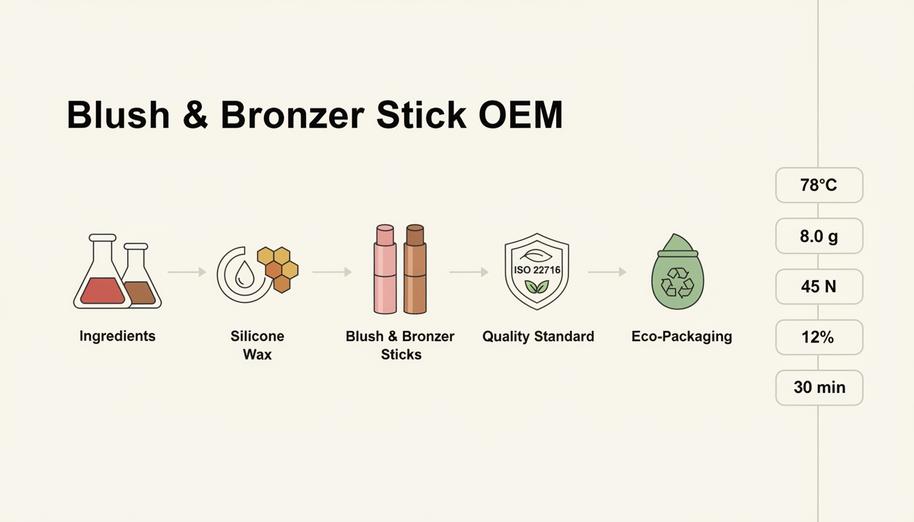
Ensuring Consistent Formulation with Silicones and Waxes
Great stick formulation depends on balanced ingredients. Silicones may support slip, while waxes and oils influence structure and thermal behavior.
- Formula control
- Texture
- Wax-to-oil balance affects firmness and creamy glide.
- Silicone and emollient choices influence spread and after-feel.
- Color
- Pigment dispersion supports even payoff.
- Controlled mixing improves batch consistency for blush and bronzer shades.
- Texture
Record development targets during trials and confirm them through formula-specific testing.
| QC check | Example target | Example tolerance |
|---|---|---|
| Fill temperature | 78°C | ±2°C |
| Stick weight | 8.0 g | ±0.2 g |
| Hardness | 45 N | ±5 N |
| Pigment level | 12% | ±1% |
| Cooling time | 30 min | ±5 min |
Leveraging ISO 22716-Compliant Facilities for Safety
ISO 22716 covers cosmetic production, control, storage, and shipment, making documented procedures relevant to repeatable private-label programs.
- Incoming materials are identified and checked under documented quality management procedures.
- Controlled manufacturing facilities apply GMP practices to equipment, hygiene, production, and finished goods.
- Batch records strengthen traceability and safety controls while supporting compliance with applicable regulatory standards.
Scaling Production with More Sustainable Packaging
Production scaling becomes harder when formula output and component supply expand at different rates. Compare capacity, compatibility, decoration, and sourcing before locking the pack.
- Sustainable packaging
- Material routes
- Bioplastics change feedstock and end-of-life questions, so claims must match the resin and disposal route.
- PCR and recycled-content parts offer other eco-friendly materials options, but the FTC Green Guides caution against broad, unqualified environmental claims.
- Scale checks
- Component availability must fit the supply chain.
- Lightweight designs may reduce material use, while a life-cycle perspective also considers manufacture, use, and end-of-life.
- Material routes
The pack must protect the formula and maintain twist-up performance through distribution.
Reduce scale-up surprises: Formula behavior, safety records from ISO 22716 facilities, and packaging supply need one approval path before volume rises.
Topfeel Beauty combines custom formulation with ISO 22716/GMPC systems and formulation MSDS/COA support. Compare the OEM face-makeup route against your formula, documentation, and pack checklist, then submit the requirements for a project review.
Formulation Secrets For Creamy Blush & Bronzer Sticks
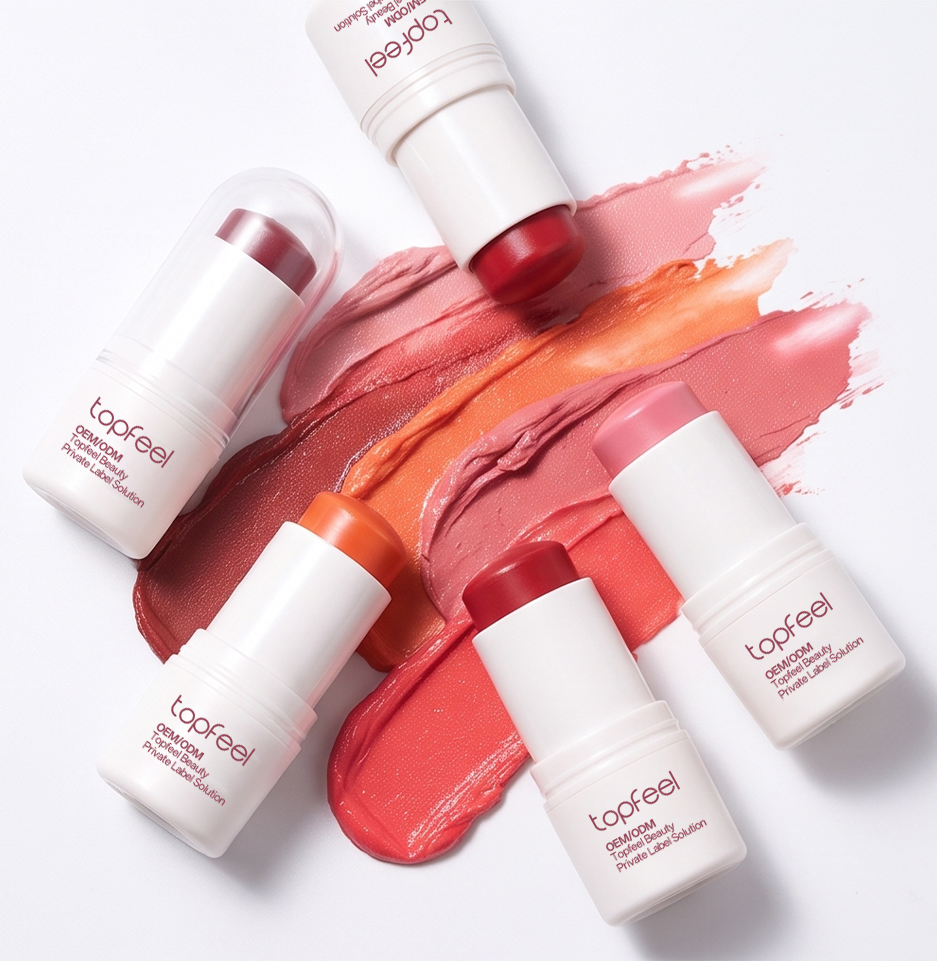
A strong formula balances color, shine, wear, structure, and skin feel. Test the complete base, not isolated ingredients.
Achieving a Velvety Matte Finish with Iron Oxides
A matte, velvety finish starts with controlled pigment dispersion.
- Color system
- Iron oxides and other pigments control shade and undertone, but U.S. launches must use color additives permitted for the intended use.
- Fine opacifiers can adjust coverage and apparent shine.
- Feel
- Balanced waxes and silicones improve texture, helping the stick spread without turning chalky.
- Buildable payoff keeps bronzer easier to blend rather than patchy.
Building a Dewy Glow via Mica and Natural Extracts
A dewy finish depends on the full base. Mica contributes shimmer and radiance, while emollients influence the dewy glow.
Compatible natural extracts may support a botanical concept, but each needs compatibility, stability, and safety review. A cosmetic ingredient guide can organize early questions.
Balancing Long-Wearing Performance with Antioxidants
- Wear and adhesion
- Film formers can be evaluated for long-wearing color.
- Waxes influence durability and shape.
- Formula protection
- Antioxidants should suit the oil system and be checked during stability work.
- Good stability and preservation plans should match water activity, pack, and use pattern.
That balance keeps stick performance practical without making application feel stiff; FDA notes that product or ingredient testing may fill safety-data gaps.
Testing Hydrating Esters and Non-Comedogenic Claims
- Choose lightweight esters and emollients around the desired slip and after-feel.
- Check skin compatibility; the OECD in-vitro skin-sensitisation guideline addresses a specific hazard endpoint.
- Pair hydrating ingredients with an emollient system that supports comfortable moisturization.
- Substantiate non-comedogenic positioning with finished-product testing because ingredient lists alone do not determine comedogenic potential.
Done right, a creamy face stick feels soft and spreads cleanly; claims should match the formulation, test design, and target market.
Customization Options: Shades, Packaging, Branding
A private label blush and bronzer stick needs coordinated color, casing, branding, and retail presentation.
Tailor Shade Ranges: From Natural Flush to Sun-Kissed Glow
A useful color palette can cover subtle blush shades and warmer bronzer shades without confusing shoppers.
- Shade direction
- Natural tones support everyday flush and soft sculpting.
- Sun-kissed hues add warmth for bronzing effects.
- Formula direction
- Shade customization adjusts permitted pigments and effect materials.
- Testing custom colors across target users helps refine payoff and undertone.
That gives each SKU a clearer role in the assortment.
Sustainable Materials: PCR Plastic vs. Virgin Plastic Casings
PCR plastic contains recycled content, while virgin plastic uses new resin. The choice can affect appearance, decoration, sourcing, compatibility, and claims.
For Topfeel Beauty projects, material selection can balance protection with sustainability goals. This sustainable beauty discussion helps frame resin, supplier, decoration, and casing questions.
Branding Benefits of Tamper Seal and Custom Outer Sleeve
Packaging can support security and communication at once.
- Tamper seal
- Supports visible product security.
- Helps customers notice package interference.
- Outer sleeve
- Adds room for shade names and instructions.
- Carries branding elements, substantiated claims, and required information.
Together, these details strengthen packaging design and visual appeal without crowding the stick; for EU sales, claims should follow common justification criteria, including evidence support and honest presentation.
Display Box Design and Labeling for Retail Appeal
A coordinated display box helps related products read as one brand family. Topfeel Beauty can align label customization, cartons, logos, finishes, ingredients, and barcodes.
- Retail packaging builds shelf appeal.
- Clear product labeling makes shades easier to identify.
- Consistent visual merchandising keeps the overall packaging design tidy and recognizable.
Make customization coherent: A shade range is easier to launch when pigment direction, component material, decoration, and label space are approved together. Topfeel Beauty’s packaging collaboration connects color matching with a custom-mold and 3D-prototype workflow, giving brands a blush category route within the product portfolio for comparing formula and pack decisions.
Review the route to define a shade-and-pack specification that suppliers can execute consistently.
Blush Bronzer Stick Vs. Powder: Which Wins?
Choosing between a blush and bronzer stick and powder comes down to finish, control, portability, and routine.
Blush Bronzer Stick
A stick places color directly, then blends with fingers, a sponge, or a brush. Its creamy texture suits a fresh finish.
- For everyday color:
- Swipe and blend
- The easy application makes cheek touch-ups quick.
- Buildable pigmentation helps users control intensity.
- Shape and warm
- A blush and bronzer stick can add warmth or targeted contour.
- A soft dewy finish creates a different effect from matte powder.
- Swipe and blend
- For practical use:
- Twist-up portability works well for travel.
- Multi-use formulas can simplify a makeup bag when their approved directions support more than one application area.
Brands can review cream blush inspiration alongside their shade, glide, pack, and claim requirements.
Powder
Powder uses an application brush for broader placement and gradual building.
- Choose a shade for blush, bronzer, or added coverage.
- Tap off excess product before blending.
- Layer slowly for a smoother matte finish and soft velvet texture.
Pressed formulas suit matte looks and users who prefer a dry texture. Wear and oil control depend on formula and use.
So, which wins? A stick favors speed, direct placement, and creamy blending; powder favors brush control and lightweight layering. Buyers can also compare pressed and loose powder formats before setting a broader face-makeup range.
Fast Turnaround? Choose Our Stick Manufacturing
Speed matters from approved formula to packed goods. A workable timeline connects sampling, components, production, QC, and shipping.
Streamlined Mixing and Filling for Batch Production
A coordinated Production line connects the Mixing process and Filling process.
- Formula preparation
- Controlled heating supports even pigment and wax distribution.
- Hot filling is followed by cooling and assembly, helping Batch production maintain the approved weight and texture.
- Faster flow
- Streamlined operations improve Manufacturing efficiency when materials, components, and records are ready.
Planning these dependencies makes output more predictable.
In-House Sterilization and Documented Quality Control
Topfeel Beauty describes ozone sterilization rooms, aseptic filling, first-article checks, microbiological testing, and final inspection.
| Check | Example target | Timing |
|---|---|---|
| Fill weight | ±5% | Each batch |
| Appearance | 100% checked sample | Before release |
| Microbial screening | Spec-based | Per QC plan |
- Release controls
- Quality assurance reviews test results against defined Manufacturing standards.
- Accelerated testing may inform a stability program, while required Product safety criteria still govern release.
Quality gates remain tied to the approved specification.
MOQ Planning with Paraben-Free and Vegan Options
Flexible MOQ is a discussion point, not an assumed quantity. Topfeel Beauty requires minimum quantities for international orders, so confirm the level for the formula and pack.
- Formula routes
- Vegan options can be developed through suitable Ingredient choices; a practical clean beauty overview can help teams clarify terminology before writing claims.
- Paraben-free positioning and cruelty-free requests remain subject to formula and claim verification.
- Brand development
- Custom formulations support different blush shades, bronzer tones, finishes, and sensory goals.
- Topfeel Beauty connects Product customization and Manufacturing flexibility from consultation through delivery.
Build a realistic launch clock: Mixing and filling, documented quality control, and MOQ or formula-option approvals all need space in the schedule.
Topfeel Beauty lists initial sampling at 3-7 days and mass production at 45 days after deposit and final approval, including packaging. Review the OEM/ODM workflow, then send your target date and requirements so the team can assess formula, pack, quantity, and delivery fit.
References
- Natural oils and waxes: studies on stick bases — PubMed
- ISO 22716:2007 Cosmetics — Good Manufacturing Practices — International Organization for Standardization
- Regulation (EC) No 1223/2009 on cosmetic products — EUR-Lex
- Environmental Claims: Summary of the Green Guides — Federal Trade Commission
- Sustainable Materials Management Basics — U.S. Environmental Protection Agency
- Color Additives and Cosmetics: Fact Sheet — U.S. Food and Drug Administration
- Product Testing of Cosmetics — U.S. Food and Drug Administration
- Test No. 442E: In Vitro Skin Sensitisation — OECD
- A re-evaluation of the comedogenicity concept — PubMed
- Commission Regulation (EU) No 655/2013 on cosmetic claims — EUR-Lex
Post time: Aug-20-2026