
How to Develop the Right Makeup Primer for Different Skin Needs
Asking “what primer is the best” sounds simple, but a private-label brief needs a more useful answer. Oily skin, dry patches, visible texture, and uneven tone call for different textures, finishes, and tests.
Successful development connects the skin need to a base system, formula checks, packaging, and supportable claims.
Quick Answers: What Primer Is the Best for Every Skin Need
- Match Formulation to Skin Type: Silicone-based textures can support a smoother feel and shine control, gel textures can suit lightweight hydration, and cream emulsions can support dry-feeling skin.
- Key Ingredients Matter: Niacinamide, peptides, botanical extracts, vitamin E, hyaluronic acid, and glycerin each support different positioning decisions.
- Stability Ensures Performance: Review pH, viscosity, emulsion integrity, preservation, and microbiological quality before approving a formula.
- Packaging Impacts Use: Select a dispenser or jar that protects the formula and delivers a controlled, repeatable application.
What Makes The Best Primer
Finding what primer is the best comes down to more than a silky first impression. Formula design, stability, packaging, and a clear claim strategy all count. Define the finish and foundation pairing before sampling.
Pore Smoothing Power: Silicone-Based Texture Blurring
For shoppers asking what primer is the best for visible pores, silicone technology can make a noticeable difference.
- Texture control
- Dimethicone supports a smooth glide.
- Silicone elastomer can soften the look of uneven skin texture and support a pore-blurring story.
- Finish
- A balanced surface smoother can be positioned around a soft-focus feel and controlled matte finish.
Ingredient Spotlight on Niacinamide and Peptide Complex
A good primer can do more than grip makeup. The CosIng database supports ingredient-name checks. Niacinamide can support skin-barrier positioning, while a peptide complex adds conditioning.
- A peptide complex can add conditioning care without stacking unrelated actives.
- Peptides can support a conditioning and hydration angle when claims match the finished formula.
That mix helps answer what primer is the best when skincare positioning matters.
Emulsion Integrity and pH Stability for Flawless Base
- Formula balance
- Controlled pH level supports skin compatibility goals.
- The right surfactant helps maintain emulsion stability.
- Consistency and safety
- Stable viscosity keeps application predictable.
- A suitable preservative system and microbiological checks support formulation integrity.
For Topfeel Beauty, compatibility, stability, and ingredient safety review matter when developing a reliable primer.
Airless Pump Packaging for Transfer-Proof, Long-Wear Performance
- Protection
- An airless pump can limit repeated air exposure and support controlled dispensing.
- Practical performance
- A measured dose reduces messy overuse and makes application more repeatable.
- Better formula integrity depends on packaging compatibility and user experience.
Packaging alone cannot make makeup transfer-proof. Formula, application, and wear testing support consistent performance, while the foundation range defines the product beneath.
Build the right base brief: A primer succeeds when texture, skincare positioning, stability checks, and dispensing work as one system. Topfeel Beauty’s private-label primer route gives buyers a product starting point; use the foundation range to define the finish and pairing decisions before sampling.
Review the primer product route and compare the foundation options to prepare a more complete formula brief.
3 Primer Types For Oily Skin
Finding what primer is the best starts with how oily skin behaves. A buyer may need shine control, lightweight hydration, tone correction, or a combination. Define the main concern before selecting texture and finish.
Silicone-Based Oil Control with Shine Reduction
A silicone primer can create a smooth layer between the skin and makeup, making it a logical direction for a visibly oily T-zone.
- For stronger oil control:
- Look for dimethicone and a suitable sebum absorber for the T-zone.
- A mattifying finish can reduce the look of surface shine.
- For smoother makeup:
- Pore blurring can soften the appearance of uneven texture.
- A velvet finish can feel silky rather than greasy.
Gel Texture Hydration Boosting with Hyaluronic Acid
Oily skin can still feel tight or dehydrated. A water-based, lightweight primer with hyaluronic acid and a gel texture supports a fresh direction.
Choose oil-free hydration when comfort matters without a rich cream feel. Confirm the film-former and foundation pairing during sampling.
Fluid Lotion Color Correcting with Humidity Considerations
A fluid lotion spreads easily when the brief combines redness concerns with warm-weather use.
- Tone concerns
- An anti-redness color corrector can visually soften flushed areas.
- A translucent finish keeps correction from looking obvious.
- Hot-weather wear
- Humidity resistant formulas should be assessed under intended conditions before using sweat-proof language.
- Sweat-proof claims should match the finished wear test.
When deciding what primer is the best for uneven tone in humid conditions, use this skin-type guide to define the audience and manufacturer-selection guidance to carry requirements into sampling.
Silicones Vs. Water-Based: Which Primer Wins?
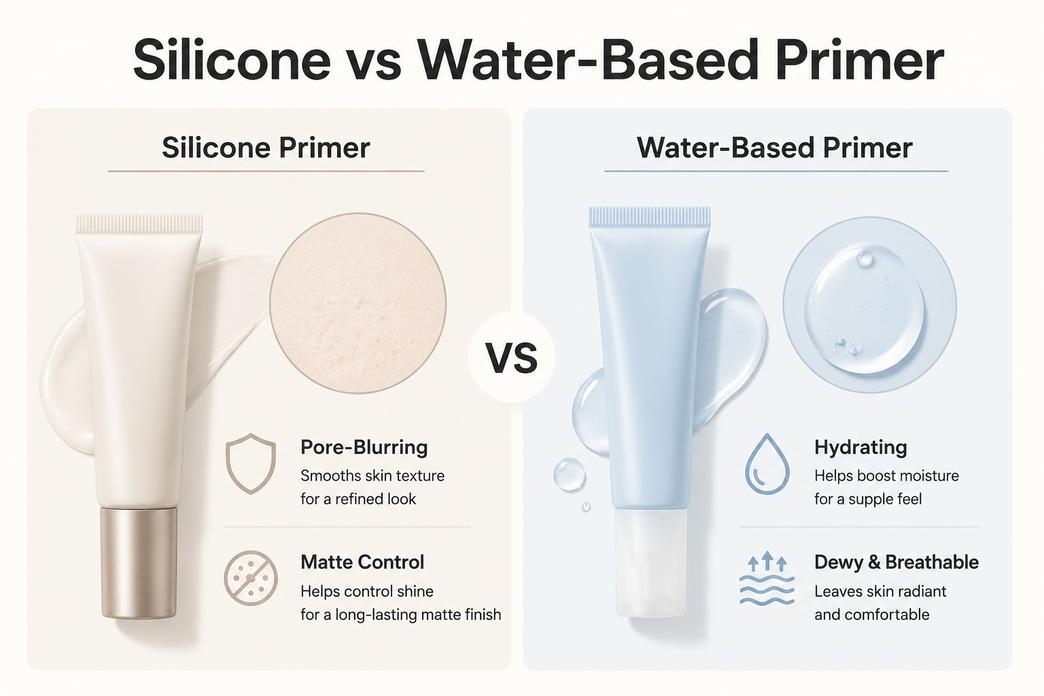
Asking what primer is the best depends on skin needs and the makeup applied over it. Silicone systems prioritize slip and texture smoothing; water-based systems prioritize lightness and moisture. Compare finish, comfort, compatibility, and supportable claims.
Silicone-Based Primer
Silicone primer is a sensible direction when a smoother canvas matters around pores or areas where foundation breaks up.
- For visible texture
- Dimethicone creates a silky surface that supports a pore-blurring feel.
- Foundation can spread more evenly when the surface is prepared consistently.
- The resulting smooth texture may help makeup look more even.
- Dimethicone creates a silky surface that supports a pore-blurring feel.
- For oily or combination skin
- A matte finish can reduce the appearance of surface shine.
- Added oil control can support the intended T-zone finish.
- Long-wearing positioning should be confirmed with an appropriate wear protocol.
- A matte finish can reduce the appearance of surface shine.
- For drier spots
- Silicone can add slip and comfort, but it is not a replacement for moisturizer.
Water-Based Primer
Water-based primer often makes sense when comfort and moisture rank above heavy smoothing.
For thirsty skin: Hyaluronic acid and glycerin can support a hydration-focused story, while a lightweight texture helps the base feel less heavy.
For comfortable wear: A breathable feel and compatible film-forming system can support everyday application.
- Pick a skin-soothing direction when comfort is the primary brief.
- Choose a dewy finish when fresh-looking radiance is the goal.
- Pair compatible primer and foundation bases during sampling to reduce pilling risk.
What primer is the best for dry skin? Water-based choices often win when comfort matters. Ultimately, the better option matches the finish, skin need, and foundation system; tips for avoiding clumping foundation and OEM face makeup help frame that complexion brief.
Choose by compatibility, not category: The silicone-versus-water comparison only becomes useful when it covers texture, finish, comfort, and the foundation system together. Topfeel Beauty’s workflow prepares initial samples in 3-7 days, giving a brand a defined point for comparing the complete complexion brief.
Use the OEM face-makeup route to compare texture and finish requirements, review foundation application guidance, then contact Topfeel Beauty to request a development discussion.
Dry Patches Flaking? Hydrating Primer Fixes Everything
Dry skin can flake and disrupt makeup. Focus on hydration, comfort, grip, preservation, and the package rather than one ingredient.
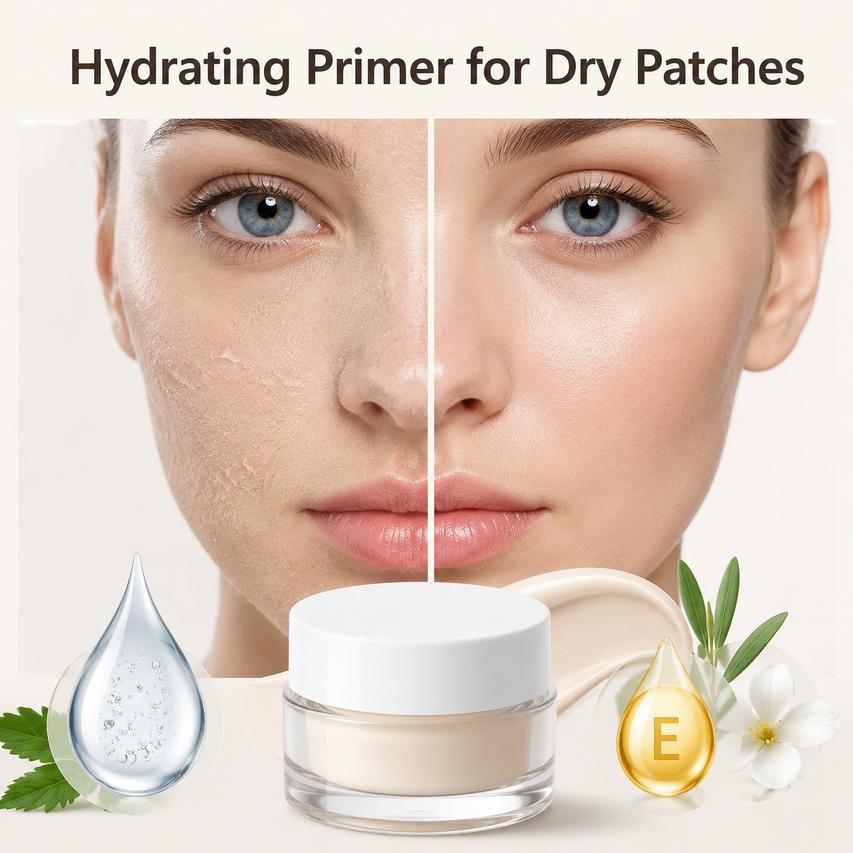
Cream Emulsion Enriched with Botanical Extracts
A cream emulsion combines water and oil phases; moisturizer formats include creams, lotions, gels, oils, and ointments.
- For dry-skin comfort:
- Hydration can soften the look of dry patches.
- Selected botanical extracts can support a soothing and conditioning story.
- For makeup performance:
- An even texture helps foundation spread with less dragging.
- A balanced formula can support a subtle radiant finish.
Jar Container Formula with Vitamin E and Hyaluronic Acid
With a jar container, repeated finger and air contact makes preservation, stability, and hygienic use important pack decisions.
- Hydration comes first.
- Hyaluronic acid and a gel-cream feel support a lightweight moisture direction.
- A gel cream feel can add moisture without becoming overly heavy.
- Conditioning backs it up.
- Vitamin E can support conditioning and antioxidant positioning.
- Anti-aging language should match the evidence and review available for the finished product.
Hypoallergenic Tested, Dermatologist Approved Moisture Booster
A dryness-focused primer should feel comfortable rather than tight. Hypoallergenic has no federal definition, so define the intended claim before testing.
- Sensitive skin
- Look for a skin-friendly pH and a non-irritating formulation approach.
- A safe formulation still needs suitable safety and stability assessment.
- Moisture support
- A moisture-focused formula can target comfort and a hydrated appearance.
- Dermatologist tested describes a test route, not universal tolerance.
When deciding what primer is the best, a hydrating formula suited to the target skin and makeup routine beats a one-size-fits-all claim. Foundation-skincare development offers a related formulation angle, while Topfeel Beauty documents compatibility, stability, and safety assessment support.
Launch with the whole dry-skin system: A cream emulsion, moisture ingredients, a hygienic pack, and claim testing shape the product experience.
Topfeel Beauty’s customization workflow moves from consultation and sampling through packaging design, production, quality control, and delivery. Submit your formula, package, and claim requirements through contact us, then use the foundation-skincare development guide to define sampling comparisons.
References
- Cosmetic Products Regulation — EUR-Lex
- Dimethicone, Methicone and Substituted-Methicone Polymer Ingredients — Cosmetics Info
- Cosmetic Ingredient Database — European Commission
- Anatomy, Skin (Integument), Epidermis — NCBI Bookshelf
- Microbiological Safety and Cosmetics — FDA
- CIR Reports — Cosmetic Ingredient Review
- Hyaluronic Acid — Cleveland Clinic
- Dermatologists’ Top Tips for Relieving Dry Skin — American Academy of Dermatology
- Emollients and Moisturizers — DermNet
- “Hypoallergenic” Cosmetics — FDA
Post time: Aug-27-2026