
What Is the Difference Between Lip Balm and Chapstick
Ask what is the difference between lip balm and chapstick, and you’re really asking how to win shelf space and customer loyalty without wasting a single SKU.
Recent reports from Grand View Research and Mintel show rising demand for natural ingredients, SPF protection, and format variety shaping lip care decisions.
That gap between stick simplicity and balm flexibility is where smart brands carve identity, tweak formulas, and make money.
Quick Insights: What Is the Difference Between Lip Balm and Chapstick?
➔ Ingredients Blend: Balms often pack richer emollients (shea butter, hyaluronic acid), while Chapstick relies on waxy occlusives (beeswax, petrolatum).
➔ Moisture Seal: Balms deliver deeper hydration and repair; Chapstick offers lighter, everyday protection.
➔ Format & Feel: Pots and tubes yield thicker, creamier textures; twist-up sticks ensure mess-free, on-the-go application.
➔ Custom Edge: Brands leverage SPF, natural actives, private label flexibility, and tinted or fragrance-free options to capture shelf space and loyalty.
5 Key Ingredients Compared: Lip Balm Vs. Chapstick
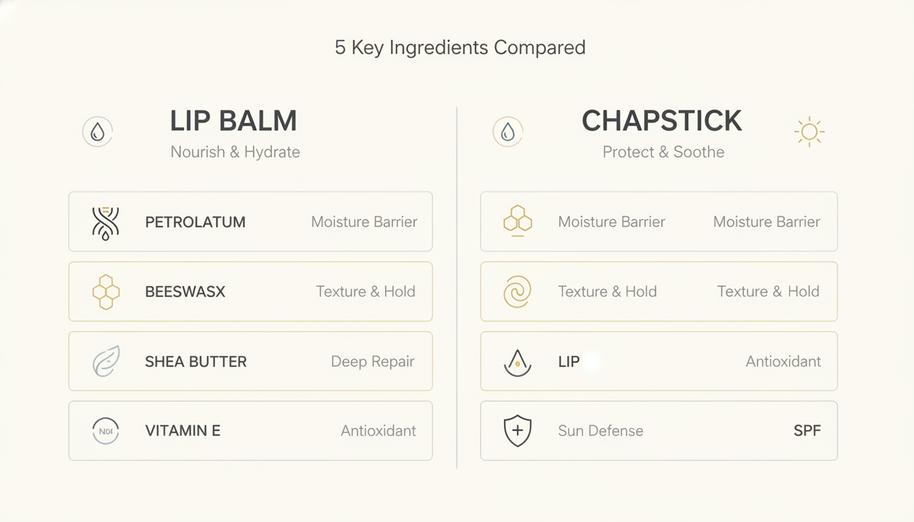
A lot of people ask what is the difference between lip balm and chapstick, and honestly, it often comes down to ingredients. Small tweaks in formula change how lips feel, heal, and stay protected.
Petrolatum
When people search what is the difference between lip balm and chapstick, petroleum jelly often pops up first.
-
Core role:
-
Forms an occlusive barrier
- Locks in moisture
- Reduces water loss
-
-
Performance:
- Strong moisture retention
- Shields against cold, wind, dry air
-
Skin impact:
- Supports skin protection
- Helps heal chapped lips
Topfeel Beauty leans into this for long-wear comfort that doesn’t feel heavy.
Beeswax
Natural lovers asking lip balm vs chapstick difference usually care about texture.
-
Structure:
- natural wax gives firmness
-
Function:
- Creates a protective layer
- Works as a light emollient
-
Skin feel:
- Adds skin conditioning
- Mild anti-inflammatory comfort
Short and real: it keeps sticks solid and lips calm.
Shea Butter
Soft, cushiony formulas? That’s natural emollient territory.
-
Deep action:
- Rich fatty acids
- Boost skin conditioning
-
Repair support:
- Known for healing properties
- Gentle soothing feel
If you’re still wondering what is the difference between lip balm and chapstick, this is where balm formulas often feel richer.
Vitamin E
A quiet hero with visible results.
“Antioxidant-enriched lip care continues to trend upward, with consumers prioritizing repair-driven formulations,” — Mintel Beauty Report, 2025
-
Protection:
- Fights damage via free radical protection
-
Recovery:
- Aids skin repair
- Enhances skin health
Topfeel Beauty includes this to keep lips looking fresh, not just coated.
SPF
Sun care isn’t optional anymore.
| Factor | Without SPF | With SPF |
|---|---|---|
| UV exposure | High | Reduced |
| Dryness risk | Elevated | Lower |
| Aging signs | Faster | Slower |
| Protection level | None | Broad-spectrum |
| Lip defense | Weak | Strong |
- Shields from UV radiation
- Blocks UVA rays and UVB rays
- Supports long-term lip defense
So yeah, when people ask what is the difference between lip balm and chapstick, SPF can be the deciding factor—especially in modern formulas from Topfeel Beauty.
Balm Vs. Chapstick: Which Seals Moisture Better?
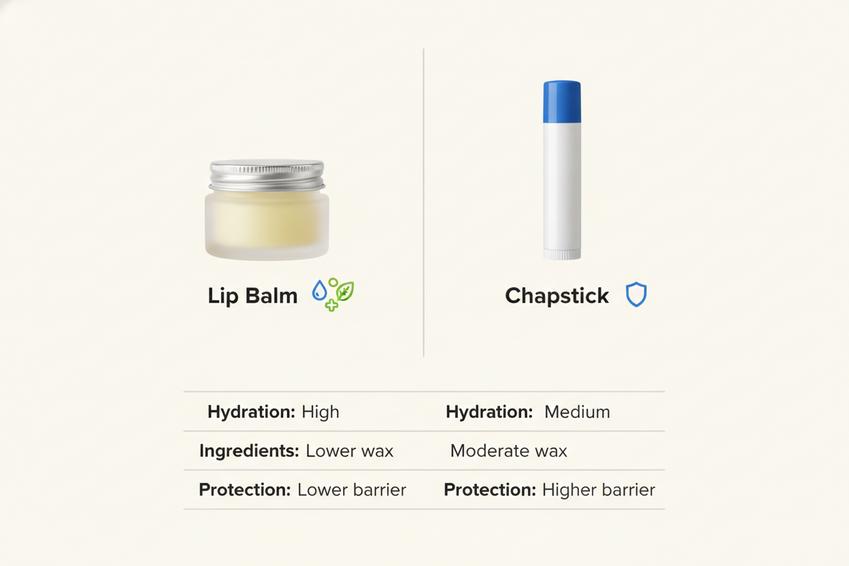
Quick intro: people keep asking what is the difference between lip balm and chapstick, and yeah, it matters when your lips feel wrecked. This breakdown keeps it real—how each one handles Moisture, sealing, and day‑to‑day Protection—so you can pick what actually works.
Lip Balm
When you ask what is the difference between lip balm and chapstick, Lip Balm usually leans richer. It packs Hydration with heavier Ingredients that help with Healing and Soothing when Dryness turns into Cracked skin.
-
Core feel:
- Thick, cushiony layer that slows water loss
- Noticeable Moisture retention over time
-
How it seals:
- Emollients soften
- Occlusives lock in
- Repeat use builds repair
-
Common formats:
- Pots (denser, high Protection)
- Squeeze tubes (mid-weight)
Long story short, if you keep googling what is the difference between lip balm and chapstick, balm wins when lips need repair, not just a quick swipe.
Chapstick
Still wondering what is the difference between lip balm and chapstick? Chapstick (stick-style lip protectant) is more about a fast, tidy Barrier. It uses Wax plus light Emollient oils for quick Relief on Chapped lips.
-
Everyday use:
- ✔ Easy Application on the go
- ✔ Clean, thin coat
- ✔ Decent wind/cold Barrier
- Swipe once → light coat
- Reapply often → steady Moisturizer feel
- Best for mild dryness
Now the data angle on what is the difference between lip balm and chapstick:
| Feature | Lip Balm | Chapstick | Result |
|---|---|---|---|
| Occlusion level | High | Medium | Balm seals longer |
| Water loss (TEWL) | Lower | Moderate | Balm reduces loss more |
| Reapply frequency | Lower | Higher | Stick needs repeats |
| Texture | Thick | Waxy-light | Different comfort |
So yeah—what is the difference between lip balm and chapstick? Balm = deeper seal and repair; Chapstick = quick, portable Barrier.
How To Choose: “What Is The Difference Between Lip Balm And Chapstick”?
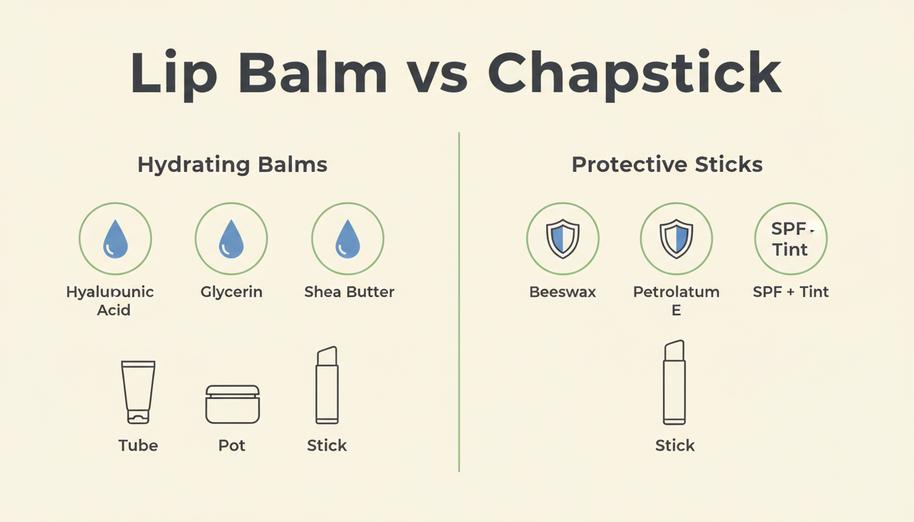
If you keep asking what is the difference between lip balm and chapstick, you’re not alone—people mix the terms all the time. The real answer sits in ingredients, texture, and use. This quick guide breaks down what is the difference between lip balm and chapstick so you can pick what actually works.
Identify Key Ingredients for Optimal Hydration
-
Core trio:
- humectants: hyaluronic acid, glycerin
- emollients: shea butter, plant oils
- occlusives: beeswax, petrolatum, vitamin E
- If you’re decoding what is the difference between lip balm and chapstick, check labels first.
- Daily care leans on light emollients; repair needs stronger occlusives.
- Balance matters—too waxy can feel sealed but dry underneath.
Short notes:
• hyaluronic acid pulls in moisture
• glycerin keeps it there
• beeswax locks it down
“Hydration-first lip care is driving repeat purchases in 2025,” notes a recent Mintel beauty report.
Match Emollient and Occlusive Formulations to Your Lips
-
Dry vs. chapped lips vs. sensitive lips:
- Light day use: plant oils, fatty acids
- Night repair: petroleum jelly, mineral oil, waxes
Steps:
- Assess feel: tight, flaky, or cracked
- Choose weight: thin gloss vs. heavy seal
- Reapply cadence: frequent for light, less for heavy
When people ask what is the difference between lip balm and chapstick, this is it—texture and protection level.
Weigh Packaging Formats: Stick, Tube, Pot, or Bulk
- stick applicator = quick, pocket-friendly
- squeeze tube = more hygienic application
- jar/pot/tin = richer blends, less portable
- bulk packaging = brand or studio use
Tiny guide:
- On-the-go → stick
- Clean application → tube
- Thick masks → pot
So, what is the difference between lip balm and chapstick in use? Format changes how often and how cleanly you apply.
Factor in Product Attributes and Private Label Opportunities
-
Pick by extras:
- SPF protection, tint, flavor, scent
- natural ingredients, organic, cruelty-free
Multi-level choice path:
-
Need sun care?
- Yes → SPF balm
- No → go to 2
-
Want color?
- Yes → tinted balm
- No → go to 3
-
Skin sensitivity?
- Yes → fragrance-free, minimal formula
- No → explore textures
Brands like Topfeel Beauty support private label manufacturing, letting you customize blends, compliance, and finish. If you’re still wondering what is the difference between lip balm and chapstick, remember: it’s branding plus formulation. Topfeel Beauty can tailor both, turning that difference into your advantage.
References
- Grand View Research – grandviewresearch.com/Grand View Research
- Mintel – premiumbeautynews.com/Premium Beauty News
- petroleum jelly – healthline.com/Healthline
- water loss – healthline.com/Healthline
- natural wax – byrdie.com/Byrdie
- healing properties – medicalnewstoday.com/Medical News Today
- free radical protection – healthline.com/Healthline
- UV radiation – skincancer.org/Skin Cancer Foundation
- Dryness – mayoclinic.org/Mayo Clinic
- humectants – webmd.com/WebMD
- hyaluronic acid – clevelandclinic.org/Cleveland Clinic
- plant oils – ncbi.nlm.nih.gov/NIH
- hygienic application – fda.gov/FDA
- organic – usda.gov/USDA
Post time: Jul-27-2026