
Blush Color Trends: Soft Neutrals, Berry Tones, and Multi-Use Shades
Private-label buyers asking what is the color of blush face a tricky shelf decision: soft nude, mauve, peach, rose, berry, terracotta, or plum? Color sets the mood, but format and finish determine how that idea lands in a product range.
Powder, cream, liquid, and stick formulas bring pigments, mica, silica, emollients, packaging, and filling into play. This guide connects three color directions with color matching, stability testing, batch consistency, and quality control.
Reading Notes: What Is the Color of Blush in 2024 Trends
➔ Soft Neutral Dominance: Nude mauve and peach tones with matte or satin finishes suit all skin types, blending via brushes or fingertips for a natural glow.
➔ Rich Berry Variations: Deep rose, terracotta berry, and dusty plum mauve deliver warmth and depth for deeper complexions, enhanced by mica or emollients.
➔ Multi-Use Versatility: Cream, stick, and liquid formulas balance pigments, emollients, and binders for cheeks, lips, and eyes—swipe, dab, or buff with the right tool.
➔ Sustainability & QC: Eco-friendly compacts, refillable pans, and strict stability testing ensure consistent color matching, texture, and quality across batches.
Why Soft Neutrals Dominate Blush Trends
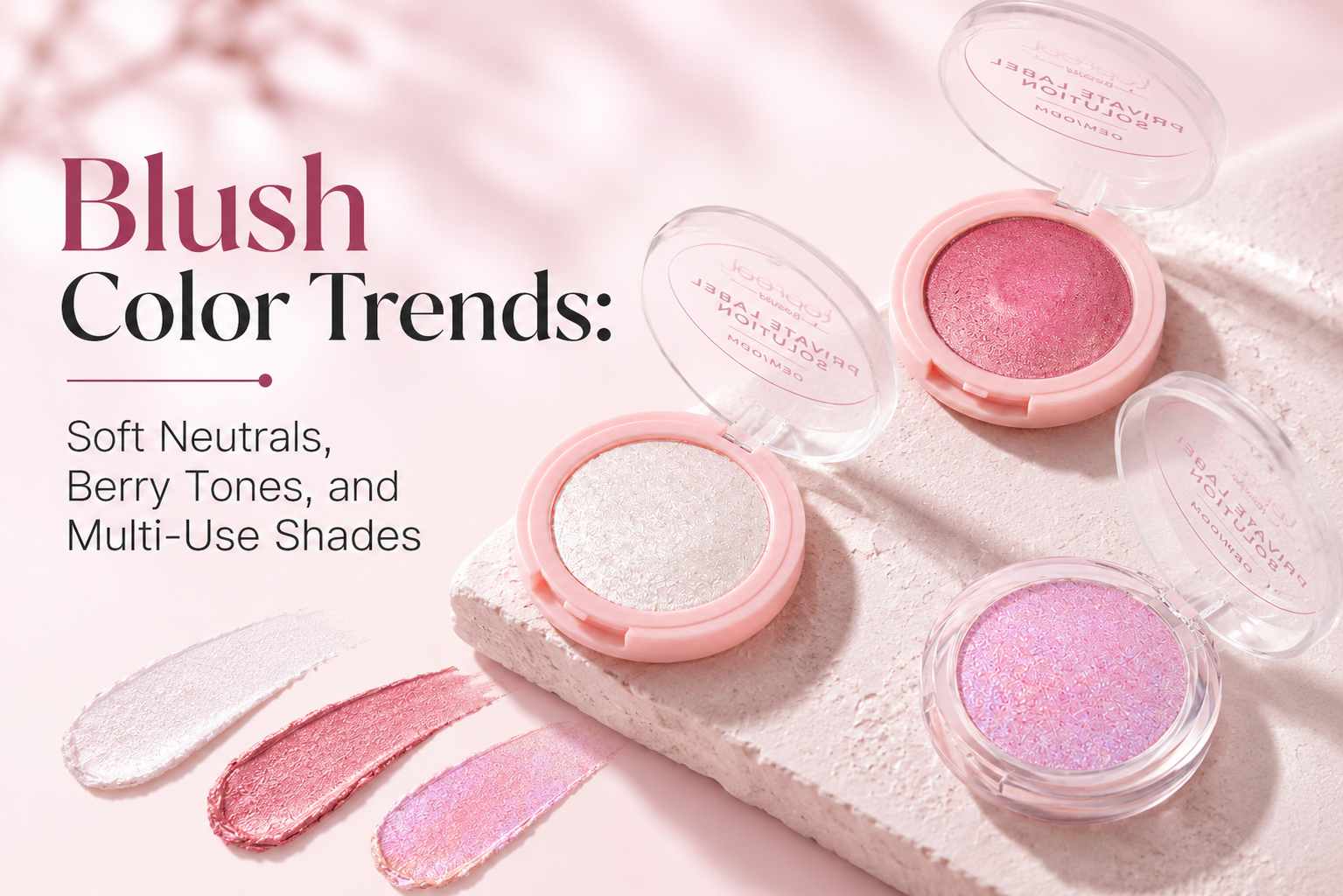
Soft neutrals make blush easier to wear with everyday makeup, from barely-there office looks to warm weekend color. When shoppers ask what is the color of blush, the answer now stretches beyond classic pink. Nude, muted peach, and Mauve tones bring gentle warmth without stealing the show, while modern formulas make the final Finish look comfortably skin-like.
Nude Mauve Matte: Exploring Powder Blush and Cream Blush Options
When considering what is the color of blush, nude mauve sits between dusty pink, beige, and muted purple.
-
Powder Blush
- A finely milled Matte formula gives cheeks a soft-focus effect.
- Its dry Texture suits controlled layering and keeps shine low.
-
Cream Blush
- Emollients help pigment melt into the skin.
- The result feels fresh and natural rather than heavily made up.
So, what color is blush for a low-key look? Nude mauve is a pretty safe bet.
How Mica and Silica Create That Subtle Satin Glow
Mica, a reflective Mineral Ingredient, redirects light and gives Satin blush its restrained Glow. Silica can absorb oil and improve slip, helping soften how texture appears.
The balance matters. Too much sparkle can move the Finish away from a neutral effect, while fine particles support a Subtle sheen. For anyone asking what is the color of blush, soft color is only half the story; light reflection changes how that shade reads on skin.
Fingertip Application Versus Blush Brush for Natural Warmth
-
Fingertip Application
-
Best matched with cream formulas.
-
Body Warmth softens the product.
- Tap instead of rubbing.
- Blend the edges gently for a Natural flush.
-
-
Blush Brush
-
This Tool works especially well with powders.
- Pick up a small amount.
- Sweep broadly across the cheeks using a light Technique.
-
What is the color of blush after blending? Peach, nude, and mauve can all look softer because application affects perceived intensity.
Eco-Friendly Compact and Refillable Packaging Solutions
A Refillable Compact uses a replaceable pan rather than requiring a whole new case each time. That simple Design can reduce repeated Packaging use.
For a more Eco-Friendly Solution, brands can pair refills with recyclable Material choices and responsibly sourced paper cartons. Mirrors, magnets, mixed plastics, and adhesives still affect recyclability, so “Sustainable” claims need careful checking. What is the color of blush may drive the initial choice, but practical refill systems can shape what shoppers repurchase. For brands exploring packaging options, Topfeel Beauty offers custom solutions from stock components to custom molds.
4 Berry Tones For Deeper Complexions
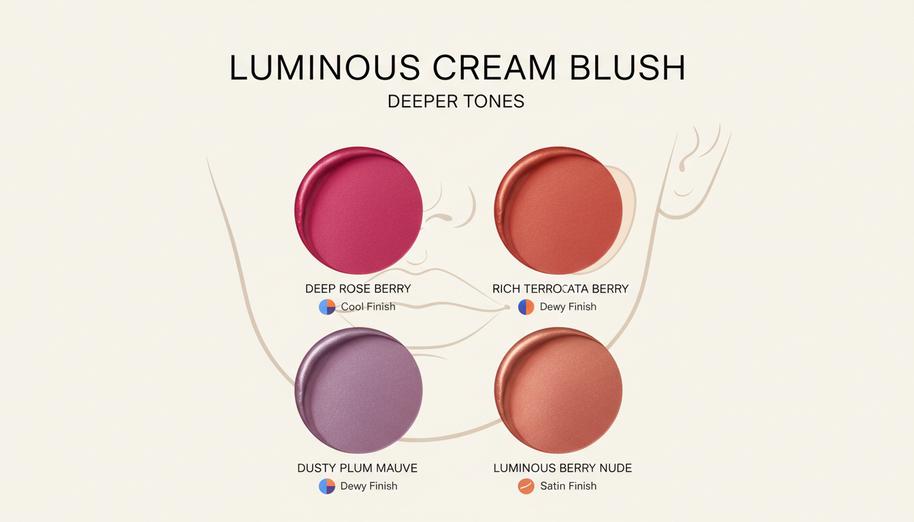
Finding flattering berry shades gets easier once undertone, finish, and depth come into play. If you’ve searched “what is the color of blush,” there isn’t one fixed answer: blush can run from warm rose to muted plum. For deeper complexions, richer berry blends usually stay visible while looking fresh, balanced, and easy to wear.
Deep Rose Berry
A deep rose berry gives the cheeks a lively flush without drifting into neon territory.
-
For everyday color:
-
Choose a rich cream blush.
- A satin finish keeps the pigment smooth.
- Warm rose tones can brighten golden undertones.
-
Build color in thin layers.
- That simple trick keeps edges soft.
-
When asking “what is the color of blush,” deep rose is a solid answer when noticeable warmth is the goal.
Rich Terracotta Berry
Terracotta brings earthy red-brown character; berry adds depth. Together, the rich mix can create a believable warm glow.
- Start with lightly placed pigment near the cheekbone.
- Blend the blush outward for an earthy, lived-in finish.
For product development, Topfeel Beauty provides oem face makeup services to create custom formulas from scratch to meet specific requirements for texture, color, and finish.
Dusty Plum Mauve
A dusty blend works differently from brighter berries.
-
Color balance
- Plum supplies depth.
- Mauve brings a muted, slightly cool cast.
-
On the cheeks
- A soft application reads polished rather than loud.
- Concentrated pigment helps the blush remain clear on deeper skin.
So, what is the color of blush here? Think restrained purple-rose with a wearable nude influence.
Luminous Berry Nude
Luminous berry paired with nude tones is the low-key pick of the bunch. A sheer blush layer lets natural skin depth remain visible, while a radiant finish supplies a subtle glow.
For a more natural result, tap color onto the cheeks and blend the edges gently; soft reflection adds life without making the finish look overly shiny.
How Do Multi-Use Shades Work?
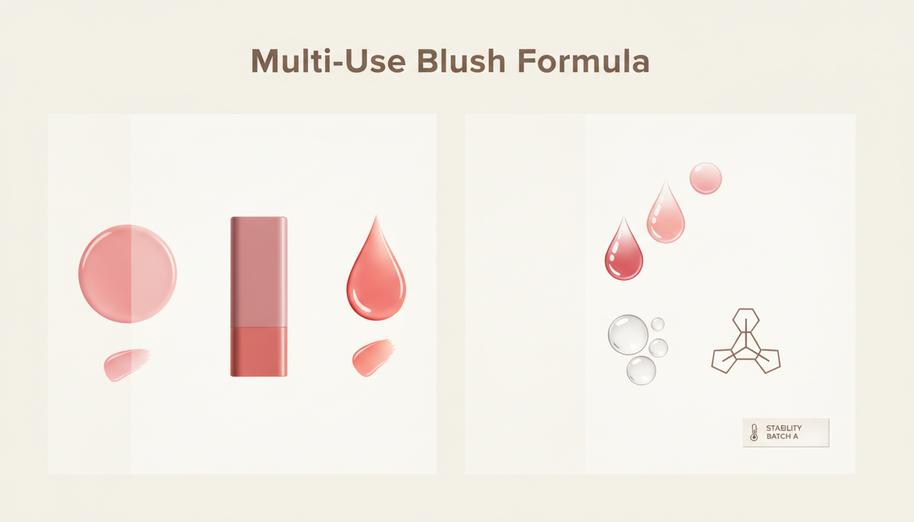
A multi-use shade has to look good, feel comfortable, and stay put across different application styles. Asking what is the color of blush is only the start; formula design and handling shape the final result.
Formulation Balance of Pigments, Emollients, and Binders
A solid formulation is a balancing act: change one part, and the finish can shift quite a bit.
-
Color and payoff
- Pigments create the visible blush color and must disperse evenly to avoid streaks.
- When someone asks what is the color of blush, pigment type, concentration, and skin tone all affect the answer.
-
Feel and wear
-
Emollients provide slip, helping a shade glide rather than drag.
-
Binders help color grip the skin and support even wear.
- Careful ingredient balance controls payoff.
- It also shapes texture, spread, and adhesion.
-
That’s cosmetic chemistry in practical terms: color, comfort, and hold need to play nicely together.
Swipe, Dab, or Buff: Tools for Cream, Stick, and Liquid Blush
Different formats call for different application techniques, and there’s no need to make it complicated.
- Swipe stick blush lightly, then soften its edges using finger application or a brush.
- Dab cream blush onto the cheeks and tap it out with fingertips or a sponge.
- Place a small amount of liquid blush, then diffuse quickly with suitable makeup brushes.
These beauty tools can change apparent blush color and intensity. So what is the color of blush on the face? Often, it’s the shade plus the amount applied, blending method, and natural skin color underneath.
Stability Testing and Quality Control in Batch Production
Reliable multi-use color depends on checks before and during batch production.
-
Formula checks
- Stability testing tracks changes in color, odor, and texture.
- Shelf life assessment helps establish how long the product maintains expected qualities.
-
Production checks
-
Quality control reviews raw materials, color matching, filling, and packaging.
-
The manufacturing process should keep one batch close to the next.
- Good product consistency helps the blush shade perform predictably.
- Appropriate preservation and testing support cosmetic safety.
-
In short, blush color is not just a shade name; controlled production helps keep that color dependable.
References
- matte or satin finishes – allure.com / Allure
- warmth and depth – byrdie.com / Byrdie
- liquid formulas – cosmopolitan.com / Cosmopolitan
- everyday makeup – nylon.com / Nylon
- comfortably skin-like – vogue.com / Vogue
- controlled layering – harpersbazaar.com / Harper’s Bazaar
- melt into the skin – instyle.com / InStyle
- absorb oil – healthline.com / Healthline
- shade reads on skin – glamour.com / Glamour
- blending – elle.com / Elle
- berry shades – marieclaire.com / Marie Claire
- deeper complexions – makeup.com / Makeup.com
- wearable nude influence – teenvogue.com / Teen Vogue
- multi-use – wmagazine.com / W Magazine
- cosmetic safety – fda.gov / FDA
Post time: Aug-14-2026