

What Is Makeup Primer?
When your brand needs staying power, a killer makeup primer is the secret weapon turning flawless performance into private label profit.
Makeup primer is the unsung bouncer of your beauty routine—the quiet pro standing at the velvet rope, deciding how long your foundation gets to party. Consumers don’t just want pretty; they want staying power. Creasing, caking, mid-day shine? That’s the heartbreak. A smart primer smooths the stage, grips pigment, and keeps the spotlight exactly where it belongs—on flawless skin.
According to Grand View Research, the global face primer market is projected to grow steadily through the decade, driven by demand for long-wear and skin-perfecting formulas. Translation? Shoppers aren’t winging it anymore—they’re investing in prep.
For brands and private label buyers, this isn’t just another SKU. It’s the glue between skincare and color cosmetics, the difference between “looks good at 9 a.m.” and “still flawless at happy hour.” Get the base right, and everything on top performs like a headliner.
What Does a Primer Actually Do?
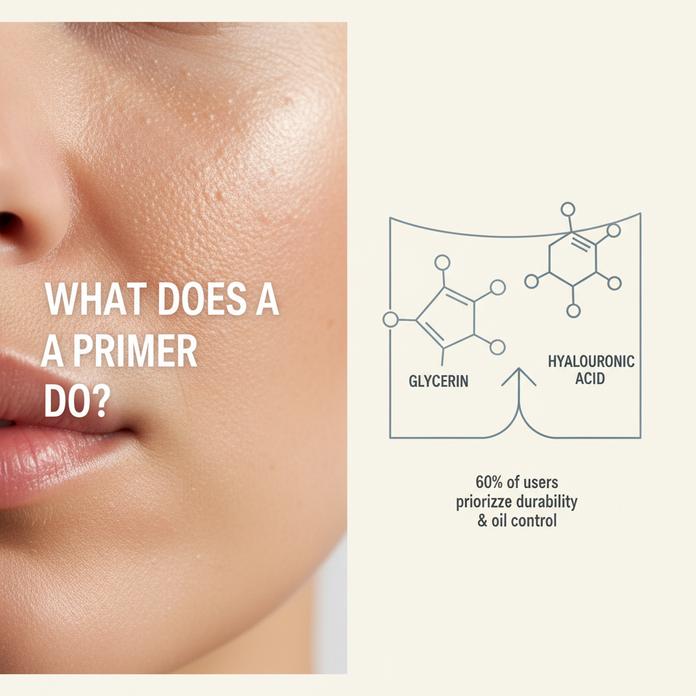
A good makeup primer isn’t just extra cream before foundation—it’s the quiet hero of smooth glam. From blurring pores to boosting makeup wear time, the right primer can totally change how your base looks and lasts. Let’s break down what a makeup primer really does for your skin and your vibe.
How Primer Creates a Smooth Canvas for Makeup
A makeup primer works at the surface level, focusing on visible skin texture and tone.
-
Surface Smoothing
-
Targets uneven skin texture
-
Softens the look of fine lines
-
Minimizes visible pores
-
-
Forms a thin film for a smooth surface
-
-
Tone Refining
-
Helps promote a more even skin tone
-
Supports seamless makeup application
-
-
Formula Types
-
Silicone-based blends create a soft-focus, blurring effect
-
Lightweight gel options prep skin without heaviness
-
As a foundation primer, it fills tiny gaps so base products don’t sink in. The result? A clean glide, less patchiness, and a finish that looks filtered but still real.
Primer’s Role in Enhancing Makeup Longevity
When it comes to staying power, makeup primer is all about grip and balance.
-
Oil & Shine Control
-
Absorbs excess sebum for better oil control
-
Adds a subtle mattifying effect
-
-
Wear Protection
-
Boosts makeup wear time
-
Improves sweat resistance
-
Helps prevent fading, creasing, and smudging
-
Supports a more transfer-proof finish
-
-
Adhesion Support
-
Preps skin so foundation bonds evenly
-
Reduces mid-day separation
-
According to Statista’s 2025 global beauty report, long-wear base products remain a top consumer demand, with over 60% of users prioritizing durability and oil control in face makeup.
Brands like Topfeel Beauty design makeup primer formulas that balance grip with comfort, so your base stays put without feeling tight. A solid cosmetic primer keeps your look fresh, even when the day runs long.
The Science Behind Primer’s Skin Prep Effect
A makeup primer isn’t magic—it’s smart formulation working with your skin barrier.
Hydration matters. Ingredients like glycerin and hyaluronic acid boost hydration, keeping skin flexible so foundation doesn’t crack.
Balance matters too. A water-based face primer suits oily skin, while a silicone-based option enhances slip and that soft blurring effect.
Quick breakdown:
-
Hydrators → maintain moisture levels
-
Smoothing agents → refine texture
-
Oil absorbers → enhance mattifying effect
When these ingredients work together, the makeup primer improves texture, supports adhesion, and creates a base that feels light but performs hard. Topfeel Beauty approaches primer as true skin prep, not just makeup—because better prep means better payoff.
Types of Makeup Primers Explained
A good makeup primer can totally change how your base looks and feels. Think of it as the quiet hero under your foundation makeup. From hydrating primer formulas to oil-free face primer picks, here’s how to match the right product to your skin vibe.
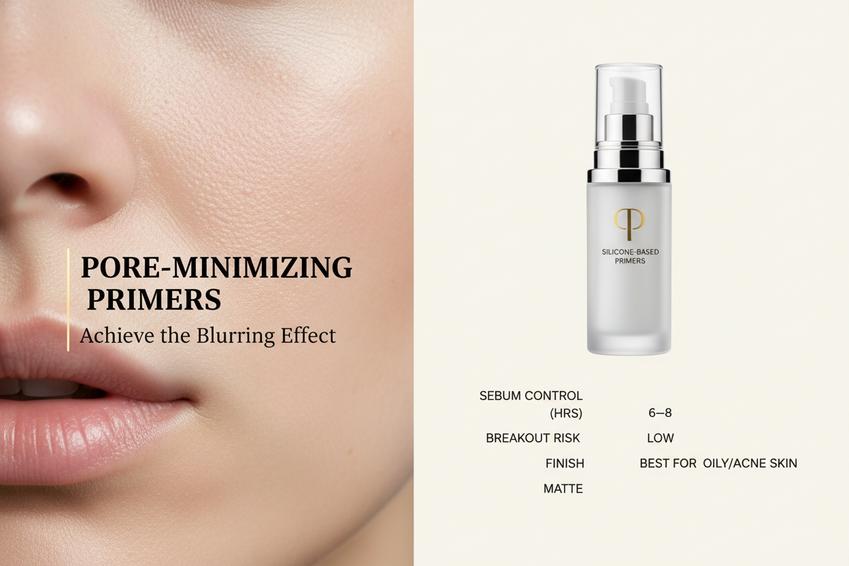
Silicone-Based Primers: The Secret to a Flawless Finish
When your goal is serious smoothness and long makeup longevity, silicone formulas step up.
-
Core ingredients
-
Silicone blends
-
Dimethicone for sealing and slip
-
Elastomers for filling fine lines
-
-
-
Skin impact
-
Refines texture
-
Creates an even canvas
-
Boosts wear time of your makeup base
-
How it works is pretty simple. The silicone layer forms a breathable film over skin, softening rough patches and blurring pores. Combination skin types love this style of makeup primer because it balances oily zones while keeping drier areas from looking patchy.
Many pro kits from Topfeel Beauty include silicone-based face primer options designed for studio lights and long shoots. The finish? Polished, not heavy. Your foundation makeup just glides.
Hydrating Primers for Dry Skin: A Must-Have in Your Kit
Dry skin and flaky foundation? No thanks. A hydration-focused makeup primer fixes that fast.
Look for:
-
Hyaluronic acid for deep moisture
-
Glycerin to lock in comfort
-
Aloe for calm, daily plumpness
Here’s how to use it:
-
Apply a thin layer after skincare.
-
Press gently into dry skin zones.
-
Wait 30 seconds before foundation.
The result is a soft, dewy finish that feels fresh, not greasy. A hydrating primer works like a cushion between skin and makeup base, helping everything melt together. Some users even skip heavy moisturizer during humid months and rely on this type of face primer instead.
Topfeel Beauty designs hydrating makeup primers that focus on skin comfort, so your glow looks real, not shiny.
Oil-Free Primers: Ideal for Oily and Acne-Prone Skin
If midday shine drives you crazy, an oil-free makeup primer is your go-to.
-
Formula priorities
-
Mattifying agents for strong shine control
-
Oil absorbers to manage sebum
-
Non-comedogenic testing to reduce breakouts
-
A lightweight texture that won’t clog pores
-
Performance comparison:
| Feature | Oil-Free Primer | Regular Primer | Heavy Cream Base |
|---|---|---|---|
| Sebum Control (hrs) | 6–8 | 3–4 | 1–2 |
| Breakout Risk | Low | Medium | High |
| Finish | Matte | Natural | Dewy |
| Best For | oily skin | Normal Skin | Dry Skin |
This kind of primer for makeup helps your foundation makeup stay put without sliding off. For teens and adults dealing with acne-prone skin, it’s a safer daily pick that keeps pores clearer over time.
Pore-Minimizing Primers: Achieve the Blurring Effect
Big pores can mess with an otherwise flawless base. A pore minimizing makeup primer handles that with smart light tricks.
-
Technology focus
-
Silicone elastomers
-
Create a soft blurring effect
-
Deliver visible texture refinement
-
-
-
Visual results
-
Smooth skin look
-
Subtle optical illusion under light
-
More even tone
-
Truly flawless base finish
-
“Global demand for pore-refining face primers continues to rise, driven by high-definition imaging and social media usage,” notes a 2025 Statista beauty market update, highlighting increased consumer focus on skin-perfecting base products.
In real life, that means your makeup primer works overtime in selfies and real-world lighting. Just tap it into enlarged pores, don’t rub. The finish looks filtered but still like skin.
How to Apply Makeup Primer Correctly
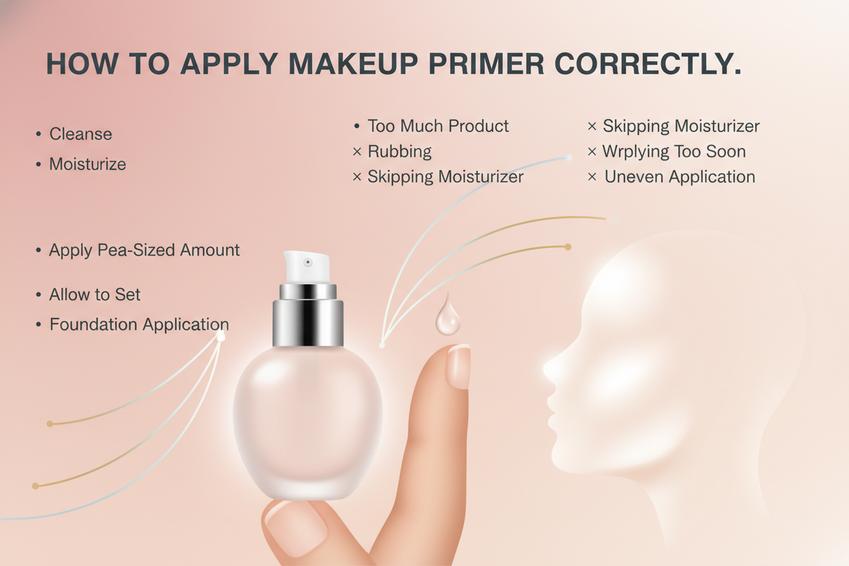
Makeup can look flawless or fall flat, and the difference often comes down to how you handle your makeup primer. A good primer for makeup acts like that quiet friend who keeps everything together. When your makeup base is smooth, your foundation sits better, lasts longer, and doesn’t slide off by lunch.
Step-by-Step Guide to Applying Primer for a Smooth Base
Getting the most out of your makeup primer starts before the bottle even opens.
-
Skin Prep Routine
1.1 Clean Canvas
-
Start by cleanse skin gently to remove oil and leftover skincare.
-
Pat dry; don’t rub.
1.2 Hydration Layer
-
Lightly moisturize.
-
Let it absorb fully to avoid mixing textures.
-
-
Applying the Makeup Primer
2.1 Right Amount
-
Squeeze a pea-sized amount of makeup primer.
-
Warm it between fingers.
2.2 Targeted Placement
-
Focus on the T-zone if you’re oily.
-
Press onto dry patches if your base clings there.
-
Spread into an even layer, not a thick coat.
2.3 Setting Time
-
Gently apply primer using tapping motions instead of dragging.
-
Allow to set for about a minute. Skin should feel smooth, not wet.
-
-
Moving to Base Makeup
3.1 Seamless Transition
-
Begin foundation application with light pressure.
-
Blend; don’t overwork.
-
A quality face primer, like those developed by Topfeel Beauty, is designed to balance grip and comfort so your makeup base stays fresh without feeling heavy. A solid cosmetic primer doesn’t mask skin; it refines it.
Common Primer Application Mistakes and How to Avoid Them
Even the best makeup primer can misbehave if handled wrong. Here’s what usually goes sideways:
-
Using too much product: More doesn’t mean smoother. It often causes slipping.
-
Aggressively rubbing primer into skin: This can lead to pilling.
-
Skipping moisturizer: Dry skin under primer equals uneven texture.
-
Choosing the wrong primer type for your skin concern.
-
Applying makeup too soon before the primer sets.
-
Creating an uneven application by ignoring certain areas.
To fix these habits:
-
Match formulas. If your foundation is water-based, avoid heavy silicone-heavy layers underneath.
-
Keep motions gentle—press and smooth, don’t scrub.
-
Wait briefly before foundation. A settled makeup base grips better.
Topfeel Beauty focuses on compatibility between makeup primer and foundation formulas, which makes layering easier and cuts down on that annoying pilling effect.
A smart makeup primer routine doesn’t take extra time. It just takes a little patience and the right touch. When done right, your primer makeup step turns good makeup into great makeup.
7 Questions to Ask Primer Suppliers
Choosing the right makeup primer supplier can feel tricky. A solid primer makeup base sets the tone for your whole line. Ask smart questions, check the details, and make sure your makeup base primer truly performs.
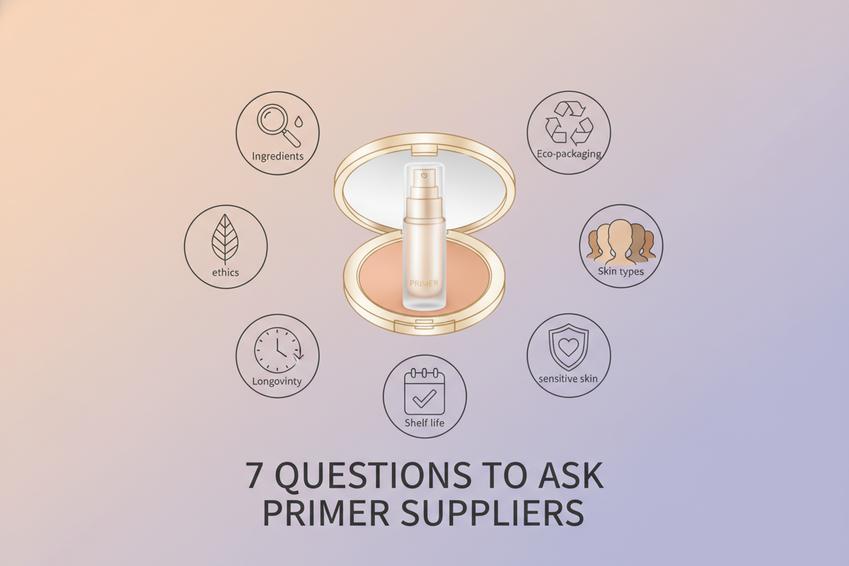
What Are the Key Ingredients in Your Makeup Primer?
When reviewing a makeup primer, break ingredients down clearly:
-
Core base structure
-
silicone systems like dimethicone for slip and pore blur
-
water-based gels for lightweight primer makeup wear
-
-
Active care components
-
hyaluronic acid and glycerin for hydration
-
niacinamide, vitamins, and antioxidants for skin balance
-
salicylic acid for oil control in oily skin formulas
-
-
Performance enhancers
-
texture balancers
-
oil-absorbing powders
-
A reliable makeup base primer should explain why each ingredient supports finish, feel, and wear.
Is Your Primer Cruelty-Free, Vegan, and Hypoallergenic?
Ethics matter in every makeup primer launch.
-
Certification review
-
valid cruelty-free certification
-
transparent animal testing policy
-
-
Ingredient sourcing
-
verified vegan ingredients
-
clear ethical sourcing statements
-
-
Safety validation
-
documented hypoallergenic testing
-
claims backed by allergy-friendly screening
-
Brands like Topfeel Beauty align product development with these standards so your primer makeup line meets global retail expectations.
Does Your Primer Offer Long-Lasting Makeup Grip?
Performance sells.
-
Test makeup longevity under heat and humidity.
-
Measure oil control after 4, 8, and 12 hours.
-
Evaluate adhesion with foundation compatibility trials.
Look for proof of transfer resistance, visible pore minimizing, and a consistent smooth finish. A true makeup primer should hold everything in place without feeling heavy.
What Is the Shelf Life of Your Primer?
Stability equals trust.
-
Documentation checklist
-
clear manufacturing date
-
printed expiration date
-
defined usage period after opening
-
-
Lab validation
-
microbial challenge testing
-
preservative review for safe preservatives
-
-
Storage guidance
-
recommended storage conditions
-
confirmed product stability in transit
-
A dependable makeup primer keeps texture and scent stable from factory to vanity.
Can Your Primer Be Used for Sensitive or Acne-Prone Skin?
For sensitive markets, details matter.
-
Skin safety profile
-
labeled non-comedogenic
-
strictly fragrance-free and oil-free
-
low irritation potential
-
-
Clinical support
-
dermatologist tested confirmation
-
screening for skin sensitivity
-
-
Formula boosters
-
calming soothing agents
-
Your primer makeup should protect the skin barrier while prepping it.
How Does Your Primer Work with Different Skin Types?
A flexible makeup primer line covers:
-
oily skin with mattifying control
-
dry skin needing hydration boost
-
combination skin balancing shine and comfort
-
normal skin seeking smooth texture
-
mature skin improving skin texture and even skin tone
Topfeel Beauty develops variants so each makeup base primer feels tailored, not generic.
Is Your Primer Available in Eco-Friendly Packaging?
Sustainability speaks loud.
-
Material options
-
recyclable materials
-
post-consumer recycled content
-
biodegradable packaging
-
-
Design strategy
-
clean minimalist design
-
practical refillable options
-
-
Environmental metrics
-
reduced carbon footprint
-
verified sustainable sourcing
-
A responsible makeup primer isn’t just about formula. The packaging tells the rest of the story.
FAQs
What ingredients define a high-performance makeup primer formulation?
A high-quality makeup primer lives or dies by its base and actives:
-
Texture builders: dimethicone in silicone-based formulas for a pore-minimizing, blurring effect; water-based or oil-free bases for lighter skin prep.
-
Hydration system: glycerin, hyaluronic acid, and aloe vera extract to support dry skin and aging skin with a soft, radiant finish.
-
Balancing actives: niacinamide and salicylic acid for oily skin or acne-prone skin, helping control shine while keeping the formula non-comedogenic.
When these elements align, the result is a smooth canvas with real makeup grip and long-lasting makeup performance.
How can makeup primer be customized for different skin types and concerns?
Customization is a strategic balance between base type and targeted benefits:
For oily or combination skin
-
Oil-free, mattifying, silicone-based blends
-
Salicylic acid + niacinamide for shine control and clearer texture
For dry or sensitive skin
-
Hydrating, water-based formulas
-
Glycerin, hyaluronic acid, aloe vera extract
-
Fragrance-free, hypoallergenic positioning
For uneven tone or dullness
-
Color-correcting variants
-
Light-reflective finish for a radiant finish effect
Each version must remain lightweight while preserving makeup grip and comfort across long wear.
What should bulk buyers confirm before sourcing private label makeup primer?
Behind every successful launch stands disciplined manufacturing:
-
Certifications & claims: cruelty-free, vegan, paraben-free, dermatologist-tested, non-comedogenic.
-
Manufacturing standards: produced in a GMP certified facility with strict quality control testing, verified ingredient sourcing, and stable shelf life stability.
-
Packaging choices: airless pump bottle for hygiene, squeeze tube for portability, glass dropper or plastic jar options using recyclable materials and a tamper-evident seal.
-
Operational factors: clear production lead time and proven batch consistency.
When formulation strength meets reliable manufacturing, the product earns trust long before it reaches the skin.
References
-
Face Primer Market Size, Share & Trends Report 2030 – Grand View Research
-
What Is Primer and How Do You Use It? – Healthline
-
The Absolute Best Way to Apply Face Primer – Allure
-
What Does Primer Actually Do for Your Face? – Cosmopolitan
-
Silicone-Based vs. Water-Based Primers: How to Choose – Byrdie
-
Dimethicone in Skin Care: Benefits and Safety – Paula’s Choice
-
How to Repair Your Skin Barrier – Cleveland Clinic
-
The Role of Humectants and Glycerin in Cosmetics – ScienceDirect
-
Skin Care for Acne-Prone Skin: Makeup Tips – American Academy of Dermatology
-
Why Is My Makeup Pilling? Experts Explain the Causes – Self
-
EWG Skin Deep® Cosmetic Database – EWG
-
Leaping Bunny Standards for Cruelty-Free Certification – Cruelty Free International
-
Cosmetic Labeling Guide – FDA
Post time: Mar-18-2026