
What Is in Lip Gloss? The Ingredients Behind Shine, Hydration, and Long Wear
Ask what is in lip gloss and you’re really asking why some tubes sell out while yours stall—because texture, shine, and wear are engineered choices, not luck.
Pick oils, polymers, and pigments with intent, control feel, gloss, and story—clean, plush, or long-wear—so line hits shelves with a point of view, not a shrug.
Reading Notes: What Is in Lip Gloss Today
➔ Base Oils & Waxes: Mineral oil, castor oil, and beeswax create slip, shine, and structure while sealing in moisture.
➔ Polymer Additives: Ingredients like polybutene and hydrogenated polyisobutene form flexible, glossy films that boost adhesion and wear.
➔ Pearlescent Pigments: Mica, iron oxides, and synthetic fluorphlogopite deliver shimmer and dimension without heavy opacity.
➔ Hydration Heroes: Hyaluronic acid attracts water to plump lips, supports barrier repair, and maintains formula stability for lasting comfort.
Surprising Spotlights: What Is In Lip Gloss Today?
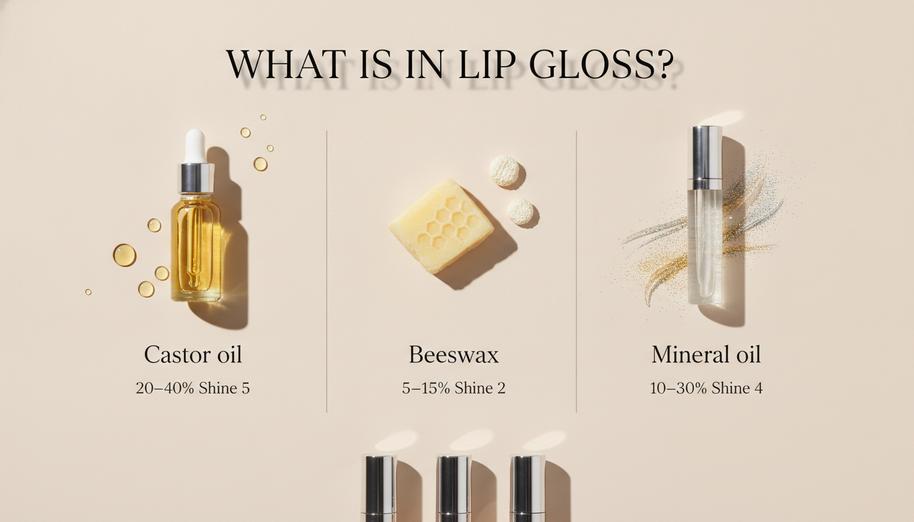
Curious about what is in lip gloss and why it feels so smooth or looks extra shiny? Let’s break down lip gloss ingredients in a way that actually makes sense. From oils to polymers to shimmer dust, here’s what is in lip gloss and why it matters.
Base Oils and Waxes Overview
When people ask what is in lip gloss, the base usually does the heavy lifting.
-
Core Liquid Oils
- Castor oil: boosts shine and pigment grip.
- Mineral oil: locks in moisture, adds slip.
- Jojoba oil: lightweight, skin-friendly feel.
-
Structural Waxes
- Beeswax and Carnauba wax give thickness.
- Shea butter and Lanolin soften and reduce dryness.
-
Functional Roles
- Gloss shine
- Barrier support
- Smooth spread
| Ingredient | Typical % Range | Texture Impact | Shine Level (1–5) |
|---|---|---|---|
| Castor oil | 20–40% | Thick, smooth | 5 |
| Beeswax | 5–15% | Firming | 2 |
| Mineral oil | 10–30% | Silky slip | 4 |
Brands like Topfeel balance these ratios carefully so the gloss feels plush, not sticky.
Innovative Polymer Additives
Beyond oils, modern formulas answer the bigger question: what’s in lip gloss that makes it last?
- Polybutene and Hydrogenated polyisobutene act as shiny film formers.
- Silicones improve glide.
- Acrylates copolymer helps prevent feathering.
- Flexible Polymers and soft Emollients boost comfort.
Application flow:
- Spread → 2) Film formation → 3) Shine lock → 4) Wear resistance.
“The global lip product market continues to see growth driven by long-wear and high-shine hybrid formulas,” notes a 2025 Euromonitor International beauty report.
That demand pushes labs, including Topfeel, to refine gloss formulation science without making lips feel tight.
Tiny Pigments and Sparkles
Color answers the fun side of what is in lip gloss.
I. Base Pigments
A. Iron oxides for reds and browns
B. Titanium dioxide for brightness
C. D&C dyes for vivid tones
II. Light Reflectors
A. Mica for soft shimmer
B. Synthetic fluorphlogopite for glassy sparkle
C. Bismuth oxychloride for pearly glow
III. Special Effects
- ✦ Fine Glitter for bold shine
So, when someone asks what is in lip gloss, the short answer is simple: oils for comfort, polymers for hold, and pigments for pop. The long answer? A smart mix of chemistry and style.
3 Components That Add Glossy Shine
Curious minds keep asking, what is in lip gloss that makes it look like liquid glass. The answer isn’t magic. It’s a tight mix of shine boosters, texture smoothers, and light players working together.
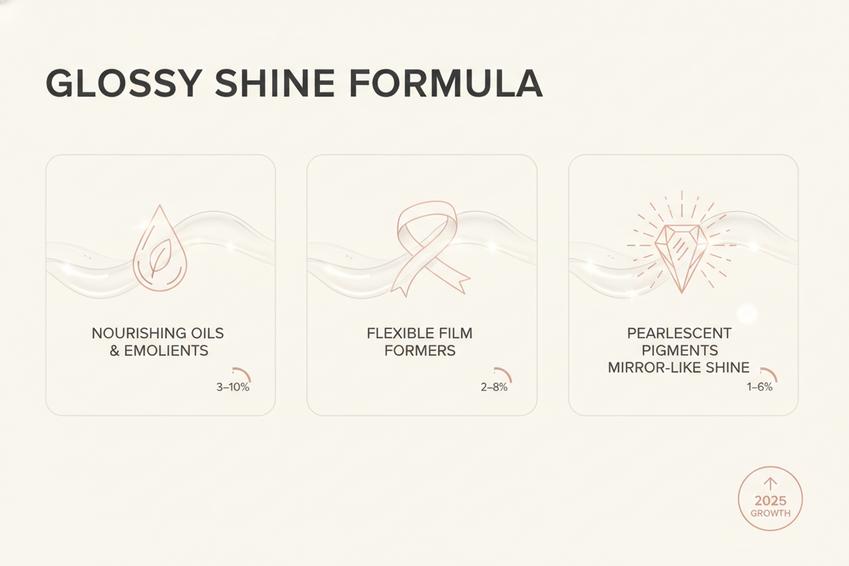
Oils and Emollients
When people search what is in lip gloss, oils sit at the top of the list. These are the comfort crew.
- Jojoba oil for lightweight moisture
- Mineral oil for classic gloss slip
- Castor oil for thick, glassy shine
- Shea butter softens dry patches.
- Squalane mimics skin’s natural lipids.
- Triglycerides improve spreadability.
At a deeper level:
-
Core Functions
-
Surface Smoothing
- Fill fine lip lines
- Increase light reflection
-
Conditioning
- Reduce transepidermal water loss
- Support barrier comfort with Vitamin E
-
Texture Balance
- Blend with Lanolin for cushion
- Stabilize pigment dispersion
-
So if you’re wondering what is in a lip gloss that makes it feel buttery but not greasy, this is it. Brands like Topfeel fine-tune oil ratios so gloss feels plush, not heavy. Lip gloss ingredients here define comfort before shine even shows up.
Film Formers
Gloss that disappears in ten minutes? Not cute. Film-forming agents fix that.
| Ingredient Type | Example Entities | Average Use % | Primary Benefit |
|---|---|---|---|
| Synthetic Polymers | Acrylates, PVP | 3–10% | Adhesion, wear time |
| Silicone-Based | Silicones | 2–8% | Slip, gloss boost |
| Natural-Derived | Cellulose, Waxes | 1–6% | Structure, stability |
Nested roles break down like this:
-
Structural Matrix
- Resins create flexible hold
- Polymers bind oils evenly
-
Sensory Control
- Adjust tack level
- Reduce feathering
-
Gloss Retention
- Form breathable layer
- Lock in shine from emollients
According to Grand View Research (2025),
The global lip cosmetics market continues steady growth, driven by high-shine and long-wear hybrid formulas that blend skincare benefits with visual impact.
That explains why what is in lip gloss now often overlaps with treatment ingredients. Topfeel uses balanced film-forming agents so shine lasts without that sticky hair-trap moment.
Pearlescent Pigments
Still asking what is in lip gloss that makes it sparkle under sunlight? This is the light science part.
Key reflectors include:
- Mica
- Bismuth oxychloride
- Titanium dioxide
- Iron oxides
- Synthetic fluorphlogopite
How it works:
-
Light Interaction
-
Reflection
- Smooth plate-like particles bounce light
-
Refraction
- Layered minerals bend light angles
-
-
Visual Effects
- Soft glow
- High-shine lacquer
- Bold Glitter sparkle
-
Finish Control
- Subtle Opalescence for everyday wear
- Dense shimmer for statement looks
In simple terms, if you’ve ever typed what is in lip gloss after spotting that wet, mirror-like finish, pearlescent systems are your answer. The balance of particle size and dispersion controls how dramatic the shine feels.
So next time someone asks about ingredients in lip gloss, you’ll know: oils cushion, film formers seal, pigments glow. And that trio is what truly defines what is in lip gloss.
Natural Vs. Synthetic Gloss Formulas
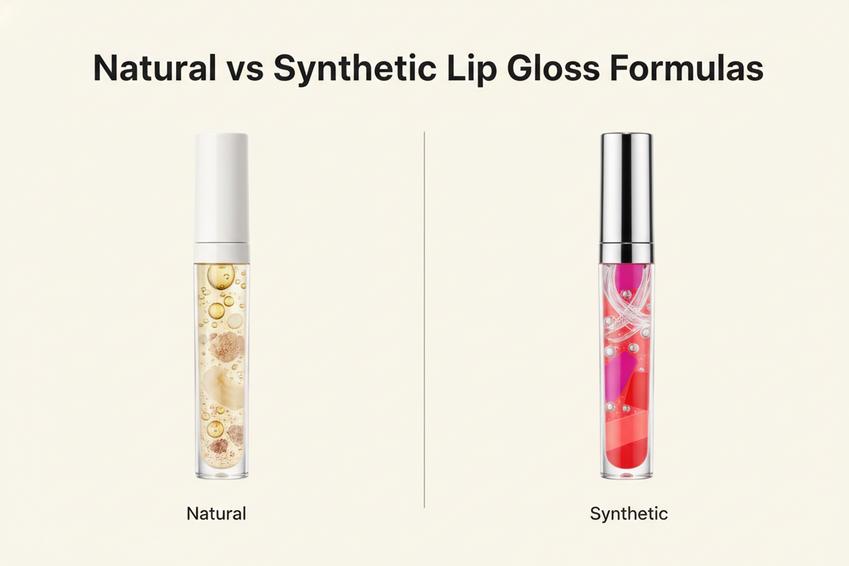
Curious about what is in lip gloss and why some tubes feel silky while others last all day? The answer sits in the formula. When people ask what is in lip gloss, they’re really comparing natural blends with lab-made mixes—and the vibe is totally different.
Natural Formulas
When breaking down what is in lip gloss, natural options usually center on plant-powered ingredients that feel easy on the lips.
-
Core base ingredients
-
Plant oils
- Jojoba oil: lightweight shine, quick absorption
- Vitamin E: antioxidant support
-
Beeswax
- Adds structure
- Locks in moisture
-
Shea butter
- Creamy texture
- Soft cushion feel
-
-
Color system
- Mineral pigments
- Botanical extracts
-
Performance notes
- Softer gloss
- Shorter wear time
- Subtle glow
If you’re Googling what is in lip gloss for clean beauty reasons, this is usually it—simple oils, waxes, and earth-based color. Brands like Topfeel refine these blends so natural doesn’t mean boring.
Synthetic Formulas
Ask again, what is in lip gloss, and synthetic formulas tell a different story—engineered shine, steady texture, longer hold.
-
Structure builders
-
Polymers
- Film-forming layer
- Extended wear
-
Microcrystalline wax
-
-
Slip enhancers
- Silicones
- Synthetic emollients
- Mineral oil
- Polybutene
-
Color stability
- Artificial dyes
- Preservatives
So when someone wonders what is in lip gloss that lasts through coffee runs, this is the lineup. The shine pops harder. The feel stays smooth. Topfeel balances these lab-crafted ingredients for consistency across climates.
At the end of the day, understanding what is in lip gloss—natural oils or smart polymers—helps you choose your gloss vibe with zero guesswork.
Dry Lips? Hyaluronic Acid To Rescue
Dry lips can make anyone ask, what is in lip gloss that actually works? If you’ve ever checked lip gloss ingredients and still felt confused, here’s the real scoop in plain wor
How Hyaluronic Acid Hydrates Lips
When people search what is in lip gloss, hydration usually tops the list. Here’s how hyaluronic acid handles it:
-
Attraction Phase
- Acts as a powerful humectant
- Binds water molecules from the air and surface
-
Retention Phase
- Boosts moisture retention
- Supports smoother texture and visible lip plumpness
-
Surface Effect
- Improves skin elasticity
- Softens the look of fine lines
At Topfeel, formulas are built so hydration feels light, not sticky. So when someone wonders what is in a lip gloss that gives that juicy shine, the answer often starts here.
Strengthening the Skin Barrier
Hydration alone isn’t enough. A healthy skin barrier keeps lips from cracking again.
- Ceramides, fatty acids, and natural lipids support barrier function.
- Reduced transepidermal water loss means moisture stays put.
- Protection against environmental stressors like wind and dry air.
Short story? Balanced lip gloss ingredients matter. That’s why Topfeel pairs hyaluronic acid with barrier-friendly components—so what’s in lip gloss isn’t just shine, but care.
Ensuring Formula Stability
Great hydration fails without formula stability. Here’s how it stays effective:
- Maintain proper pH balance for ingredient performance.
- Add antioxidants to limit oxidation.
- Use safe preservatives to extend shelf life.
- Fine-tune viscosity with smart emulsifiers for smooth glide.
Next time someone asks what is in lip gloss that actually lasts, remember: stable science plus thoughtful formulation—exactly how Topfeel keeps lips comfortable and glossy.
Photo Shoot: Gloss Without Flashback
Gloss looks cute in person, but cameras spill the tea. When people ask what is in lip gloss, they usually mean shine. Under studio lights, shine can bounce hard. So let’s unpack what is in lip gloss and keep it camera-safe while spotlighting smart formulas from Topfeel.
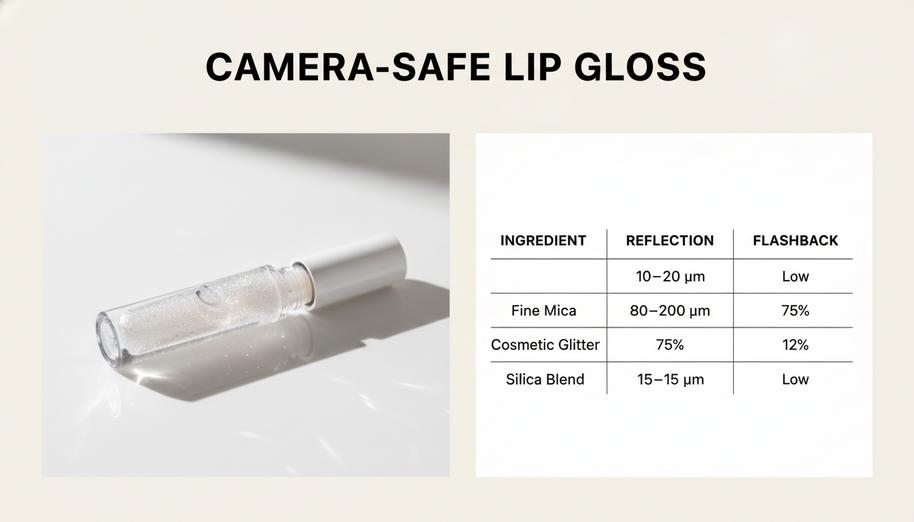
Choosing Non-Reflective Shimmers
When someone Googles what is in lip gloss, the answer often starts with shine agents. But not all shimmer behaves the same on camera.
- pigment
- mica
- glitter
- pearl
- finish
- texture
- light diffusion
- particle size
- Smaller particle size = softer light diffusion
- Dense glitter = higher flashback risk
- Fine mica + muted pearl = smoother finish
To make it practical:
- ✓ Choose micro-milled pigment
- ✧ Avoid chunky glitter
- ➜ Test under direct lighting
| Ingredient Type | Avg Particle Size (µm) | Light Reflection (%) | Flashback Risk | Recommended Use |
|---|---|---|---|---|
| Fine mica | 10–20 | 35 | Low | Studio shoots |
| Synthetic pearl | 15–25 | 40 | Medium-Low | Daylight photos |
| Cosmetic glitter | 80–200 | 75 | High | Avoid on camera |
| Iron oxides | <10 | 15 | Very Low | Base tint |
| Silica blend | 5–15 | 12 | Minimal | Soft-focus gloss |
So, what is inside lip gloss that won’t blind a lens? Go for controlled texture and subtle finish. Topfeel formulas balance shimmer without drama.
Matte-Finish Highlighters
People asking what is in lip gloss rarely think about contrast. Shine needs balance.
- powder
- cream
- liquid
- finish
- texture
- silica
- light absorption
- blurring effect
Here’s the move:
- Apply gloss.
- Tap matte powder with silica around the lip line.
- Blend for a soft blurring effect.
Short and sweet:
Shine pops. Matte frames it. Cameras chill.
A dab of cream highlighter with low light absorption keeps dimension without oil-slick vibes. That’s the trick behind camera-ready ingredients in lip gloss.
Layering Techniques for Cameras
If you’re still wondering what is in lip gloss, think layers.
- Base coat
- Gloss coat
- Seal
Now break it down:
-
Application Phase
- Prep with primer
- Light blending
-
Build Phase
- Thin base coat
- Controlled topcoat
-
Set Phase
- Mist setting spray
- Check under direct photography lighting
Multiple thin layers beat one thick swipe. Blot once. Reapply lightly. Done.
That’s really what is in lip gloss success: smart application, balanced ingredients, and lighting awareness. With Topfeel, shine stays glossy—not glaring.
References
- Mineral oil for Skin – byrdie.com/Byrdie
- Castor Oil: Uses, Benefits, and Side Effects – healthline.com/Healthline
- Health Benefits of Beeswax – webmd.com/WebMD
- Mica – safecosmetics.org/Safe Cosmetics
- Iron Oxides – safecosmetics.org/Safe Cosmetics
- Hyaluronic Acid – my.clevelandclinic.org/Cleveland Clinic
- Jojoba Oil for Face – healthline.com/Healthline
- What Is Shea Butter? – healthline.com/Healthline
- Silicones in Skincare – byrdie.com/Byrdie
- Titanium Dioxide in Skincare – byrdie.com/Byrdie
- What Is Squalane? – healthline.com/Healthline
- Vitamin E – lpi.oregonstate.edu/Oregon State University
- Humectant – healthline.com/Healthline
- Skin Barrier – healthline.com/Healthline
- Ceramides for Skin – webmd.com/WebMD
Post time: Jun-18-2026