
What Is Makeup Setting Spray Made Of? Ingredients Explained
Cut to the chase: what is in a makeup setting spray decides if your product sells or stalls today.
Buyers care about hold, skin feel, and claims, but formulation choices control cost, stability, and how you scale.
Topfeel Beauty’s formulation team notes in its 2025 materials that ingredient systems determine film strength, comfort, and compatibility across packaging and climates.
Quick Answers: what is in a makeup setting spray
→ Film Formers: Polyvinylpyrrolidone creates a breathable, flexible film that locks makeup in place, ensuring smudge- and transfer-proof wear.
→ Hydration Boosters: Glycerin, aloe vera, and hyaluronic acid deliver moisture, soothe irritation, and maintain a weightless feel without clogging pores.
→ Packaging Matters: PET plastic offers lightweight scalability; glass imparts luxury and stability. Both need fine-mist sprayers, strict sterilization, and regulatory-compliant labeling for optimal performance.
What Is In A Makeup Setting Spray: Basics Explained
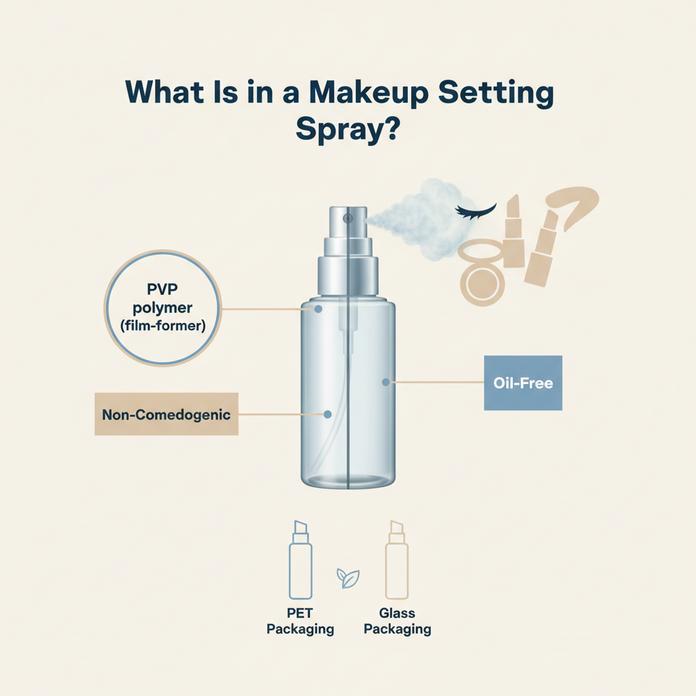
Curious about what is in a makeup setting spray and why it actually works? Let’s break down makeup setting spray ingredients in a chill, real-talk way so you know what you’re putting on your skin and why it matters.
The Role of Film Formers: Polyvinylpyrrolidone Explained
When people ask what is in a makeup setting spray, the star answer often starts with a film former—especially polyvinylpyrrolidone (aka PVP), a flexible polymer that locks everything in place.
-
Core idea:
- Forms a thin film over makeup
- Helps resist sweat, transfer, and smudging
- Keeps the setting spray feeling light, not crusty
-
How it behaves on skin
1.1 Liquid mist lands → evaporates quickly
1.2 PVP molecules link → create a soft mesh
1.3 That mesh holds foundation + powder steady
-
Why brands like Topfeel Beauty use it
- Smooth wear without stiffness
- Better blend retention
- Less midday touch-up drama
A cosmetic chemist report from Mintel (2025) notes:
“Flexible film-forming polymers such as PVP are key to long-wear claims, balancing durability with comfort in modern setting sprays.”
So yeah, if you’re wondering what is in a makeup setting spray that actually makes it last—this is the backbone.
Formulation Properties You Need: Non-comedogenic & Oil-free
Not all formulas feel the same, and if you’re Googling what is in a makeup setting spray for acne-prone skin, this part matters.
-
Key traits to scan for:
- non-comedogenic labels
- oil-free base
- lightweight formulation
• Why it matters
→ Keeps pores from clogging
→ Reduces excess sebum shine
→ Supports breakout-prone skin
Short breakdowns:
- Oily skin: oil-free = less slip
- Acne skin: non-comedogenic = fewer flare-ups
- Combo skin: balanced hold without heaviness
Topfeel Beauty keeps these needs in mind by tuning formulas so they don’t suffocate the skin while still answering the big question: what is in a makeup setting spray that won’t cause breakouts?
Also, quick note—“makeup setting spray ingredients” aren’t just about hold; they’re about skin behavior over hours.
Packaging Materials Impact: PET Plastic vs. Glass Bottle
People rarely think about packaging when asking what is in a makeup setting spray, but the container quietly affects performance and sustainability.
-
Two main options:
- PET plastic: light, travel-friendly
- glass bottle: sturdy, more premium feel
-
Material comparison
1.1 PET plastic
Pros: durable, easy recycling, lower shipping costCons: less luxe feel1.2 glass bottle
Pros: stable, cleaner aestheticCons: heavier, break risk -
Functional must-haves
- Fine mist sprayer compatibility
- Clean packaging process
- Safe cosmetic material standards
-
Sustainability angle
- PET = widely recyclable in many regions
- Glass = endlessly recyclable but energy-heavy
Topfeel Beauty balances these choices so the formula inside—yes, the answer to what is in a makeup setting spray—stays stable while the outside still feels good to use.
In short, the formula matters, but the bottle plays backup in a big way.
4 Key Ingredients In Every Setting Spray
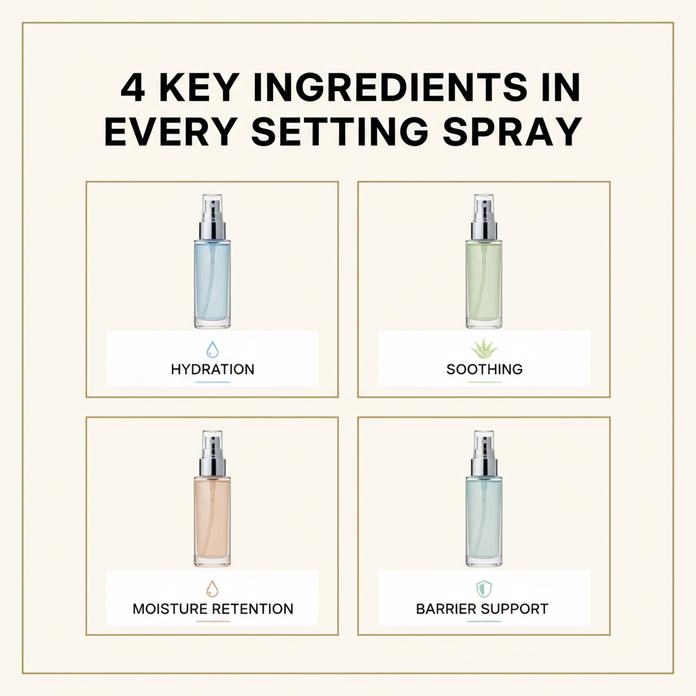
Ever wondered what is in a makeup setting spray and why it feels so light yet keeps everything locked in? The answer mixes smart hydration and skin-friendly actives. If you’re asking what’s in a makeup setting spray or what is in makeup setting spray formulas, here’s the real breakdown.
Glycerin for Hydrating Mist and Weightless Feel
When people ask what is in a makeup setting spray, this one shows up fast. Glycerin is a classic humectant that pulls in hydration without heaviness.
- light mist application
- breathable, weightless finish
- steady moisturizing effect on skin
Quick flow:
- attracts water
- holds moisture
- keeps that soft feel
A closer look:
-
Core role
- binds water to surface layers
- prevents tightness after makeup
-
Wear impact
- reduces patchiness
- keeps foundation flexible
Brands like Topfeel Beauty rely on it to keep formulas fresh, not sticky.
Aloe Vera’s Pore-Blurring, Soothing Power
If you’re still thinking about what is in makeup setting spray, Aloe Vera explains the calm, fresh finish.
Short bursts:
- soothing touch
- gentle blurring of pores
- anti-inflammatory comfort
How it works:
- calms stressed skin
- reduces redness
- smooths surface look
Nested view:
-
Skin comfort
- cooling extract
- supports recovery
-
Visual effect
- soft-focus finish
- less texture emphasis
Topfeel Beauty often pairs this with light mists to keep things wearable all day.
Hyaluronic Acid: Long-lasting Hydration Booster
Ask again, what is in a makeup setting spray, and this hydration hero pops up. Hyaluronic Acid is a powerhouse humectant.
Key notes:
- boosts moisture
- supports plumping
- extends wear in heat
Sequence:
- binds water
- locks it in
- keeps makeup smooth
Deeper structure:
-
Performance
- long-lasting hydration
- reduces creasing
-
Skin effect
- fuller look
- softer texture
It answers what’s in a makeup setting spray that actually keeps your base from cracking.
Niacinamide for Balanced pH and Skin Barrier Support
Rounding out what is in a makeup setting spray, Niacinamide (vitamin B3) adds balance.
- controls sebum
- supports pH balance
- strengthens skin barrier
Layered breakdown:
-
Skin health
- improves texture
- boosts resilience
-
Stability
- works across formulas
- supports long wear
Step flow:
- regulates oil
- reinforces barrier
- smooths overall finish
So when you ask again what is in a makeup setting spray, this is the ingredient that keeps everything in check while your look stays put.
Setting Sprays Vs. Mists: Main Differences
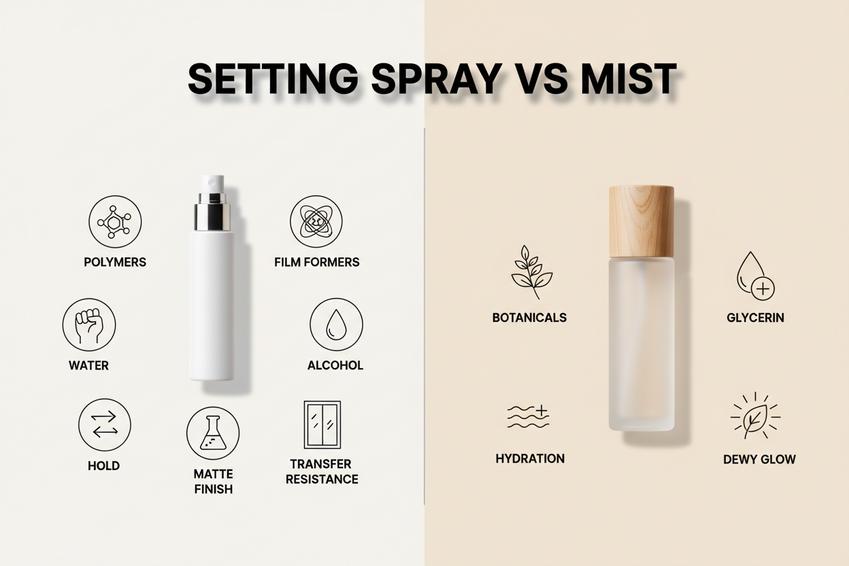
A lot of people ask what is in a makeup setting spray and how that compares to a face mist. The answer sits in texture, ingredients, and performance. If you’ve ever wondered what is in makeup setting spray formulas versus hydrating mists, this breakdown keeps it real and easy to follow.
Setting Sprays
When asking what is in a makeup setting spray, the core idea is hold and durability, not just a quick refresh.
-
Composition focus
-
polymers and film formers create a thin layer
- lock makeup in place
- improve transfer resistance
-
base mix
- water for spread
- often alcohol for fast drying
-
-
Performance behavior
- boosts makeup longevity
- controls shine for a matte finish
- helps resist sweat and humidity
-
How formulas differ
-
pro-grade sprays
- stronger film formers
- longer wear time
-
everyday sprays
- lighter polymers
- more flexible finish
-
-
Real-use flow
- apply after makeup
- mist evenly
- let the film formers set naturally
If you keep circling back to what is in makeup setting spray, brands like Topfeel Beauty design formulas that balance water, alcohol, and polymers so makeup stays put without feeling stiff. That’s the whole point of what is in a makeup setting spray—it’s built to hold.
Mists
Flip the question—what is in a makeup setting spray—and you’ll see why mists feel totally different.
-
Ingredient direction
- humectants like glycerin pull in moisture
- botanicals and essential oils add comfort
- a water-heavy base keeps it light
-
Skin effect
- instant hydration
- soft, refreshing feel
- subtle glow with a dewy finish
-
Usage rhythm
- before makeup
- during the day
- after makeup for a soft blend (not hold)
-
Experience
- soothing on dry skin
- never forms a tight film
- makeup may move slightly
So while people still search what is in a makeup setting spray, the better comparison is intent. Setting sprays lock; mists relax. Topfeel Beauty keeps both options clear—one built on film formers, the other powered by humectants—so you pick based on whether you want grip or glow.
Can Silicones Harm Your Skin Barrier?
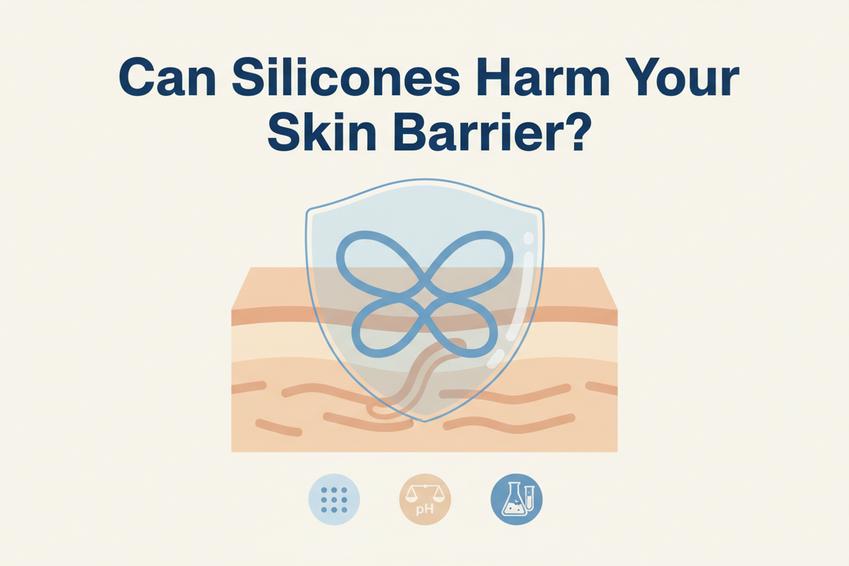
You’ve probably asked yourself, what is in a makeup setting spray, and whether those silky silicones are low-key messing with your skin. Let’s keep it real: most formulas, including Topfeel Beauty picks, are designed to support—not wreck—your barrier while keeping that finish smooth and locked in.
Assessing Occlusivity: Silicone’s Breathable Feel
Silicones sit in a sweet spot between comfort and function. They form a light film, not a suffocating seal.
-
Core idea:
-
silicone creates flexible film formation
- allows controlled permeability
- reduces transepidermal water loss
-
result → smoother skin feel, stable skin barrier
-
-
How this plays out in a setting spray (aka, yes—what is in a makeup setting spray matters):
-
Layer 1: Micro-thin coating
- doesn’t clog
- moves with skin
-
Layer 2: Breathable shield
- limits moisture escape
- avoids heavy occlusivity
-
-
Real-life vibe:
- makeup grips better
- skin doesn’t feel trapped
- finish looks soft, not greasy
Topfeel Beauty formulas lean into this balance, so when someone asks what’s in a makeup setting spray, silicones often carry that smooth, breathable performance.
Non-comedogenic Rating and Microbiological Testing
Not all shine equals breakouts. Most silicones are labeled non-comedogenic, meaning they don’t typically block pores or trigger comedones.
Quick breakdown:
- Non-comedogenic → low risk for acne
- Stable molecules → don’t feed bacteria
- Clean production → controlled microbial growth
Here’s a simple lab-style snapshot:
| Factor | Silicone Behavior | Skin Impact | Testing Focus |
|---|---|---|---|
| Pore interaction | Low adhesion | Fewer clogged pores | Comedogenicity tests |
| Microbial support | Minimal | Stable skin flora | Microbiological testing |
| Oxidation risk | Very low | Less irritation | Stability checks |
When people search makeup setting spray ingredients or ask what is in a makeup setting spray, this safety profile is a big reason silicones keep showing up. Topfeel Beauty keeps formulas tightly tested, so contamination isn’t part of the story.
Compatibility Testing: pH Balance & Skin Health
Getting along with your skin isn’t optional—it’s tested step by step.
- Start with compatibility screening
- check ingredient harmony
- flag irritation risks early
- Measure pH balance
- align with the acid mantle
- avoid disrupting the skin microbiome
- Barrier response testing
- monitor skin barrier strength
- track sensitivity signals
- Real-user validation
- short wear tests
- extended daily use
Short takeaways:
- good formulas respect skin health
- poor pH = irritation drama
- balanced sprays feel invisible
So next time you wonder what’s in a makeup setting spray or scan for makeup setting spray ingredients, remember: it’s not just what’s inside—it’s how well it plays with your skin. Topfeel Beauty keeps that balance tight, so your finish stays fresh without stressing your barrier.
Summer Scenario: Heat-Resistant Ingredients Explained
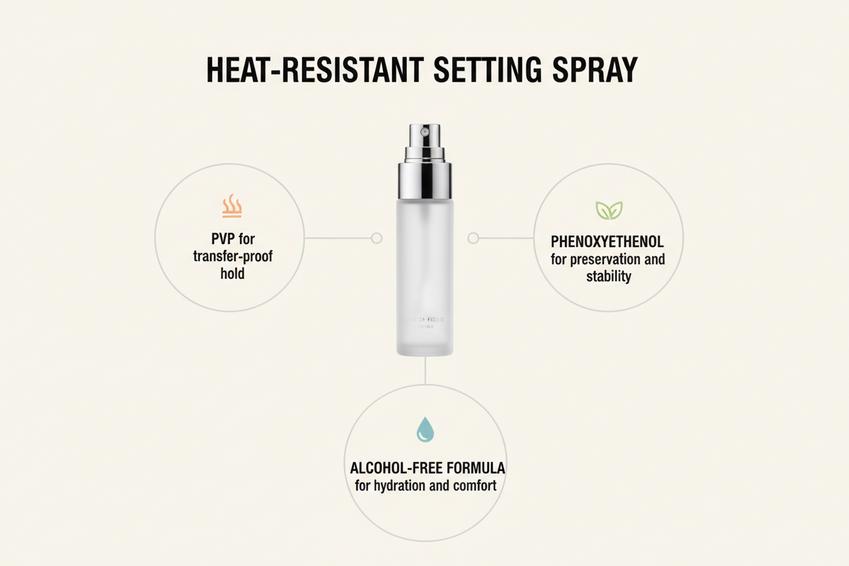
Hot weather flips the script on glam. If you’ve ever wondered what is in a makeup setting spray, this breakdown keeps it real—covering makeup spray ingredients, setting spray formula choices, and why some blends actually survive the heat.
Polyvinylpyrrolidone for Transfer-Proof, Heat-Resistant Hold
A closer look at what is in a makeup setting spray often starts with Polyvinylpyrrolidone or PVP, a flexible polymer that behaves like a breathable shield.
-
Core role of this film-former
- Creates a thin layer that grips pigment
- Helps resist sweat and oil
- Keeps a transfer-proof finish intact
-
Performance under heat
- Maintains heat-resistant structure
- Supports long-wear hold without cracking
- Works well in a setting spray base
-
Practical payoff
When people ask about makeup spray ingredients, this is the quiet workhorse. Topfeel Beauty leans on this ingredient to keep looks locked without feeling stiff, which matters when the temperature spikes.
Alcohol-Free Formulas to Prevent Excess Drying
Not every answer to what is in a makeup setting spray should include alcohol. An alcohol-free formula shifts the vibe completely.
-
Skin feel upgrade
- Reduced drying effect
- Better hydration balance
- Comfortable wear on sensitive skin
-
Ingredient synergy
- Added humectant support
- Maintains moisture in the skin
- Lowers risk of irritation
-
Real-world use
- Ideal for long outdoor events
- Helps makeup settle, not crack
“Post-2024 consumer reports show a clear shift toward hydration-focused setting sprays, with alcohol-free claims driving repeat purchases in warm climates.”
Topfeel Beauty taps into this shift, blending comfort with staying power so the setting spray formula feels easy, not tight.
Phenoxyethanol’s Role in High-Temperature Preservation
If you’re still asking what is in a makeup setting spray, preservation matters just as much as finish. Phenoxyethanol is a trusted preservative keeping formulas stable when temps climb.
• Guards against bacteria and microbes
• Extends shelf life in fluctuating heat
• Supports overall formulation stability
Short take: without it, your spray could spoil faster than you think.
A well-balanced setting spray formula blends safety with performance. Topfeel Beauty ensures this balance, so every spritz holds up—not just on your face, but inside the bottle too.
References
- Polyvinylpyrrolidone – pubchem.ncbi.nlm.nih.gov / PubChem
- Non-comedogenic – byrdie.com / Byrdie
- Sebum – healthline.com / Healthline
- PET plastic – bpf.co.uk / British Plastics Federation
- Glass bottle – gpi.org / Glass Packaging Institute
- Glycerin – medicalnewstoday.com / Medical News Today
- Humectant – wikipedia.org / Wikipedia
- Aloe Vera – nccih.nih.gov / NIH
- Anti-inflammatory – webmd.com / WebMD
- Hyaluronic Acid – my.clevelandclinic.org / Cleveland Clinic
- Niacinamide – lpi.oregonstate.edu / Linus Pauling Institute
- Skin barrier – allure.com / Allure
- Silicone – cosmeticsinfo.org / Cosmetics Info
- pH balance – ncbi.nlm.nih.gov / NCBI
- Phenoxyethanol – safecosmetics.org / Safe Cosmetics
Post time: Jul-31-2026