

What Is Foundation Makeup?
Skin that sells—your next private label success starts with foundation makeup that builds loyalty, not just coverage. Own the shelf now.
Foundation makeup is the quiet hero of every beauty line—the product shoppers grab when they want skin to look “put together” in five minutes flat. It’s the little black dress of cosmetics: always in style, always in demand. For private label buyers, it’s not just pigment in a bottle—it’s repeat sales, shade expansions, and brand loyalty wrapped into one smooth layer.
Here’s the rub: consumers expect coverage that feels like nothing, shades that actually match, and skincare perks baked in. Miss that mark, and carts get abandoned fast.
According to Statista’s 2024 U.S. cosmetics report, face makeup remains one of the top revenue drivers in beauty. As a Topfeel Beauty product manager puts it, “Performance sells, but consistency keeps contracts.”
So the real question isn’t what foundation does—it’s how your brand plans to own the shelf with it.
What Does Foundation Makeup Actually Do?
Foundation makeup sounds simple, yet it does way more than just add color. From smoothing your base makeup to boosting skin comfort, foundation and makeup formulas quietly work hard under the surface.
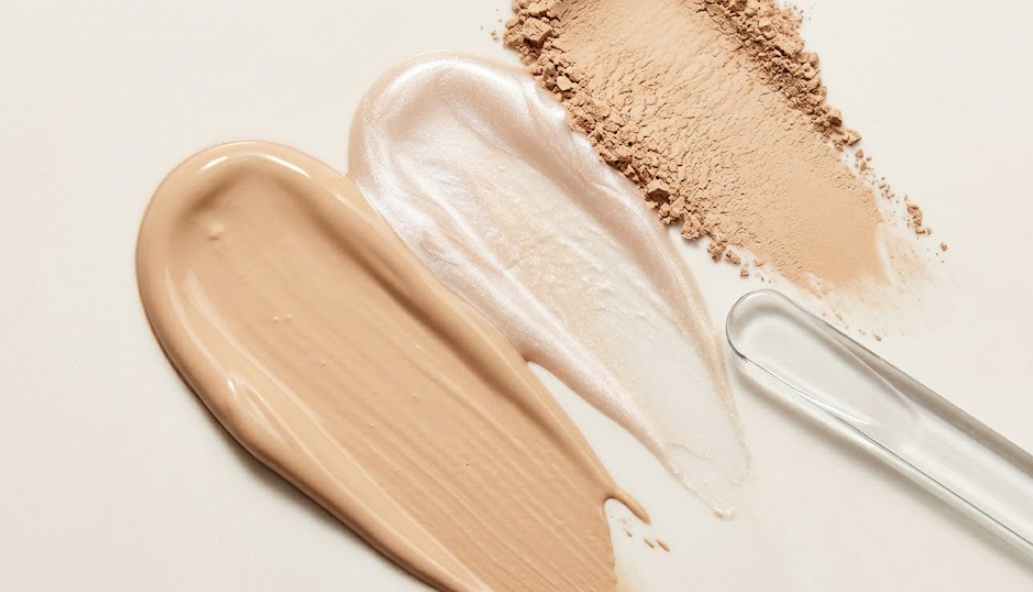
Creates an Even Skin Canvas with Pigments and Binders
Foundation makeup builds a true skin canvas through layered formulation logic:
- Core Color System
- Pigments
- Iron oxides for shade matching
- Titanium dioxide for brightness
- Result: balanced even tone across face and neck
- Pigments
- Adhesion Network
- Binders
- Polymers
- Natural wax blends
- Function: lock coverage onto skin for a lasting smooth finish
- Binders
- Texture Control
- Liquid foundation: flexible film
- Cream foundation: richer base
- Powder foundation makeup: oil absorption
When foundation makeup is blended well, uneven patches, redness, and dull spots soften. The base makeup feels unified, not heavy. Brands like Topfeel Beauty refine pigment dispersion so makeup foundation looks like real skin, just smoother.
Provides Sun Protection via UV Filters and Preservatives
Not all foundation makeup replaces sunscreen, yet many formulas support daily sun protection.
• UV filters help defend against short-term UV exposure
• Preservatives protect formula stability
• Added SPF boosts overall skin defense
| Component | Typical SPF Range | Main Function |
|---|---|---|
| Titanium Dioxide | 10–30 | UVB reflection |
| Zinc Oxide | 15–50 | UVA/UVB shielding |
| Organic Filters | 10–40 | Broad spectrum boost |
A 2025 Statista beauty report noted:
“Daily sun protection products with cosmetic benefits continue to see steady growth as consumers favor simplified routines.”
That’s where foundation makeup fits in. It blends light sunscreen support into everyday wear. Topfeel Beauty integrates stable UV filters while keeping texture breathable, so foundation and makeup layers don’t cake up.
Improves Skin Hydration Using Humectants and Emollients
Good foundation makeup doesn’t just sit there. It helps maintain skin hydration throughout wear.
Short bursts of comfort matter:
- Humectants pull in moisture from the environment.
- Emollients smooth texture and reduce tightness.
- Together, they support the skin barrier.
In serum foundation formulas, lightweight humectants keep makeup foundation flexible. In cream base makeup, richer emollients boost nourishment for drier skin.
The result? Foundation makeup that feels less like a mask and more like skincare with color. When makeup and foundation work with your skin instead of against it, the finish looks fresher—morning to night.
5 Key Benefits of Foundation Makeup Formulations
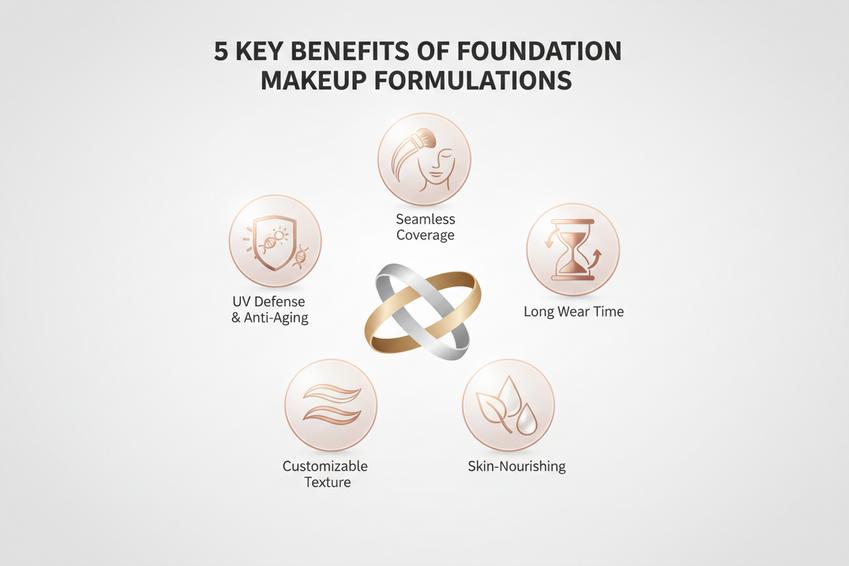
Foundation makeup is more than just color in a bottle. A well-designed foundation, or makeup foundation, blends science and style to upgrade daily base makeup routines. From smooth coverage to built-in SPF, modern formulas are doing a lot of heavy lifting while still feeling light on skin.
1 Seamless Coverage for Flawless Complexion
A high-performing foundation makeup formula builds true coverage through:
- Pigment Engineering
- Fine particle milling
- Even dispersion in emulsion systems
- Shade calibration for even skin tone
- Skin Interaction
- Optical blurring for blemish correction
- Light-diffusing powders for a soft-focus complexion
- Layer-friendly texture for flawless skin
- Application Performance
- Brush: higher payoff
- Sponge: sheerer finish
- Fingers: natural blend
The result? A smooth foundation layer that looks like skin, not a mask.
2 Long Wear Time Backed by High-Grade Binders
Long-lasting foundation makeup depends on smart binders that boost staying power and keep it transfer-resistant.
| Binder Type | Adhesion Strength (%) | Sebum Resistance (hrs) | Suitable Format | Wear Claim |
|---|---|---|---|---|
| Silicone Resin | 85 | 8 | Liquid | All-day wear |
| Acrylates Copolymer | 78 | 10 | Cream/Stick | Long wear |
| Polyurethane Film Former | 90 | 12 | Liquid | Transfer-resistant |
In real-world use:
- Higher resin = stronger film
- Balanced oil phase = flexible feel
- Smart polymer mix = true all-day wear
That’s why a solid makeup foundation doesn’t slide off by noon.
3 Skin-Nourishing Finish with Added Humectants
Great foundation makeup now treats skin kindly.
- Add humectants like glycerin to draw in water.
- Blend emollients for softness and moisturizing comfort.
- Stabilize with gentle emulsifiers to protect the barrier.
The payoff is visible skin nourishment, smoother texture, and naturally hydrated skin. A breathable base makeup routine feels less tight and looks more alive.
4 Customizable Texture Through Formula Adjustments
Not all foundation textures behave the same.
- Liquid: fluid application, adjustable finish
- Cream: richer texture, higher coverage
- Powder: matte surface control
Behind that flexibility sits the formula matrix: pigment load, oil phase ratio, and thickener choice. Brands tweak these variables to create a customizable experience—dewy, matte, sheer, or full glam. Small lab shifts can totally change how foundation makeup melts into skin.
5 UV Defense and Anti-Aging with Built-In Filters
Modern foundation makeup often doubles as daily shield.
- UV Protection System
- Mineral or chemical filters
- Broad-spectrum SPF support
- Boosted sun protection for daily exposure
- Skin Defense Complex
- Anti-aging support
- Vitamin blends to reduce dullness
- Pollution-defense actives
So your foundation doesn’t just perfect your base makeup look—it quietly backs up your skin against sun stress and early aging signs.
Liquid vs. Powder Foundation
Foundation makeup sits at the heart of any base routine. From quick daily touch‑ups to full glam nights, the right foundation makeup changes how skin looks and feels. Some love a dewy glow, others want that soft matte vibe. Let’s break down liquid and powder foundation makeup in a real, no‑nonsense way.
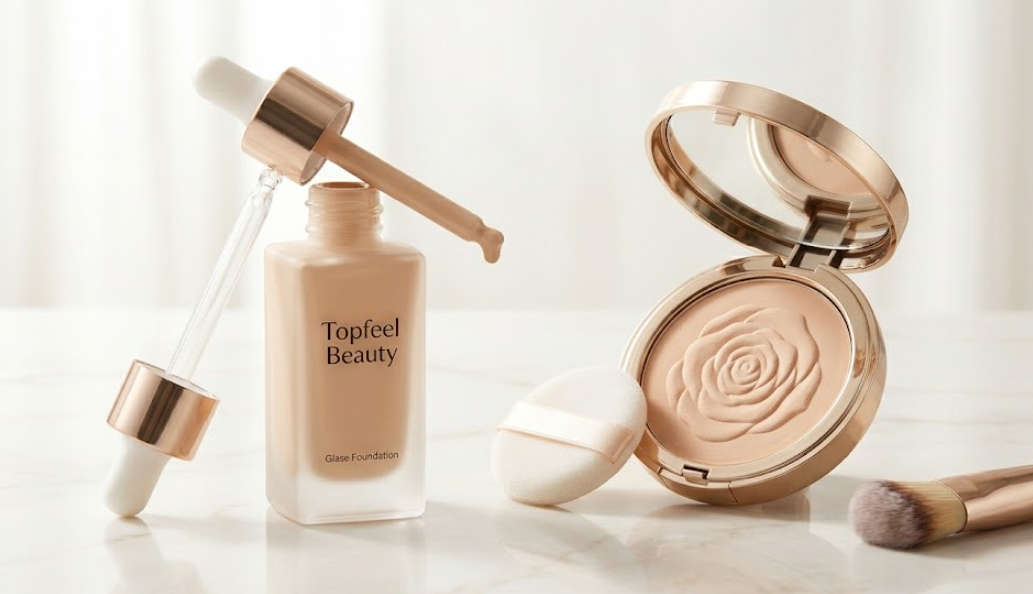
Liquid foundation
When it comes to lightweight liquid foundation, the magic starts with Emulsification Technology, blending pigments with skin-loving agents for smooth foundation makeup results.
- Core Composition
- Pigments
- Provide adjustable coverage in makeup foundation looks
- Even out tone for natural face foundation finish
- Emollients
- Help foundation glide easily
- Support flexible base makeup wear
- Humectants
- Maintain moisture balance
- Prevent cakey foundation makeup buildup
- Pigments
- Skin Compatibility
- Dry Skin
- Adds comfort
- Creates glow-focused makeup foundation
- Combination Skin
- Balances shine and hydration
- Dry Skin
- Application Flow
- Blend with sponge or brush
- Layer gradually for breathable foundation makeup
Brands like Topfeel Beauty refine liquid formulas to keep foundation makeup lightweight yet polished, making everyday base makeup feel effortless.
Powder foundation
Powder Foundation focuses on oil control and speed. Its finely milled structure shapes a different foundation makeup experience.
- Structural Elements
- Ground Pigments
- Deliver light coverage
- Offer buildable makeup foundation control
- Binders
- Improve adhesion
- Extend face foundation wear
- Ground Pigments
- Finish & Texture
- Matte Effect
- Reduces shine fast
- Ideal for oily base makeup routines
- Lightweight Feel
- Quick touch-ups
- Travel-friendly foundation makeup option
- Matte Effect
- Usage Scenarios
- Daily Commuting
- Humid Weather
- On-the-go foundation makeup fixes
Topfeel Beauty powder options keep foundation makeup fresh without heaviness. Liquid or powder, the right foundation makes makeup feel like skin—just better.
How to Choose Your Shade?
Finding the right foundation makeup shade can feel tricky, but it gets easier when you break it down. From undertones to packaging, every detail shapes how your makeup foundation looks, feels, and lasts.
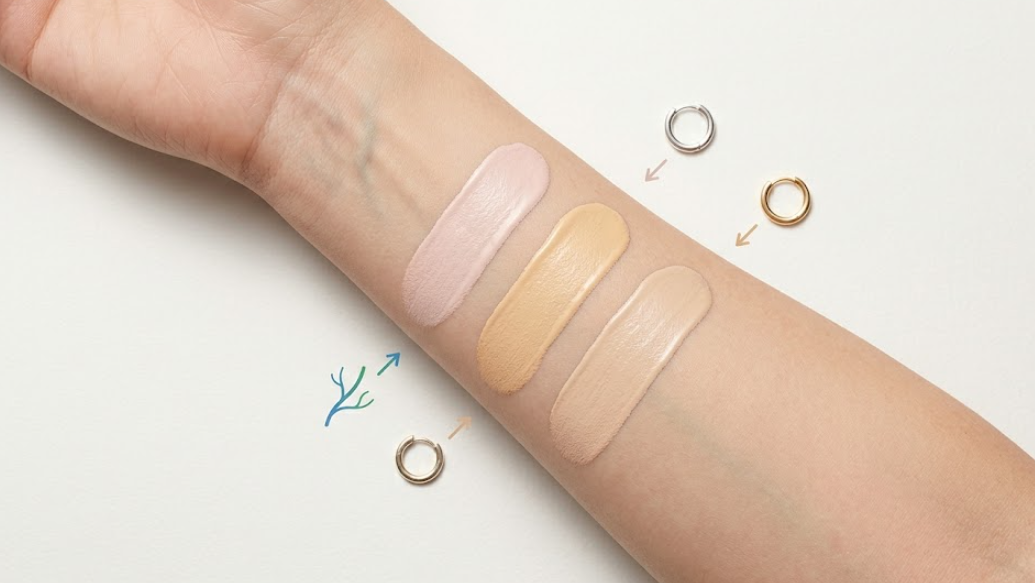
Understanding Undertones for Perfect Shade Matching
- Start with your skin tone, then refine with undertones.
- Identify your undertone type:
- Cool undertones: skin leans pink, red, or bluish.
- Warm undertones: golden or peach hints.
- Neutral undertones: a mix of both.
- Try simple checks:
- Vein test
- Blue/purple veins → cool.
- Green veins → warm.
- Jewelry test
- Silver flatters cool.
- Gold suits warm.
- Match within your shade family across liquid or powder foundation makeup formulas.
- Identify your undertone type:
When undertone and base align, foundation makeup blends in instead of sitting on top.
Application Properties: Coverage, Finish, and Blendability
- Choose your ideal coverage:
- Light coverage for everyday glow.
- Medium coverage to even things out.
- Full coverage for events or photos.
- Pick a finish that fits your vibe:
- Matte finish controls shine.
- Dewy finish boosts radiance.
- Satin finish balances both.
Check blendability on the jawline. Good makeup foundation should melt into skin, not drag.
Skin Type Suitability: Oily, Dry, and Combination Tips
- Know your skin type before buying.
- Oily skin
- Look for foundation for oily skin.
- Lightweight, oil-control textures help reduce slip.
- Dry skin
- Pick foundation for dry skin with hydrating agents.
- Creamy formulas prevent patchiness.
- Combination skin
- Balance matte zones and hydrated areas.
- Oily skin
If you have acne-prone skin or sensitive skin, check labels carefully and test before committing.
Packaging Matters—From Pump Bottles to Compact Cases
- Compare packaging styles:
- Liquid formulas
- Pump bottle: clean dosing.
- Airless pump: limits air exposure.
- Tube: travel-friendly.
- Cream or powder
- Compact case: easy touch-ups.
- Dispenser or doe-foot applicator: precise control.
- Liquid formulas
Smart packaging keeps your foundation makeup fresh longer. Brands like Topfeel Beauty focus on both formula and design, so your base makeup routine feels easy, not messy.
4 Manufacturing Quality Checks
Great foundation makeup doesn’t just happen in a lab by luck. Behind every smooth liquid foundation or flawless face foundation sits serious control over mixing, texture, grinding, and inspection. If the goal is high‑performing base makeup that blends like a dream, every tiny production detail matters.
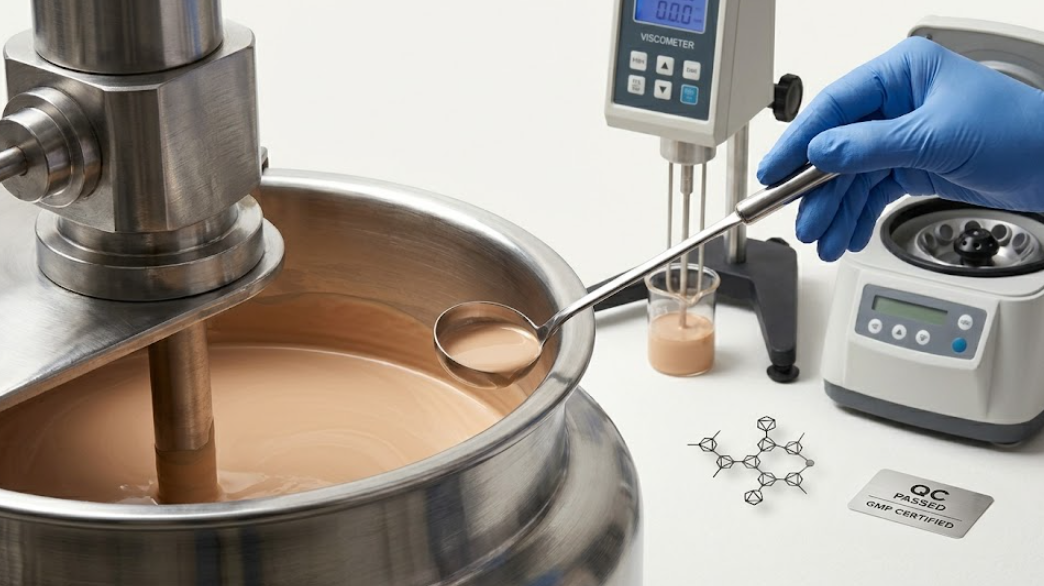
Mixing Uniformity in Batch Production
Consistent foundation makeup starts inside controlled batch production systems where the mixing process defines product reliability.
- Raw Material Preparation
- Pigments are pre-dispersed to avoid clumping.
- Emollients are temperature-balanced for smoother ingredient distribution.
- Core Mixing Stage
- High-shear blending ensures uniformity across the full tank.
- Controlled RPM settings prevent air bubbles in liquid foundation formulas.
- Monitoring and Validation
- In-line sensors track viscosity shifts.
- Random sampling confirms consistency before filling.
- Internal quality control checks validate shade accuracy for foundation makeup lines.
At Topfeel Beauty, technicians monitor each mixing cycle closely. Even slight imbalance can affect how foundation makeup spreads on skin, so adjustments are made in real time.
Emulsification Stability and Texture Consistency
A smooth face foundation relies on strong emulsification. If oil and water fall out of balance, product stability suffers fast.
Key checks include:
- Centrifuge testing to simulate long-term shelf life.
- Heat–cool cycling to test product integrity.
- Sensory panels for texture and consistency scoring.
Then comes hands-on evaluation. Teams assess slip, blendability, and after-feel. Good base makeup should glide, not drag. A stable emulsion keeps pigment evenly suspended, protecting foundation makeup from separation during shipping or storage.
Short and simple: stable formula, happy customers.
Grinding Fineness for Smooth, Even Pigment Dispersion
Pigment quality shapes coverage. Without proper grinding, foundation makeup can streak or look patchy.
Production control flows like this:
- Pre-Grinding Inspection
- Measure initial particle size.
- Confirm pigment purity for strong color payoff.
- Precision Milling
- Equipment reduces particles to micron-level fineness.
- Continuous testing ensures even pigment dispersion.
- Post-Grinding Review
- Lab checks confirm smoothness and surface evenness.
- Shade comparison under multiple lighting conditions.
Fine particles mean better blendability. That’s why liquid foundation with refined dispersion feels almost weightless. Topfeel Beauty keeps tight grinding standards to protect performance across every foundation makeup range.
Final Quality Control: From GMP Standards to Safety Data Sheets
Before any foundation makeup leaves the facility, strict quality control protocols apply.
- Regulatory Alignment
- Production follows certified GMP standards.
- Ingredient lists meet global regulatory compliance rules.
- Laboratory Verification
- Microbial product testing ensures safety.
- Stability testing validates long-term wear of face foundation formulas.
- Documentation and Release
- Detailed documentation supports traceability.
- Updated Safety Data Sheets are prepared for partners.
- Final inspection signs off each batch.
Only after these checkpoints does base makeup move to packaging. Topfeel Beauty treats inspection as the last promise to clients: safe, stable, and ready to perform.
FAQs
What role does foundation makeup play in a private label line?
Foundation makeup sets the mood of the face. It smooths the canvas, supports confidence, and defines brand character.
- Coverage and finish come from pigments balanced with binders.
- Comfort and wear time rely on emollients and humectants that respect skin type suitability.
Across liquid foundation, cream foundation, powder foundation, stick foundation, serum foundation, and mousse foundation, the formula becomes the voice of the brand.
How is quality protected during foundation makeup manufacturing?
Behind every jar or bottle sits a careful rhythm of batch production.
Mixing and emulsification build texture. Grinding refines blendability. Filling seals consistency.
Quality control checks wear time, finish, and shade stability before release, all under GMP standards that protect both skin and reputation.
Why are pigments and binders so important to coverage and wear time?
Pigments decide how skin is seen. Binders decide how long that story lasts.
Together they shape:
- Shade matching that feels personal
- Texture that moves with expression
- Wear time that holds through heat and humidity
A fine grind keeps the finish even, calm, and human.
How can oem face makeup buyers customize the look and feel of foundation makeup?
Customization begins with listening to skin.
Formula adjustments guide the journey—matte or radiant, sheer or full. Active ingredient inclusion and fragrance options refine emotion. Packaging design and label printing finish the promise.
This balance turns foundation makeup into a personal ritual, not just a product.
What packaging and compliance steps matter before shipment?
The final moment is both practical and emotional.
Pump bottles, squeeze tubes, compacts, dropper vials, jars, and airless containers protect texture and daily use.
Compliance follows quietly but firmly: ingredient lists, safety data sheets, labeling requirements, cruelty-free certification, and vegan certification.
Trust arrives sealed, ready for hands and faces.
References
- U.S. Cosmetics Market Outlook 2024 – statista.com/Statista
- Iron Oxides in Beauty: Safety and Uses – byrdie.com/Byrdie
- Titanium Dioxide in Makeup: Is it Safe? – healthline.com/Healthline
- Pigment Dispersion in Cosmetic Engineering – sciencedirect.com/ScienceDirect
- Sunscreen: How to Help Protect Your Skin from the Sun – fda.gov/FDA
- SPF 101: Everything You Need to Know – skincancer.org/Skin Cancer Foundation
- Moisturizer Ingredients and Skin Hydration – medicalnewstoday.com/Medical News Today
- Humectants vs Emollients: Skincare Science – allure.com/Allure
- What is the Skin Barrier? – healthline.com/Healthline
- The Rise of Serum Foundations – vogue.com/Vogue
- Emulsification Technology in Cosmetics – ncbi.nlm.nih.gov/PubMed
- How to Figure Out Your Skin Undertone – allure.com/Allure
- Choosing the Right Foundation for Your Skin Type – webmd.com/WebMD
- Stability of Emulsions in Cosmetic Formulations – ncbi.nlm.nih.gov/PubMed
Post time: Mar-27-2026