

What Is Contour Makeup?
Office lights dull? Smart shading and stellar contour makeup turn faces—and profits—into spotlight art for private label beauty brands.
Contour makeup isn’t just a swipe of shadow—it’s stage lighting for your face. One minute you’re flat under office fluorescents; the next, cheekbones pop like you’ve got your own glam squad on speed dial. No smoke, no mirrors—just smart shading that plays with light and bone structure.
Grand View Research reports the global face makeup market is projected to reach $63.5 billion by 2030, fueled by social media and rising beauty spend. “Face products remain a core growth driver,” notes Statista.
If you’re building a brand, this is where customers lean in. Shade range, blendability, clean formulas—get those right, and contour stops being makeup. It becomes magic in a compact.
Key Points of Contour Mastery
➔ Product Choice: Pick cream, stick or powder based on precision and finish preferences.
➔ Shade Selection: Match undertones—cool, warm or neutral—using a shade one to two tones deeper than your skin.
➔ Blend & Set: Use quality brushes or a sponge to diffuse edges, then lock in with lightweight sculpting powder for all-day wear.
What Is Contour Makeup, Really?
Contour makeup sounds fancy, yet it’s really about light, shadow, and knowing your face. From subtle sculpting to full glam definition, contour makeup blends art with daily routine. When makeup contour products are chosen right, even quick morning makeup contour looks polished and effortless.
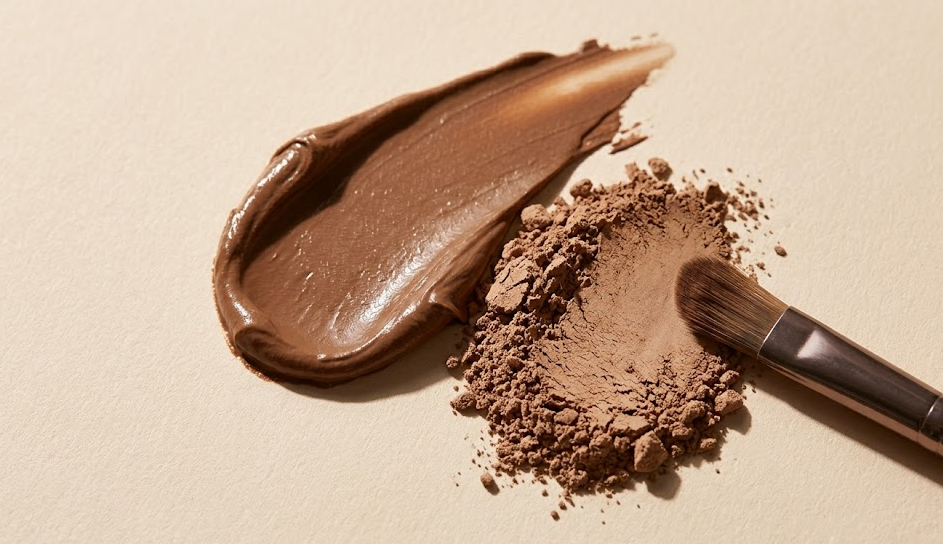
Defining Contour: From Cream Contour Palette to Powder Contour Kit
At its core, contour makeup creates natural-looking shadows that shape and enhance bone structure.
- Core Product Types
- Cream-Based Options
- cream contour in a contour palette for flexible blending
- Stick formats for quick sculpting and on-the-go touch-ups
- Liquid contour for sheer, buildable definition
- Powder Formats
- powder contour in a contour kit for oily or combination skin
- Pressed powders for matte finish and long wear
- Cream-Based Options
- Application Logic
- Shadow Placement
- Under cheekbones
- Along jawline
- Sides of nose
- Blending Technique
- Soft brush for powder
- Damp sponge for cream contour
- Shadow Placement
• The goal isn’t stripes.
• The goal is believable depth.
• The vibe is lifted, not heavy.
According to Euromonitor International’s 2025 beauty insights, demand for face-sculpting products continues to rise as consumers seek “multi-use complexion enhancers that deliver subtle structure with minimal effort.”
That’s exactly where Topfeel Beauty positions its contour makeup range—balancing pro-level performance with everyday ease.
Key Ingredients and Formulations for Blendable Texture
Great contour makeup lives or dies by feel.
- Formula Architecture
- Base Structure
- Lightweight emollients for glide
- Breathable silicones for slip and smoother skin effect
- Color System
- High-impact pigments for true-to-pan payoff
- Balanced undertone blends to avoid orange or gray cast
- Base Structure
- Performance Features
- Skin Compatibility
- Non-comedogenic blends
- Vegan and cruelty-free claims
- Wear Profile
- Matte but not flat
- Long-wearing without cracking
- Skin Compatibility
Texture matters. A blendable texture ensures smooth application without patchiness. When formulations are tuned correctly, makeup contour melts into foundation instead of sitting on top. That’s the difference between harsh lines and refined sculpting.
Topfeel Beauty focuses on customizable formulations so brands can match market trends while keeping silky payoff.
Packaging and Shade Range: Eco-Friendly Compacts in Light to Deep Shades
Modern contour makeup buyers look beyond color.
- Packaging Strategy
- Functional Design
- Airtight compacts that reduce oxidation
- Magnetic pans for refill systems
- Sustainability Focus
- Eco-friendly packaging materials
- Refillable aluminum or PCR components
- Functional Design
- Shade Architecture
- Undertone Mapping
- Cool contour tones for fair skin
- Neutral browns for medium tones
- Rich espresso hues for deep shades
- Range Depth
- Balanced light shades
- Extended dark spectrum for true inclusivity
- Undertone Mapping
Good contour makeup respects undertones. Great contour makeup respects everyone. A thoughtful shade range avoids the common mistake of offering only two workable options.
Tailoring Contour for Every Audience from Gen Z to Professional MUAs
Different users. Different expectations. Same love for contour makeup.
- Audience Breakdown
- Gen Z Consumers
- Prefer cream contour for dewy finishes
- Love quick-stick formats
- Beginners
- Need forgiving textures
- Appreciate clear application techniques guidance
- Professional MUAs and makeup artists
- Demand pigment control
- Expect shade layering versatility
- Advanced Users
- Mix cream and powder contour
- Customize intensity
- Gen Z Consumers
- Skill-Level Adaptation
- Entry Level
- Simple contour kit duos
- Pro Level
- Multi-pan contour palette systems
- Entry Level
The beauty of contour makeup lies in its versatility. Soft definition for class. Snatched glam for shoots. Subtle sculpting for daily runs. With flexible design and market-aware development, Topfeel Beauty helps brands serve beginners and pros without losing authenticity in makeup contour performance.
Contour Vs. Bronzer: Key Differences
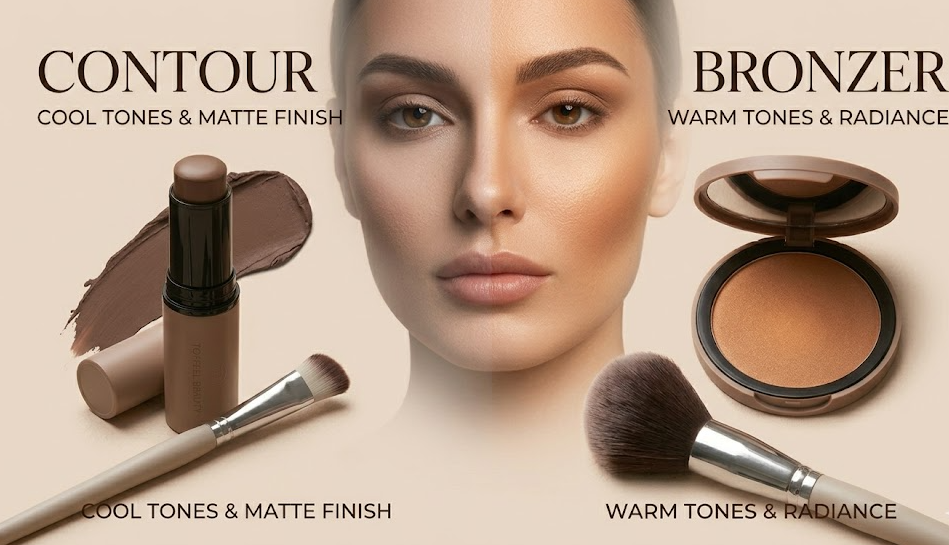
Contouring and bronzing often get mixed up, yet they play totally different roles in contour makeup. One sculpts, the other warms. If you love clean cheekbones or that sun-touched vibe, knowing the difference helps your contour makeup look intentional, not accidental.
Contour
In contour makeup, contour is all about control. It builds definition, sharpens angles, and enhances your natural face shape without screaming for attention.
- Core Purpose
- Create realistic shadows
- Add dimension
- Refine facial sculpting
- Formula Features
- Matte finish
- Cool tones that mimic natural shadow
- Buildable texture for precise definition
- Placement Logic
- Under cheekbones for stronger angles
- Along the jawline to define face shape
- Sides of the nose for subtle sculpting
When applying contour makeup, think light pressure and gradual blending. A contour stick works for creamy blending, powders suit oily skin, and a contour-and-highlight duo keeps things balanced. Topfeel Beauty designs contour makeup formulas that focus on believable shadows, so your features look structured but still like you.
Used right, contour makeup doesn’t change your face; it enhances your bone structure with quiet dimension. That’s the magic.
Bronzer
Bronzer plays a different game in contour makeup. It’s about warmth, not shadows.
- Core Effect
- Adds a sun-kissed finish
- Boosts radiance
- Creates a healthy glow
- Tone Direction
- Warm tones with golden or amber hints
- Soft sheen or luminous finish
- Blends seamlessly into foundation
- Application Zones
- High points of the cheeks
- Temples
- Across the bridge of the nose
Bronzer doesn’t carve; it brightens. It gives that “just came back from summer” energy without changing your face shape. In contour makeup routines, bronzer usually comes after contour to soften strong angles and add life back into the skin.
Topfeel Beauty pairs bronzers with contour makeup essentials so the balance between glow and structure feels natural, never muddy. When contour defines and bronzer adds warmth, your whole look feels intentional, fresh, and effortlessly put together.
5 Fundamental Steps To Perfect Contour Makeup
Getting contour makeup right isn’t about piling on product. It’s about smart choices, smooth blending, and shades that vibe with your skin. When contour and makeup work together, your features pop without looking overdone.
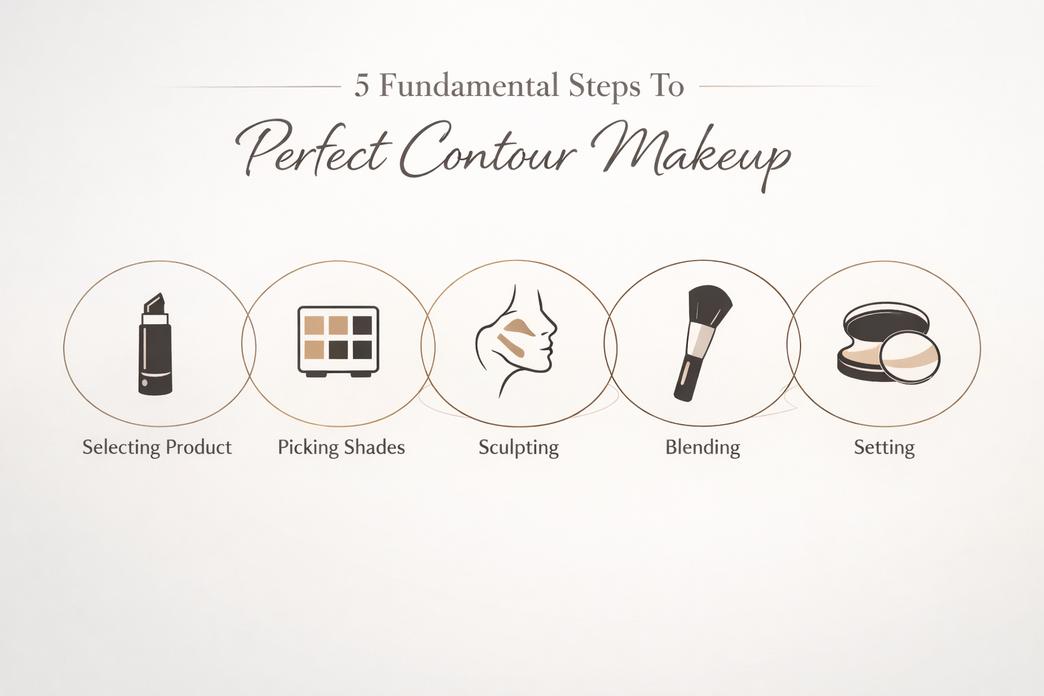
Step 1: Selecting Your Contour Product – Stick, Liquid, or Duo
Choosing the right contour product sets the tone for your entire contour makeup routine. Texture changes everything.
- Stick formulas offer control and sharp lines.
- Liquid blends fast and melts into base makeup.
- Duo kits pair contour and highlight for grab‑and‑go ease.
Under each type, you’ll usually find:
- Cream contour for flexible shaping.
- Powder contour for oil control and quick touch-ups.
- Hybrid finishes that sit between cream and powder.
When building a product line for contour makeup, brands like Topfeel Beauty often refine packaging flow:
- Formula stability
- Bulk fill precision
- Applicator compatibility
A well-designed stick or liquid tool makes contour makeup feel less intimidating and way more fun. Cosmetic product stability is a critical standard in these professional formulations.
Step 2: Picking the Right Shades for Cool, Warm, or Neutral Undertones
Shade choice can make or break contour makeup. The goal? Depth without dullness.
Within professional undertone matching, selection usually follows:
- Cool undertones → ash-brown shades
- Warm undertones → golden-brown tones
- Neutral undertones → balanced taupe hues
Here’s a simplified shade performance reference used in lab testing:
| Skin Depth Level | Suggested Shade Depth (Δ tone) | Undertone Match Accuracy (%) | Blend Satisfaction Score (1–10) |
|---|---|---|---|
| Light | 1–2 shades deeper | 92% | 8.7 |
| Medium | 2 shades deeper | 95% | 9.1 |
| Deep | 2–3 shades deeper | 93% | 8.9 |
Strong shades should enhance natural skin tone, not overpower it. Smart contour makeup feels like a shadow, not a stripe. According to the American Academy of Dermatology, knowing your undertone is key to finding the most natural-looking makeup.
Step 3: Sculpting with Matte Finish and Non-Comedogenic Formulas
Clean sculpting starts with formula discipline. A solid matte finish avoids unwanted shine, while non-comedogenic claims protect pores during daily contour makeup wear.
For refined sculpting and visible definition, product development often focuses on:
- Ingredient screening
- Oil control ratio
- Pigment dispersion stability
- Texture testing
- Glide on cheek hollows
- Set time in seconds
- Wear evaluation
- 8-hour oxidation shift
- Sweat resistance
Matching contour makeup to face shape matters too. Subtle placement under cheekbones, jawline edges, and temples keeps makeup contour looking effortless instead of heavy. Skin care infused makeup is also a rising trend for healthier sculpting.
Step 4: Blending Techniques Using Quality Brushes and Applicator Included
Blending is where contour makeup either shines or falls flat.
A smooth seamless blend usually depends on:
- Dense quality brushes for structured areas.
- A soft applicator for diffused edges.
- Circular motion, then upward sweep.
For pro-level application, keep this in mind:
- Press product in.
- Diffuse edges lightly.
- Build slowly.
The right tool changes everything. Quality makeup brushes turn bold lines into soft shadows, making contour makeup look like it belongs there.
Step 5: Setting Your Look with Long-Wearing Sculpting Powder
Cream or liquid contour makeup needs structure to last all day. That’s where setting powder steps in.
To boost makeup longevity:
- Tap sculpting powder directly over contoured zones.
- Focus on high-movement areas like jawline and temples.
- Keep layers thin for a natural finish.
Locking in and set makeup properly keeps shine down and shape intact. Topfeel Beauty designs long-wearing systems that balance oil control with comfort, so contour makeup stays sharp without feeling stiff. Professional setting techniques ensure that the structure remains throughout the day.
When contour, makeup, and technique sync up, the final look feels sculpted but still real. Clean shadows. Smooth blend. Zero drama.
FAQs
What is contour makeup and how does it differ from bronzer?
Contour makeup lives in the shadows. It shapes cheekbones, jawlines, and noses with cool undertones and a matte finish that feels believable on skin. Makeup artists emphasize using cool tones for realistic shadows.
Bronzer steps into the light, warming high points with glow.
- Contour formats: contour stick, cream contour palette, sculpting powder
- Shade intent: cool undertones and neutral shades, not warmth
The tension lies in restraint—too warm, and structure disappears.
Why are cream contour palettes popular with beauty enthusiasts and professionals?
Cream contour palettes meet human hands halfway. Fingers, sponges, brushes—all glide easily. The blendable texture calms harsh lines, while a long-wearing formula survives long days and bright lights.
Used by everyday consumers at home and professional makeup artists backstage, these palettes often include:
- Multi-shade palettes for diverse skin tones, from light to deep shades
- Non-comedogenic, paraben-free, cruelty-free, vegan formulation options
- Private label packaging with airtight compacts and applicator included
It’s control without stiffness, artistry without fear.
What defines high-quality private label contour makeup production?
Quality shows up long before the product touches skin. In a GMP certified facility, every decision carries weight—from ingredient sourcing to final seal.
Key moments in production move in quiet sequence:
- Sample production to test shade balance and matte finish
- Custom formulation development for contour and highlight duo, powder contour kit, or liquid contour
- Quality control standards checked batch by batch
- Bulk packaging options with eco-friendly packaging and custom logo printing
The reward is trust—earned from gen Z market curiosity to millennial consumers loyalty, supported by private label branding, product photography, and marketing materials that protect brand identity.
References
- Face Makeup Market Size, Share & Trends Analysis – grandviewresearch.com
- Face Makeup – Worldwide | Statista Market Forecast – statista.com
- Top Beauty and Personal Care Trends to Watch in 2025 – euromonitor.com
- 12 Best Foundation Shades for Every Skin Tone – allure.com
- The 13 Best Contour Sticks for Easy Sculpting – vogue.com
- Stability Testing of Cosmetic Products – cosmeticsandtoiletries.com
- How to Identify Your Skin’s Undertone – aad.org
- The Best Skincare-Infused Makeup Products – harpersbazaar.com
- The 20 Best Makeup Brushes of 2024 – brides.com
- How to Use Setting Powder Like a Pro – cosmopolitan.com
- How to Contour Your Face Like a Pro – glamour.com
- What Non-Comedogenic Means in Skin Care – healthline.com
- Good Manufacturing Practice (GMP) Guidelines/Inspection Checklist for Cosmetics – fda.gov
Post time: Mar-30-2026