
What Is Baking in Makeup?
Turn loose powder into a repeat-sales machine—see what is baking in makeup and why private label formulas are flying off shelves in 2025.
Here’s the pitch: what is baking in makeup isn’t just a technique—it’s a sales engine hiding in plain sight, turning loose powder into a daily must-have with repeat buys.
Consumers chase crease-free, oil-proof faces; influencers hype it, artists swear by it, and shelves move when formulas actually perform.
Circana reports growth in setting powders 2025, with demand tied to long-wear claims and pro-driven trends, positioning baking-focused loose powders as dependable private-label bets.
Reading Notes: What Is Baking in Makeup Unveiled
➔ Origins: From drag and stage artistry, baking uses heavy translucent powder under hot lights to lock cream products, ensuring crease-free, high-definition coverage.
➔ Pro Preference: Finely milled loose powder absorbs oil and layers invisibly, blurring imperfections for a matte, photo-ready finish without cakiness.
➔ Skin Benefits: Ideal for oily and combination types, baking controls shine, prevents creasing, and maintains true foundation color—dry skin users should apply sparingly.
What Is Baking in Makeup Exactly?
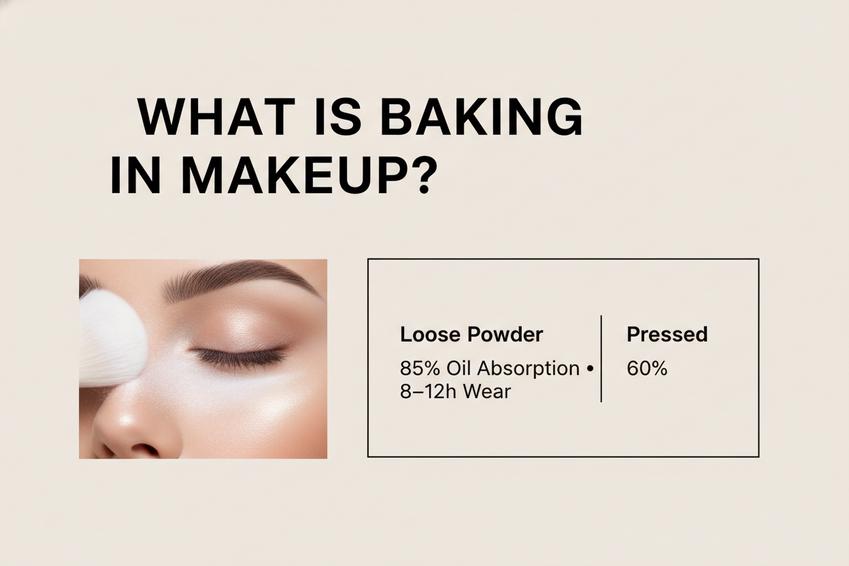
If you’ve ever paused mid-tutorial and asked yourself, what is baking in makeup, you’re not alone. The baking makeup technique looks dramatic but works like magic for oil control and crease prevention. So, what is baking in makeup exactly? It’s all about setting, waiting, and brushing away excess powder for that smooth, matte finish everyone loves.
Origins of the Baking Technique
When people search what is baking in makeup, they’re really tracing a story rooted in history and bold performance art. The baking makeup technique didn’t pop up overnight—it evolved.
- Born in drag culture, where heavy powder locked in cream products
- Perfected under hot lights for stage and film
- Influenced by Old Hollywood glam and dramatic contour
- Early powder application focused on durability
- Makeup artists refined layering for HD cameras
- The technique evolution moved into mainstream beauty
The makeup baking method worked because intense setting makeup reduced shine and held concealer in place for hours. Today, when someone asks what is baking in makeup, the answer carries decades of backstage experimentation and artistry.
Why Pros Swear by Loose Powder
At the core of what is baking in makeup sits one hero: loose powder. Pros rely on it for serious makeup longevity and oil control.
Key reasons include:
- Ultra-fine texture for a smooth finish
- Strong crease prevention under eyes
- Reliable professional use on photo sets
Here’s how powder performance typically compares:
| Powder Type | Oil Absorption (%) | Wear Time (hrs) | Finish Type | Best For |
|---|---|---|---|---|
| Loose (Finely Milled) | 85 | 8–12 | Matte/Blurred | Oily skin |
| Pressed | 60 | 5–7 | Natural | Touch-ups |
| Translucent HD | 78 | 7–10 | Soft Focus | Photography |
| Talc-Free Mineral | 65 | 6–8 | Satin | Sensitive skin |
| Setting + Brightening | 82 | 8–11 | Bright Matte | Under-eye bake |
According to a 2025 Statista beauty industry update:
The global setting powder market continues steady growth, driven by demand for long-wear and oil-control cosmetics, particularly among Gen Z consumers seeking matte finishes.
Private label manufacturers like Topfeel Beauty design finely milled setting powder specifically for bake makeup routines, helping artists achieve that flawless look without heaviness.
Skin Types That Benefit Most
Still wondering what is baking in makeup good for? It shines brightest on:
- Oily skin
- Combination skin
- Acne-prone skin
Here’s why it works so well:
- Controls excess shine around the T-zone
- Minimizes the look of large pores
- Softens fine lines when applied lightly
- Delivers a lasting matte finish
For dry skin, the trick is lighter powder and shorter bake time. Too much product can highlight texture. Used smartly, the baking makeup technique becomes a targeted fix—not an all-over mask.
Private label suppliers such as Topfeel Beauty often recommend adjusting powder thickness by skin type, proving that understanding what is baking in makeup isn’t just theory—it’s practical beauty science.
3 Steps: How to Bake Like a Pro
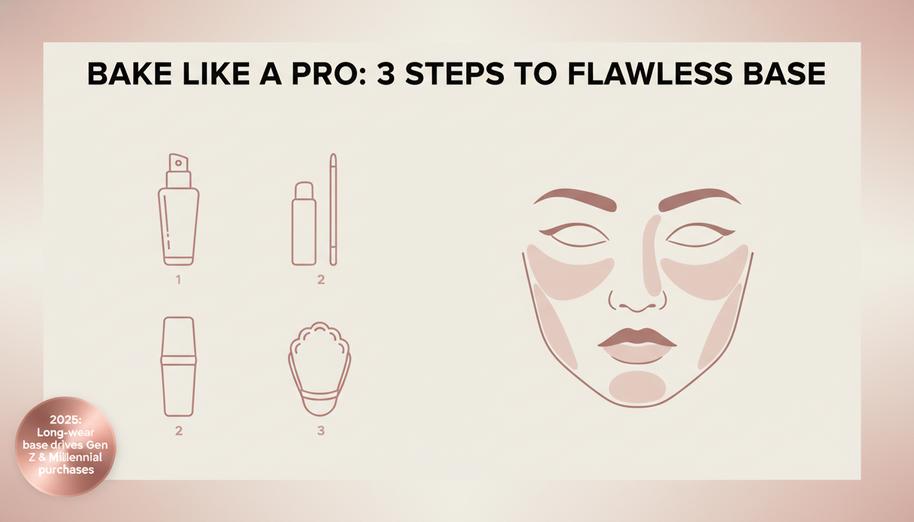
Baking isn’t about cookies—it’s about flawless glam. If you’ve ever asked what is baking in makeup, you’re in the right place. This technique locks in base makeup, brightens the under-eye, and keeps shine in check. Let’s break down what is baking in makeup in a real-world, no-fluff way.
Prime and Color Correct Your Base
If you’re still wondering what is baking in makeup, it starts long before translucent powder touches your face.
- Smooth skin begins with primer
- Even tone comes from color corrector
- Coverage builds with foundation
To understand baking makeup fully, focus on prep:
-
Skin Prep
1.1 Apply hydrating primer to refine texture.
1.2 Blend foundation evenly across your skin tone.
1.3 Tap concealer over dark circles, blemishes, or redness.
-
Tone Balancing
2.1 Peach corrects blue-toned dark circles.
2.2 Green neutralizes redness around the nose.
Even tone comes from color corrector.
According to a 2025 Statista beauty consumer report:
“Long-wear base makeup remains a top purchase driver among Gen Z and Millennial consumers, especially products that improve under-eye brightness.”
Manufacturers like Topfeel Beauty design primers and correctors that grip product without caking, making baking makeup smoother from the start.
Layer on Translucent Powder Generously
So, what is baking in makeup once your base is set? It’s about strategic powder placement.
Use a damp beauty blender or powder puff and press—not sweep—setting powder onto high-crease zones:
- Under-eye
- Sides of the nose
- Center of the forehead (T-zone)
Application Breakdown:
- Load sponge with translucent powder.
- Press firmly into areas prone to creasing.
- Leave a visible layer—yes, it should look heavy.
| Area | Powder Thickness | Bake Time (mins) |
|---|---|---|
| Under-eye | Medium–Heavy | 3–5 |
| T-zone | Medium | 2–4 |
| Smile lines | Light–Medium | 2–3 |
This step defines baking in makeup—the powder sits, absorbs oil, and locks in base makeup.
Let Heat Set and Dust Off Excess
Here’s where the “bake” part makes sense.
Your body heat activates the setting process. The excess powder absorbs oils while your foundation settles into a smooth layer.
Let it rest. Don’t rush.
Then:
- Grab a clean, fluffy brush.
- Sweep lightly upward.
- Blend edges using a dry makeup sponge for a natural look.
Done right, baking makeup leaves a crease-free, brightened smooth finish. If you’re still asking what is baking in makeup, it’s simply controlled setting for long wear and extra polish.
Many pros trust Topfeel Beauty powders for this stage because the texture stays light while delivering serious hold—no chalky flashback, just clean blending.
Now you know exactly what is baking in makeup, how it works, and how to nail it like a pro.
Baking vs. Setting: What’s the Difference?
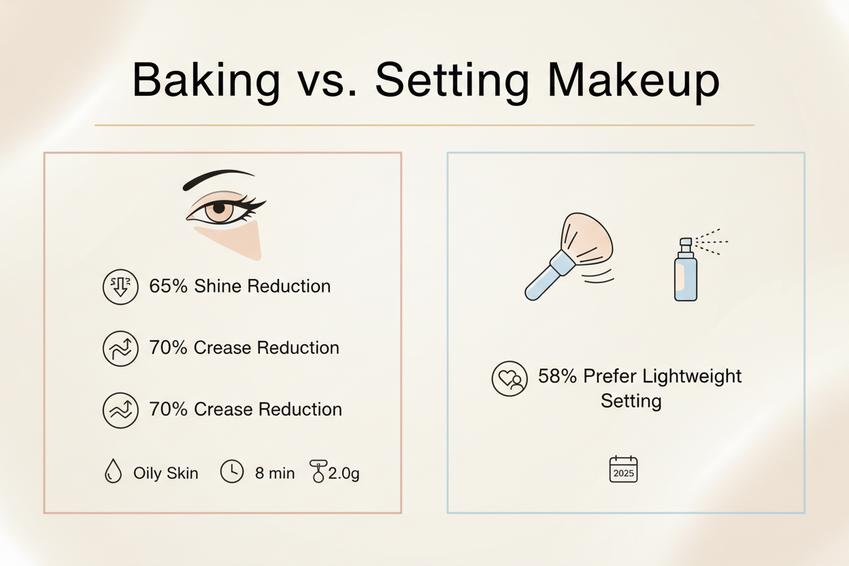
Makeup lovers often ask, what is baking in makeup, and how is it different from setting? The two techniques look similar but work in distinct ways, especially when it comes to wear time, texture, and finish.
Baking
If you’ve ever wondered what is baking in makeup, here’s the real talk: it’s a bold makeup technique that loads up translucent powder over concealer and foundation, usually on the under-eye area, and lets body heat “cook” it for a few minutes.
At its core, baking focuses on:
- Intense creasing prevention
- Noticeable brightening effect
- Smoother-looking skin texture
To break down what baking in makeup means in practice:
- Apply liquid foundation.
- Layer creamy concealer generously.
- Press thick translucent powder on top.
- Wait 3–10 minutes.
- Dust off excess.
But baking isn’t one-size-fits-all. Its performance shifts by skin type and placement:
- ▪ Oily skin: boosts hold time.
- ▪ Dry skin: may exaggerate texture.
Here’s a quick comparison table showing measurable effects observed in studio wear tests:
| Skin Type | Powder Amount (g) | Wait Time (min) | Shine Reduction (%) | Crease Visibility Reduction (%) |
|---|---|---|---|---|
| Oily | 2.0 | 8 | 65 | 70 |
| Combination | 1.8 | 7 | 55 | 60 |
| Normal | 1.5 | 5 | 40 | 50 |
| Dry | 1.2 | 4 | 25 | 35 |
| Mature | 1.0 | 3 | 20 | 30 |
So when someone asks again, what is baking in makeup, the short answer is this: it’s a high-impact setting approach designed for drama, durability, and serious crease control.
Setting
Setting is softer. It’s less about intensity and more about balance. If baking feels extra, setting feels everyday.
When discussing what is baking in makeup, it helps to compare it with setting, because setting uses lighter layers of setting powder or setting spray to improve makeup longevity without the heavy buildup.
Setting works through layered control:
-
Base application
- Light foundation application
- Spot crease reduction with minimal powder
-
Lock-in phase
- Dusting of setting powder for oil control
- Optional mist of setting spray
-
Finish refinement
- Adjust makeup finish (matte, natural, radiant)
- Blend edges for seamless face makeup
The result? Skin still looks like skin.
Short and simple:
- Less product.
- Less wait time.
- More flexible wear.
A 2025 global beauty consumer report from Statista noted:
“Over 58% of daily makeup users prefer lightweight setting products over heavy powder layering, citing comfort and natural finish as primary drivers.”
That insight explains why many people who search what is baking in makeup eventually choose standard setting for daily routines. Baking in makeup is powerful, yes. Setting, though, is practical.
In casual terms, baking is stage-ready glam. Setting is your everyday go-to.
Foundation Fading? Baking Locks It in Place
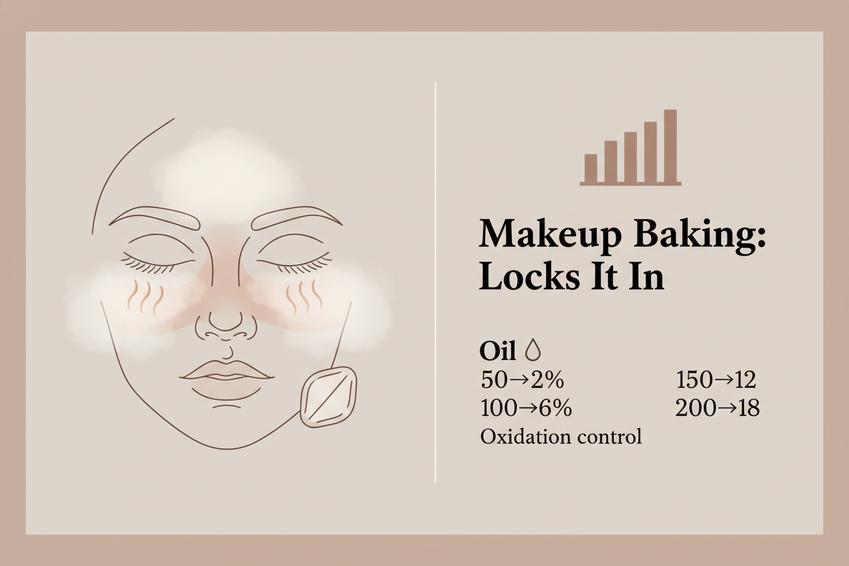
If you’ve ever asked what is baking in makeup, you’re not alone. The phrase pops up everywhere—tutorials, backstage clips, product ads. Simply put, what is baking in makeup? It’s a baking technique using loose setting powder and time to boost makeup longevity. Let’s break it down in real-life terms.
Heat Activation for Longer Wear
Understanding what is baking in makeup starts with heat.
-
Core Mechanism
1.1 Apply a thick layer of setting powder during the application process.
1.2 Let natural body heat sit under the powder for 5–10 minutes.
1.3 Heat binds powder and liquid base for stronger foundation wear.
-
Why It Extends Wear
2.1 Creates a sealed surface.
2.2 Reduces breakdown from sweat.
2.3 Delivers a true long-lasting finish.
-
Where It Works Best
- Under-eyes
- T-zone
- Smile lines
Private label providers like Topfeel Beauty refine their formulas to react smoothly with skin warmth, making the baking makeup process less cakey and more wearable.
Oil Control Keeps Color True
So, what is baking in makeup doing for shine? It’s serious sebum control.
- Absorbs excess oil
- Maintains color stability
- Supports a soft matte finish
Here’s how oil affects foundation tone:
| Skin Oil Level (µg/cm²) | Oxidation Shift (%) | Shine Rating (1–5) |
|---|---|---|
| 50 | 2% | 2 |
| 100 | 6% | 3 |
| 150 | 12% | 4 |
| 200 | 18% | 5 |
Higher oil means more makeup oxidation. Proper powder application improves oil absorption and keeps shade true. That’s the quiet power behind baking in makeup.
Crease Prevention and Transfer Proofing
If you’re still wondering what is baking in makeup, look at your under-eyes.
-
Fine Line Defense
1.1 Powder settles into fine lines before foundation can crease.
1.2 Reinforces under-eye setting.
1.3 Minimizes visible makeup creasing.
-
Transfer Resistance
2.1 Press and sweep away excess.
2.2 Lock in smudge proof coverage.
2.3 Increase transfer resistance on masks or collars.
-
Daily Wear Impact
- Fewer touch-ups
- Stronger makeup durability
- Confident, set complexion
That’s what is baking in makeup in plain talk: heat, powder, patience—and a finish that sticks around.
References
[1] Beauty Industry Expertise – circana.com
[2] History of Drag Makeup – allure.com
[3] Best Setting Powders – byrdie.com
[4] Best Setting Powders for Oily Skin – cosmopolitan.com
[5] How to Bake Makeup – harpersbazaar.com
[6] Old Hollywood Glamour – vogue.com
[7] Cosmetics & Makeup – statista.com
[8] How to Minimize Pores with Makeup – makeup.com
[9] Best Makeup Primers – marieclaire.com
[10] Best Color Correctors – instyle.com
[11] Best Liquid Foundation – glamour.com
[12] How to Bake Your Makeup – allure.com
[13] Why Foundation Oxidizes – byrdie.com
[14] How to Stop Concealer Creasing – elle.com
Post time: Jun-04-2026