
Types of Blush: Powder, Cream, Liquid, Gel, and Stick Formulas
“Choosing among types of blush requires decisions about finish, packaging, and customer use.
Circana reported 5% growth in U.S. prestige makeup dollar sales, supporting continued assortment development.
This guide compares formulas, packaging, and sourcing.”
Reading Notes: Types of Blush in Harmony
➔ Choose your formula: powder for oil control, cream for dewy radiance, liquid for buildable glow, gel for lightweight luminosity, stick for on-the-go touch-ups.
➔ Match skin needs: matte powder suits oily skin; emollient creams pamper dry or mature complexions; non-comedogenic gels help acne-prone types.
➔ Finish and feel: select matte, satin, shimmer, or luminous textures to complement your look and lasting power.
➔ Packaging and sourcing: compact cases, tubes, droppers, and pots each carry cost and MOQ implications; plan bulk pigment and preservative blends for consistency.
Types Of Blush: Powder Vs. Cream Formulas
Choose powder or cream by texture and skin needs. Powder supports layering, while cream brings flexible color.
Powder Blush
Powder blush combines pigments, talc, mica, and binders in a pressed pan. This talc ingredient overview supports ingredient screening.
- Finish and skin match
- Matte cuts down visible shine and can be a great fit for oily skin.
- Satin adds softer light without looking overly glossy, making it useful for combination skin too.
- Application and wear
- A fluffy brush spreads pigment smoothly instead of dropping intense color in one spot.
- Start lightly because good powder color is buildable.
- Layering thin coats can create a more long-lasting result without a heavy look.
- A fluffy brush spreads pigment smoothly instead of dropping intense color in one spot.
Topfeel Beauty can tailor powder blush colors, textures, and finishes.
Cream Blush
Cream blush mixes pigment with emollients for flexible blending. A review of hyaluronic acid in cosmetic use provides hydration context for moisture-focused concepts.
- Pick the finish. A dewy cream gives cheeks a fresh sheen, while a radiant option adds noticeable light without the dry appearance some powders can create.
- Match it to your skin. Cream formulas often complement dry skin and mature skin because their softer texture avoids emphasizing flaky or textured areas.
- Apply a small amount with clean fingers for warmth and control, or tap it on with a damp sponge. Keep the edges blendable and build color gradually.
Topfeel Beauty develops cream formulas with adjustable pigment, slip, and finish; this blush trend guide helps frame color direction.
Compare the complete format choice: Powder and cream require different texture, finish, skin-fit, and application decisions. Topfeel Beauty develops both pressed powders and cream blush formulas through color-cosmetic R&D.
Review the blush category and natural cream blush route to select a sample direction.
5 Forms Of Blush You Should Stock
Choosing the right formats helps shoppers match color, finish, and application style. This blush-stick guide adds useful format context.
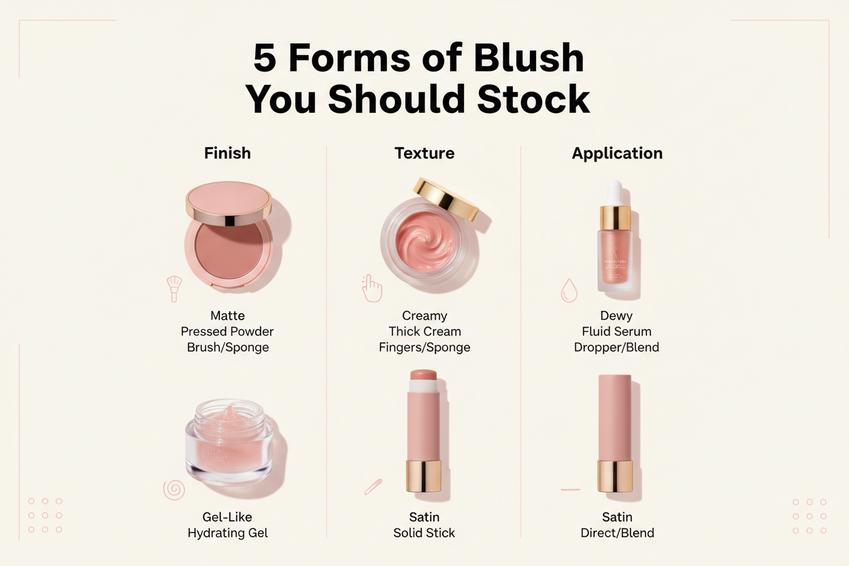
Flawless Matte Powder Blush in Compact Cases
- For everyday color:
- A flawless, matte powder blush offers a smooth dry finish with helpful shine control.
- Pressed formulas in compact cases work neatly with brushes and suit pink, peach, coral, and terracotta palettes.
Buildable Coverage Cream Blush with Emollients
Cream blush brings a softer feel to the mix. Its emollients help create a creamy, hydrating texture that stays blendable.
- Dab on a small amount for light coverage.
- Add another layer for buildable color.
- Blend with fingers, sponge, or brush for satin, radiant, or dewy results.
Radiant Liquid Blush in Dropper Bottles
- Color payoff
- Radiant liquid blush can look sheer with one dab.
- Extra layers create stronger, luminous color.
- Application
- Dropper bottles control the amount dispensed.
- The fluid texture spreads easily, making this one of the types of blush suited to lightweight makeup.
Dewy Gel Blush with Silica for Glow
- Texture:
- Gel and jelly formulas feel fresh and light.
- Finish:
- Silica helps manage texture while pigments provide translucent color.
- A dewy glow keeps the blush lively without the richer feel of cream. Pretty handy for fresh-faced looks.
Convenient Stick Blush in Portable Tubes
Stick blush is made for quick application: swipe, blend, and head out. Portable tubes keep these blush types especially practical.
- Convenient, easy-to-apply color works with fingers, brushes, or sponges.
- The on-the-go, travel-friendly format makes touch-ups simple while supporting buildable color from soft to bold.
Cream Vs. Powder Vs. Liquid Blush
Cream, powder, and liquid blush handle pigment, texture, and wear differently, so the choice comes down to skin type and finish.
Cream Blush
Cream blush combines pigments with emollient ingredients, creating a creamy texture that moves easily across the skin.
- For skin and finish:
- Dry skin often gets along well with the softer, hydrating feel.
- A dewy finish can give cheeks a fresh, natural look without appearing powdery.
- For application:
- Finger application warms the formula and makes edges easier to soften.
- A sponge or dense brush also works when more control is needed.
- Start lightly.
- Build color gradually because most cream blush is highly blendable.
Among the major types of blush, cream is a handy pick when skin looks dull or makeup needs to stay fresh.
Powder Blush
Powder blush is a classic compact option. A silky texture can produce a soft diffused look, while oil-absorbing powders may suit oily skin.
- Use brush application for even distribution and tap off excess product.
- Add thin layers for buildable coverage rather than loading up the cheeks at once.
- Pick a matte finish for low shine or choose shimmer for extra light. Many formulas are also designed to be long-wearing.
| Blush format | Typical start | Added layers | Common tools |
|---|---|---|---|
| Cream | 1 small dab | 1–2 | 3 |
| Powder | 1 light brush load | 1–3 | 2 |
| Liquid | 1 tiny dot | 1–2 | 3 |
These amounts are practical starting points, not fixed formulation standards; pigment strength varies widely between blush products.
Liquid Blush
Liquid formulas have a fluid consistency, so a tiny amount can travel far.
- Pigment control:
- Start with one dot of a doe-foot applicator where provided.
- Softer formulas create sheer coverage and a natural flush.
- High-color formulas can carry intense pigment, so going easy saves cleanup.
- Start with one dot of a doe-foot applicator where provided.
- Blending and wear:
- Fingers, a sponge, or a brush can keep liquid blush blendable.
- Fast-setting formulas may feel especially long-lasting once dry.
Liquid blush is a solid choice for lightweight color and a skin-like finish. A review of polymers in cosmetic formulations provides useful context for film-forming materials, while this base-makeup guide frames application.
Build the assortment around use: One matrix keeps format decisions clear.
Topfeel Beauty develops color-cosmetic textures and shades around the assortment brief. Review the liquid cream blush route and blush category to compare cream, powder, and liquid samples.
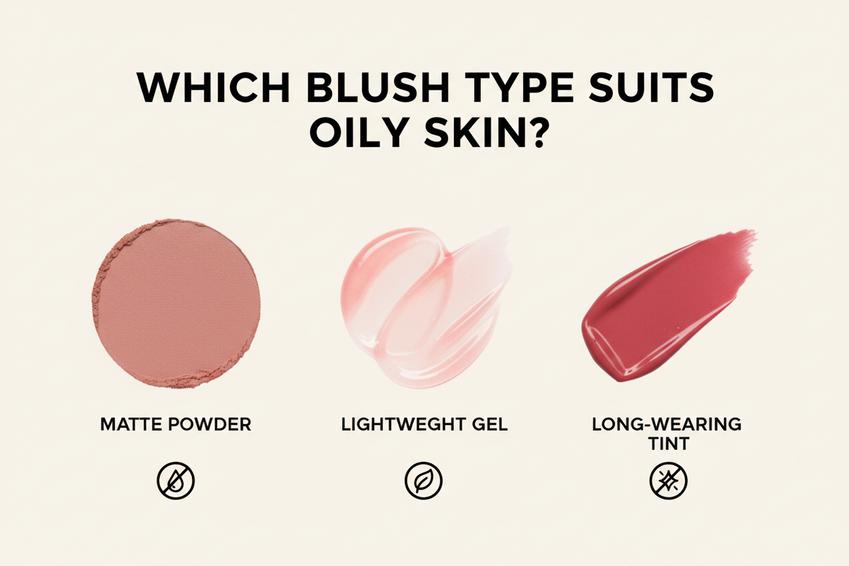
Which Blush Type Suits Oily Skin?
Finding the right types of blush for oily skin comes down to texture, finish, and staying power. Some formats absorb oil, while others feel light. For everyday wear, Topfeel Beauty offers practical formulas designed around the finish brief.
Oil-absorbing Matte Powder Blush
A powder blush is a classic pick when shine appears quickly. Matte powders can offer straightforward oil control without feeling slick.
- Choose the finish
- A matte finish keeps added glow to a minimum.
- Talc or silica may support sebum absorption, helping the cheeks look fresher.
- Check the wear
- A finely milled formula feels non-greasy on oily skin.
- Long-lasting color means fewer touch-ups when the day gets busy.
Lightweight Gel Blush with Non-comedogenic Formula
Gel is one of the types of blush worth trying when powder feels too dry. A gel blush can be lightweight, breathable, and easy to tap onto the cheeks.
- Look for a non-comedogenic formula designed not to encourage pore-clogging.
- Blend a thin layer over oily skin rather than piling it on.
- Pick a natural finish for fresh-looking color without a heavy, creamy feel.
Topfeel Beauty can pair this texture with skin-friendly formulation choices; this clean-beauty overview helps frame claim language, while FDA allergen guidance supports ingredient review.
Long-wearing Blush Tint for Shine Control
A blush tint suits people who want color that stays put with less fuss. Compared with richer blush types, its thin texture can create a natural flush while keeping oily skin feeling light.
- For lasting color:
- Choose a long-wearing, transfer-proof tint.
- Apply sparingly and build color in thin layers.
- For shine control:
- Skip rich, oily bases that can amplify gloss.
- Pair the tint with suitable skincare or powder for practical sebum regulation.
These formats make it easier to match cheek color with oily-skin needs.
Blush Bulk Procurement Pain Points Solved
Bulk buyers comparing blush formats must manage shade drift, packaging fit, shelf life, and order size. A guide to qualified cosmetic manufacturers and ISO 22716 help frame supplier controls.
Shade Inconsistency? Standardize with Cosmetic Pigments
Reliable shade control starts with agreed color standards, not eyeballing a sample. For multiple types of blush, suppliers can document pigment blends and incoming raw materials.
- Color targets
- Set numerical color matching tolerances.
- Check color stability after processing.
- Batch release
- Compare production lots with approved standards.
- Record adjustments to protect formulation consistency.
| Shade family | L* target | a* target | b* target |
|---|---|---|---|
| Pink | 68 | 28 | 8 |
| Coral | 64 | 31 | 19 |
| Peach | 72 | 20 | 25 |
| Berry | 48 | 34 | 5 |
These CIELAB values are illustrative production targets, not universal specifications.
Packaging Headaches? Opt for Custom Compact Case Solutions
Powder blush needs a compact design matched to pan dimensions and filling methods. Research on protective cosmetic packaging reinforces product-specific evaluation.
- Define packaging materials and case components.
- Check pan fit and drop protection.
- Specify closure mechanisms.
- Finalize usability.
- Plan mirror or applicator integration.
- Reserve custom molds for designs that justify the added tooling cost.
That keeps packaging solutions practical.
Variable Shelf Life? Bulk Sourcing of Preservative Blends
Cream, liquid, and gel blush formulas containing water need suitable preservative systems under the applicable EU cosmetic-products regulation.
- Formula protection
- Select approved antimicrobial agents based on formula chemistry.
- Consider antioxidant blends where oxidation is a concern.
- Supply control
- Standardize ingredient sourcing.
- Verify product stability through stability and microbial challenge testing.
For water-containing blush formulas, preservation supports formulation integrity; FDA explains why cosmetic product testing remains necessary.
High MOQ Woes? Flexible Tube and Stick Container Options
Different types of blush can call for very different packs. Flexible sourcing makes trial launches less of a slog.
- Format
- tube packaging suits many liquid or cream products.
- stick packaging supports solid formats.
- Procurement
- Compare container materials and available applicator types.
- Use flexible manufacturing and component customization where suppliers permit smaller runs.
This packaging versatility supports format-specific supplier questions; this cosmetics-factory overview helps prepare them.
Retail Display Of Blush Types
Shopping for different types of blush gets easier when color, formula, and finish make sense at a glance. Smart counter design lets shoppers compare format, test texture, and find a suitable finish.
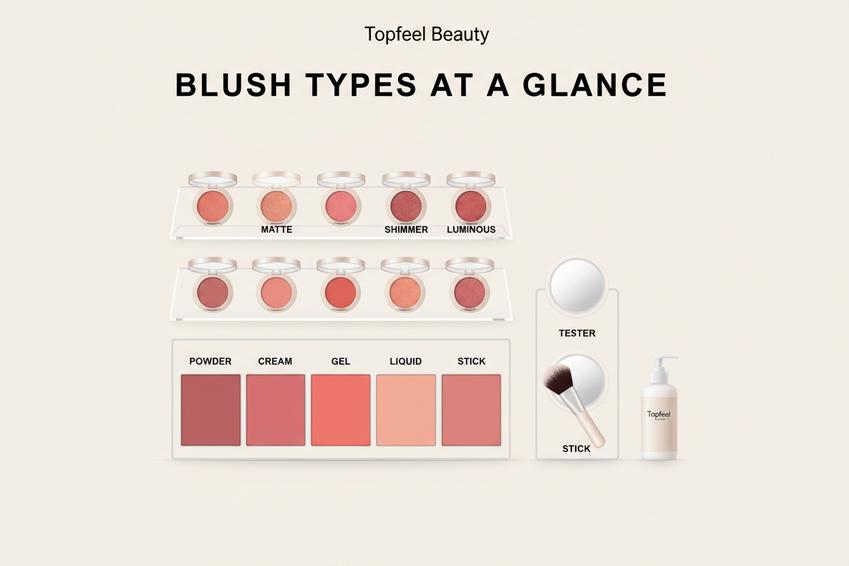
Beauty Counter Palette Inserts for Pink and Peach Hues
A well-planned palette and insert keep each pink hue and peach hue easy to scan while showing how types of blush differ on the counter.
- Color families
- Pink options can move from soft rose to brighter tones.
- Pair each shade with a powder formula or cream formula marker so the color selection feels clear.
- Peach options can run from pale apricot to warm coral.
- A clean display unit lets shoppers compare intensity without digging around.
- Pink options can move from soft rose to brighter tones.
This setup can present complementary blush types side by side for faster shade discovery.
Interactive Tester Stations with Blush Brushes
Trying types of blush before buying is a big deal, especially when cream, powder, gel, liquid, and stick blush can behave quite differently.
- Start at the tester station, where each sample product is clearly identified by formula.
- Use a clean application tool or blush brush.
- Keep sanitizer nearby and follow the store’s hygiene rules.
- Check the result in a well-lit mirror.
That product trial helps shoppers compare pigmentation, feel, and blendability.
Tiered Shelf Layout by Matte, Shimmer, and Luminous Finishes
A tiered display can make types of blush much easier to browse by placing finish front and center.
- Finish
- Matte finish
- Low-shine options suit shoppers seeking a soft, smooth effect.
- Shimmer finish
- Reflective blush adds visible sparkle and dimension.
- Luminous finish
- Glow-focused formulas create a softer sheen.
- Matte finish
- Shopping cues
- Shelf organization can identify each product category by formula.
- Clear visual merchandising helps customers compare blush texture and glow level fast.
Topfeel Beauty can keep formats visually distinct and connect finish to formula; this guide to makeup brush types can support tester planning.
Plan the display with the samples: Topfeel Beauty lists initial samples at 3-7 days. That checkpoint lets teams coordinate palette inserts, tester tools, and finish-led shelf tiers before finalizing the assortment.
Review the blush category and submit your requirements to request a display-ready sample plan.
References
- U.S. Beauty Industry Sales Grow for the Fourth Consecutive Year
- Talc
- Hyaluronic Acid in Cosmetic Applications
- Applications of Polymers in Cosmetic Formulations
- Allergens in Cosmetics
- ISO 22716 Cosmetics GMP
- Protective Efficiency of Cosmetic Packaging
- EU Cosmetic Products Regulation
- Product Testing of Cosmetics
Post time: Aug-21-2026