
Sustainable Alternatives for Cosmetic Brands: From Formula to Packaging
The sustainable alternatives cosmetic industry isn’t some tree-hugger side quest; it’s the deal breaker buyers can’t dodge, where margins, shelf space, and brand trust collide fast.
Private label teams want scale without headaches, claims without drama, and packaging that won’t bite later—so the smart play is sourcing partners who make sustainability pay, not sound pretty.
Harmony in the Sustainable Alternatives Cosmetic Industry: Quick Answers
➔ Upcycled & Refillable Focus: Harness by-products and plant-derived emollients in zero-waste refill systems to cut costs, reduce microplastics, and boost circularity.
➔ Eco-Tech & Green Manufacturing: Adopt solvent-free synthesis, closed-loop mixing, and water recycling to minimize emissions, waste, and resource consumption.
➔ Certified Trust & Transparency: Leverage GMPC, ISO 22716, and digital traceability to prove cruelty-free options, ethical sourcing, and full supply chain visibility.
Why Zero-Waste Refills Are The Next Big Trend
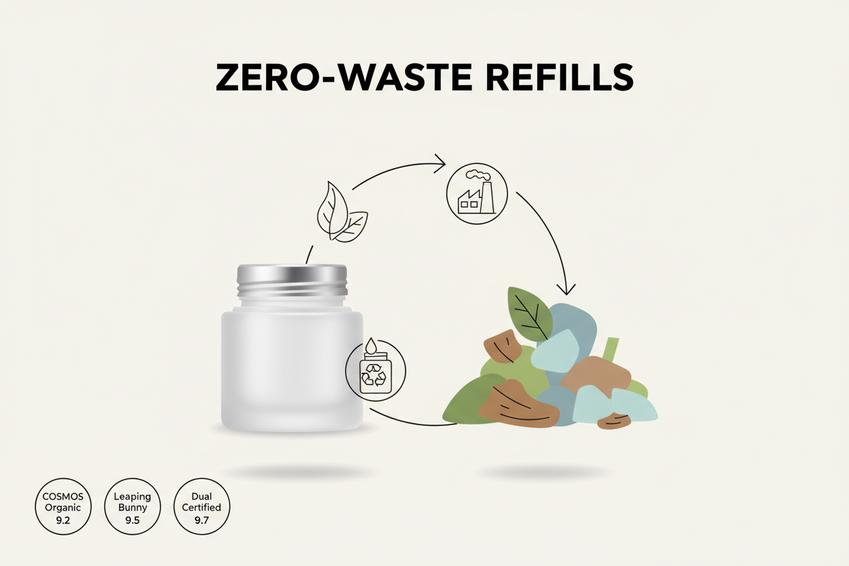
Zero-waste refills are picking up speed as people hunt for sustainable alternatives cosmetic industry options that actually make sense day to day. It’s less hype, more habit now, with smarter sourcing, cleaner formulas, and supply chains that don’t feel shady.
Rising Demand for Upcycled Raw Materials in Refills
- upcycling keeps waste low while boosting ingredient innovation
- raw materials from food by-products support sustainable sourcing
- refill systems fit neatly into a circular economy
Short take: brands chasing sustainable alternatives cosmetic industry wins are turning scraps into skin care gold.
- Source surplus
- Refine safely
- Blend into formulas
- Plug into refill packs
This shift trims costs and supports waste reduction without cutting quality.
Biodegradable Emollients: Perfect Partners for Zero Waste
Here’s the mix that clicks for the sustainable alternatives cosmetic industry:
- biodegradable + plant-based oils
- eco-friendly textures replacing silicones
- natural oils improving cosmetic formulation
Results feel lighter, break down faster, and align with zero waste goals consumers now expect.
Traceable Origins: Building Trust in Refill Supply Chains
A closer look at traceability in the supply chain:
-
Core layer
- ingredient origin verified digitally
- ethical sourcing checks (labor + land use)
-
Operational layer
- refill logistics tracked end-to-end
- transparency dashboards for buyers
-
Outcome
- stronger consumer trust
- tighter sustainable practices
For brands exploring custom solutions, integrating traceability helps verify ingredient origins.
GMPC & ISO 22716 Certifications for Refillable Lines
Certifications matter in the sustainable alternatives cosmetic industry, especially when refillable packaging is in play.
| Certification | Focus Area | Consumer Signal | Impact Score |
|---|---|---|---|
| GMPC | safe manufacturing | quality control | 9.2 |
| ISO 22716 | cosmetic safety | regulatory trust | 9.5 |
| Cruelty-Free / Vegan | ethical standards | no animal testing | 9.7 |
Quick hits:
- ↑ trust in sustainable beauty
- ↓ skepticism around green claims
- ↑ repeat purchases in refill lines
As a full-service private label cosmetic supplier, Topfeel Beauty offers vegan matte liquid lipstick and cruelty-free formulation options that align with these standards.
Types Of Eco-Formulation Technologies
A cleaner cosmetic industry is moving fast toward sustainable alternatives cosmetic industry goals, swapping harsh inputs for smarter systems. This mix of tech and mindset keeps formulas safe, cuts waste, and still performs. Think greener labs, tighter loops, and ingredients that actually make sense.
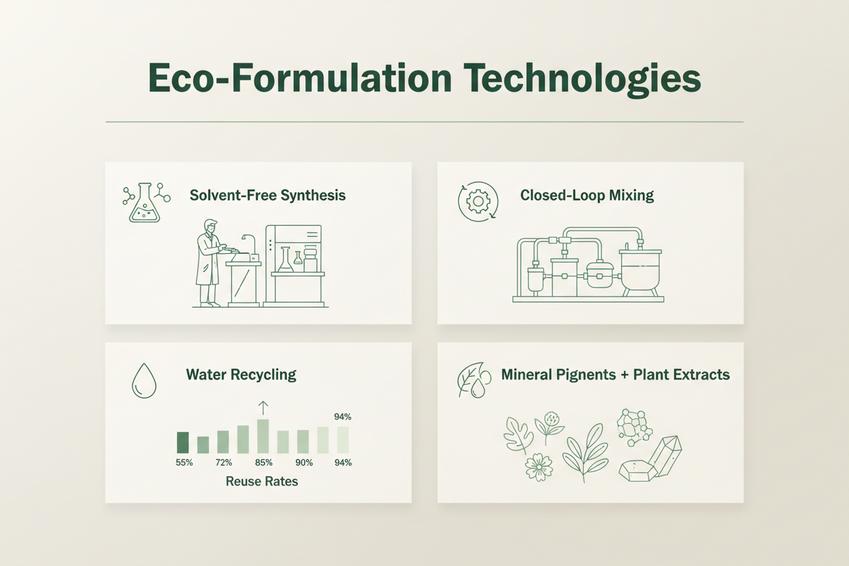
Solvent-Free Synthesis for Cleaner Cosmetics
-
Core shift within the sustainable alternatives cosmetic industry:
-
Solvent-free routes replace volatile carriers
- aligns with Green chemistry rules
- supports Sustainable synthesis in every Manufacturing process
-
Output focus:
- safer Cosmetic ingredients
- stable Clean formulation
-
-
Why it sticks in the cosmetic industry:
- Lower emissions
- Better worker safety
- Easier Eco-friendly production
-
Quick flow:
- raw input → heat/pressure control → direct reaction → minimal residue
-
Manufacturers like Topfeel Beauty provide 100,000-level purification workshops to support clean formulation and scalable systems for real sustainable alternatives cosmetic industry impact.
Closed-Loop Production: Minimizing Waste in Mixing
-
Setup a Closed-loop system
- capture excess during Mixing process
-
Refeed materials
- boosts Resource efficiency
-
Track + refine
- drives Production optimization
-
Nested impact:
-
Waste cuts
- supports Waste minimization
- feeds Circular economy
-
-
Short notes:
- tighter batches
- less loss
- cleaner output
-
This is how the sustainable alternatives cosmetic industry keeps costs and footprint down while scaling.
Water Recycling Systems in Emulsion Manufacturing
-
Inside Emulsion production:
-
capture → filter → reuse Process water
- strengthens Water conservation
- upgrades Resource management
-
-
Data snapshot for sustainable alternatives cosmetic industry adoption:
| System Type | Reuse Rate (%) | Energy Use (kWh/t) | Cost Reduction (%) |
|---|---|---|---|
| Basic loop | 55 | 18 | 12 |
| Membrane filtration | 72 | 22 | 18 |
| Reverse osmosis | 85 | 30 | 25 |
| Hybrid system | 90 | 28 | 29 |
| Closed-cycle advanced | 94 | 26 | 33 |
-
Result:
- cleaner discharge
- lower intake
- stronger Wastewater treatment outcomes
Mineral Pigments & Plant-Derived Extracts Blends
-
Ingredient pairing in the cosmetic industry:
-
Mineral pigments
- stable Cosmetic colorants
-
Plant extracts
- active Botanical compounds
-
-
Layered benefits:
-
safer skin feel
-
supports Sustainable sourcing
- fits Clean beauty formulation
-
-
Symbol cues:
- ✓ reef-safe tone
- ✓ silicone-free finish
-
For brands seeking pigmented eye shadow or highlighters, Topfeel Beauty incorporates mineral-based formulas to meet the demand for premium, sustainable alternatives.
3 Key Biodegradable Packaging Materials Explained
Sustainable alternatives cosmetic industry conversations keep heating up, and honestly, brands are hustling to swap wasteful packs for smarter ones. Here’s how cosmetic sustainable alternatives are actually taking shape in real products.
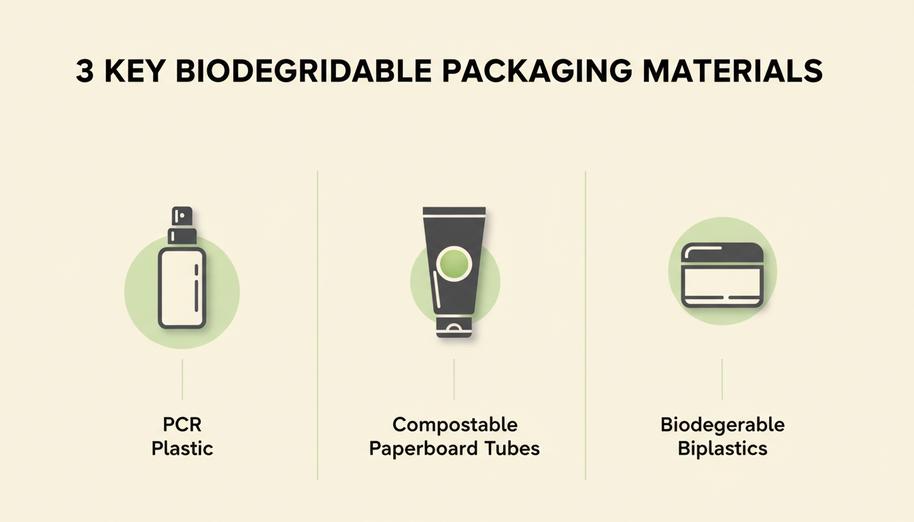
Post-Consumer Recycled Plastic Solutions
- Recycled content keeps materials in play instead of landfills
- PCR plastic supports a circular economy mindset
- Strong enough for daily use, even in premium lines
- Collect via plastic recycling streams
- Clean and sort through material recovery systems
- Reprocess into usable resin for packaging
Nested view:
-
Performance
- Durability under heat and stress
- Compatibility with pumps and caps
-
Impact
- Measurable waste reduction
- Clear gains in sustainability metrics
| Metric | Virgin Plastic | PCR Plastic |
|---|---|---|
| Carbon footprint | High | Lower |
| Waste diversion | Low | High |
| Cost stability | Medium | Improving |
McKinsey (2025) notes recycled inputs are “quickly becoming baseline expectations in sustainable alternatives cosmetic industry supply chains.”
Topfeel Beauty offers related packaging solutions, including custom molds, to help brands balance aesthetic appeal with the sustainability goals outlined in our company overview.
Compostable Paperboard for Sustainable Tubes
Short take: light, clean, and breaks down.
- Compostable material sourced from renewable resources
- Smooth paperboard packaging finish for shelf appeal
Steps in use:
- Form fiber-based tubes
- Fill with low-moisture formulas
- Dispose via compost stream
Nested notes:
-
Design
- Leak resistance tweaks
- Layer optimization for eco-friendly claims
-
End-of-life
- Industrial compost preferred
- Home compost varies
Topfeel Beauty collaborates on custom packaging to develop products such as unique tube formats that fit cosmetic sustainable alternatives without sacrificing user feel.
Biodegradable Bioplastics: From Corn to Container
- Bioplastic from corn starch or sugarcane
- Acts like plastic, but a biodegradable polymer
Flow:
- Grow renewable feedstock
- Convert into bio-based material
- Mold into sustainable containers
Nested breakdown:
-
Material traits
- Controlled breakdown vs traditional plastic
- Suitable for creams, not all solvents
-
Disposal reality
- Needs proper composting for full benefit
- Mis-sorting reduces gains
This is where sustainable alternatives cosmetic industry goals meet real constraints. Done right, compostable plastic reduces landfill load while keeping packaging practical.
Refillable Vs. Single-Use Cosmetic Containers
The push for sustainable alternatives cosmetic industry isn’t just hype anymore; it’s shaping how brands design, sell, and rethink packaging. In the cosmetic industry, choices between refillable and disposable formats reflect deeper priorities—waste, cost, and user habits. Let’s unpack how sustainable alternatives show up in real packaging decisions.
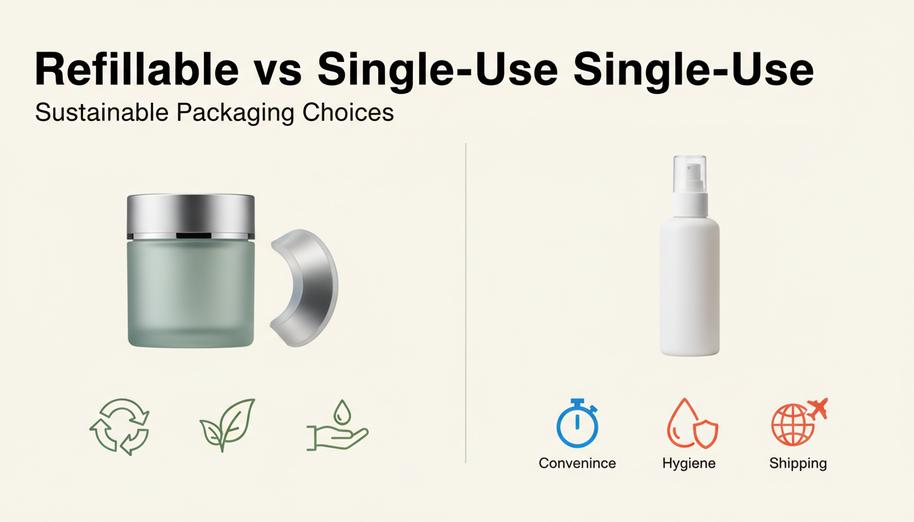
Refillable Containers
-
Core value drivers in the cosmetic industry:
-
Sustainability
- cuts raw material demand
- supports long-term waste reduction
-
Reusability
- extends lifecycle of glass or aluminum units
- builds stronger consumer engagement
-
Circular economy
- refill systems loop materials back into use
- aligns with eco-driven material innovation
-
-
Practical adoption layers:
-
Brand strategy
- Topfeel Beauty supports oem face makeup strategies by assisting with custom packaging and mold designs
-
User behavior
- simple refill steps boost repeat use
-
Supply chain
- lighter refill packs reduce shipping load
-
“Refill models are gaining traction as consumers increasingly favor sustainable alternatives in the cosmetic industry,” notes a 2025 McKinsey packaging insights update.
Short take: sustainable alternatives cosmetic industry growth leans heavily on refill culture.
Single-Use Cosmetic Containers
Quick reality—convenience still wins shelves.
- • Convenience keeps single-use dominant
- • Portability suits travel and on-the-go habits
- • Hygiene remains a selling point
Yet the trade-offs hit hard. Material waste stacks fast, and environmental pollution becomes harder to ignore. In the cosmetic industry, production favors speed, but disposal creates friction.
-
Key tension points:
- Production efficiency vs sustainability goals
- Disposal challenges vs recycling limits
Topfeel Beauty offers foundation and packaging services that blend sustainable alternatives cosmetic industry practices with custom single-use redesigns.
Small shift, big signal.
Are Sustainable Alternatives Cosmetic Industry-Ready?
Sustainable alternatives cosmetic industry talk is everywhere right now, but turning ideas into daily factory habits is the real test. From sourcing to energy to labels, cosmetic sustainability depends on proof, not vibes.
Auditing Suppliers for Full Supply Chain Transparency
Keeping the supply chain clean in a sustainable cosmetic industry starts with sharp auditing and honest supplier assessment. As a cosmetics packaging and formulation supplier, Topfeel Beauty maintains strict inspection of incoming raw materials, detailed in their faq, to ensure supply chain transparency.
- Map raw materials → verify ethical sourcing → confirm compliance
- Spot-check farms and labs for labor and environmental claims
- Build digital logs for real-time transparency
- Identify tier-1 and tier-2 suppliers
- Cross-check certifications
- Run surprise audits
- Flag risks early
A tighter loop means fewer blind spots, especially as sustainable alternatives cosmetic industry standards rise fast.
Scaling Renewable Energy Usage in Cosmetics Plants
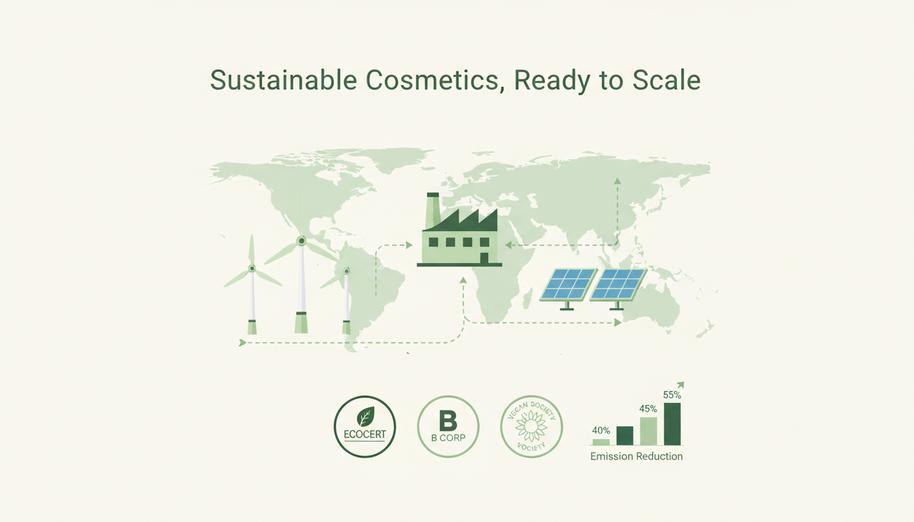
Cleaner plant operations are reshaping sustainable cosmetics manufacturing. Switching to renewable energy like solar power and wind energy cuts the carbon footprint without slowing output.
| Energy Type | Avg Cost/kWh | Emission Reduction % | Adoption Rate | ROI Years |
|---|---|---|---|---|
| Solar | 0.08 | 40% | 52% | 4 |
| Wind | 0.07 | 45% | 38% | 5 |
| Hybrid | 0.09 | 55% | 21% | 6 |
| Grid Green | 0.10 | 30% | 60% | 3 |
| Biomass | 0.11 | 35% | 17% | 7 |
To enhance efficiency while pursuing realistic manufacturing goals, Topfeel Beauty utilizes automatic intelligent voice air showers and ozone sterilization rooms, as shown in their company video.
Navigating GMPC, ISO 22716 & FDA/EU Standards
Certifications guide trust in the sustainable cosmetic industry. Each label signals something specific:
- GMPC → safe manufacturing practices + compliance
- ISO 22716 → strict quality control + traceability
- FDA/EU Regulations → global compliance + safety
✓ Align formulas with certification standards
✓ Document sourcing for compliance
✓ Match branding with real sustainability labels
Short bursts of work, repeated often, beat one big certification rush. For brands navigating these requirements, Topfeel Beauty provides formulas compliant with EU/FDA regulations and you can contact us for full documentation.
Costly Waste Disposal? Try Compostable Tubes
The cosmetic world is shifting fast, and yeah, sustainable alternatives cosmetic industry talk isn’t just buzz anymore. Brands are hunting smarter materials that cut waste and costs at the same time. From fiber builds to biopolymer designs, the move toward eco cosmetic packaging and sustainable cosmetic solutions is changing how beauty tools and packaging end their life.
Compostable Paperboard Tubes for Easy Break-Down
- Core idea: swap plastic-heavy formats with fiber-based packaging material that supports real biodegradability
-
Material lifecycle logic
1.1 Input stage
- renewable pulp → supports eco-design goals
1.2 Use phase
- stable for creams, balms
1.3 end-of-life path
- enters decomposition process within compost systems
-
Waste handling benefits
2.1 Reduced landfill load
2.2 Improved waste management metrics
2.3 Alignment with sustainable alternatives cosmetic industry targets
-
Practical adoption flow
- audit current packaging
- test fiber durability
- switch SKUs gradually
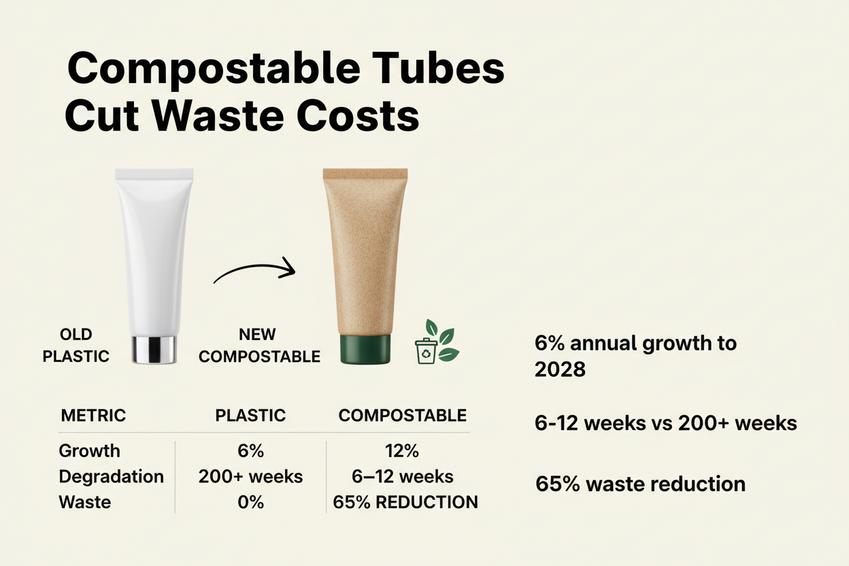
“Smithers Market Report (2025)” notes fiber-based packaging demand in beauty is projected to grow over 6% annually, driven by disposal cost pressure and regulation.
| Material Type | Decomposition Time (weeks) | Cost per 10k Units ($) | Waste Reduction (%) |
|---|---|---|---|
| Paperboard Tube | 6–12 | 420 | 65 |
| Plastic Tube | 200+ | 380 | 5 |
| Laminated Tube | 150+ | 400 | 15 |
Short take: less mess, lower fees, better fit for eco friendly cosmetic packaging moves.
Bioplastic Tube Options That Reduce Landfill Fees
Bioplastic tubes sound fancy, but the idea is simple: use biopolymer materials from a renewable source to cut disposal pain. In the sustainable alternatives cosmetic industry, that shift is becoming pretty standard.
-
Quick wins:
- ♢ lower disposal cost
- ♢ improved waste diversion
- ♢ clear environmental benefit
Now zoom in a bit.
Brands testing material innovation in tubes often follow this rhythm:
mix plant-based inputs → mold into flexible packaging → validate shelf stability → track breakdown performance.
Small snapshots:
- lighter footprint
- easier compliance
- fits circular cosmetic packaging goals
And yeah, in the sustainable alternatives cosmetic industry, these tubes plug right into the circular economy model. Less landfill, more reuse thinking.
In casual terms? You’re not just saving money—you’re redesigning how packaging exits the system.
References
- microplastics – unep.org
- circular economy – ellenmacarthurfoundation.org
- zero waste goals – epa.gov
- Green chemistry – epa.gov
- Water conservation – unwater.org
- reef-safe – noaa.gov
- PCR plastic – plasticsindustry.org
- McKinsey – mckinsey.com
- biodegradable polymer – europa.eu
- environmental pollution – greenpeace.org
- ISO 22716 – iso.org
- FDA/EU Regulations – fda.gov
- Smithers – smithers.com
- waste diversion – epa.gov
Post time: Aug-04-2026