
Silicone vs Water-Based Foundation: Compatibility, Coverage, and Wear
Choosing silicone vs water based makeup can feel like a tiny formulation feud with big money riding on it. Texture, coverage, finish, hydration, and wear shape what customers experience—and what your private label foundation promises.
Silicone-rich formulas often favor smoothing and lasting wear; water-forward options favor lighter hydration. Yet hybrids blur the line, so sourcing requires stability and packaging checks.
Quick Notes: Silicone vs Water-Based Makeup
➔ Silicone Strengths: Delivers seamless spreadability, long-wear adhesion, pore-blurring matte finishes—ideal for oily or combination skin seeking transfer-resistant coverage.
➔ Water-Based Wins: Embraces lightweight hydration with glycerin and humectants for a dewy, comfortable feel—perfect for dry, mature, or sensitive skin.
➔ Hybrid Harmony: Rely on emulsifier blends to stabilize silicones and water, achieving balanced texture, reliable layering, and consistent performance across primers, foundations, and setting sprays.
Data: 72% Of Formulas Use Silicone Vs Water Based Makeup
Comparing silicone vs water based makeup is less about picking a universal winner and more about understanding formula design. Silicone can bring slip and wear, while water supports a fresh, hydrated feel. In practice, many foundation formulas mix both systems, so reading the ingredient list gives shoppers a much better clue.
Prevalence of Dimethicone and Cyclopentasiloxane in Modern Foundations
Silicone ingredients remain familiar tools in modern makeup, especially when smooth payoff matters.
-
Texture and application
- Dimethicone, one of the widely used synthetic polymers, can reduce drag and help foundation glide across uneven texture.
- Cyclopentasiloxane is a volatile silicone valued for light slip; after application, it can evaporate, leaving other ingredients behind.
-
Wear and finish
- Silicones can improve adherence and create a soft, even surface without automatically making coverage heavy.
- In the silicone vs water based makeup debate, cosmetic prevalence alone does not prove one base performs better. The whole formula counts.
For brands developing modern foundation, Topfeel Beauty can tune silicone levels around the desired spread, coverage, and finish.
Water-Based Formulations: Glycerin, Humectants, and Skin Hydration
Water-based formulations typically place Water high on the ingredient list, creating a lighter starting point. Yet water alone is not a moisturizer.
- Glycerin and other humectants attract water and support skin hydration.
- These aqueous ingredients can provide useful moisturizing properties, particularly for dry, dehydrated, sensitive, or mature skin.
- Good cosmetic science also considers oils, emollients, and barrier-supporting ingredients because long-term skin health depends on more than hydration alone.
That makes silicone vs water based makeup a formula-level comparison, not a simple water-good, silicone-bad call.
Emulsifier Hybrids Balancing Silicones and Water for Optimal Blendability
Many foundations sit somewhere between the two camps.
-
Emulsifier hybrids
- Support ingredient compatibility in cosmetic emulsions containing water, oils, and silicones.
- Help maintain a useful silicone-water balance.
-
Performance
- Better blendability can mean fewer streaks and easier layering.
- Controlled optimal texture helps pigment spread consistently.
-
Development
- Formulation science guides emulsifier selection.
- Stability testing checks product stability over time.
So silicone vs water based makeup often becomes silicone and water makeup in real-world formulation.
3 Benefits Of Silicone Vs Water Based Makeup
The silicone vs water based makeup choice comes down to how a formula behaves on real skin. Silicone makeup tends to smooth and control shine, while water based makeup often puts moisture front and center. For brands such as Topfeel Beauty, both routes offer practical ways to match formulas with different skin needs.
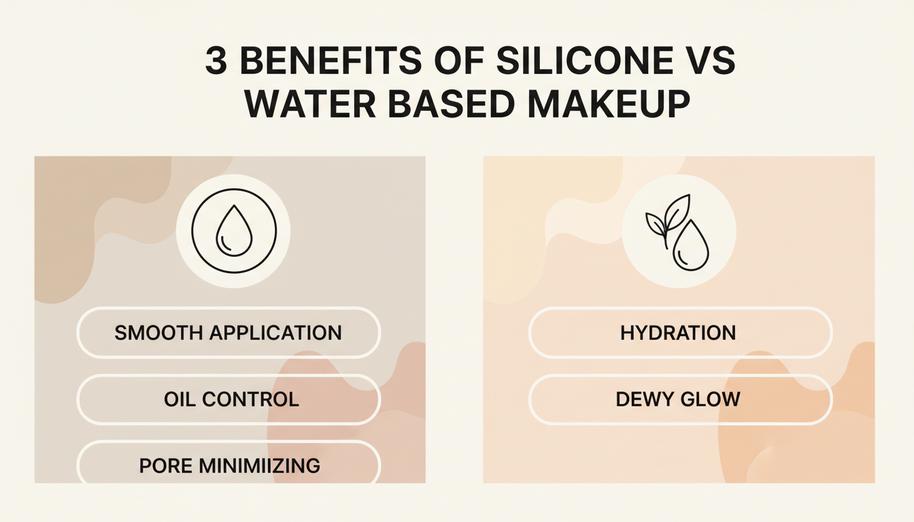
Benefit 1: Smooth Application and Airbrush-Ready Texture
Silicone-rich primer and silicone foundation help makeup glide across the skin surface, giving that easy, slip-on feel people love.
-
Smoother base
- Silicones improve blendability, supporting smooth application with less dragging.
- The formula can create even coverage and soften uneven-looking texture.
-
Better layering
- Concealer and liquid blush can blend over the base without easily disturbing coverage.
- For airbrush application, the payoff is an airbrush texture and more seamless, flawless finish.
That silky performance is a key reason the silicone vs water based makeup comparison matters for professional-looking results.
Benefit 2: Oil Control, Pore Minimizing, and Matte Finish
For oily skin, silicone makeup can be a handy match. Its smoothing film helps create a matte finish while improving the look of skin texture.
- Oil control helps manage the appearance of excess sebum.
- Shine reduction keeps high-shine areas looking calmer during wear.
- Pore minimizing soft-focus effects can make visible pores appear less obvious.
For combination skin, Topfeel Beauty can pair these qualities with targeted primer or foundation formulas rather than making the whole face look flat.
Benefit 3: Dewy Hydrating Wear for Dry and Mature Skin
Water-based foundation, BB cream, and tinted moisturizer take silicone vs water based makeup in a different direction.
-
For dry skin
- Glycerin and other humectants attract moisture, supporting skin hydration.
- Water-based makeup can deliver lighter hydrating wear with a comfortable feel.
-
For mature skin
- Moisture-focused formulas can reduce the look of dryness without relying on a heavy base.
- A dewy finish adds a fresh natural glow, making skin look lively rather than overly powdered.
In short, water based makeup favors fresh hydration, while silicone based makeup excels at smoothing and polished wear.
Silicone Vs Water-Based: Final Verdict
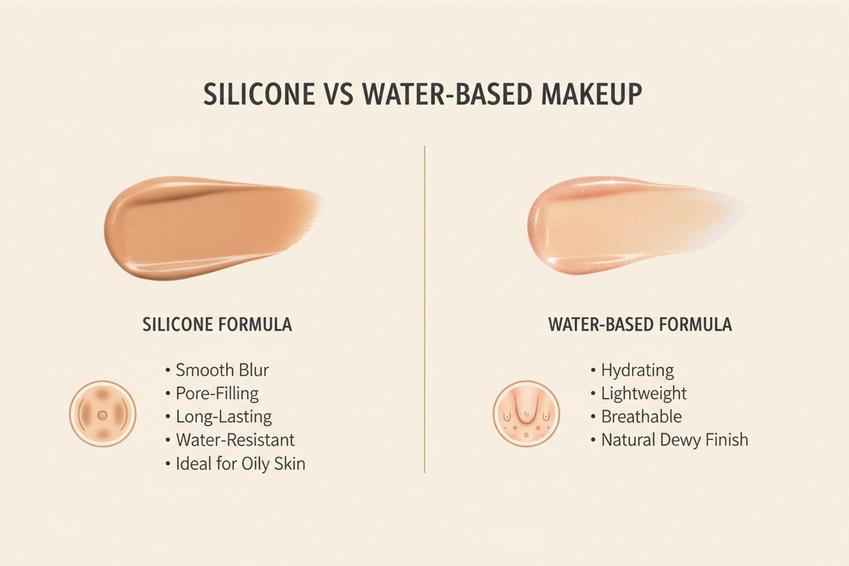
The silicone vs water based makeup choice comes down to skin needs, finish, and staying power. Silicone makeup usually wins on polish and wear, while water based makeup feels fresher and more hydrating. Topfeel Beauty can tailor either route to different complexion goals.
Silicone Formulations
For a smoother, more perfected base, the silicone side of silicone vs water based makeup has some clear perks. Ingredients such as Dimethicone and Cyclopentasiloxane help foundation glide across uneven texture instead of catching around pores.
-
Finish and coverage
-
A Smooth finish can make fuller coverage look less heavy.
- The Pore-filling quality softens the appearance of enlarged pores.
- That creates a noticeable Blurring effect without piling on extra product.
-
-
Wear and skin type
-
Silicone foundations tend to provide stronger adherence.
- Long-lasting wear makes sense for long workdays, events, or warm weather.
- A more Water-resistant film may also improve transfer resistance.
-
Oily Skin often gets the biggest payoff.
- Silicone makeup can keep a polished base intact when facial oils start showing through.
-
For shoppers comparing silicone vs water based makeup mainly on durability, silicone is typically the stronger bet. It’s pretty handy when staying power matters.
Water-Based Formulations
Water based makeup takes another path: less emphasis on heavy smoothing, more on comfortable moisture and skin-like movement. A Hydrating formula often uses humectants such as Glycerin to help support a softer complexion.
- Feel: Lightweight and Breathable textures sit comfortably on Dehydrated Skin, Dry Skin, Mature Skin, and many sensitive complexions.
- Look: A Natural finish can lean toward a fresh Dewy finish, especially when paired with skin-care-style ingredients.
- Coverage: Sheer coverage lets freckles and natural skin texture show through, so the result feels low-key rather than made up.
- Formula goals: Carefully designed Non-comedogenic options can suit consumers concerned about clogged pores, though the complete ingredient formula still matters.
So, silicone vs water based makeup has no universal winner. Water based makeup suits moisture and natural glow; silicone favors blur and endurance. For Topfeel Beauty product development, that distinction makes matching formulas to target users much easier.
Office Wear: Silicone Vs Water-Based Makeup
For a long office day, silicone vs water based makeup comes down to skin needs, compatible layers, and the finish you like. Silicone makeup often gives a smoother, locked-in feel; water based makeup can feel lighter. Smart prep keeps either option looking fresh without much fuss.
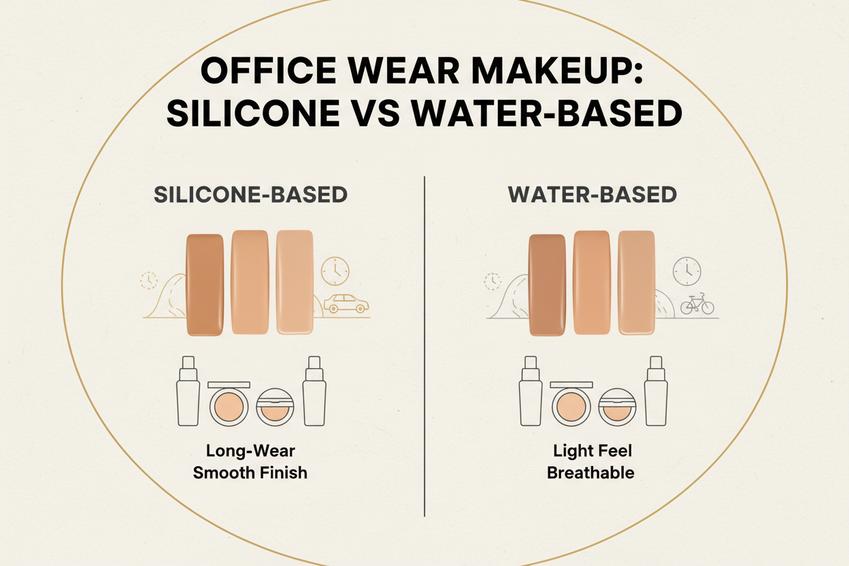
Transfer Resistance and Long-wearing Performance
-
Silicone formulas
- Silicone-rich foundation tends to improve adherence and surface slip, helping longevity through meetings and commutes.
- Film-formers can add transfer-proof, smudge-proof, and water-resistant performance, although no formula is completely immune to rubbing.
-
Water formulas
- A water based foundation may give a fresh, natural finish and comfortable wear time, but durability depends heavily on polymers and powders, not water alone.
- Oxidation varies by pigments, oils, sebum, and formula chemistry. Good setting power supports fade resistance and overall durability.
So, silicone vs water based makeup isn’t a simple winner-takes-all contest.
Layering Primer, Foundation, and Setting Spray for All-Day Hold
A good layering technique starts with thin coats. Match the primer to the foundation rather than judging compatibility solely by the first ingredient; modern formulas commonly contain water plus silicones.
Apply skincare sparingly and let it settle. Follow with primer, then press foundation onto the skin instead of piling it on. Add concealer only where extra coverage is needed. This lighter makeup application limits pilling and patchiness.
Finish with a fine setting spray suited to the formula. For brands developing office-ready complexion products, Topfeel Beauty can support compatible product concepts designed around all-day hold and reliable adherence.
Formulations Suited to Oily, Combination, and Sensitive Skin
-
Oily skin
- Look for oil-free or oil-controlling options with a matte finish. Silicone makeup can smooth texture without automatically making skin greasy.
-
Combination skin
- Balance shine control on the T-zone with hydration on drier areas. Lightweight water based makeup can be handy here.
-
Acne-prone and sensitive skin
- Non-comedogenic claims are useful screening cues, not guarantees against breakouts.
- Choose a simple formulation and avoid known personal irritants. Hypoallergenic labels also cannot promise zero reactions.
Skin behavior matters more than picking water vs silicone by name alone.
References
- Dimethicone – pubchem.ncbi.nlm.nih.gov
- synthetic polymers – sciencedirect.com
- Cyclopentasiloxane – healthline.com
- Glycerin – healthline.com
- humectants – webmd.com
- skin hydration – medicalnewstoday.com
- cosmetic emulsions – sciencedirect.com
- oily skin – aad.org
- sebum – clevelandclinic.org
- dry skin – mayoclinic.org
- mature skin – harpersbazaar.com
- Non-comedogenic – healthline.com
- setting spray – allure.com
- sensitive skin – webmd.com
- Hypoallergenic – fda.gov
Post time: Aug-12-2026