
Should Concealer Be Lighter Than Foundation Color?
Everyone keeps asking, should concealer be lighter than foundation, like it’s some beauty rule carved in stone, yet real faces tell a messier story.
Shoppers chase one shade and end up with ghostly under eyes, patchy spots, returns.
Topfeel engineers state in 2025 product briefs that function based shade design drives performance and sales.
Key Points: Should Concealer Be Lighter Than Foundation?
➔ Brightening Role: A slightly lighter concealer reflects light to lift tired areas without disrupting overall complexion.
➔ Under-Eye Application: Counteract shadows under eyes by choosing a shade one to two shades lighter for a refreshed look.
➔ Spot Correction: Match foundation tone for blemishes and redness to ensure seamless blending and avoid highlighting imperfections.
➔ Shade Harmony: Always test in natural light, account for oxidation, and adjust seasonally to maintain a flawless, natural finish.
Should Concealer Be Lighter Than Foundation? Here’s Why
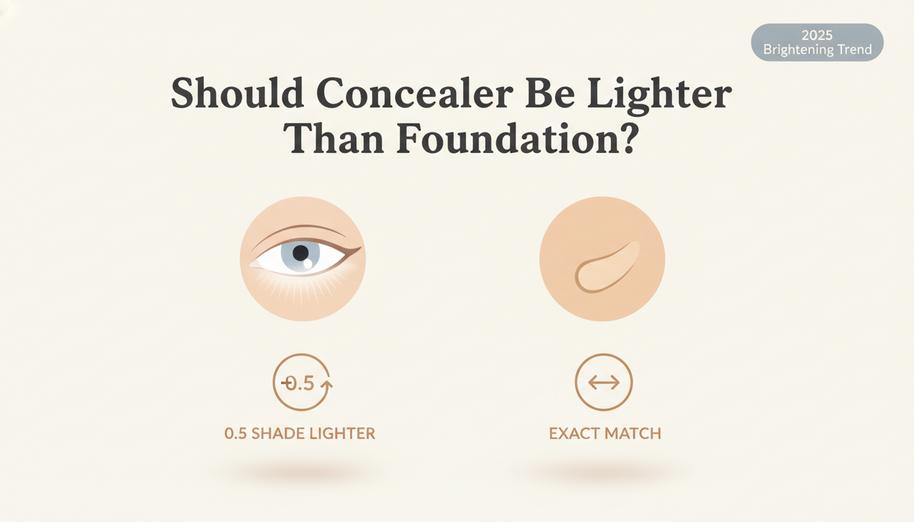
Choosing between shades can feel confusing. If you’ve ever asked, should concealer be lighter than foundation, you’re not alone. Shade choice shapes your under-eye area, affects blemish coverage, and controls how natural your base looks. Let’s break it down in a way that actually makes sense.
Unlocking the Role of Brightening in Concealer
When people ask should concealer be lighter than foundation, they’re often thinking about that subtle brightening effect under the eyes. A lighter concealer works by boosting light reflection, adding soft illumination without washing out your skin.
- Adds gentle luminosity
- Softens the look of dark circles
- Enhances natural radiance
Here’s how brightness works in real life:
- Light hits the under-eye area.
- A slightly lighter tone reflects it better.
- Shadows appear less deep.
- The face looks lifted.
But balance matters:
- ✓ Too light = obvious highlight
- ✦ Just right = smooth radiance
- ✗ Too dark = dull finish
“Consumers in 2025 continue prioritizing brightening and skin-like finishes in complexion products,” notes Mintel’s 2025 Global Beauty Report, highlighting the rise of subtle illumination trends.
Topfeel’s brightening formulas are designed to give that lift without turning the eye area gray or chalky.
How a Lighter Shade Enhances Under-Eye Coverage
If your main concern is shadows or tired eyes, then yes—should concealer be lighter than foundation often leans toward a gentle yes.
Here’s a quick comparison:
| Shade Difference | Best For | Effect on Eye Area | Risk Level | Finish Result |
|---|---|---|---|---|
| Same as foundation | Mild discoloration | Neutral correction | Low | Natural finish |
| 0.5 shade lighter | Light dark circles | Soft lifting effect | Very Low | Fresh look |
| 1 shade lighter | Noticeable shadows | Strong brightening | Medium | Visible lift |
| 2 shades lighter | Heavy circles | High contrast | High | Harsh highlight |
| Corrector + 0.5 lighter | Deep pigmentation | Balanced correction | Low | Even tone |
For everyday wear:
- Match undertone carefully.
- Use thin layers.
- Blend outward for seamless under-eye coverage.
So if you’re still wondering should concealer be lighter than foundation, think “slightly,” not dramatically.
When Matching Tone Beats Adding Brightness
Now here’s the twist. For spot correction, the answer changes.
If you’re covering acne, redness, or discoloration, a skin tone match works better. A lighter shade can spotlight what you’re trying to hide.
Use this approach:
- Apply foundation.
- Dot concealer directly on the blemish.
- Press, don’t swipe.
- Let it set for full camouflage.
For:
- Blemish coverage
- Red patches
- Uneven texture
Stick with a seamless blend close to your base shade. That’s how you get an even complexion without obvious patches.
Topfeel recommends matching your concealer exactly to your foundation for breakouts, while going half a shade lighter only in the under-eye area.
So, should concealer be lighter than foundation?
For brightness under eyes—usually yes.
For spots—no.
Shade choice isn’t about rules. It’s about placement and purpose.
5 Mistakes in Concealer-Foundation Color Matching
Shade matching can feel confusing, especially when you keep asking, should concealer be lighter than foundation or the other way around? The truth is, it depends on your skin tone, undertone, and finish goals. Let’s break down the common slip‑ups so your base looks smooth, not streaky—and yes, we’ll settle the whole should concealer be lighter than foundation debate along the way.
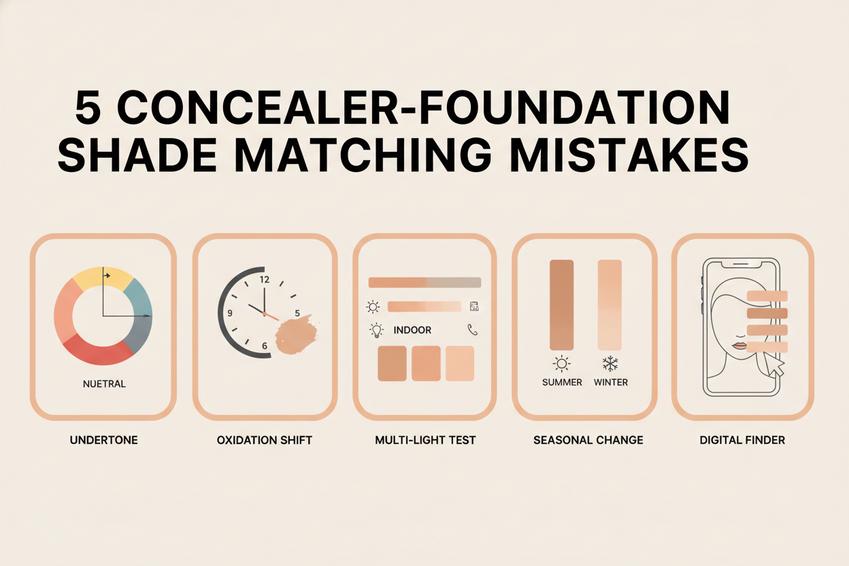
Picking Completely Contrasting Undertones
When people ask, should concealer be lighter than foundation, they often forget about undertone. Lightness isn’t the only issue—tone harmony matters more.
-
Identify your base tone
-
Compare foundation vs. concealer
- If foundation is warm and concealer is cool, the clash creates a gray cast.
- A neutral concealer often blends safest.
-
Quick harmony check
- ◦ Blend along the jawline
- ◦ Step into natural light
So, should concealer be lighter than foundation? Yes—but stay within the same undertone family. Topfeel formulas are designed in coordinated undertone ranges, which makes pairing less of a guessing game.
Overlooking Natural Oxidation on Your Skin
Here’s the thing about oxidation—it sneaks up on you. A concealer that looks perfect at 9 a.m. can turn darker or slightly orange by noon because of skin chemistry and natural oils.
Watch for this:
- Fresh application: bright, smooth
- After 30 minutes: subtle color change
- Extended wear time: deeper tone
If you’re still wondering, should concealer be lighter than foundation, factor in oxidation. A half‑shade lighter can balance that shift. For anyone debating should concealer be lighter than foundation in oily areas, test both products together and wait before deciding.
Ignoring Swatch Tests in Different Lighting
Lighting lies. Indoor bulbs skew warm; office LEDs flatten dimension.
To protect color accuracy:
-
Swatch on the neck and jawline, not your hand.
-
Check under:
- Artificial light (indoor)
- Natural light (near a window)
- Full outdoor daylight
If the blend disappears in all three, you’re close. If you’re still unsure, should concealer be lighter than foundation for brightening? Slightly—about one shade—when tested in natural light. That’s the real filter.
Skipping Seasonal Shade Adjustments
Your skin tone isn’t static. Summer brings tan from sun exposure; winter often means pale and cooler.
Follow this mini roadmap:
-
Summer
- Foundation: deeper shade
- Concealer: match or ½ shade lighter
-
Winter
- Foundation: lighter base
- Concealer: subtle shade adjustment for brightness
Ignoring seasonal changes is why makeup suddenly looks off. When clients ask should concealer be lighter than foundation year‑round, the answer shifts with the weather.
Relying Solely on Online Shade Finders
An online shade finder is helpful, but it’s still digital. Screens distort depth and accuracy.
Keep this balance:
- Use the virtual tool for narrowing options.
- Confirm in real-life with the human eye.
- Compare against your foundation before buying.
If you’re typing “should concealer be lighter than foundation” into a search bar, remember: tech guides you, but your mirror decides. Testing in person—especially with reliable systems like Topfeel—makes that final call much easier.
The Concealer vs. Foundation Shade Dilemma
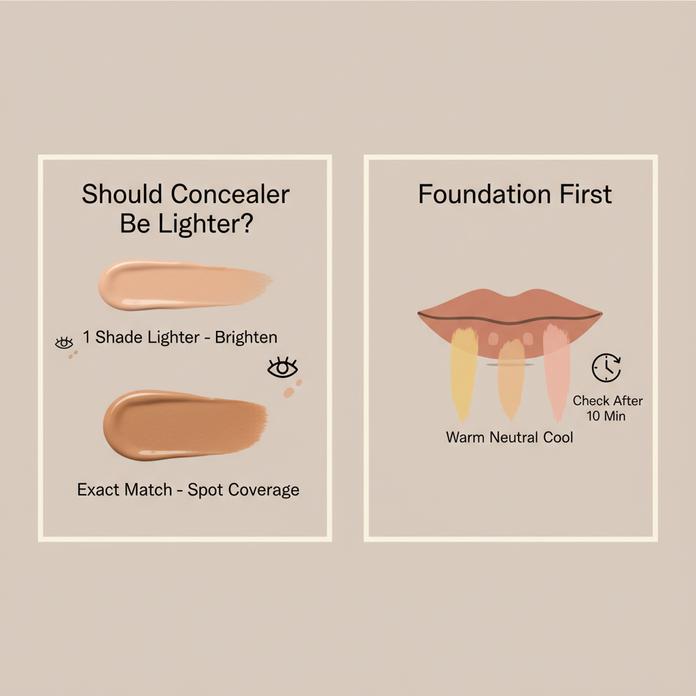
Figuring out should concealer be lighter than foundation can feel confusing. The truth? It depends on your skin tone, your goal, and how you want your base to look in real life.
Concealer Shade
When asking should concealer be lighter than foundation, break it down by purpose.
- For dark circles, a slightly lighter shade supports brightening.
- For blemishes, an exact shade match keeps coverage invisible.
- For redness, match both undertone and skin tone.
Here’s how to think it through:
-
Define placement.
-
Under-eyes
- 1 shade lighter can lift.
- Cool undertone cancels blue tones.
-
Spots
- Exact shade prevents patchiness.
-
-
Check lighting.
- Natural light test.
- Indoor test before full application.
So, should concealer be lighter than foundation every time? No. Only when brightening matters more than spot-level coverage.
With Topfeel concealers, the range allows:
- subtle lift
- precise match
- smooth blend into your real skin tone
Still wondering should concealer be lighter than foundation for everyday wear? Go lighter by half a shade, not two. Big jumps look obvious fast.
Foundation Shade
Foundation sets the base. If you’re asking should concealer be lighter than foundation, remember the base must match your full skin tone first.
-
Identify undertone.
- Warm
- Neutral
- Cool
-
Test jawline for true matching.
-
Watch for oxidation after 10 minutes.
A quick reference:
| Factor | Ideal Result | Risk if Wrong |
|---|---|---|
| Shade depth | Seamless neck blend | Visible line |
| Undertone | Natural finish | Ashy or orange |
| Coverage level | Even texture | Heavy buildup |
If the base is off, no one cares about should concealer be lighter than foundation because the mismatch shows first.
Topfeel foundations are designed for smooth blending, steady coverage, and minimal oxidation, so when you ask again, should concealer be lighter than foundation, the answer becomes simple: match your base, adjust your concealer with intention.
Cakey Concealer? Avoid This Shade-Matching Trap
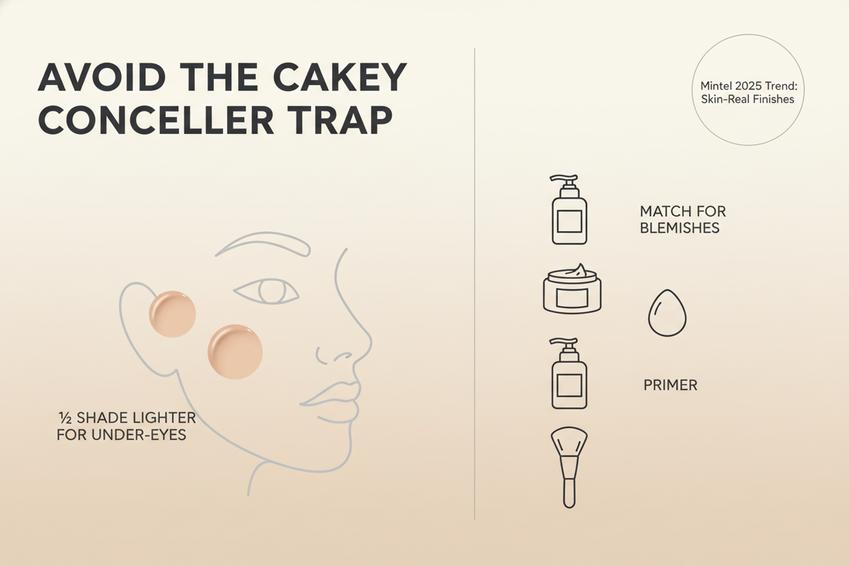
A lot of people still ask, should concealer be lighter than foundation? The short answer: not always. Shade choices, skin prep, and blending decide if your base looks smooth or cakey. Let’s break down how to avoid that heavy, cracked finish.
Balancing Coverage Without Going Too Light
The big debate—should concealer be lighter than foundation—usually starts with brightening goals. But going too pale throws off your shade matching and highlights texture.
-
When choosing a concealer shade, consider:
-
- Your exact foundation shade
-
- Your true skin tone
-
- Your undertone (cool, warm, neutral)
-
If you’re still wondering, should concealer be lighter than foundation, think in layers:
-
For blemishes
-
→ Match your foundation shade closely
- ▪ Focus on seamless coverage level
-
-
For under-eyes
-
→ Go half a shade lighter at most
- ▪ Keep a natural finish
-
Many makeup artists now say the question isn’t just should concealer be lighter than foundation, but how it works with color correction.
“Consumers are moving toward skin-real finishes over high-contrast brightening,” noted Mintel’s 2025 global beauty trend report.
Brands like Topfeel design flexible shade ranges so the lighter-versus-matching debate doesn’t feel so dramatic.
Prepping Skin to Prevent Product Buildup
Before asking again, should concealer be lighter than foundation, check your base.
- Start with gentle exfoliation to smooth skin texture.
- Follow with lightweight moisturizer for solid hydration.
- Add a thin primer layer.
Think in tiers:
-
Skin prep
-
→ Proper skin preparation
- ▪ Balanced product layering
- ✦ Prevents buildup
- ✦ Reduces creasing
-
Skipping prep makes even the right shade look wrong.
Blending Techniques That Thwart Cakey Lines
Even if you’ve solved should concealer be lighter than foundation, bad blending ruins it.
Use smart blending tools:
-
Beauty sponge
-
→ Damp
- ▪ Light patting motion
-
-
-
→ Soft buffing
- ▪ Thin layers only
-
Finish softly with minimal setting powder. Too much equals instant creasing.
When someone asks again, should concealer be lighter than foundation, you’ll know: shade matters, prep matters more, and technique seals the deal. A balanced approach—like the finishes offered by Topfeel—keeps coverage smooth, never cakey.
References
- Blemishes and Redness – cosmopolitan.com
- Natural Light – harpersbazaar.com
- Seasonally – glamour.com
- Brightening Effect – allure.com
- Mintel’s 2025 Global Beauty Report – mintel.com
- Dark Circles – byrdie.com
- Warm – elle.com
- Cool – instyle.com
- Color Change – marieclaire.com
- Color Correction – sephora.com
- Exfoliation – healthline.com
- Moisturizer – womenshealthmag.com
- Primer – self.com
- Creasing – makeup.com
Post time: Jun-02-2026