
Setting Powder vs. Finishing Powder: What’s the Difference?
Setting powder vs finishing powder can look like twins, but their jobs split fast: setting powder fixes makeup, cuts shine, and fights creasing; finishing powder blurs pores and polishes texture with matte or luminous effects.
For private label brands, that split shapes formulas, claims, formats, packaging, and SKU planning. Custom production starts there.
Quick Answers: Setting Powder vs Finishing Powder
➔ Primary Role: Setting powder locks makeup, controls oil, and prevents creasing; finishing powder refines texture, blurs pores, and adds a soft-focus or luminous finish.
➔ Texture & Composition: Setting formulas rely on oil-absorbing ingredients (silica, kaolin), while finishing often contains light-diffusing mica or HD particles.
➔ Application Order: Use setting powder directly after foundation; apply finishing powder sparingly, focusing on visible texture or glow.
➔ Finish Effect: Choose setting for matte longevity; opt for finishing for a polished, camera-ready look.
Why Does Setting Powder Exist?
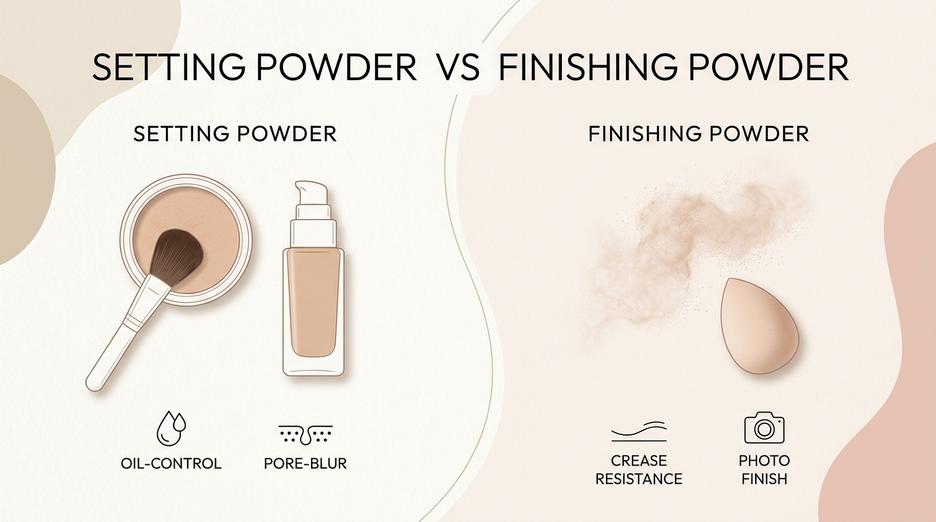
Setting powder has a simple job: keep base makeup looking fresh after application. Yet the choice gets less obvious when comparing setting powder vs finishing powder, loose formulas, or baking products. The right powder can manage shine, soften texture, and protect coverage without making skin look flat, dry, or overly made up.
Enhancing Foundation Longevity with Private Label Setting Powder
A setting powder helps foundation resist everyday heat, touching, and skin oils, extending makeup longevity. In the setting powder vs finishing powder debate, setting products mainly secure the base, while finishing products focus more on final appearance.
-
Formula choices
-
Private label development can adjust:
- oil absorption for oily complexions;
- softer moisture balance for dry skin;
- pigment levels for different skin tones.
-
During cosmetic manufacturing, brands can also choose pressed or bulk powder formats based on the intended makeup routine.
-
That flexibility matters. A good formula keeps coverage put without leaving the face looking chalky.
Oil-Absorbing, Pore-Blurring Talc-Free Loose Powder
Talc-free loose powder swaps talc for materials such as silica, rice powder, or modified corn starch. These ingredients support sebum absorption and oil control, cutting unwanted shine while preserving a clean matte finish.
For shoppers comparing setting powder vs finishing powder, loose setting formulas usually have the more practical wear-control role. Pore blurring comes from tiny particles scattering light around visible texture, so pores appear softer rather than physically disappearing.
Some formulas also use mineral powder ingredients. A light hand is key; piling it on can make texture stand out instead of smoothing it.
HD Baking Powder for Crease Resistance and Photo Finish
HD powder is especially fine, helping create a smoother photo finish without a heavy layer.
- Press translucent powder onto areas prone to movement or shine.
- With the baking technique, leave extra powder briefly under the eyes or around facial contours.
- Brush away the excess to support crease resistance and cleaner makeup setting.
This method can reduce product movement around fine lines, though too much powder may emphasize dry skin. Setting powder vs finishing powder matters here too: baking primarily sets makeup, while finishing powder is typically applied afterward for visual refinement. In short, setting powder vs finishing powder comes down to hold versus final polish.
Oil Control: Setting Vs. Finishing Powder
Choosing between setting powder vs finishing powder gets much easier once the job of each formula is clear. One manages makeup and oil; the other polishes the final look. Topfeel Beauty can support both needs with purpose-built powder formulas.
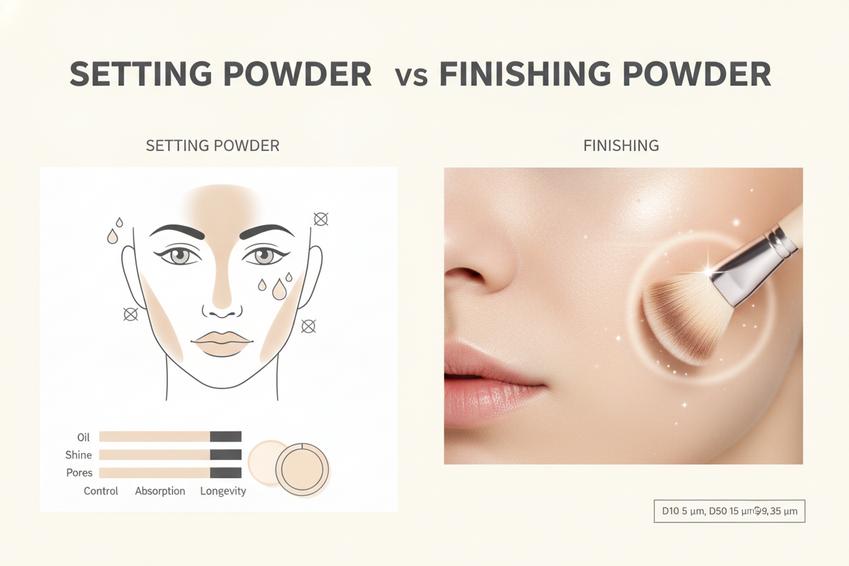
Setting Powder
For oily or combination skin, setting powder vs finishing powder is mainly about staying power. Setting formulas sit over foundation and concealer, providing Oil absorption while helping Makeup setting last through a busy day.
-
For wear control:
-
Apply over Liquid products after they settle.
- A light press supports Foundation longevity without piling on product.
- Concentrate around the nose, forehead, and chin for targeted Shine control.
-
Set Cream products where movement or creasing is common.
- Build gradually for a cleaner Mattifying effect rather than a flat, cakey layer.
-
A useful technical reference is particle size. ISO 13320:2020 describes laser-diffraction methods for particle-size analysis; D10, D50, and D90 are percentile values commonly reported when testing powder distributions.
| Measurement | Particles below value | Example result (µm) |
|---|---|---|
| D10 | 10% | 5 |
| D50 | 50% | 15 |
| D90 | 90% | 35 |
These figures are illustrative test data, not universal targets for cosmetic powder.
Finishing Powder
With finishing powder vs setting powder, the priority shifts from wear to appearance. Finishing powder is the Final step, used sparingly once makeup is already fixed.
- Sweep a small amount across areas showing Skin texture.
- Fine powders create Light diffusion, supporting Blurring imperfections and a Soft focus effect.
- Keep the layer sheer. That helps produce a Smooth appearance and polished Airbrushed look without turning the face overly matte.
In short, setting powder vs finishing powder comes down to function: set for oil and wear, finish for optical refinement. Topfeel Beauty powder development can pair both benefits while keeping each formula focused on its main job.
4 Steps To Flawless Powder Application
Good powder work starts before a brush touches your face. In the setting powder vs finishing powder debate, setting products mainly hold makeup and manage oil, while finishing formulas polish its appearance. These four techniques help keep skin fresh, smooth, and natural, without piling on product or turning that glow flat.
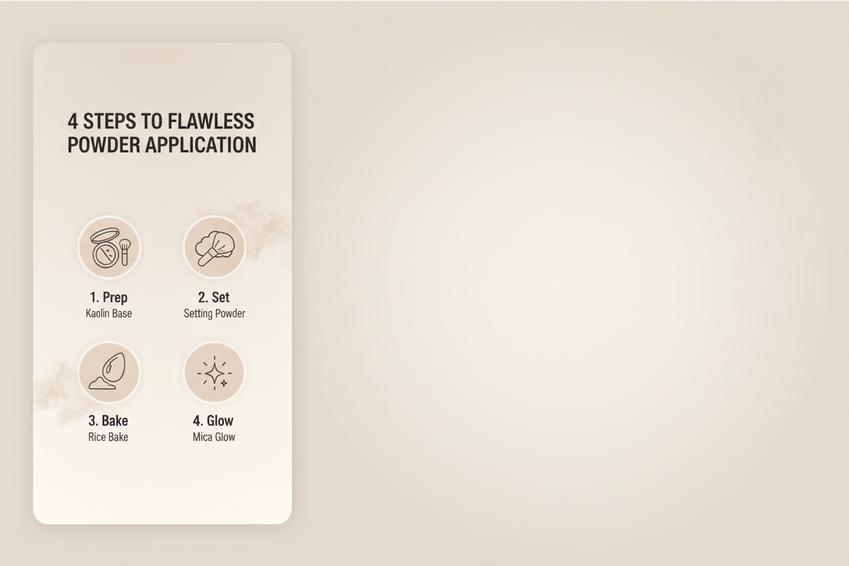
Prep with Kaolin Clay Base for Smooth Texture
A kaolin clay base gives oily areas a cleaner starting point while helping prep makeup for better grip.
-
For balanced texture:
- Apply a thin primer layer where shine usually appears.
- Keep dry areas light; too much clay can look cakey.
-
For a smooth result:
- Let the base settle before foundation.
- Press rather than rub later powder layers.
Topfeel Beauty can pair kaolin-based face products with setting formulas when building routines around setting powder vs finishing powder needs.
Lock in Makeup Setting via Silica Microspheres Translucent Powder
A light translucent powder with silica microspheres cuts surface shine and softens the look of small imperfections. Short and sweet: less tack, more hold.
-
Makeup setting
- Press onto the T-zone for targeted oil control.
- Use a fluffy brush elsewhere for a softer finish.
-
Better longevity
- Build thin layers instead of one heavy coat.
- A gentle press helps lock foundation without dragging it.
That fixation role is central to setting powder vs finishing powder.
Refine Skin Texture Using Rice Powder Extract Bake Technique
The bake technique works best with restraint; a thick coat isn’t automatically better.
-
Application
- Press a rice powder extract formula beneath the eyes or around oily areas.
- Let it sit briefly so oil absorption can mattify the surface.
-
Refining skin texture
- Sweep away loose product with a soft brush.
- Check pores in natural light and remove visible excess.
Topfeel Beauty formulas can use this approach to refine targeted zones without masking natural skin character.
Seal and Illuminate: Mica Pigments for a Luminous Glow Finish
• Seal: Keep mica pigments mainly on high points after setting powder has done its job.
• Illuminate: Fine reflective particles add radiance and a luminous glow by bouncing light.
• Finish: Use controlled shimmer as a soft highlight, not all-over sparkle. That distinction explains setting versus finishing powder clearly: one supports wear, while the other visually perfects the finish.
References
- how to stop concealer from creasing – byrdie.com/Byrdie
- best setting powders – glamour.com/Glamour
- best setting powders – cosmopolitan.com/Cosmopolitan
- makeup tricks to make your foundation last longer – allure.com/Allure
- oily skin causes – healthline.com/Healthline
- talc – fda.gov/FDA
- how to bake your makeup – makeup.com/Makeup.com
- best liquid foundation – harpersbazaar.com/Harper’s Bazaar
- best matte foundation – elle.com/Elle
- ISO 13320:2020 – iso.org/ISO
- best setting powders – marieclaire.com/Marie Claire
- kaolin clay skin benefits – webmd.com/WebMD
- silica – paulaschoice.com/Paula’s Choice
- mica – incidecoder.com/INCI Decoder
- airbrush makeup foundation review – refinery29.com/Refinery29
Post time: Aug-17-2026