
Primer with Makeup: Formula Compatibility for Base Makeup Products
A primer system can pill or dispense poorly with the wrong package. This foundation-clumping guide defines visible failures.
Topfeel Beauty’s packaging guidance matches airless materials and dispensing structures to formulas before production.
Brands should treat formula and package as one system. Test viscosity, output, and seals. The goal is repeatability.
Key Notes on Primer with Makeup Harmony
- Treat formula and package as a single system: match primer chemistry with PP, PE, acrylic or aluminum materials.
- Tune airless pump components: adjust actuator, piston and dispensing rate to suit primer viscosity.
- Conduct compatibility testing: evaluate emulsion stability, chemical resistance and texture under expected conditions.
- Verify seal integrity: perform leakage tests and vacuum decay to prevent air ingress and product degradation.
3 Essential Steps To Match Primer With Makeup
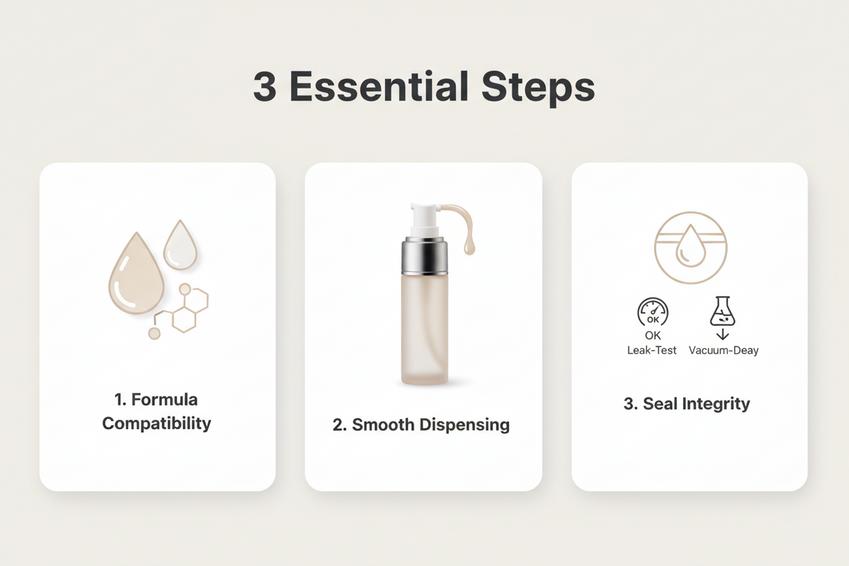
Matching the system requires formula chemistry, dispensing behavior, and sealing performance to be reviewed together; a cosmetic polymer review describes film-forming materials.
Assessing Primer Base: Polypropylene vs. Acrylic Emulsions
Getting Formula Compatibility right starts with the formula and pack touching each other safely.
- Primer chemistry
- Acrylic Emulsions create film-forming networks that can improve slip and wear beneath Base Makeup.
- Emulsion Stability must hold through storage, so separation does not throw primer with makeup performance off.
- Packaging contact
- Polypropylene offers useful chemical resistance for many cosmetic formulas.
- Interaction with the Polymer Matrix still needs testing under expected temperatures and storage times.
- Application feel
- Rheology, meaning how a formula flows under force, affects spreading and layering. Good balance helps makeup primer sit smoothly rather than pill or drag.
That chemistry check keeps primer with makeup from becoming a guessing game.
Ensuring Smooth Dispense with Airless Pump and Actuator Tuning
A good Airless Pump should dispense consistently. Match Packaging Mechanics to Viscosity, then refine Actuator Tuning.
- Measure formula flow and target Dispensing Rate.
- Set Stroke Volume for a useful primer dose without waste.
- Check actuation force and watch for sputtering, stringing, or residue.
- Review Shear Stress, since pumping force can temporarily change how some emulsions flow.
The result should be controlled delivery.
Verifying Seal Integrity via Leakage Test and Vacuum Decay
- Container Closure
- Bottle body and neck
- Run a Leakage Test to identify formula escape around joints.
- Inspect Seal Integrity after filling and transport simulation.
- Pump interfaces
- Apply Vacuum Decay testing to detect tiny air paths without relying only on visible leaks.
- Compare Pressure Decay results against approved limits.
- Bottle body and neck
Strong Barrier Properties restrict air paths that may affect the formula. A study developed a method for evaluating protective cosmetic packaging, reinforcing the need for product-specific limits.
Make compatibility measurable: Compatibility tests catch package-fit problems before production, and Topfeel Beauty includes this check in development as one formula-to-pump-to-seal decision.
Use the face-primer direction and custom solutions to choose the package.
Can You Mix Water-Based Primer And Silicone?
Water-based primer with makeup can work with silicone-containing layers, but system testing matters more than a simplified ingredient label.
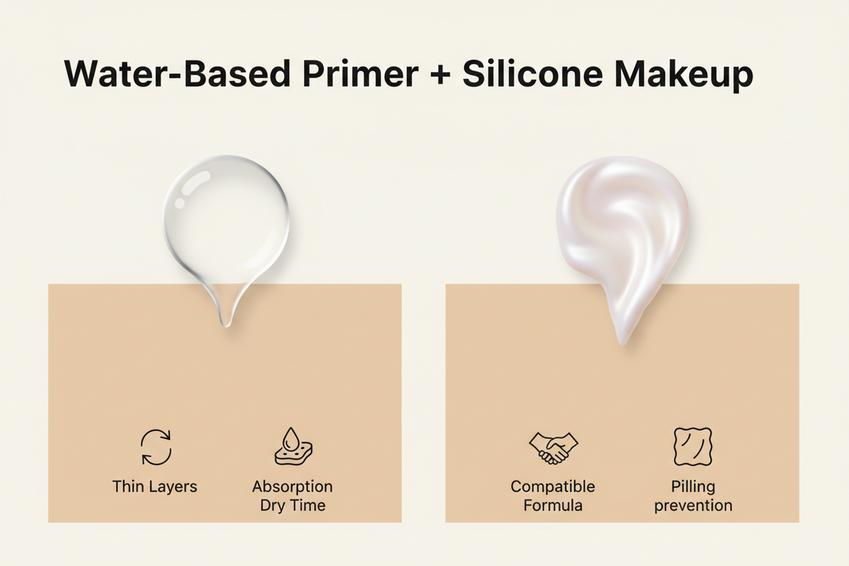
Water-Based Primer Formulation Fundamentals
A water-based primer uses an aqueous base as its main carrier. A base-makeup guide helps frame the liquid texture and layering routine.
- Start with the formula
- Water-rich products depend on emulsifiers to keep oil, water, and other ingredients evenly blended.
- Good absorption helps a primer with makeup form an even base instead of leaving a wet film.
- Prep for better layering
- Keep skin preparation simple.
- Apply skincare in thin coats.
- Allow tacky products to settle before adding primer.
- Press foundation on gently rather than rubbing.
- When testing a primer with makeup, watch for pilling around the nose or jaw. Those little flakes can signal too much product or incompatible film-forming ingredients.
- Keep skin preparation simple.
Product developers should brief finish, skin feel, and foundation-layering goals rather than rely on broad “water-based” claims.
Silicone Primer Characteristics and Compatibility
A silicone primer commonly uses dimethicone or related materials for foundation glide and a smooth texture. This can support pore-filling and wear goals.
- Check how the layers behave together.
- A balanced emulsifier system can let silicone and water coexist nicely.
- Heavy barrier creation, however, may reduce grip when the next layer goes on too quickly.
- Test the application.
- Use a small amount of primer with makeup and give it time to set.
- Pat on foundation. Vigorous rubbing can cause foundation separation, especially when there is a formula conflict between film-formers.
- Judge the finished wear.
- Smoothness matters, but so do transfer, pilling, and oil control.
For brands developing a compatible system, test silicone concentration, emulsifiers, and texture with the intended foundation. FDA guidance places responsibility for cosmetic product safety testing on the manufacturer.
Reduce layering surprises: One scorecard keeps system testing focused.
Topfeel Beauty uses lab co-creation for texture and compatibility. Compare its face-primer product route with the OEM face makeup service, then record pilling, grip, transfer, and finish before approval.
5 Packaging Solutions For Airless Cosmetic Needs
Primer packaging should protect the formula, give a steady dose, and support decoration. This factory overview and guide to evaluating cosmetic manufacturers frame supplier controls; ISO 22716 is a relevant cosmetic GMP reference.
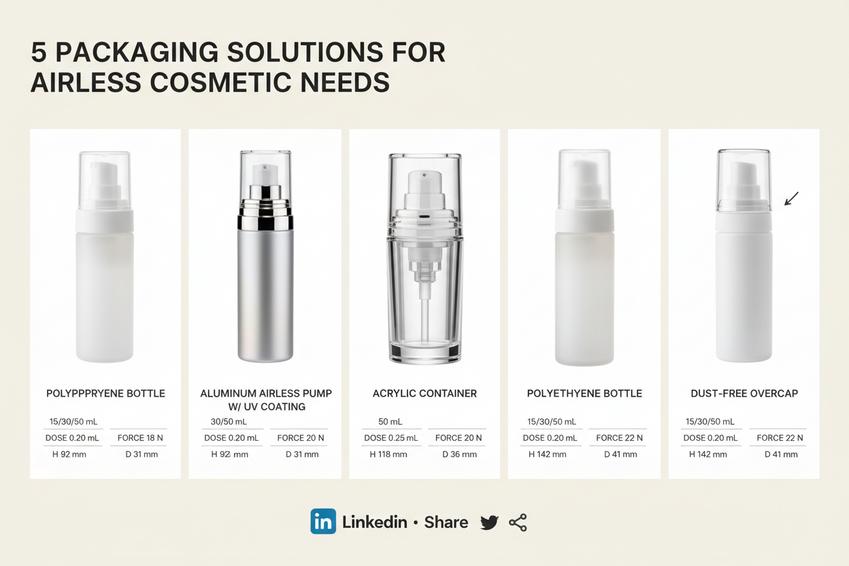
Polypropylene Bottles via Injection Molding for Consistent Capacity Volume
Polypropylene injection molding supports precision manufacturing for a cosmetic bottle, keeping wall thickness and capacity volume steady.
- Body control
- Stable neck dimensions improve pump fit.
- Repeatable volume supports base makeup packaging and formula compatibility when pairing primer with makeup.
Aluminum Airless Pump Systems Featuring UV Coating Protection
An aluminum airless pump combines a dispensing system with a UV coating. The coating protects decoration, while the piston still requires formula-specific testing.
Typical specification targets can look like this:
| Check | 15 mL | 30 mL | 50 mL |
|---|---|---|---|
| Dose (mL) | 0.20 | 0.25 | 0.25 |
| Actuation force (N) | 18 | 20 | 22 |
| Bottle height (mm) | 92 | 118 | 142 |
| Diameter (mm) | 31 | 36 | 41 |
Actual limits require product testing, especially where primer packaging needs oxidation prevention.
Acrylic Container Bodies Adorned with Silk Screen Printing
- Acrylic container
- Provides a clear, rigid shell for visual design.
- Supports cosmetic branding through silk screen printing.
- Surface decoration can also include hot stamping.
- Product labeling should stay readable across the chosen diameter and height.
The result should balance decoration with tested performance.
Polyethylene Bottles Validated for Leakage Test and Stress Cracking
- Mold the polyethylene liquid foundation container.
- Run a leakage test to check barrier integrity.
- Complete stress cracking and durability testing using a relevant method such as ASTM D1693.
- Record deformation or leaks.
- Confirm safety validation against the real primer formula.
That testing helps confirm containment through handling and storage, while FDA authority guidance clarifies that cosmetics are regulated but generally not preapproved.
Fully Compliant Overcaps: ISO 9001, FDA Compliance, and Dust-Free Packaging
Good overcaps keep actuators covered and support contamination control. Dust-free packaging adds another clean-handling measure.
- Quality assurance: ISO 9001 supports controlled quality-management processes.
- Market checks: FDA compliance, applicable regulatory standard requirements, RoHS, REACH, and BPA-free specifications should be verified for the destination market and packaging use; EU cosmetic rules are set out in Regulation 1223/2009, with claim criteria in Regulation 655/2013.
Approve the complete pack system: Topfeel Beauty lists initial samples at 3-7 days. The custom solutions workflow turns that checkpoint into a package approval gate before mass production.
Submit your formula and packaging requirements to request a compatibility plan before mass production.
References
- Applications of Polymers in Cosmetic Formulations
- Protective Efficiency of Cosmetic Packaging
- Product Testing of Cosmetics
- Environmental Stress-Cracking of Ethylene Plastics
- ISO 22716 Cosmetics GMP
- FDA Authority Over Cosmetics
- EU Cosmetic Products Regulation
- Common Criteria for Cosmetic Claims
Post time: Aug-24-2026