
Petroleum Jelly for Lip Gloss: Formula, Safety & Packaging
If you’re sourcing petroleum jelly for lip gloss, margins, consistency, and shine decide everything; one bad batch turns sticky, grainy, and expensive fast.
Recent reports from Grand View Research and Mintel (2025) show demand for lip products, favoring petroleum-based bases for stability, compliance, and scalable label manufacturing.
Pick the right grade, pair with compatible oils and packaging, and lock a partner who can scale without surprises—that’s how you keep gloss moving profitably.
Pearlescent Quick Guide: Petroleum Jelly for Lip Gloss
- Choose the Right Grade: USP or cosmetic‐grade for purity, texture consistency, and safety.
- Formulation Balance: Blend petroleum jelly with waxes, mineral oils, and emollients to achieve non-sticky, high-shine finish.
- Regulatory Compliance: Verify FDA and EU Cosmetics Regulation standards, complete safety assessments, and label with correct INCI nomenclature.
- Packaging & Scale: Select tubes or tins based on cost and user experience; partner with contract manufacturers for filling, labeling, and bulk production.
Types Of Petroleum Jelly Grades Explained
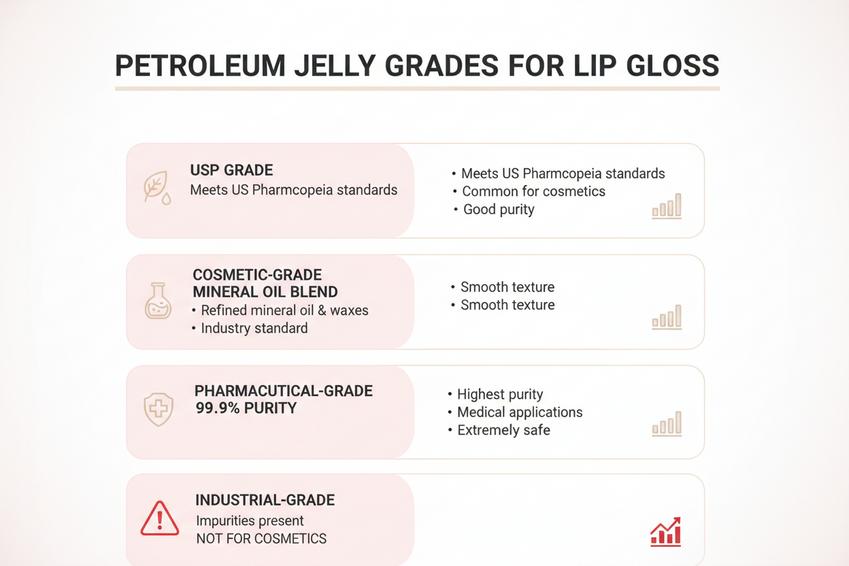
Picking the right petroleum jelly for lip gloss isn’t just vibes—it’s about purity, feel, and safety. From USP standard blends to industrial mixes, each type shapes how lip gloss petroleum jelly performs. If you’re working with petroleum jelly lip gloss formulas or scaling a petroleum lip gloss line, knowing the differences keeps things smooth, safe, and market-ready.
USP-Grade Petroleum Jelly for Cosmetics
-
Core traits:
- Meets USP standard and strict purity requirements
- Built for cosmetic formulation and personal care
-
Why it works in petroleum jelly for lip gloss:
- Clean safety profile supports sensitive lips
- Stable base for pigments in lip gloss petroleum jelly
- Compatible with skin emollients and flavors
Nested use logic:
-
Formulation layer
- Base: petroleum jelly lip gloss structure
- Add-ons: oils, waxes
-
Compliance layer
- Regulatory compliance checks
- Batch consistency
For brands wanting to learn about us, Topfeel Beauty offers lipgloss manufacturing using cosmetic-grade ingredients.
Cosmetic-Grade Jelly with Mineral Oil Blends
Blended systems tweak feel without killing shine.
-
Blend mechanics:
- mineral oil + jelly = better glide
- texture enhancement improves spread
-
Performance flow:
- Adjust viscosity
- Boost emollient properties
- Enhance skin conditioning
Sub-layer:
-
Stability
- formulation stability under heat
- Balanced ingredient synergy
Great for cost-friendly petroleum lip gloss lines while keeping that glossy payoff.
Pharmaceutical-Grade Jelly: Purity & Applications
Ultra-clean, tightly controlled.
| Property | USP Limit | Pharma Grade | Use Case |
|---|---|---|---|
| Purity % | ≥99% | 99.9% | medical applications |
| Microbial load | Low | Ultra-low | wound healing |
| Processing | Refined | sterile processing | topical medications |
| Function | Base | excipient function | drug delivery |
Application stack:
-
Clinical layer
- Safe for compromised skin
-
Cosmetic crossover
- Premium petroleum jelly for lip gloss
Topfeel Beauty provides custom solutions that can incorporate high-purity bases upon request.
Industrial-Grade Jelly and Waxes Mixtures
Not for lips—seriously.
-
Composition:
- wax mixtures + lower-grade base
-
Use paths:
- lubrication systems
- protective coatings
- rust inhibitors
Hierarchy:
-
Manufacturing tier
- Heavy-duty technical applications
-
Restriction tier
- Fails non-cosmetic uses safety crossover
Using this in petroleum jelly lip gloss would wreck both safety and product feel. Stick to cosmetic or USP options if you want a legit petroleum lip gloss finish.
4 Steps To Formulate Your Best Lip Gloss
Getting a lip gloss right isn’t just mixing shine and color—it’s about smart sourcing, tight formulation, and clean finishing. If you’re working with petroleum jelly for lip gloss, every small choice shapes texture, feel, and shelf life.
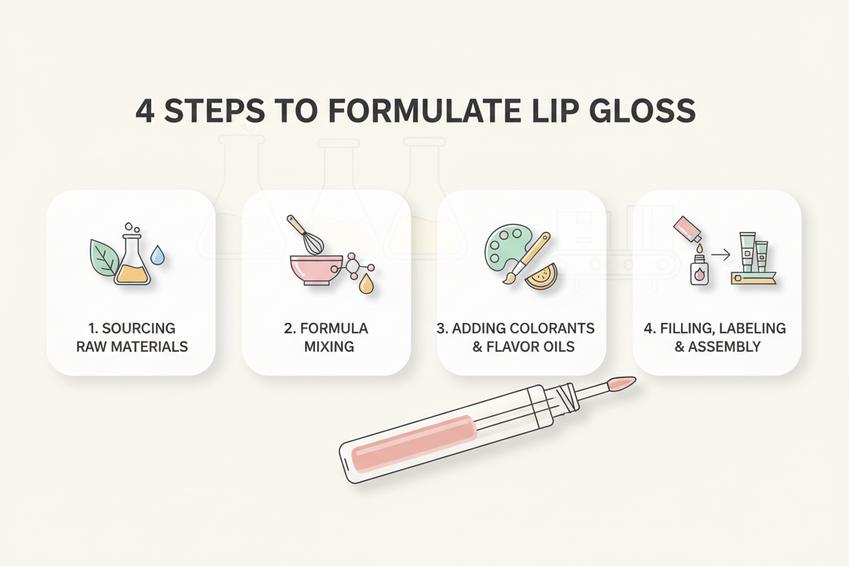
Step 1: Raw Material Sourcing of Petroleum Jelly & Emollients
- Start with raw materials that meet strict material specifications, especially cosmetic-grade petroleum jelly for lip gloss and light emollients.
-
Supplier filtering
- Check supplier selection credentials
- Confirm traceability in ingredient procurement, a practice championed by the Society of Cosmetic Chemists
- Review COA under quality assurance
-
Ingredient validation
- Purity of petroleum jelly for lip gloss
- Stability of emollients under heat
- Odor neutrality for lip-safe use
-
Consistency checks
- Batch-to-batch viscosity
- Compatibility with petroleum jelly lip gloss bases
A smoother sourcing flow means fewer surprises later.
Step 2: Formulation Development with Waxes and Mineral Oil
-
Base building
- Blend waxes with mineral oil
- Adjust ratios for soft glide vs firm hold
-
Texture tuning
- Use rheology modifiers to refine texture
- Test spreadability of petroleum jelly for lip gloss blends
-
Performance testing
- Run stability testing across temperatures
- Monitor separation in cosmetic development cycles
As a cosmetic formulation supplier and manufacturer, Topfeel Beauty offers oemodm services and one-stop solutions encompassing formulation stability testing.
Step 3: Incorporating Colorants, Flavor Oils & Preservatives
- Add colorants and pigments slowly into petroleum jelly for lip gloss to prevent clumping
- Blend flavor oils with safe fragrance compounds for subtle scent
- Balance preservatives and antimicrobial agents to extend shelf life
Small tweaks here shape sensory attributes—shine, scent, and feel all click together.
Step 4: Filling Services, Labeling Services & Assembly
-
Production flow
- Automated filling services ensure volume accuracy
- Inline quality control reduces waste
-
Finishing
- Clean labeling services aligned with compliance
- Tight assembly for leak-proof packaging
-
Final handling
- Organized logistics
- Smooth product finishing for retail-ready gloss
Read our company overview to see how Topfeel Beauty supports clients through the customization process, from formula sampling to final assembly.
Lip Gloss Safety: Common Regulatory Standards
A quick reality check: making petroleum jelly for lip gloss isn’t just mixing shine and scent. Rules matter, and they’re tighter than most expect. From petroleum jelly purity to lip gloss labeling, every step connects to safety, compliance, and shelf trust—especially when brands aim for global reach.
FDA Regulations for Petroleum Jelly-Based Products
- Core idea: safe cosmetic products start with compliant ingredients
-
Ingredient control
- a. FDA enforces limits on contaminants in petroleum jelly
- b. Testing focuses on heavy metals + microbes
-
Labeling rules
- a. Clear labeling of petroleum jelly for lip gloss formulas
- b. No misleading claims about healing or drug-like effects
-
Safety pathway
- a. Batch testing ensures ongoing safety
- b. Topfeel Beauty provides formulations that comply with EU and FDA regulations.
Short notes:
Clean jelly for lip use matters.
Stable gloss texture counts.
Safe lip gloss isn’t optional.
EU Cosmetics Regulation and INCI Nomenclature
-
Market entry logic
- a. Follow EU Cosmetics Regulation strictly
- b. Submit safety-backed product safety data
-
Ingredient clarity
- a. Use INCI nomenclature for every component
- b. Full ingredient listing for petroleum jelly for lip gloss
-
Restrictions
- a. Check restricted substances database
- b. Maintain compliance before market authorization
“Transparency and traceability are now baseline expectations in EU beauty markets,” notes a 2025 Cosmetics Europe industry update.
Quick hits:
• lip gloss petroleum base must be declared
• petroleum jelly lip gloss naming must stay consistent
GMP Standards, Safety Assessments & Product Information File
-
Manufacturing flow
-
a. Apply GMP standards
- i. Control manufacturing processes
- ii. Monitor hygiene + batch repeatability
-
-
Safety structure
-
a. Conduct safety assessment
- i. Toxicology review
- ii. risk assessment for petroleum jelly for lip gloss
-
-
Documentation core
-
a. Maintain Product Information File
- i. Formula records
- ii. Stability + quality control data
-
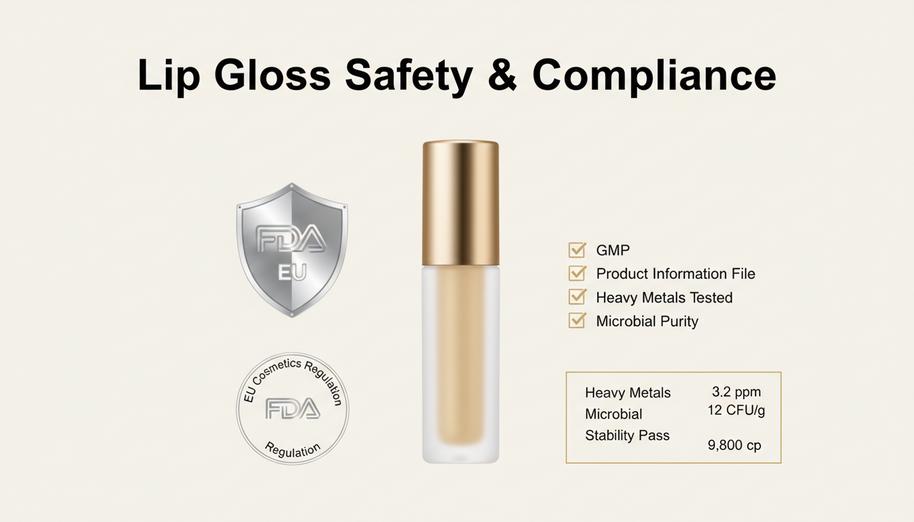
Data snapshot:
| Test Type | Limit Standard | Typical Result | Status |
|---|---|---|---|
| Heavy Metals (ppm) | ≤10 | 3.2 | Pass |
| Microbial Count (CFU/g) | ≤100 | 12 | Pass |
| Stability (°C/12w) | No separation | Stable | Pass |
| Viscosity (cP) | 5,000–15,000 | 9,800 | Pass |
End note: petroleum jelly for lip gloss only works when science, paperwork, and process all line up. Topfeel Beauty operates a 100,000-level purification workshop to ensure manufacturing hygiene.
Which Packaging Options Suit Petroleum Jelly Gloss?
Petroleum jelly for lip gloss sits between balm and shine, so packaging has to match that vibe. From slick tubes to sturdy jars, each pick affects feel, hygiene, and shelf pull. If you’re blending petroleum jelly lip gloss or testing jelly base for lip gloss, smart packaging keeps things clean, cute, and sellable.
Lip Gloss Tubes with Applicator Wands
- tube + wand combos keep petroleum jelly for lip gloss smooth on contact
- doe-foot tips control spread for petroleum jelly lip gloss blends
- clear plastic or squeeze bodies show off tint and texture
Short takes: clean use, less mess, quick reapply. Works great when your petroleum jelly for lip gloss is semi-fluid.
Steps:
- Fill tube with warm jelly gloss base
- Insert applicator and secure cap
- Test flow; adjust viscosity for squeeze
Screw-Top Tins and Pot Jars
- tin and jar formats suit thicker petroleum jelly lip gloss
- aluminum or glass adds weight; a solid container feel
- screw-top lid locks in oils
Notes in bursts: budget-friendly; finger use isn’t the cleanest; ideal for high-wax petroleum jelly for lip gloss. Topfeel Beauty offers packaging support, including stock components like jars and custom molds.
Caps & Closures Paired with Secondary Cartons
- Primary seal
- cap fit → leak test
- closure torque → travel safety
- Secondary carton
- box strength → freight
- seal label → tamper cue
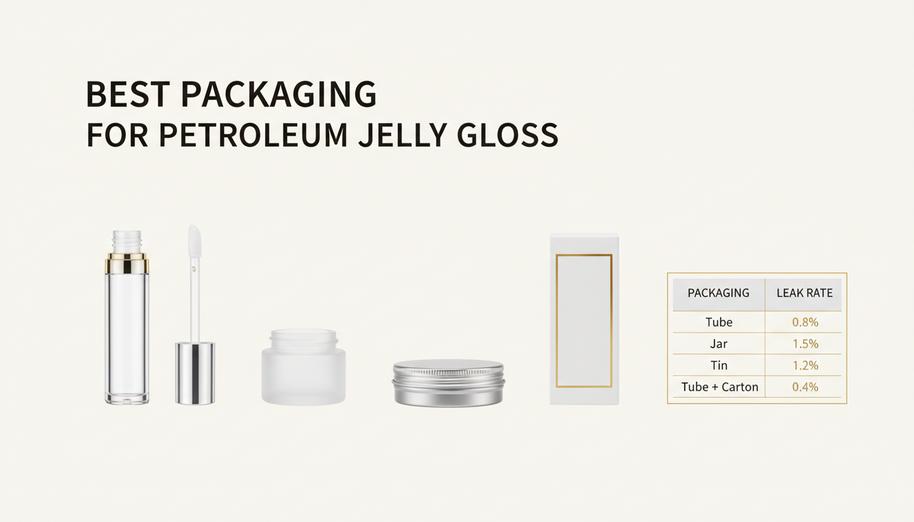
Data snapshot for petroleum jelly for lip gloss:
| Format | Leak Rate % | Fill Temp °C | Unit Cost $ |
|---|---|---|---|
| Tube | 0.8 | 55 | 0.42 |
| Jar | 1.5 | 60 | 0.38 |
| Tin | 1.2 | 58 | 0.36 |
| Tube+Carton | 0.4 | 55 | 0.55 |
Topfeel Beauty offers related packaging solutions tailored for safe global shipping.
Labels, Display Boxes & Branding Solutions
- label clarity: ingredients for petroleum jelly for lip gloss
- sticker seals: quick QA
- display box: retail pop
- branding, design, printing, marketing tie it together
Mix it up: bold color blocks, clean fonts, and callouts like “petroleum jelly lip gloss” help shoppers get it fast. Topfeel Beauty offers in-house design support to assist with packaging layout.
Cost Comparison: Tubes Vs. Pots Vs. Tins
Quick intro: picking packaging for petroleum jelly for lip gloss isn’t just vibes—it hits cost, feel, and how people use it daily. From squeeze tubes to cute jars and metal tins, each option shifts pricing, hygiene, and brand tone in small but real ways.
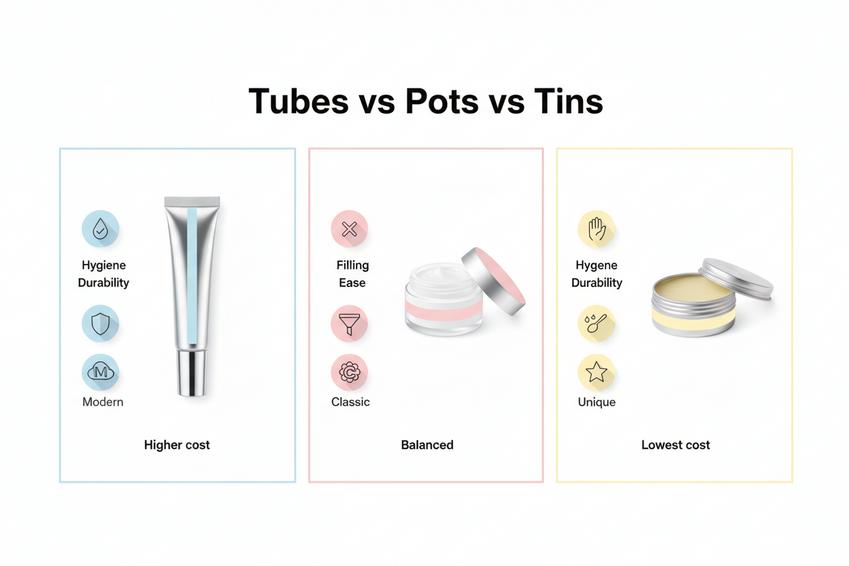
Tubes
- Cost leans higher, thanks to Applicator builds and tighter Sealing integrity.
- Great for clean use; no finger dipping, strong Hygiene factor.
- Build stack
-
Core
- Plastic material body
- Squeeze mechanism for smooth Dispensing
-
Tip
- Precision Applicator shapes
- Heat or ultrasonic sealing
- Production flow
- Fill → seal → cap → test for leaks → pack
- Extra QC raises unit price but boosts shelf trust
Short takes: portable, neat, and ideal when petroleum jelly lip gloss needs controlled output. Works well for premium petroleum jelly for lip gloss lines.
Pots
Multiple notes, quick: Jar container with Wide opening, Screw lid, and either Glass material or plastic. Lower tooling cost, easy filling, but Finger application means more Product exposure.
- Cost drivers
-
Materials
- Glass = higher freight
- Plastic = cheaper, lighter
-
Add-ons
- Labels, inner discs, tamper seals
- Use fit
- Thicker petroleum jelly for lip gloss spreads easily
- Strong Material compatibility across formulas
- Trade-offs
- Pros: aesthetic, refillable feel
- Cons: hygiene dips, faster contamination risk
Tins
Compact and budget-friendly. The Metal casing with Slide top or hinged lids keeps things simple and tough.
- Structure
-
Body
- Durability for travel
- Recyclability appeal
-
Closure
- Airtight seal improves Product protection
- Cost logic
- Fewer parts → lower assembly
- Efficient stacking in warehouses
- Brand feel
- Vintage look, pocketable
- Slightly less “lux” for petroleum jelly lip gloss, but solid for everyday lip balm users
Tiny checklist:
- ✓ lowest cost
- ✓ sturdy
- ✓ simple fill lines
Gloss Formula Scalability: Key Considerations
Getting petroleum jelly for lip gloss from small batches to full-on production isn’t just about making more—it’s about making it right, every time. From sourcing lip-safe petroleum to scaling gloss texture, each move shapes quality, cost, and vibe. For brands launching a private label lipstick or gloss line, Topfeel Beauty offers turnkey solutions for scaling cosmetic lines.
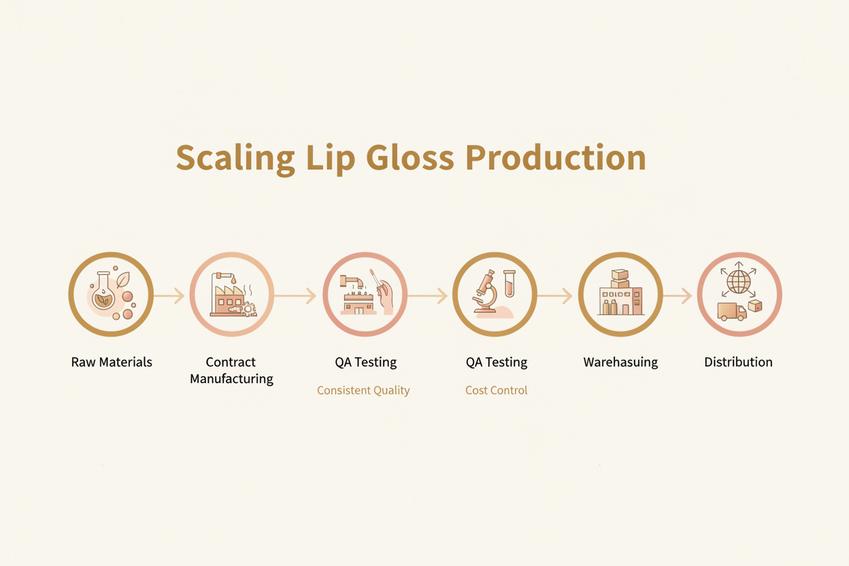
Contract Manufacturing for Bulk Production
-
Core flow:
-
Select a manufacturer with proven capacity
- Check facility certifications and filling lines
- Review past production of petroleum jelly lip gloss
-
Align on agreement
- Define formulation specs for petroleum jelly for lip gloss
- Lock scalability targets and timelines
-
Optimize outsourcing
- Batch size scaling for lip gloss petroleum blends
- Flexible runs for seasonal gloss launches
-
Small tweaks matter. A slight shift in petroleum jelly ratio can change glide and shine.
Raw Material Sourcing & Component Procurement
-
Sourcing chain:
-
Vet vendors
- Stable ingredients like refined petroleum for lip gloss
- Backup vendors to avoid delays
-
Manage procurement
- Bulk materials pricing for petroleum jelly lip gloss
- Smart packaging choices (tubes, wands)
-
- Secure petroleum jelly for lip gloss base
- Match with waxes and oils
- Sync packaging arrival with filling schedule
Topfeel Beauty manages raw material sourcing to support brand production.
Stability Testing, Batch Consistency & QA Services
-
Quality ladder:
-
Testing
- Heat/cold stability checks for petroleum jelly for lip gloss
- Microbial screening
-
Consistency
- Compare batches for texture and shine
-
Assurance
- Meet standards and compliance
-
Short checks, repeated often, beat one big test. That’s how petroleum lip gloss stays reliable.
Warehousing Solutions & Distribution Channels
-
Logistics map:
-
Warehousing
- Climate-safe storage for petroleum jelly lip gloss
- Real-time inventory
-
Distribution
- Multi channels: retail, DTC
- Efficient transport routes
-
-
→ Fast fulfillment keeps petroleum jelly for lip gloss fresh on shelves
-
→ Clean logistics cuts delays
Feel free to contact us to discuss flexible shipping terms for distributing finished cosmetics globally.
References
- Grand View Research – grandviewresearch.com
- Mintel – mintel.com
- USP standard – usp.org
- mineral oil – pubchem.ncbi.nlm.nih.gov
- Society of Cosmetic Chemists – scconline.org
- rheology modifiers – ulprospector.com
- FDA – fda.gov
- EU Cosmetics Regulation – single-market-economy.ec.europa.eu
- INCI nomenclature – personalcarecouncil.org
- restricted substances – echa.europa.eu
- Cosmetics Europe – cosmeticseurope.eu
- GMP standards – iso.org
- manufacturing processes – cosmeticsbusiness.com
- Product Information File – ctpa.org.uk
- vendors – thomasnet.com
Post time: Jul-23-2026