
How Can Brands Launch a Private Label Perfume Line?
Perfume private label isn’t a cute side hustle—it’s a pressure cooker where speed, consistency, and branding either click or crash hard.
Topfeel Beauty engineers and managers note in official materials that scalable color cosmetic lines depend on formula stability, compliant sourcing, and packaging that survives shipping—principles that apply equally well to fragrance.
Get this wrong and margins leak; get it right and your brand moves fast from concept to shelf without chaos.
Whispered Key Notes for Perfume Private Label
➔ Customization & Formula: Define signature scent profiles with stable, market-aligned formulations.
➔ Ingredients & Sourcing: Select compliant, traceable raw materials; coordinate supply chains for consistency.
➔ Packaging & Design: Choose bottles, jars, pumps, and cartons that protect fragrance integrity and reflect your brand.
➔ Compliance & QC: Adhere to GMP, safety assessments, labeling rules, cruelty-free and vegan certifications; conduct stability tests.
➔ Logistics & Inventory: Implement efficient warehousing, distribution, and inventory management to scale without delays.
5 Steps To Kickstart Your Perfume Private Label
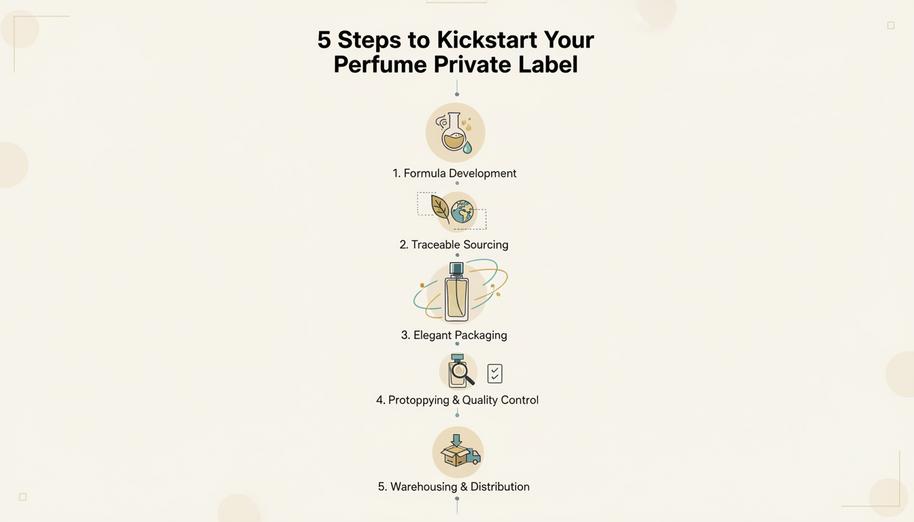
Getting into perfume private label isn’t just mixing nice smells; it’s building a vibe people remember. From scent ideas to shipping boxes, every move shapes your brand’s staying power.
Step 1: Customization and Formula Development
-
Core build of a perfume private label starts with a tight creative brief
-
Define fragrance profile
- Top: light scent notes that hook fast
- Middle: balanced aroma composition
- Base: depth for long wear
-
Shape scent development into a clear bespoke fragrance direction
-
-
Refinement loop
- Adjust formulation for skin feel and longevity
- Match target buyers who expect a distinct perfume brand private label identity
-
Quick reality check
- If it smells generic, it won’t sell—period
Step 2: Ingredient Selection and Sourcing Logistics
-
Build a stable supply chain
-
Source raw materials
- essential oils for natural depth
- aroma chemicals for consistency
- natural extracts vs synthetic compounds for cost balance
-
Vet supplier network for traceability
-
-
Compliance path
- Meet regulatory compliance early to avoid rework
-
Insight worth noting
“Global fragrance buyers are prioritizing transparency and traceable sourcing more than ever,” — McKinsey Beauty Insights, 2025
Step 3: Packaging Design with Bottles, Jars, and Pumps
-
Visual identity meets function
-
bottle design + cap alignment with brand tone
- Premium feel? Go weighted glass
-
Spray experience
- Smooth atomizer matters more than you think
-
-
Protection layer
- Smart material selection preserves scent
- Strong outer packaging boosts shelf appeal
-
A clean perfume private label look wins attention fast, much like the packaging Topfeel Beauty consistently nails for color cosmetics.
Step 4: Prototyping, Production Run, and Quality Control
-
Build → test → refine cycle
-
sample creation
- run stability testing and wear tests
-
scale into batch production
- monitor manufacturing process closely
-
-
Control points
- quality assurance and testing at each stage
- final production scale must match prototype results
-
Shortcut thinking here usually backfires
Step 5: Warehousing, Distribution, and Inventory Management
-
Operations backbone
-
structured storage solutions
- climate control protects fragrance integrity
-
real-time stock control
-
-
Movement flow
- synced logistics + shipping
- efficient fulfillment across distribution channels
-
Growth layer
- smart supply chain management keeps a perfume private label scalable
- cosmetic brands like Topfeel Beauty show how tight ops quietly drive profit
Regulatory Checklist For Perfume Private Label
Getting a perfume private label off the ground isn’t just about scent vibes; it’s about playing by the rules without killing creativity. From private label perfume formulation to labeling, every move affects safety, trust, and long-term brand growth in the perfume label space.
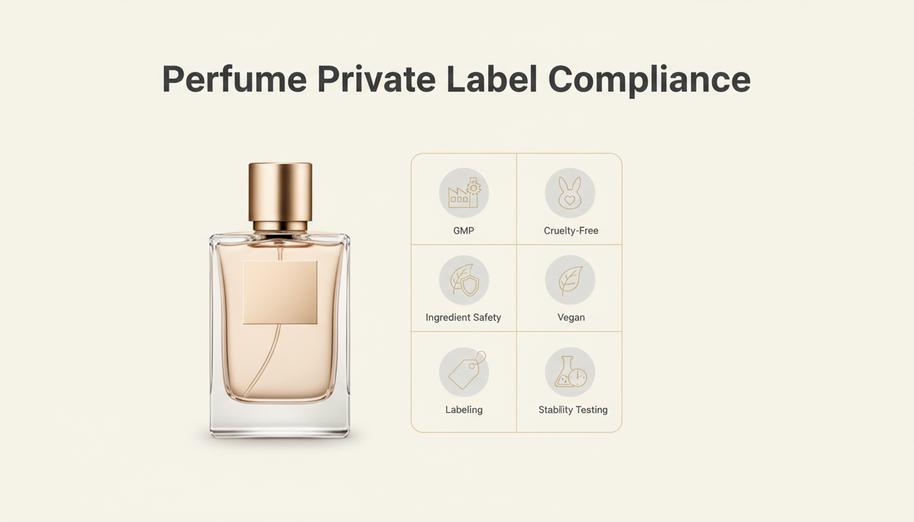
GMP Standards and Quality Control
-
Core flow for perfume private label production:
-
Good Manufacturing Practices
- Facility readiness
- Production Facilities checked for airflow, contamination risk
- Hygiene Standards enforced with routine sanitation logs
- Process control
- Maintain Documentation across every stage
- Record every batch via Batch Records
-
Oversight layer
- Internal verification
- Run Internal Audits quarterly
- External alignment
- Sync with Quality Assurance benchmarks
-
Short checks keep things sane: clean tools, stable temperatures, consistent filling lines. A private label perfume that skips this? Risky, and regulators won’t be chill about it.
Ingredient Compliance with Safety Assessments
-
Ingredient entry point
- Ingredient Sourcing must be traceable
- Validate Raw Materials with Safety Data Sheets
-
Formula screening
- Conduct Toxicology Review
- Flag allergens via Allergen Declaration
-
Risk control
- Remove Restricted Substances
- Final Risk Assessment before scale
A solid perfume private label formula balances scent performance with safety. No shortcuts here.
Labeling Regulations for Bottles and Cartons
-
Must-have details for any perfume label:
-
Product Information and full Ingredient List
-
Net Content and Country of Origin
-
Safety layer
- Warning Statements
- PAO Symbol
-
Traceability
- Batch Number
- Meets Packaging Requirements
-
Messy labels can sink a private label perfume launch fast. Keep it clear, readable, compliant.
Cruelty-Free Certification Essentials
A perfume private label claiming ethical status needs proof, not vibes.
- ✔ Build an Animal Testing Policy
- ✔ Lock in Ethical Sourcing
- ✔ Verify partners via Supply Chain Verification
- ✔ Apply for Leaping Bunny or PETA Certification
- ✔ Maintain Compliance Audit trails aligned with Animal Welfare Standards
No paperwork, no credibility.
Vegan Certification & Formula Stability Testing
For a perfume private label going vegan, it’s more than skipping obvious animal inputs.
-
Ingredient integrity
- Use verified Vegan Ingredients
- Eliminate hidden Animal-Derived Components
- Prevent Cross-Contamination
-
Performance validation
- Run Stability Testing for heat, light, time
- Confirm Shelf Life and scent consistency
- Conduct Compatibility Testing with packaging
- Ensure Preservation Efficacy
- Pass Microbiological Testing
Multiple quick checks, then long-term observation. That’s how a private label perfume stays stable and legit on shelves.
4 Packaging Tips For Private Label Perfumes
Getting perfume private label products noticed isn’t just about scent—it’s the whole vibe. From bottle feel to shipping ease, smart packaging choices can elevate a private label perfume line from basic to seriously memorable.
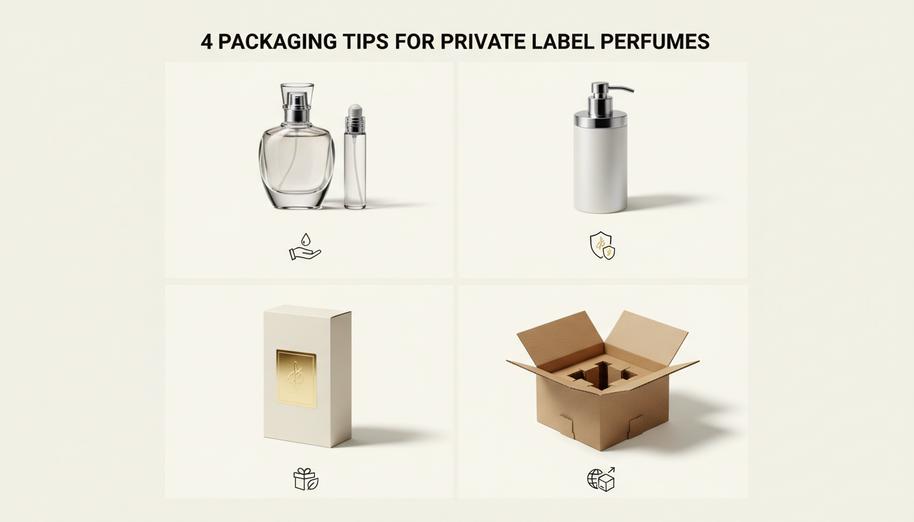
Maximize appeal with custom containers and applicators
A strong first impression often comes down to how the bottle looks and feels in hand. With custom containers, brands can push beyond safe designs and explore unique shapes that catch the eye instantly.
-
Core design choices:
- Bottle materials: glass for luxury, acrylic for portability
- Cap styles: magnetic closures, weighted caps
- Spray mechanisms: fine mist vs. targeted spray
Then layer in specialized applicators. Roll-ons feel personal, atomizers feel premium. For any perfume private label, this is where personality shows up fast.
- Define your aesthetic design
- Match applicator to usage context
- Align visuals with brand tone
In color cosmetics, brands like Topfeel Beauty often balance bold looks with practical usability, keeping both shelf appeal and comfort in sync—a lesson perfume brands should adopt.
Optimize protection through sturdy tubes, pumps, and jars
Good looks mean nothing if the product leaks. Strong protective packaging keeps your private label perfume intact from factory to final spritz.
-
Protection essentials:
- Durable materials for long transit
- Reliable pumps that don’t clog
- Secure jars for solid perfumes
Nested priorities:
-
Product safety
- Leakage prevention
- Impact resistance
-
Formula care
- Maintain product integrity
- Avoid contamination
A 2025 packaging report by Smithers noted that durability directly impacts repeat purchase behavior, especially in fragrance categories.
“Consumers increasingly associate packaging reliability with product quality, especially in premium fragrance segments.” — Smithers, 2025
Enhance branding via carton design and labeling finishes
Outer packaging quietly does heavy lifting. A clean carton design paired with sharp labeling finishes builds instant recognition for any perfume private label line.
-
Visual hierarchy:
- Logo placement front and center
- Supporting graphic elements
Layered enhancements:
-
Surface upgrades
- Foil stamping for shine
- Embossing for texture
-
Material feel
- Matte vs. gloss
- Distinct material textures
Topfeel Beauty keeps branding tight in cosmetics by syncing primary packaging visuals with outer cartons, so nothing feels off or disconnected.
Streamline fulfillment with packaging tailored for logistics
Packaging isn’t done once it looks good—it has to move well. Efficient logistics optimization keeps costs low and customers happy.
- Standardize packaging dimensions
- Reduce bulk with smart weight considerations
- Add protective inserts only where needed
Nested workflow:
-
Warehouse handling
- Easy stacking
- Clear labeling
-
Shipping flow
- Faster packing
- Lower damage rates
-
Storage solutions
- Space-saving designs
- Better supply chain flow
A well-planned private label perfume package doesn’t just sit pretty—it travels smart, scales easily, and lands in perfect condition.
In-House Vs. Contract Perfume Manufacturing
Kicking off a perfume private label journey means picking how your scents come to life. Go fully internal or partner up—each path shapes cost, speed, and creative control. If you’re building a perfume private label brand, this choice quietly decides how flexible, scalable, and consistent your fragrance private label line will feel.
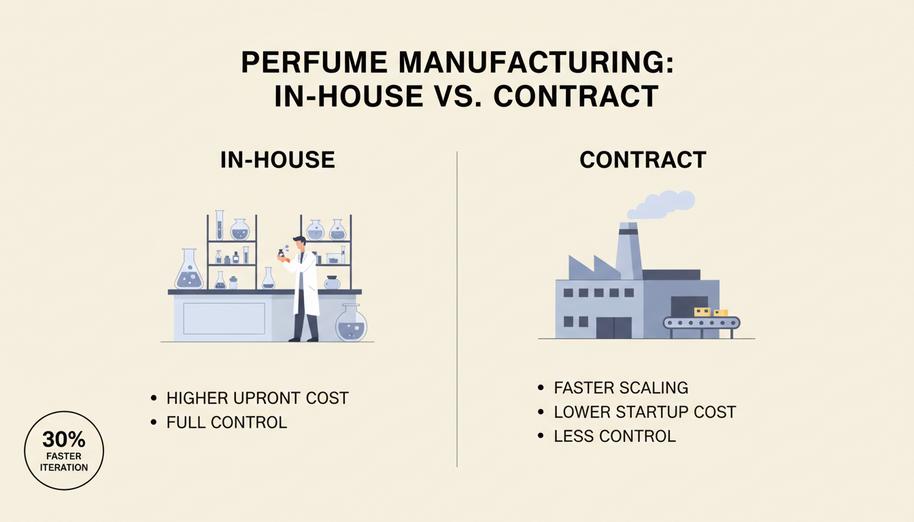
In-House Manufacturing
-
Core build-out for a perfume private label setup:
- Facility setup
- Equipment acquisition
- Raw material sourcing
- Production staff
-
Foundation layer
- Lab + blending zone tied to research and development
- Storage aligned with supply chain management
-
Creation layer
- Scent crafting driven by formulation expertise
- Batch trials with tight quality control
-
Output layer
- Scheduled runs
- Packaging sync for perfume private label SKUs
-
Control loop
- Continuous testing
- Feedback into formulation tweaks
This route suits brands that want hands-on control over every perfume private label detail. It’s heavier upfront, no sugarcoating that, yet it pays off when consistency and IP matter.
McKinsey’s 2025 beauty report notes that brands owning formulation and production cycles tend to cut iteration time by up to 30%, tightening their perfume private label release rhythm.
Contract Manufacturing
Quick snapshot:
- ✅ Lower startup cost
- ✅ Faster scaling
- ⚠️ Less direct control
A smoother path for many perfume private label startups:
- Pick a third-party producer with matching production capacity
- Lock terms via a manufacturing agreement
- Align on supplier selection and materials
- Confirm quality assurance checkpoints
- Plan timelines around lead time
- Expand using scalability options and specialized equipment
Short takeaways:
- Speed matters? This wins.
- Testing multiple perfume private label scents? Easier here.
- Want guidance? Teams like Topfeel Beauty help streamline color cosmetics private label development without the headache, a model similar to the best fragrance partners.
For growing brands, contract partners act like an extension of your perfume private label operation, letting you focus on branding and market play while production stays steady.
Low MOQ? Find Small-Batch Perfume Partners.
Getting into perfume private label work doesn’t have to feel like a huge factory-only game. Small-batch partners open doors to creative control, tighter budgets, and quicker drops. If you’re building a perfume brand, or testing private label perfume ideas, this path keeps things flexible without cutting corners on quality or vibe.
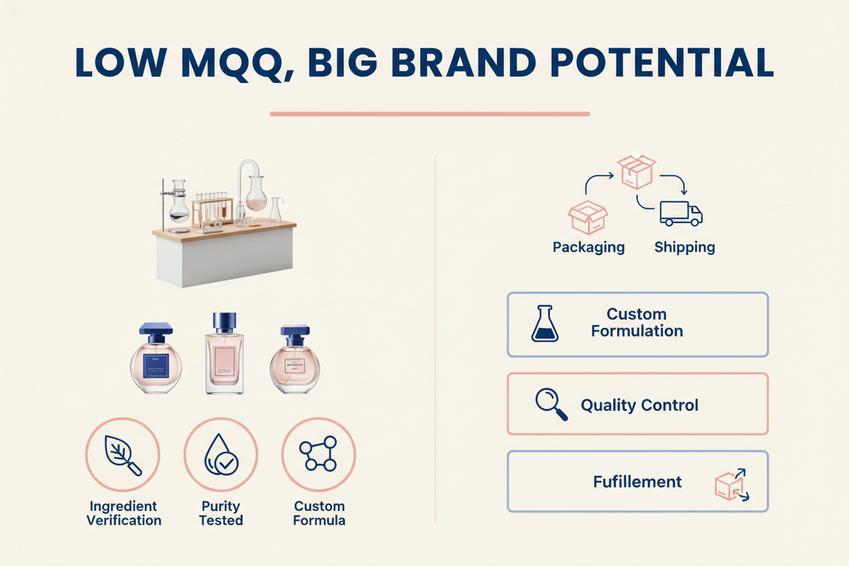
Leveraging niche producers for formula customization
Working with Niche perfumers shifts the whole perfume private label process from rigid to creative.
-
Core path to Custom formulations:
-
Idea shaping
- Define Olfactory profiles (fresh, woody, sweet, experimental)
- Align scent mood with your perfume brand identity
-
Lab collaboration
- Engage Artisanal producers for Fragrance creation
- Adjust ratios during Scent development rounds
-
Finalization
- Lock Bespoke scents for your private label perfume line
-
-
Practical flow with cosmetic partners like Topfeel Beauty:
- Small MOQ trials
- Iteration without heavy sunk cost
- Faster go-to-market for perfume private label launches
Short note: flexibility here means you can test multiple perfume private label directions at once instead of betting everything on one scent.
Ensuring precise ingredient sourcing and quality control
Quality can’t be guessed—it’s tracked.
-
You’ll want tight control over Raw materials and Ingredient suppliers, especially in perfume private label production.
-
A reliable Supply chain should include:
- Material verification at intake
- Documented Purity standards
- Ongoing Quality assurance checks
- Source transparency
- Batch testing
- Stability validation
- Repeat Batch consistency
Topfeel Beauty supports private label cosmetic projects by keeping documentation clear and audit-friendly, an approach which matters when scaling from small runs to wider distribution in any beauty category.
Quick reality: cutting corners on ingredients will show up fast—in scent performance, skin feel, and customer trust.
Coordinating packaging materials and fulfillment services
Packaging isn’t just looks; it’s logistics meeting design.
-
Integrated workflow:
-
Design phase
- Bottle design aligned with brand tone
- Select Packaging components (caps, pumps, boxes)
-
Production sync
- Match Labeling specs with compliance needs
- Coordinate Assembly services timing
-
Delivery system
- Plan Fulfillment logistics
- Choose Shipping solutions based on region
- Expand into Distribution channels smoothly
-
-
For perfume private label success:
- Packaging + fulfillment must move together
- Delays often come from mismatch, not manufacturing
Topfeel Beauty helps connect these dots for cosmetics, demonstrating the exact integrated approach you need so your perfume private label line arrives clean, consistent, and ready to sell—no last-minute chaos.
References
- McKinsey Beauty Insights, 2025 – mckinsey.com
- manufacturing process – ifactoryapp.com
- quality assurance – asq.org
- distribution channels – forbes.com
- supply chain management – hbr.org
- Good Manufacturing Practices – fda.gov
- Safety Data Sheets – osha.gov
- Toxicology Review – toxicology.org
- Allergen Declaration – ifrafragrance.org
- Leaping Bunny – leapingbunny.org
- PETA Certification – peta.org
- Animal Welfare Standards – hsi.org
- Vegan Ingredients – vegansociety.com
- Smithers, 2025 – smithers.com
- manufacturing agreement – nolo.com
Post time: Jul-22-2026