
Oil-Based Makeup Primer: 6 Formula Decisions That Shape Wear and Finish
Oil based primer makeup can look simple on paper, but one wrong formulation choice can throw finish, wear, and foundation compatibility off course. For private-label buyers, the real job is balancing emollients, humectants, waxes, esters, and blurring materials to create the right skin feel without opening a can of worms.
Packaging, stability, batch consistency, and quality control matter too. Six key formula decisions shape commercial performance and help buyers build smarter product briefs.
Reading Notes: Oil Based Primer Makeup Essentials
➔ Core Benefits: Hydrates dry skin with plant oils and humectants, blurs fine lines via optical agents, and boosts wear by balancing waxes and esters.
➔ Formulation Focus: Choose non-comedogenic oils, emollients, and fatty acids for spreadability and pore-minimizing effects; add blurring powders for a smooth canvas.
➔ Packaging & Production: Opt for airless pumps to preserve sensitive oils and follow GMP blending, filling, and QC protocols to ensure stability and batch consistency.
Why Choose Oil Based Primer Makeup
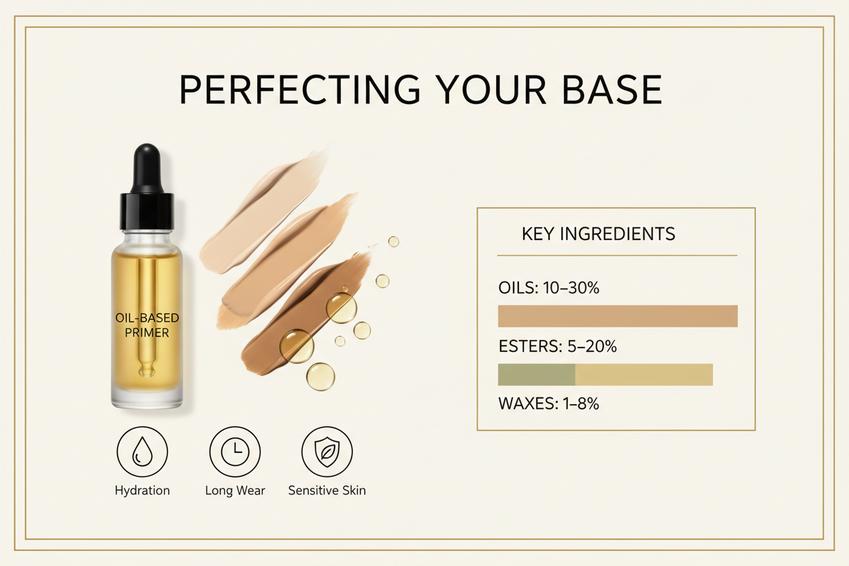
Oil based primer makeup pairs skin-conditioning ingredients with a makeup-ready base, so dry-feeling complexions get comfort without giving up staying power. As a full-service private label cosmetic supplier, Topfeel Beauty provides custom solutions for brands looking to develop high-quality oem face makeup that balances oils, waxes, humectants, and esters to support smoother application, steady wear, and a gentler feel when skin gets fussy.
Hydrating Texture for Dehydrated Skin
For dry skin, oil based primer makeup creates a soft cushion between the face and foundation. Plant oils and emollient ingredients reduce water loss, while humectants support hydration and surface moisture.
-
Skin comfort
- Oils help reinforce the skin barrier and create a more supple, nourishing feel.
- Primer makeup can soften the look of flaky areas, helping foundation glide instead of catching. Pretty handy on rough days.
Long-Wearing Consistency to Combat Fading
Oil primer does not have to mean slippery makeup. Balanced waxes and esters can improve makeup adherence, supporting longevity while reducing uneven fading.
Typical formulation ranges below are illustrative, since actual performance depends on the full formula and testing.
| Component | Typical level (%) | Oil phase (%) | Main role |
|---|---|---|---|
| Emollient oils | 10–30 | 100 | Slip |
| Esters | 5–20 | 100 | Spreadability |
| Waxes | 1–8 | 100 | Structure |
-
A controlled texture supports longer wear time.
- Better film formation can promote extended wear.
- Suitable film formers may improve smudge-proof or transfer-proof performance, though those claims require product testing.
Non-Comedogenic Formula for Sensitive Skin
Oil based primer makeup can also be designed around sensitive skin needs. The key is ingredient choice, not simply the presence of oil.
-
A non-comedogenic oil based primer may use carefully selected oils and esters intended to limit clogged pores and breakouts.
- Fragrance-free or gentle formulas may reduce potential irritation for some users.
- “Hypoallergenic” does not guarantee zero reactions, so sensitive users still benefit from checking ingredients and patch testing the face primer.
Formula Layers: Oils, Emollients, Waxes
A good oil based primer makeup formula has to nail the balance between slip, softness, and staying power. Each layer plays a different role, from easy blending to a smooth finish that keeps foundation looking fresh instead of greasy or patchy.
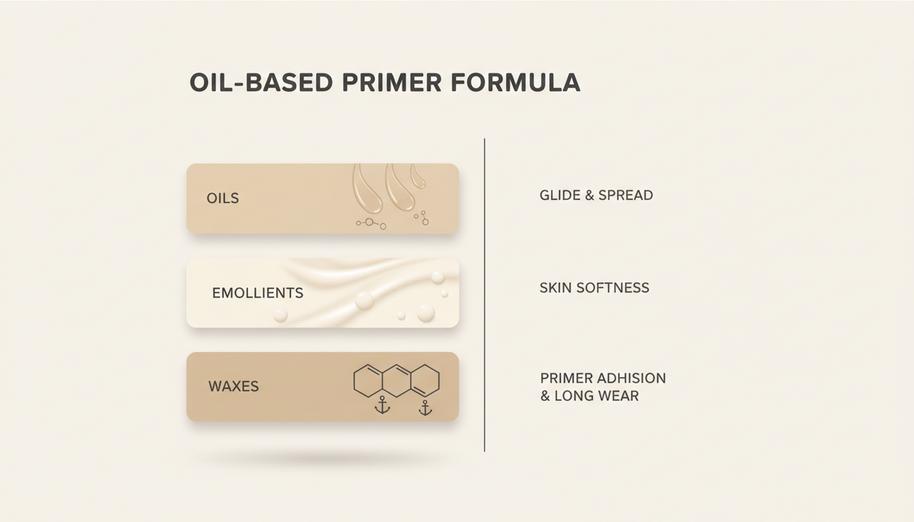
Plant Oils for Enhanced Spreadability
The oil layer shapes how quickly primer moves across the face. Well-chosen natural oils and botanical oils can give oil based primer makeup that easy, no-fuss glide without leaving a heavy coat.
-
For smoother application:
- Lightweight carrier oils and light oils reduce dragging around dry areas.
- Good absorption helps control the after-feel while maintaining comfortable glide.
-
For foundation compatibility:
- Carefully selected non-comedogenic oils can suit formulas designed with blemish-prone users in mind, though finished-product testing still matters.
- Balanced oil primer formulas keep the texture silky rather than overly slick.
Topfeel Beauty can tailor these oil systems around the desired payoff, skin feel, and makeup format, leveraging our 100,000-level purification workshop to ensure safe and compliant formulations.
Emollients and Fatty Acids for Soft Finish
An oil based primer makeup needs softness as well as slip. Skin conditioning ingredients and other moisturizing agents help rough or flaky spots feel smoother, giving foundation a more even base.
Fatty-acid choices matter, too. Oleic acid supports richness, while linoleic acid can contribute a lighter conditioning profile and palmitic acid adds body. A practical formula may pair these components with humectants for water attraction and measured occlusives for reduced moisture loss. The result is a softer skin feel without going overboard on grease.
Waxes and Esters to Boost Longevity
Slip alone does not keep makeup put. Structure matters.
-
Build the base:
- Natural waxes act as viscosity enhancers, giving oil based primer makeup enough body to stay controlled during application.
-
Improve wear:
Strengthen the finish:
- Synthetic esters refine spread and can support adhesion.
- Compatible binding agents help hold the oily and waxy components together.
-
- Suitable film formers can create a light protective barrier.
- The finished primer makeup gains a more long-lasting feel while remaining comfortable and flexible.
4 Key Components in Oil Based Primer Makeup
A good oil based primer makeup formula balances moisture, slip, texture, and wear instead of simply piling on rich oils. Get that balance right, and oil primer makeup feels comfortable while giving foundation a smoother, less patchy surface. Topfeel Beauty can tailor these components for different skin needs, offering formulations that comply with EU and FDA regulations.
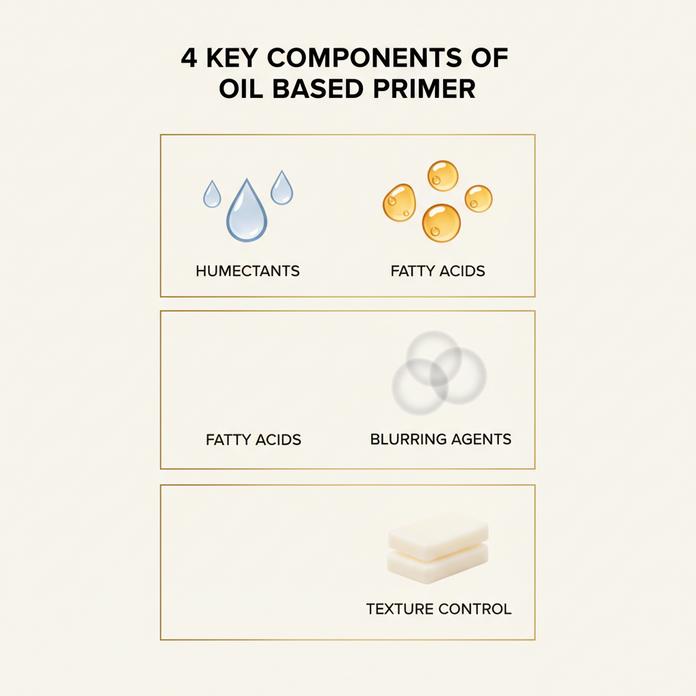
Humectants to Lock in Moisture
Oil based primer makeup works best when oils help seal in water supplied by compatible humectants.
-
Water-binding support
- Glycerin and Hyaluronic acid help retain surface moisture, which can cut that dry, cakey look.
- Propanediol and Sodium PCA add hydration while supporting a pleasant primer feel.
-
Conditioning extras
- Panthenol, Sorbitol, and carefully dosed Urea can help keep skin soft beneath makeup.
The result is a more comfortable oil based primer that doesn’t feel like a straight layer of grease.
Fatty Acids for Pore-Minimizing Effects
Fatty acids don’t physically close pores. Instead, Linoleic acid and Oleic acid condition the surface, helping makeup sit more evenly so pores look less obvious.
Stearic acid and Palmitic acid can also contribute structure and creaminess, while Capric acid derivatives may support emollient slip. Smart formulation can complement Sebum control, but claims of permanent Pore reduction should be avoided. That’s the key distinction.
Blurring Agents for Fine Lines
A polished oil based primer makeup can pair emollience with optical correction.
-
Soft-focus layer
- Silicone elastomers smooth uneven texture without needing a heavy coat.
- Silica and Boron nitride can refine feel and manage excess shine.
-
Light-scattering layer
- Mica, Titanium dioxide, and Polymethylsilsesquioxane can create a Soft focus effect.
Fine lines remain, but their shadows and edges can appear less noticeable beneath foundation.
Waxes for Smooth Absorption
- Beeswax or Candelilla wax gives an oil primer more body and controlled glide.
- Carnauba wax can increase firmness, while Synthetic wax offers adjustable texture.
- Microcrystalline wax helps manage oil movement and supports a consistent Film former system.
That balance promotes Smooth application without making oil based primer makeup draggy or overly slick.
Oil vs. Silicone Primers: Which Wins?
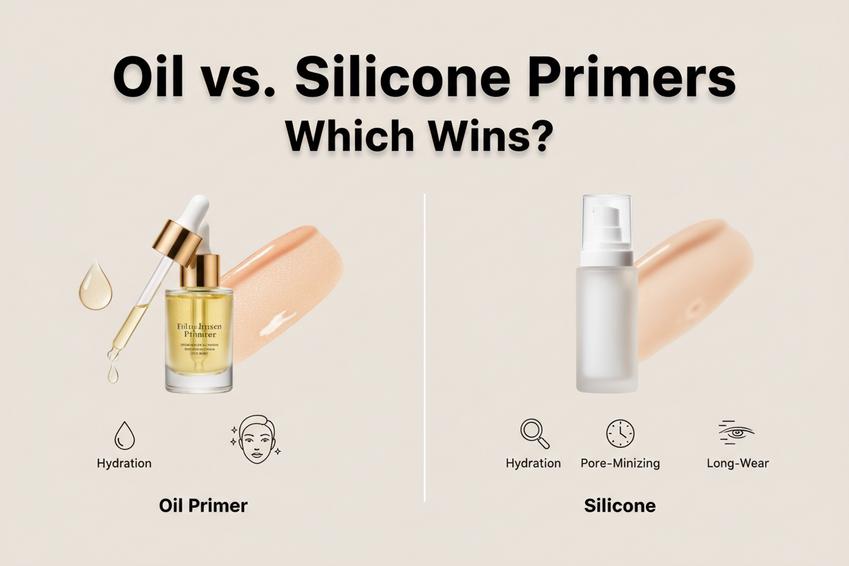
Picking a primer is less about crowning one universal winner and more about matching texture to skin and foundation. An oil based primer makeup routine can add comfort and glow, while silicone formulas focus on smoother-looking texture and staying power. Topfeel Beauty can develop either approach for brands targeting different skin needs, finishes, and everyday makeup habits, providing cruelty free face primer makeup base lightweight moisturizing makeup primer formulas or silicone-based alternatives.
Oil Primers
Oil primers lean into hydration and an emollient feel, so dry or dehydrated skin can look fresh rather than flat. Good blendability also helps foundation move across the face without that annoying patchy look.
-
For a glow-focused routine, oil based primer makeup works best when its oil phase plays nicely with the foundation.
-
Lighter oils can support:
- a dewy finish without a heavy coating;
- a soft natural glow that still looks like skin;
- a nourishing feel for areas prone to dryness.
-
Formula balance matters:
- Too much oil may encourage foundation movement.
- A well-matched primer can support the skin barrier while keeping coverage flexible.
-
In short, oil primer makeup makes sense when comfort and radiance sit high on the wish list. It’s a pretty sweet match for dry-feeling skin.
Silicone Primers
Silicone primers take a different route. Their quick slip creates a smooth texture and velvety feel, particularly around uneven-looking areas.
-
Texture concerns
-
A silicone base can create a noticeable blurring effect.
- That supports visible pore minimization.
- Fine lines may also appear softer under foundation.
-
-
Wear concerns
-
For oily zones, formulas may pair smoothing agents with:
- mattifying ingredients;
- sebum control support.
-
For busy days, the aim often shifts toward:
- stronger makeup grip;
- dependable long wear.
-
Compared with oil based primer makeup, silicone primer makeup usually feels less rich and more focused on surface refinement. Topfeel Beauty can tune that balance for matte, soft-focus, or hybrid finishes; still, oil based primer makeup remains the stronger fit when emollience is the main goal.
Makeup Fading Fast? Lock It with Oil
An oil based primer makeup can give foundation a smoother place to settle, but mixing, packaging, and production quality all matter when you want that fresh look to stick around.
Emulsification Techniques for Better Adherence
A well-made oil based primer makeup needs more than nice oils. Careful blending keeps the formula comfortable while helping foundation grip instead of slipping by lunch.
-
During formula development:
- Emulsifiers bring oil and water together, supporting emulsion stability without creating a heavy feel.
- Controlled phase inversion can improve droplet distribution and keep the primer uniform.
-
During wear:
- Balanced rheology creates a spreadable texture for smooth application.
- Compatible film formers encourage adhesion, giving makeup a steady base without that greasy, no-go finish.
For brands developing oil primer formulas, Topfeel Beauty can apply these controls during formulation and manufacturing.
Airless Containers to Preserve Active Oils
Oil based primer makeup also has to stay fresh after leaving the production line. The package quietly does a lot of that work. For brands exploring packaging options, Topfeel Beauty offers related packaging solutions, including custom mold development and 3D prototyping in collaboration with our packaging division.
-
Protection inside:
- Airless packaging limits incoming air, helping slow oxidation of sensitive active ingredients.
- Strong barrier protection supports product integrity and practical shelf life.
-
Protection during daily use:
- Controlled dispensing reduces direct contact with fingers and surrounding air.
- Less exposure can lower avoidable contamination, which is a handy win for an everyday oil based makeup primer.
GMP Standards in Batch Production
Consistency becomes especially important when oil based primer makeup moves from a lab sample to repeat manufacturing runs. Operating under GMPC and ISO 22716 certified standards, Topfeel Beauty emphasizes strict quality control throughout the production process.
-
Before blending:
- Raw material quality checks help confirm that incoming oils and other ingredients meet specifications.
- Clear documentation supports ingredient tracking.
-
During manufacturing:
Before release:
- Defined GMP standards guide production processes and contamination prevention.
- Controlled mixing supports dependable batch consistency.
-
- Quality control checks confirm the finished primer meets established targets.
- Accurate records help support regulatory compliance, so each run can be traced and reviewed rather than left to guesswork.
Outdoor Weddings: Primer That Lasts
Outdoor wedding makeup has a tough gig: heat, sunlight, photos, and hours of wear can all test the base. An oil based primer makeup can add slip and help makeup sit smoothly, but sun care needs its own attention. Smart primer choices pair comfortable wear with proper sun protection and packaging that makes quick fixes less of a fuss.
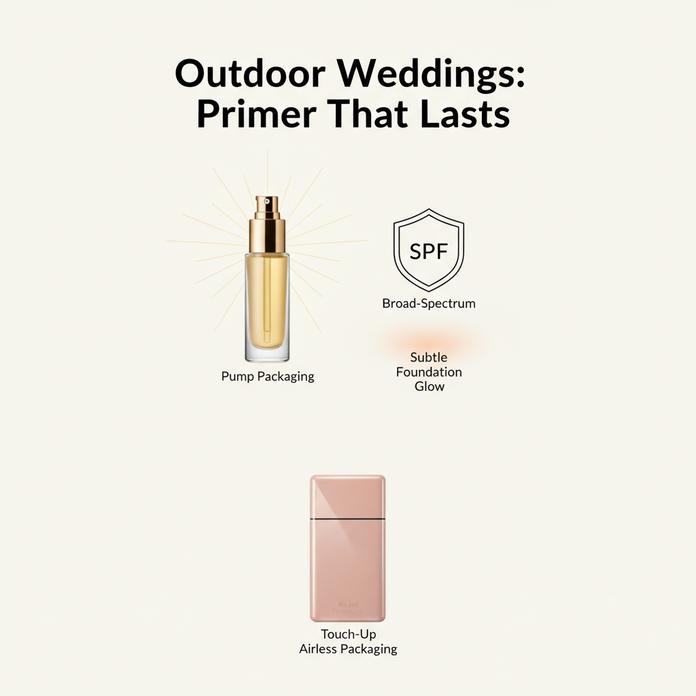
SPF-Infused Oil Blends for Sun Protection
A sunscreen oil primer is more than a regular face oil with SPF ingredients tossed in. Any claimed SPF product needs a properly developed formula, approved UV filter system, relevant testing, compliant labeling, and regulatory review for its market.
-
For daytime wear:
-
Choose validated protection.
- Look for labeled SPF and broad-spectrum coverage where that terminology is legally applicable.
- Apply sunscreen at the labeled amount and follow reapplication directions; an oil based primer makeup should not replace that routine.
-
Consider how the base behaves.
- A well-designed oil blend can provide smooth glide without making foundation feel overly slick.
- An antioxidant may support formula stability or skin-conditioning goals, but it does not substitute for UV protection.
-
For brides who like oil makeup textures, this approach keeps the roles clear: sunscreen provides protection, while primer supports the finish. Pretty simple, and much easier to plan around.
Pump Packaging for On-The-Go Touch-Ups
A pump dispenser can make wedding-day prep less messy, especially when hands, bags, and dressing rooms get busy. Airless packaging can also reduce repeated exposure of the bulk formula to air and fingers.
- Pack smart: A compact, travel size squeezable concealer flawless liquid foundation format or a portable primer bottle keeps oil based primer makeup portable and helps limit spills.
- Dispense with control: A pump supports measured primer use and everyday convenience without dipping fingers into a jar.
- Fix only where needed: For a makeup touch-up, use a small amount rather than piling on another full layer. Sunscreen reapplication, when required by the product directions, remains a separate priority.
References
- skin barrier – healthline.com
- non-comedogenic – allure.com
- carrier oils – healthline.com
- blemish-prone – aad.org
- Oleic acid – byrdie.com
- linoleic acid – paulaschoice.com
- Hyaluronic acid – healthline.com
- Silicone elastomers – incidecoder.com
- Titanium dioxide – skincancer.org
- Beeswax – medicalnewstoday.com
- Airless packaging – beautypackaging.com
- GMP standards – fda.gov
- regulatory compliance – fda.gov
- UV filter – fda.gov
Post time: Aug-13-2026