
10 Common Minerals Used in Cosmetics and What They Do
Minerals in cosmetics aren’t just trendy—they’re the quiet fix for brands losing trust, facing picky customers, and juggling compliance headaches. If your formulas don’t feel clean, safe, and high-performing, buyers walk. Fast.
Recent reports from McKinsey and Statista show sustained demand for clean, compliant beauty ingredients globally.
Choose minerals wisely now.
Key Notes: Minerals in Cosmetics
→ Ethical Sourcing: Consumers demand traceable, cruelty-free minerals backed by supplier audits and transparent raw materials.
→ Regulatory Compliance: Align formulations with FDA & EU safety assessments, heavy-metal testing, labeling requirements, and GMP standards.
→ Top Ingredients: Leverage titanium dioxide & zinc oxide for UV protection, mica & silica for texture, iron oxides for color, and kaolin clay for oil control.
→ Innovation & Packaging: Enhance stability with encapsulation techniques and reduce waste using refillable, airtight, sustainable packaging.
Why Minerals in Cosmetics Are Booming
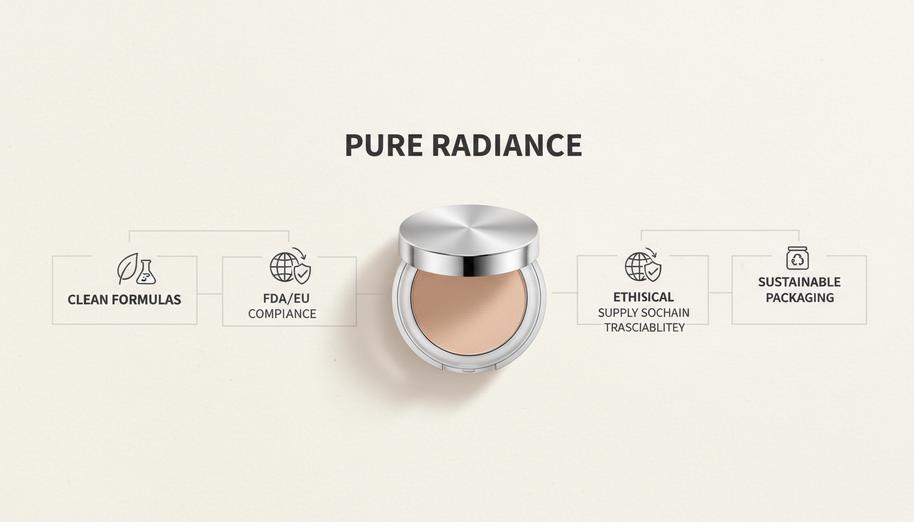
Minerals in cosmetics are having a real moment, and not just for trend hype. From cleaner ingredient lists to smarter packaging, the shift toward cosmetic minerals feels practical, ethical, and honestly pretty overdue.
Consumer Demand and Ethical Sourcing Drive Growth
Consumers are reshaping the minerals in cosmetics space, pushing brands to rethink sourcing and storytelling around cosmetic minerals and mineral-based cosmetics.
-
Core demand drivers
- Rising consumer preferences for clean formulas
- Stronger focus on ethical sourcing
- Visible link between sustainability and purchase intent
-
How brands respond
-
Transparency layers
- Ingredient origin tracking
- Public supplier audits
- Clear labeling tied to responsible practices
-
Supply chain shifts
- Verified mines
- Reduced environmental impact
- Fair labor alignment
-
-
Market impact
- Faster market growth for minerals in cosmetics
- Higher trust in brands like Topfeel Beauty that openly map sourcing
“Traceability is no longer optional; it directly influences consumer retention in beauty categories,” noted a 2025 McKinsey beauty insights update.
Regulatory Shifts Under FDA Regulations and EU Cosmetics Regulation
Minerals in cosmetics now sit under tighter legal frameworks, and yeah, brands feel it.
- Regulatory changes tighten ingredient scrutiny
- FDA regulations push clearer labeling and safety data
- EU Cosmetics Regulation enforces strict safety standards
- Heavy metal testing becomes non-negotiable
- Faster rejection of non-compliant ingredient approval submissions
Quick hits:
- ✔ cleaner mineral-based cosmetics
- ✔ stricter compliance expectations
- ✔ global alignment getting closer
Topfeel Beauty adapts by aligning formulas across both regions, keeping cosmetic minerals consistent and approved.
Innovations in Sustainable Packaging and Encapsulation Techniques
Minerals in cosmetics aren’t just about ingredients anymore; delivery and packaging matter just as much.
Step flow:
- Switch to eco-friendly materials
- Introduce refillable sustainable packaging
- Apply encapsulation techniques
- Improve delivery systems for stability
- Extend shelf life with better material science
Short bursts: cleaner feel. longer wear. less waste.
The result? Product innovation that makes mineral-based cosmetics more effective and easier to trust. Topfeel Beauty leans into this, pairing green technology with high-performance cosmetic minerals.
Types of Minerals in Cosmetics Explained
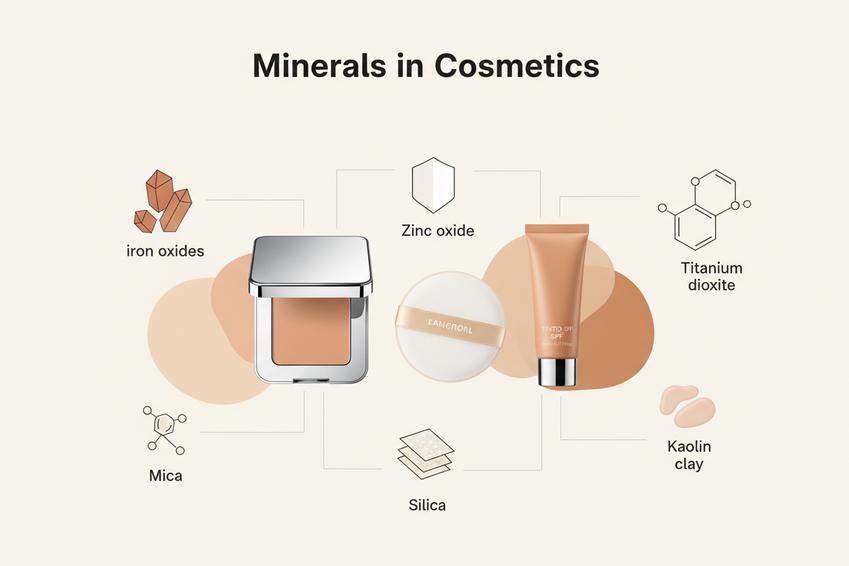
Minerals in cosmetics show up everywhere—from soft-focus powders to high-coverage bases—and the vibe is both skin-friendly and performance-driven. This quick guide breaks down how cosmetic minerals work, why they matter, and how brands like Topfeel Beauty make them feel effortless on real skin.
Iron Oxides & Titanium Dioxide Pigments
- Core color system in many cosmetic bases relies on iron oxides and titanium dioxide
- These pigments act as stable colorants across undertones
- Shade building
- Coverage tuning
- Light diffusion
• Warm, cool, neutral balance
Under the hood, minerals in cosmetics behave like tiny reflectors.
Short takes:
- Iron oxides = tone control
- Titanium dioxide = opacity + brightness
- Blend = believable skin
Multi-step flow:
- Grind mineral pigments finely
- Coat for smoother glide
- Press or keep loose for finish preference
Nested view:
-
Pigment system
-
Iron oxides
- red/yellow/black ratios
-
Titanium dioxide
- refractive index → coverage
-
-
Outcome
- even tone
- soft-focus blur
Topfeel Beauty leans on this pairing so minerals in makeup read natural, not chalky.
Zinc Oxide Mineral Sunscreens
Zinc oxide sits at the center of mineral sunscreen design.
Nested sequence:
-
UV defense
-
UV filter behavior
- reflects + scatters
-
broad-spectrum coverage
- UVA + UVB
-
-
Wear profile
- gentle adhesion
- low irritation for sensitive skin
-
Format
- foundation, concealer, tinted SPF
Quick bits:
- SPF stability stays consistent
- true physical blocker feel without heavy drag
- Disperse zinc oxide evenly
- Pair with emollients
- Balance cast vs clarity
“Mineral UV filters, especially zinc oxide, continue gaining share as consumers prioritize skin compatibility and broad-spectrum claims.” — 2025 suncare outlook, Euromonitor-style reporting
In minerals in cosmetics, this ingredient bridges skincare and makeup. Topfeel Beauty uses micronized grades so protection doesn’t kill the finish.
Mica and Silica for Texture and Slip
Nested breakdown:
-
Sensory
- glide from silica
- silkiness from mica
-
Visual
- soft sheen vs matte blur
-
Function in products
- blush, bronzer, setting powder
Short segments:
- Texture: smoother touch
- Finish: lit-from-within or softly matte
- Wear: less patching
- Choose particle size
- Adjust ratio for smoothness
- Test under flash and daylight
In minerals makeup, these two tune how skin looks in motion. Topfeel Beauty fine-tunes blends so cosmetic powders feel airy, not dusty.
Absorbent Clays: Kaolin Clay’s Oil Control
At oilier moments, absorbent clays step in.
Nested map:
-
Core material
-
- gentle sebum uptake
-
-
Effects
- mattifying finish
- longer wear
-
Skin feel
- light purification without tightness
• T-zone friendly
• reduces midday shine
- Disperse clay into base
- Balance with binders
- Check for over-dry pull
Long note: In minerals in cosmetics, kaolin acts like a quiet regulator—less shine, steadier texture, cleaner look through the day. It keeps mineral cosmetics practical for real-life heat, commute, and long hours.
5 Cosmetic Minerals You Need
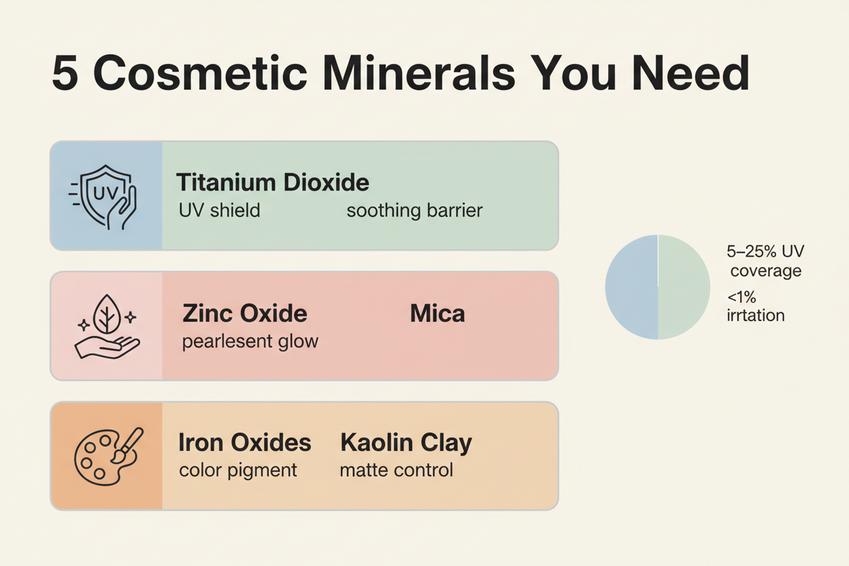
Minerals in cosmetics show up everywhere, from sunscreen to blush, quietly doing the heavy lifting. Break the phrase into parts—minerals, in, cosmetics—and you’ll notice how often each pops up in daily routines. These cosmetic minerals shape texture, color, and skin feel in ways that synthetic swaps often can’t match.
Titanium Dioxide Broad-Spectrum Protection
-
Core role of Titanium Dioxide in minerals in cosmetics:
-
UV defense
- Acts as a UV filter and physical blocker
- Reflects light instead of absorbing it
-
Coverage boost
- High refractive index improves opacity
- Helps foundation hide uneven tone
-
-
In sunscreen blends:
- Supports broad-spectrum protection
- Works well with other mineral sunscreen agents
-
Quick takeaway: solid, reliable, no-fuss mineral layer
Zinc Oxide Soothing UV Shield
-
Why Zinc Oxide stands out in cosmetic minerals:
-
Skin comfort
- Known for soothing and anti-inflammatory effects
-
Protection style
- Forms a physical barrier for UV shield performance
-
Safety profile
- Widely accepted in mineral sunscreen formulas
-
| Property | Zinc Oxide % | Effect on Skin |
|---|---|---|
| UV coverage | 5–25% | Broad protection |
| Irritation risk | <1% | Gentle feel |
| Oil interaction | Moderate | Balanced finish |
Mica for Natural Highlight
✦ Mica in minerals in cosmetics brings that soft pearlescent glow
✦ Particle size tweaks shift from subtle sheen to bold shimmer
✦ Found in highlighter, blush, even body products for easy luminosity
Iron Oxides Custom Color Pigmentation
Short notes, quick hits:
Iron Oxides = stable pigment base.
Blend red, yellow, black for flexible cosmetic color.
Shade matching gets precise, which matters across skin tones.
In cosmetic minerals, this is where art meets chemistry.
Kaolin Clay Mattifying Base
-
How Kaolin Clay works inside minerals in cosmetics:
-
Oil control system
- Absorbs excess sebum
- Supports mattifying finishes
-
Texture refinement
- Acts as a cosmetic filler
- Helps with pore minimizing look
-
Wear improvement
- Enhances grip of powders
- Keeps base makeup from sliding
-
Mix it all together and cosmetic minerals don’t just sit on skin—they shape how everything feels, wears, and looks throughout the day.
Mica vs. Silica: Which Exfoliant Wins?
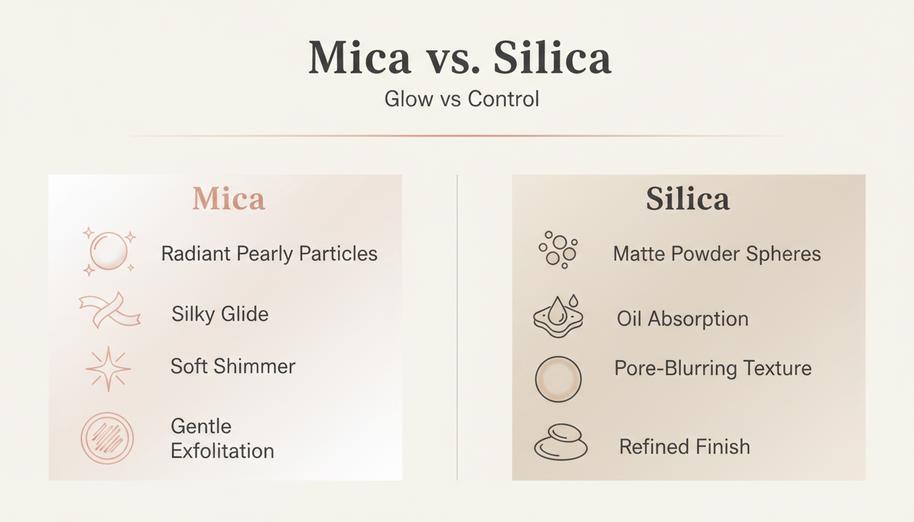
Minerals in cosmetics keep popping up in everyday beauty talk, and for good reason. From mineral pigments to skin-loving fillers, these ingredients shape texture and finish. Here, mineral-based cosmetics meet two stars—mica and silica—each bringing its own vibe.
Mica
-
Core role of minerals in cosmetics:
-
Surface feel:
- Adds silky glide through Smoothness
- Works as a light Filler without heaviness
-
Visual payoff:
- Boosts Shimmer and soft Luster
- Reflects light via Reflective particles for glow
-
Skin interaction:
- Gentle Exfoliant action with rounded edges
- Supports barrier-friendly wear
-
-
In mineral makeup formulas:
- Used as Pigment enhancer
- Blends easily into mineral-based cosmetics
-
In product design:
- Topfeel Beauty often taps mica for glow-forward finishes
- Keeps the feel breathable, not chalky
A quick takeaway—mica in minerals in cosmetics leans radiant, soft, and easygoing, ideal when glow matters more than oil control.
Silica
Silica plays a different game in minerals in cosmetics, leaning toward control and refinement. You’ll notice:
-
Oil behavior:
- Strong Oil absorption
- Leaves a Mattifying touch
-
Texture shift:
- Fine Exfoliant feel, slightly Abrasive compared to mica
- Acts as a Thickener and Filler to smooth uneven areas
-
Finish:
- Blurs pores, improves Texture, soft-focus effect
In mineral cosmetics and daily wear, Topfeel Beauty uses silica when shine needs toning down without killing comfort. Think balanced skin, less glare, cleaner finish.
Sensitive Skin: Zinc Oxide’s Protective Power
Minerals in cosmetics are getting real love lately, especially for touchy skin. This cluster breaks down how zinc oxide works behind the scenes, keeping things calm, comfy, and reliably protected.
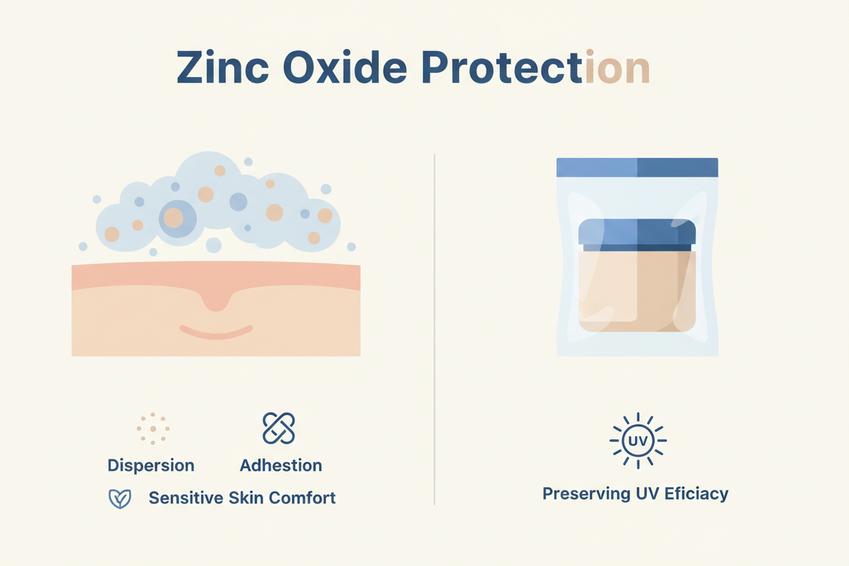
How Mineral Sunscreen Formulations Soothe Irritation
-
Core calming pathway of mineral sunscreen and formulation design:
-
zinc oxide sits on skin, not in it
- forms a soft barrier that reduces triggers
- limits redness linked to irritation
-
Built-in anti-inflammatory behavior
- helps sensitive skin stay balanced
- boosts daily skin comfort without actives overload
-
-
In minerals in cosmetics, this gentle approach feels more like a shield than a treatment.
-
Topfeel Beauty leans into this by keeping formulas minimal, letting soothing effects speak for themselves.
Particle Size and Adhesion for Gentle Coverage
-
Fine-tuned particle size matters more than people think:
- smaller particles improve dispersion
- larger ones enhance visible coverage
-
Balanced adhesion creates:
- even film formation
- breathable cosmetic texture and better skin feel
-
In minerals in cosmetics, the sweet spot avoids chalkiness while keeping gentle coverage intact.
Short take: good dispersion = smooth face, no drama.
Topfeel Beauty adjusts zinc oxide ratios so coverage stays soft, not heavy.
Packaging Choices for Maintaining Zinc Oxide Efficacy
-
Protection chain for zinc oxide stability:
-
Container design
- airtight packaging reduces oxidation
- smart container material avoids reactions
-
Product lifespan
- longer shelf life keeps UV protection steady
- limits degradation from light and air
-
-
Minerals in cosmetics depend on stability more than hype; once exposed, performance dips fast.
• Tight seal
• Low light exposure
• Clean dispensing
Topfeel Beauty keeps formats practical—no messy jars when precision matters, just steady efficacy you can trust.
References
- McKinsey – mckinsey.com
- Statista – statista.com
- GMP standards – iso.org
- FDA regulations – fda.gov
- EU Cosmetics Regulation – single-market-economy.ec.europa.eu
- Heavy metal testing – fda.gov
- encapsulation techniques – ncbi.nlm.nih.gov
- titanium dioxide – pubchem.ncbi.nlm.nih.gov
- Iron oxides – cosmeticsinfo.org
- Zinc oxide – pubchem.ncbi.nlm.nih.gov
- Euromonitor – euromonitor.com
- Mica – cosmeticsinfo.org
- Silica – cosmeticsinfo.org
- kaolin clay – cosmeticsinfo.org
- mineral sunscreen – aad.org
Post time: Jul-29-2026