
Liquid Foundation Trends in the Growing Complexion Makeup Category
Ask any product team where things go sideways, and the answer sneaks past formulation into packaging. Even a basic question like liquid foundation would fall under which cosmetic classification starts a chain reaction that ends at the pump, not the lab.
Formulas get fussy—thin, thick, air-shy—and standard bottles can’t keep up, leading to waste, mess, and returns. Airless systems step in, keeping doses clean, product stable, and production running without drama.
Key Insights: Where Liquid Foundation Would Fall Under Which Cosmetic Classification
→ Viscosity & Shear Sensitivity: Creamy high-viscosity foundations pair with piston pump systems; fluid formulas suit standard airless pumps to prevent phase separation.
→ Container Choice: Airless pump bottles maintain dosage control and air exclusion, while airless jars support thicker textures with sealing gaskets.
→ Ingredient Protection: Formulas prone to oxidation or UV degradation benefit from PP/PET airless formats and opaque outer casings for enhanced stability.
→ Sustainability & Shelf Life: Double-wall construction extends longevity, and refillable designs with PCR materials reduce waste and align with eco-friendly packaging trends.
How Does Liquid Foundation Fit Classification
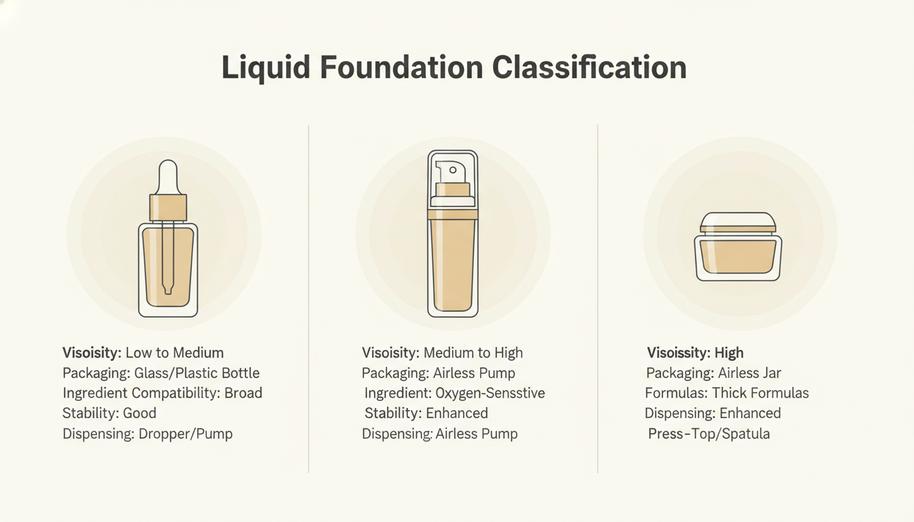
When people ask “liquid foundation would fall under which cosmetic classification,” the answer often depends on formula behavior, packaging, and ingredient needs. In day-to-day product development, brands sort liquid foundation, foundation liquid products, and complexion formulas by practical factors rather than a single label. That makes “liquid foundation would fall under which cosmetic classification” a useful question for manufacturers, retailers, and buyers alike.
By Viscosity and Shear Sensitivity: Cream vs. Fluid Foundations
Understanding “liquid foundation would fall under which cosmetic classification” often starts with viscosity, shear sensitivity, and overall rheology.
-
Formula behavior
-
Cream foundation
- Higher texture density
- Thicker consistency
- Commonly paired with controlled dispensing systems
-
Fluid foundation
- Lower resistance to flow
- Easier pump delivery
- Lighter wear feel
-
-
Stability considerations
-
Formulation teams review:
- Shear response during pumping
- Texture recovery after dispensing
- Long-term appearance
-
For brands exploring packaging options and formulations, Topfeel Beauty offers private label and OEM solutions to help determine where a lightweight liquid foundation product sits within broader cosmetic categories. In many product discussions, “liquid foundation would fall under which cosmetic classification” is closely tied to flow properties.
Packaging Container Types: Airless Pump Bottle vs. Airless Jar
Packaging can influence how liquid foundation categories are organized.
-
Packaging
-
Container options
- Airless pump bottle
- Precise dispensing mechanism
- Better product preservation
- Consistent dosage
- Airless jar
- Suitable for denser formulas
- Sealed access design
- Supports extended shelf life
-
Key classification logic:
- Formula flow rate
- User experience
- Package design compatibility
When asking “liquid foundation would fall under which cosmetic classification,” packaging performance is frequently part of the answer, especially for foundation liquid products sold in premium formats.
Ingredient Compatibility Driving Classification
Ingredient requirements often finalize classification decisions.
-
Ingredient compatibility
-
Raw-material review
- Raw materials
- Pigment dispersion
- Preservatives
-
-
Chemical performance
-
Chemical stability
- Oxidation-sensitive blends
- Volatile ingredients
-
Emulsion
- Phase integrity
- Wear consistency
-
-
Protection strategy
- Solvent system evaluation
- Opaque packaging selection
A liquid foundation with sensitive ingredients may be classified differently from similar makeup formulas because protection needs change. As a result, “liquid foundation would fall under which cosmetic classification” is often answered through ingredient risk, packaging fit, and formula design. As a private label cosmetic supplier, Topfeel Beauty offers R&D support and custom solutions to help brands assess all three factors before assigning a final cosmetic classification.
4 Benefits Of Airless Cosmetic Bottles
When discussing product packaging, many brands also ask: “liquid foundation would fall under which cosmetic classification?” In practice, a liquid foundation cosmetic product relies heavily on packaging performance. Questions around liquid foundation classification, foundation makeup category placement, and liquid makeup product types often connect directly to preservation, dispensing accuracy, sustainability, and shelf-life expectations.
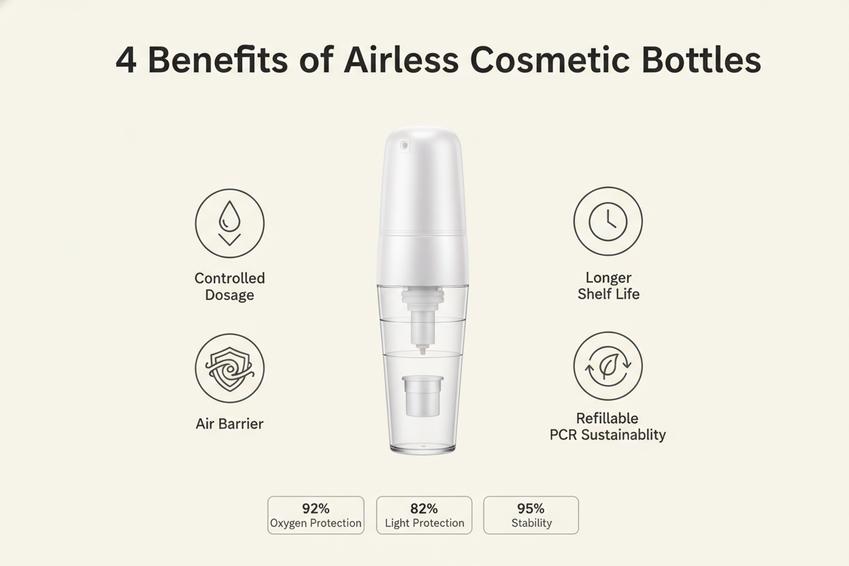
Controlled Dosage with a Precision Pump Mechanism
For brands evaluating “liquid foundation would fall under which cosmetic classification,” packaging precision matters because product consistency influences user perception.
-
Core benefit:
-
Precision pump technology supports controlled dosage.
- Consistent product delivery reduces overuse.
- Better application control improves the user experience.
-
- One press releases a measured amount.
- The makeup dispenser helps maintain formula uniformity.
- Less waste is especially valuable for premium formula development.
Topfeel Beauty offers related packaging solutions and custom formulations designed to match the viscosity of liquid foundation formulas while improving handling during daily use.
Air Exposure Prevention for Reduced Oxidation Susceptibility
An effective airless packaging system creates an air barrier between the environment and the product.
-
Protection pathway
-
Sealed pouch structure
- Limits oxygen contact.
- Supports oxidation prevention.
-
Internal piston movement
- Reduces formula degradation.
- Preserves active ingredients.
-
As a result, product stability, preservation, and overall cosmetic integrity remain stronger throughout use. For brands researching liquid foundation classification and asking “liquid foundation would fall under which cosmetic classification,” maintaining ingredient performance is often just as important as the formula itself.
Extended Shelf Life via Double-Wall Airless Construction
The relationship between packaging and longevity can be summarized through measurable performance indicators.
| Feature | Oxygen Protection (%) | Light Protection (%) | Relative Stability Index |
|---|---|---|---|
| Standard Jar | 35 | 20 | 60 |
| Standard Pump Bottle | 55 | 35 | 72 |
| Airless Bottle | 85 | 70 | 89 |
| Double-Wall Airless Bottle | 92 | 82 | 95 |
Within this design:
-
Double-wall construction
- Strengthens the material barrier.
- Enhances formula protection.
- Supports extended shelf life.
For airless technology, better resistance to oxygen exposure and changing storage conditions contributes to greater product longevity. This is especially relevant when brands compare packaging options for liquid foundation products and revisit the question, “liquid foundation would fall under which cosmetic classification?”
Sustainable Refillability and Post-Consumer Recycled (PCR) Content
Modern beauty packaging increasingly combines performance with environmental responsibility.
◦ Refillable designs reduce packaging waste.
-
Sustainability framework
-
Refillable system
- Encourages repeat use.
- Supports a circular economy.
-
Post-consumer recycled materials
- Increase PCR content utilization.
- Promote adoption of recycled materials.
-
Short, practical benefits:
- Less material consumption.
- Lower environmental impact.
- More eco-friendly packaging choices.
For brands exploring packaging options, Topfeel Beauty provides packaging support that aligns with market demand for refillable solutions. For brands selling foundation makeup products and repeatedly evaluating “liquid foundation would fall under which cosmetic classification,” packaging decisions now influence both performance goals and sustainability objectives. The same discussion often extends to liquid makeup classification and broader cosmetic product category planning.
Switching To Airless: Pain-Point Solution
Airless packaging solves common packaging headaches while supporting product stability and user satisfaction. As brands review liquid makeup categories and ask “liquid foundation would fall under which cosmetic classification,” packaging performance remains a key part of product success.
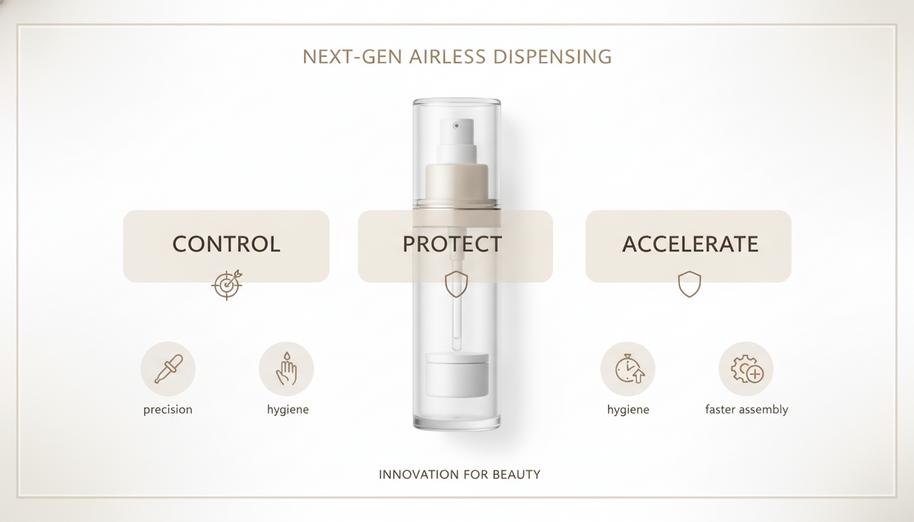
Uncontrolled Dispensing? Switch to a Piston Pump System
When discussing liquid foundation products and asking “liquid foundation would fall under which cosmetic classification,” product delivery matters just as much as formulation.
-
Control through a piston pump system
-
Consistent dispensing helps reduce waste.
-
Precise dosage improves daily application.
- Suitable for lightweight formulas.
- Suitable for thicker textures.
-
-
Advanced mechanism benefits
- Smooth evacuation supports product use from start to finish.
- Better precision reduces accidental overuse.
-
Brand considerations
- Consumers researching “liquid foundation would fall under which cosmetic classification” often expect reliable product performance.
- Topfeel Beauty offers related packaging solutions for brands seeking cleaner and more predictable dispensing experiences.
Formula Contamination? Sealing Gasket Ensures Hygiene Maintenance
Questions such as “liquid foundation would fall under which cosmetic classification” frequently connect to product safety, storage, and shelf-life expectations.
-
Protection against external exposure
- A sealing gasket limits air contact.
- Airless designs help preserve formula quality.
-
Maintaining integrity
-
Reduced contamination risk during repeated use.
-
Better hygiene and ongoing maintenance standards.
- Sensitive skincare-makeup hybrids benefit significantly.
- Active ingredient formulas remain more stable.
-
-
Formula-focused advantages
- The formula stays better protected throughout consumer use.
- Topfeel Beauty emphasizes packaging systems designed to support product cleanliness and consistency for items like travel size foundation.
High Production Lead Times? Custom Tooling for Faster Assembly Process
As brands evaluate packaging options alongside questions like “liquid foundation would fall under which cosmetic classification,” manufacturing speed can influence launch schedules.
-
Improving production flow
- Custom tooling supports repeatable results.
- Faster assembly process management reduces bottlenecks.
-
Increasing efficiency
- Better optimization during molding and component fitting.
- Enhanced manufacturing coordination supports reliable output.
-
Accelerating market readiness
- Shorter lead times help brands respond to demand.
- For companies comparing cosmetic categories, foundation makeup classification, or asking “liquid foundation would fall under which cosmetic classification,” efficient packaging development can help products reach shelves sooner.
References
- Foundation Liquid Products – The Packaging Company
- Makeup Formulas – Mamaearth
- Foundation Makeup Category Placement – AliExpress
- Daily Use – FH Packaging
- Oxygen Contact – Compax Packaging
- Refillable Solutions – Topfeelpack
- Foundation – Authentic K-Beauty
- Airless Packaging – JC Cosmopack
- Foundation Makeup – Esmi Skin Minerals
- Eco-Friendly Cosmetic Packaging – Cosmetic Packaging Now
- Cosmetic Airless Pump Bottles – Sunrange Pack
- AS Airless Pump Bottles Wholesale – Somewang
- Airless Cosmetic Bottles – Yello Packaging
- Ultimate Guide to Liquid Foundation Production – TGM Machine
- Foundation Brush & Concealer Brush – Walmart Canada
Post time: Jul-14-2026