
Lip Oil Recipe: The Rise of Hydrating Lip Oils in Modern Beauty Formulations
The lip oil recipe isn’t just a formula; it’s your ticket out of crowded shelves and slow-moving stock.
Shoppers want gloss that cares, not sticky shine, and brands that get there fast win big.
Mintel and Statista report rising demand for hybrid lip care across global beauty markets.
Reading Notes on Lip Oil Recipe Mastery
➔ Select plant-derived base oils (jojoba, squalane, almond) and actives (hyaluronic acid, ceramides) for deep hydration and barrier support.
➔ Blend sensory additives (mica pigments, flavor oils, sweeteners) via homogenization to ensure even color, flavor, and non-sticky texture.
➔ Automate filling under GMP compliance, perform viscosity testing and microbial analysis to guarantee consistency, safety, and shelf-life stability.
➔ Design eco-friendly packaging (recyclable tubes, tamper-evident seals) and align with FDA/INCI regulations while highlighting long-wear, vegan-friendly benefits in marketing.
Why Are Hydrating Lip Oils Trending?
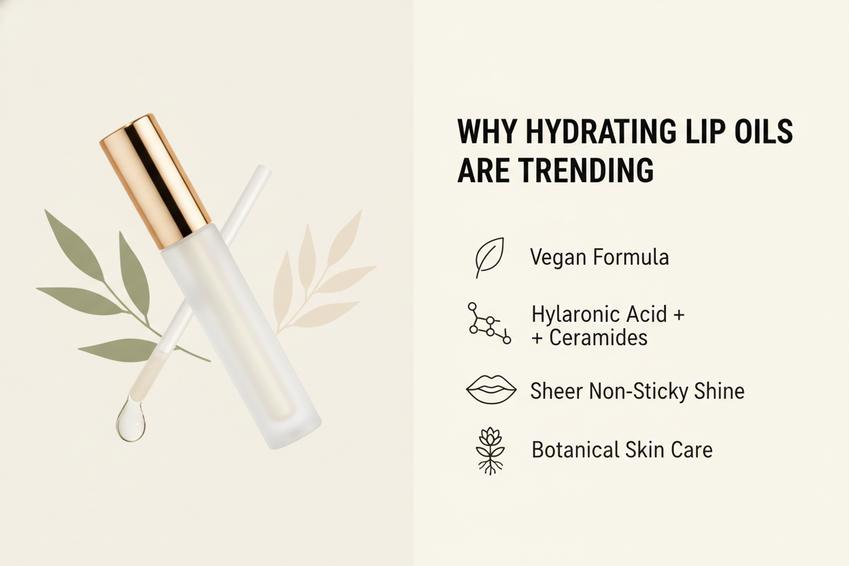
Hydrating gloss is having a major glow-up. The buzz around every new lip oil recipe isn’t random—it reflects changing tastes in clean beauty, texture preference, and skincare-meets-makeup habits. From vegan blends to barrier care, today’s lip oil recipe feels less like makeup and more like self-care in a tube.
1 Surging Demand for Hydrating Formula in Vegan Formulations
The rise of the modern lip oil recipe is closely tied to vegan formulations and plant-based ingredients. Shoppers scan labels for cruelty-free claims and ingredients they can pronounce.
- Hydrating formula powered by jojoba and sunflower
- Certified ethical beauty positioning
- Alignment with sustainable beauty values
- Ingredient sourcing
- Texture refinement
- Clean-label messaging
At a deeper level, demand breaks down like this:
-
Ingredient Expectations
- Cold-pressed oils
- No animal-derived waxes
-
Brand Values
- Transparency
- Eco packaging
-
Performance
- Long-lasting shine
- Real moisture payoff
The typical oil recipe for lips now skips synthetic heaviness. Instead, a DIY lip oil recipe mindset—simple, plant-focused, skin-friendly—guides commercial labs too. Brands like Topfeel respond by pairing clean beauty claims with visible gloss payoff, which keeps consumer demand climbing.
2 Role of Hyaluronic Acid and Ceramides in Lip Care
Today’s lip oil recipe borrows straight from skincare.
-
Core Actives
- Hyaluronic acid as a humectant
- Ceramides as emollients
-
Benefits
- Improved lip hydration
- Stronger skin barrier
- Better overall lip health
Application flow matters:
- Apply thin layer
- Allow absorption
- Reapply for sealing moisture
“Barrier-supporting ingredients like ceramides continue to dominate lip care launches in 2025,” notes Mintel’s 2025 Global Beauty Trends update, highlighting rising consumer focus on long-term moisture retention.
A hydrating lip oil recipe that blends actives with cushiony oils reduces moisture loss and boosts comfort. It’s skincare logic in gloss form.
3 Influence of Sheer Coverage and Non-Sticky Texture on Consumer Choice
No one wants heavy gloss anymore. A winning lip oil recipe balances sheer coverage with a non-sticky texture.
-
Finish
- Glossy finish
- Natural look
-
Feel
- Lightweight feel
- Comfortable wear
Quick comparison shoppers make:
- Traditional lip gloss → thick, tacky
- Modern lip oil → breathable, smooth
That easy glide drives consumer preference and stronger aesthetic appeal. Even a simple hydrating lip oil recipe can outperform older formulas if the texture feels right.
4 From Skincare to Makeup: Botanical Extracts Driving Crossover Trends
The latest lip oil recipe often reads like a serum label.
-
Botanical extracts
- Chamomile-derived bisabolol
- Green tea antioxidants
-
Added skincare benefits inside everyday makeup products
Innovation unfolds in layers:
- Base oils for shine
- Plant extracts for soothing
- Active boosters for protection
This ingredient synergy fuels real crossover trends and ongoing beauty innovation. A well-designed lip oil recipe doesn’t just gloss—it treats. Topfeel captures this shift by blending skincare logic with color cosmetics appeal, proving that a smart lip oil recipe can sit comfortably between lip balm and gloss while meeting modern expectations.
Which Oils Deliver Deep Hydration?
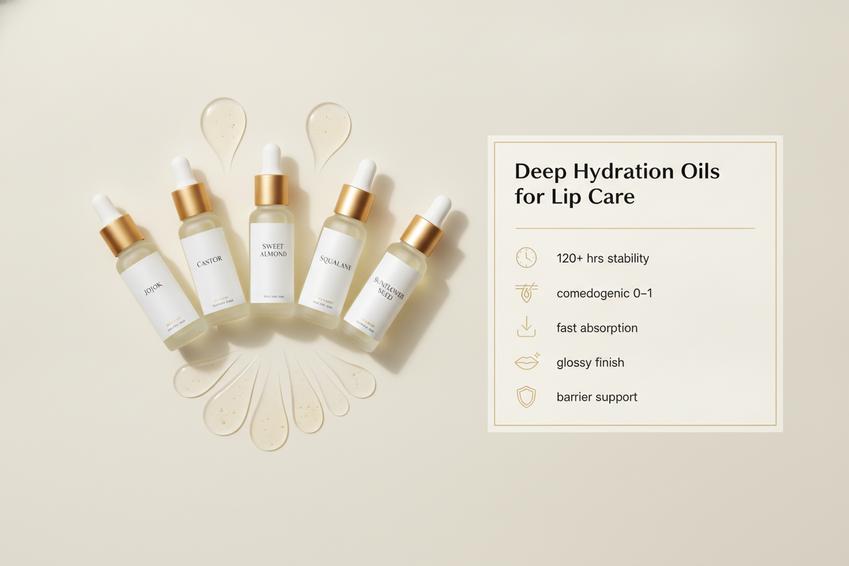
Creating a standout lip oil recipe is not just about shine—it’s about deep comfort, barrier care, and that smooth glide everyone loves. When building lip oil formulas, choosing the right oils changes everything. Let’s break down what truly hydrates.
Jojoba Oil
A smart lip oil recipe often starts with Jojoba Oil, a liquid wax known as a sebum mimic. It feels natural on lips and sinks in fast.
-
Key traits:
- Non-comedogenic
- Stable against oxidation
- Supports the skin barrier
- Absorbs quickly
- Leaves a soft, breathable layer
- Enhances antioxidant stability
Performance Snapshot
| Property | Jojoba Oil | Typical Mineral Oil | Coconut Oil |
|---|---|---|---|
| Absorption Speed | Fast | Slow | Medium |
| Oxidative Stability (hrs @45°C) | 120+ | 90 | 60 |
| Comedogenic Rating | 0–1 | 0 | 4 |
| Texture Feel | Lightweight | Heavy | Semi-heavy |
In layered lip oil formulas:
-
Base layer
- Improves spreadability
- Boosts moisturizing effect
-
Active blend
- Supports antioxidant defense
- Extends shelf life
Brands like Topfeel often rely on jojoba in a professional lip oil recipe because stability matters as much as shine.
Castor Oil
Thick. Glossy. Protective. Castor Oil is rich in ricinoleic acid, giving serious viscosity.
-
Benefits:
- High gloss
- Moisture lock
- Strong protective barrier
In a DIY lip oil or commercial lip oil formulation:
- Acts as shine anchor
- Suspends pigment evenly
- Enhances conditioning
It behaves like this:
-
Surface layer
- Boosts shine
- Adds cushion
-
Structural support
- Improves viscosity
- Extends wear time
For a bold lip oil recipe, this oil brings that glassy finish users rave about.
Squalane
Derived from squalene, Squalane is a skin-identical hydrocarbon with a clean, non-greasy vibe.
- Ultra-light slip
- Strong barrier support
- Highly stable
Short notes:
Fast absorption.
No sticky drag.
Smooth after-feel.
Within lip oil formulas:
-
Primary emollient
- Boosts moisturizing
- Prevents water loss
-
Texture balancer
- Reduces heaviness
- Keeps formula breathable
Topfeel integrates squalane when clients want a modern lip oil recipe that feels barely there but works overtime.
Sweet Almond Oil
Softening and comforting, Sweet Almond Oil delivers vitamin E and essential fatty acids.
- Skin-softening
- Gentle conditioning
- Lightweight nourishment
Sequence in formulation:
- Adds glide
- Improves elasticity
- Supports smooth finish
Layer logic:
-
Nutrient phase
- Enhances nourishing profile
- Supports soothing feel
-
Texture phase
- Keeps formula fluid
- Prevents drag
For brands refining a lip oil formulation, this oil adds that everyday wearable comfort.
Sunflower Seed Oil
Rich in linoleic acid, Sunflower Seed Oil strengthens the skin barrier without heaviness.
- Non-comedogenic
- High vitamin E
- Clean finish
How it works in a lip oil recipe:
- Reinforces hydration
- Reduces flaking
- Improves stability
Nested use:
-
Barrier support system
- Enhances moisturizing retention
- Improves resilience
-
Lightweight blend partner
- Balances richer oils
- Maintains fluid texture
When crafting a high-performing lip oil recipe, balancing shine, stability, and comfort is key—and that balance often starts right here with the oils.
3 Steps To Create Your First Lip Oil Recipe
Getting a lip oil recipe right isn’t rocket science, but it does take smart choices. From picking base oils to dialing in automation, this guide keeps it real and practical—so your lip oil formula actually performs, sells, and feels amazing.
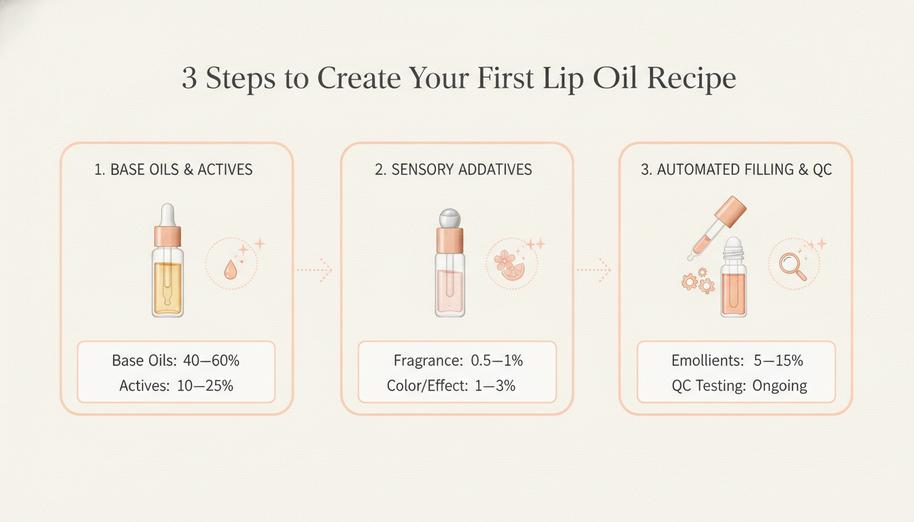
Step 1: Select Base Oils and Actives (Fractionated Coconut Oil, Vitamin E, Peptides)
A solid lip oil recipe starts with the backbone: Base oils and Actives. Think of Carrier oils and Emollients as the comfort layer, while Antioxidants and Peptides handle treatment claims like Hydration and plump.
- Lightweight glide: Fractionated Coconut Oil
- Barrier support: jojoba among classic Carrier oils
- Protection boost: Vitamin E as a go-to Antioxidant
For brands refining a lip oil formula, balance matters. Too thin? It leaks. Too thick? It drags.
Key Functional Breakdown
| Ingredient | % Range | Primary Function | Sensory Impact |
|---|---|---|---|
| Fractionated Coconut Oil | 40–60% | Emollient base | Light, silky |
| Jojoba Oil | 10–25% | Barrier support | Smooth |
| Vitamin E | 0.5–1% | Antioxidant | Neutral |
| Peptides | 1–3% | Lip conditioning | Slight cushion |
| Squalane | 5–15% | Softening | Glossy |
When developing a repeatable lip oil recipe, labs like Topfeel often test oxidation stability and skin feel side by side. It keeps the lip gloss oil recipe stable on shelf and lush on lips.
Step 2: Blend Sensory Additives via Homogenization (Mica Pigments, Flavor Oils, Sweeteners)
Now the fun part. Sensory additives shape vibe and personality.
- Colorants like Mica pigments add shimmer.
- Flavor oils create that subtle, snackable note.
- Sweeteners smooth out any bitter edge.
During Homogenization, speed and shear matter. Poor Blending leaves pigment streaks; proper mixing gives even Aesthetics and payoff.
A clean lip oil recipe should feel weightless but look juicy. Tiny tweaks—0.1% shifts—change everything. Keep batches logged, compare gloss levels, and test under warm storage. That’s how a basic lip oil formula turns pro.
Step 3: Automate Filling and Quality Control (GMP Compliance, Viscosity Testing, Applicator Wands)
Scaling a lip oil recipe means dialing in Automation without losing soul.
- GMP compliance protects brand credibility.
- Viscosity testing ensures flow matches the Applicator wands.
- Clean Packaging prevents leaks and air gaps.
Under tight Quality control, production lines check:
- ➤ Bulk viscosity range
- ➤ Fill weight accuracy
- ➤ Wand compatibility
- ➤ Micro limits
For growing brands, partnering with manufacturers like Topfeel helps align Manufacturing speed with consistent gloss payoff. A lip oil recipe isn’t just about shine; it’s about repeat performance, batch after batch.
Retail Launch: Lip Oil Recipe Success
A smart retail debut of a lip oil recipe takes more than shine and scent. It blends lab data, bold Packaging, airtight compliance, and punchy storytelling. From refining your lip oil formula to marketing the final lip gloss oil, every move shapes how buyers see your brand on shelf.
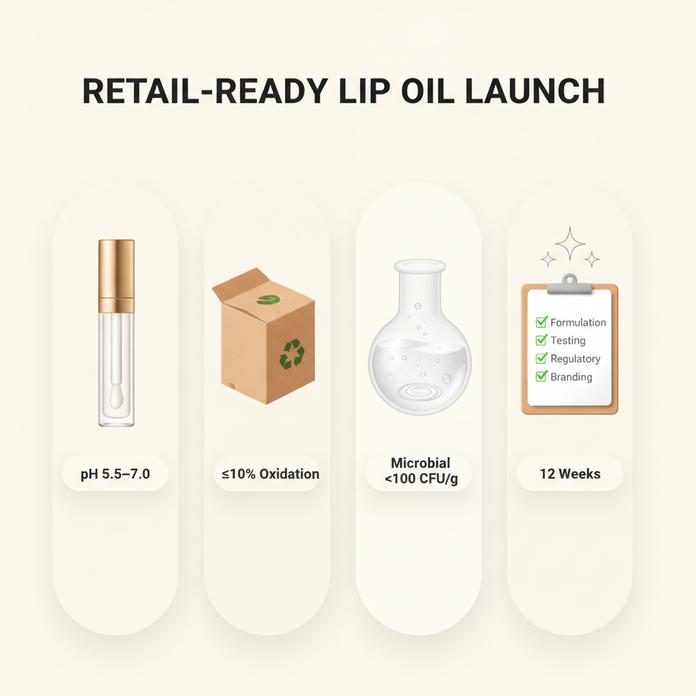
Crafting Eye-Catching Packaging with Recyclable Materials and Tamper-Evident Seals
A winning lip oil recipe deserves Packaging that feels just as thoughtful. With Recyclable materials, brands cut waste while boosting Sustainability points shoppers actually care about.
- clear gloss tubes for color visibility
- PCR plastics to support Consumer safety and eco goals
- Secure Tamper-evident seals for trust at first twist
Design works best when layered:
-
Core layer
- Material choice → recycled PET or glass
- Compatibility test → oil stability with applicator
-
Visual layer
- Bold Design lines
- Clean Aesthetics that echo your lip oil formula story
-
Safety layer
- Seal integrity checks
- Leak and drop trials
For brands like Topfeel, balancing shelf pop with eco logic keeps the lip oil recipe competitive and retail-ready.
Ensuring Shelf-Life Stability Through Microbial Analysis and pH Measurement
Stability keeps a lip oil recipe safe and sellable. Tight Quality control protects Product integrity from lab to store.
Testing roadmap:
-
Microbial analysis
- Total plate count
- Yeast and mold screening
-
pH measurement
- Target range alignment with formulation
- Drift tracking under heat
-
Formulation testing
- Freeze–thaw cycles
- Light exposure trials
| Test Item | Standard Range | Duration (Weeks) |
|---|---|---|
| Microbial Count | 4 | |
| pH Stability | 5.5–7.0 | 12 |
| Oxidation Index | ≤10% change | 8 |
Preservation isn’t guesswork. It’s disciplined data that keeps your lip gloss oil stable long after launch.
Navigating FDA Regulations and INCI Naming for Global Markets
Compliance shapes global growth. A lip oil recipe must align with FDA regulations, proper INCI naming, and sharp Labeling.
Key checkpoints:
- Ingredient disclosure using correct INCI naming
- Safety substantiation files for Regulatory compliance
- Claims review to meet International standards
For Global markets, documentation stacks up fast:
-
U.S.
- Voluntary cosmetic registration
- Adverse event tracking
-
EU
- CPNP notification
- Responsible person assignment
Topfeel supports brands by ensuring formulations comply with EU and FDA regulations and providing MSDS and COA documentation, keeping each lip oil formula ready for cross-border sales.
Leveraging Long-Wear Properties in Retail Marketing Campaigns
Performance sells. Highlight Long-wear properties, hydration, and smooth glide in Retail marketing.
Multiple short hooks work:
- “Glass shine, zero stick.”
- “Hydration that hangs all day.”
- “Your go-to lip oil recipe for busy mornings.”
- Define Product benefits
- Support with wear-test stats
- Align messaging with Sales strategy
Recent beauty insights from Mintel (2025) note:
“Consumers are prioritizing multi-benefit lip products that combine care and cosmetic performance in one step.”
That insight feeds strong Advertising angles and sharper Performance claims. When Topfeel positions a lip oil recipe as both treatment and gloss, Consumer appeal rises fast—and retail buyers notice.
References
- Mintel – www.mintel.com/Mintel
- Statista – www.statista.com/Statista
- hyaluronic acid – www.healthline.com/Healthline
- ceramides – www.webmd.com/WebMD
- GMP compliance – www.fda.gov/FDA
- jojoba – www.medicalnewstoday.com/MedicalNewsToday
- 2025 Global Beauty Trends – www.mintel.com/Mintel
- Castor Oil – www.verywellhealth.com/VerywellHealth
- Squalane – www.healthline.com/Healthline
- Sweet Almond Oil – www.healthline.com/Healthline
- Sunflower Seed Oil – www.healthline.com/Healthline
- Vitamin E – ods.od.nih.gov/NIH
- Peptides – www.byrdie.com/Byrdie
- FDA regulations – www.fda.gov/FDA
- INCI naming – www.personalcarecouncil.org/PersonalCareCouncil
Post time: Jun-23-2026