
What Is Included in a Lip Gloss Making Kit?
A private-label lip gloss project can combine formula components, tubes and applicators with filling, sealing, and retail production. The useful scope depends on the intended product and pack.
Topfeel Beauty’s OEM/ODM services cover formulation, packaging, samples, and quality control for color cosmetics. Manufacturer-selection guidance can help frame the early sourcing discussion.
For bulk buyers, connect the shade brief, packaging, testing, filling, and delivery requirements before production.
Key Points: Lip Gloss Making Kits
- Bundle Essentials: Formula components, pigments, flavor materials, tubes, applicators, and compatible stoppers.
- Precision Equipment: Fillers, mixing equipment, and sealing tools support a repeatable production process.
- Private-Label Edge: Packaging, decoration, and color samples shape a retail-ready presentation.
- Compliance Support: Product records and appropriate testing help a brand prepare for its target market.
5 Surprising Items In Lip Gloss Making Kits
Beyond base and color, a development brief should cover sensory choices, component fit, and pack use.
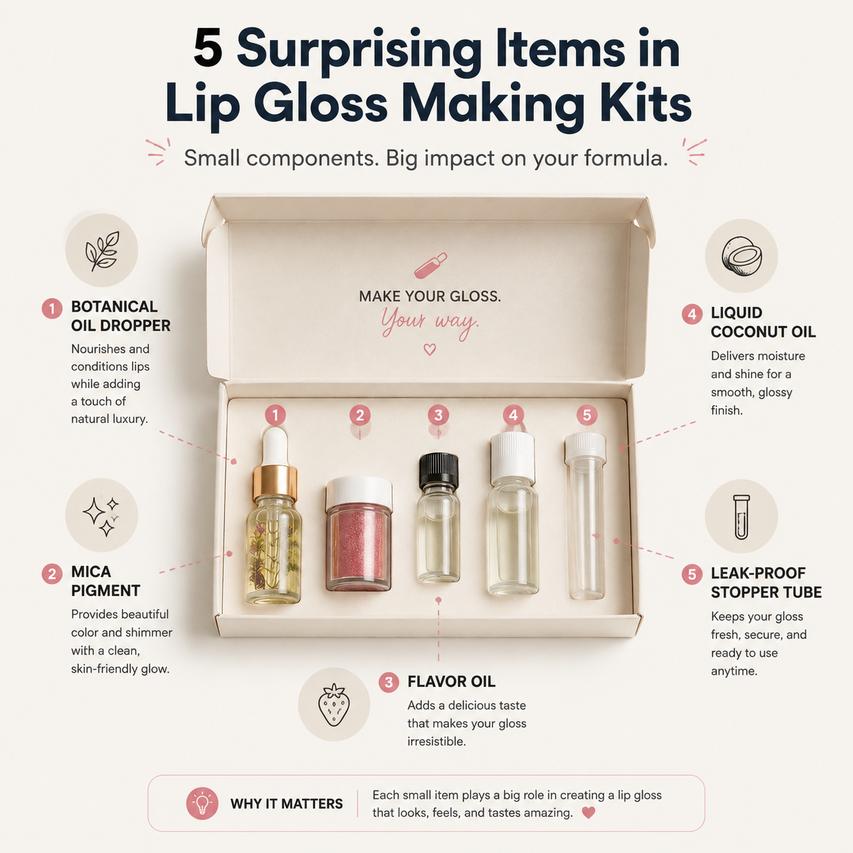
Hidden Hydrating Botanical Infusion Secrets
A natural infusion can be considered with the intended base and sensory profile.
- Botanical additions
- A botanical extract or herbal essence can complement the formula concept.
- A compatible plant oil acts as a moisturizing agent.
- This supports hydration and everyday lip conditioning within the selected formula brief.
Unexpected Role of Cosmetic Pigment Dispersion
A good pigment dispersion is central to shade development. For U.S. planning, the eCFR color-additive list identifies color additives exempt from certification.
- Color control
- Cosmetic grade dye or mica powder creates the chosen shade direction.
- Careful hue blending adjusts color intensity.
- Formula consistency
- An even tint suspension helps the team assess streaking and clumping during samples.
- That makes the colorant easier to review from sample to batch.
Flavor Oil Essence That Defines Your Signature Scent
Flavor oil gives gloss a sensory direction, from vanilla-style aroma to fruity olfactory notes.
Keep the intended taste mild and document selected materials.
Liquid Coconut Oil for a Non-Sticky Formula
- Add liquid coconut oil to a compatible lip base as a lightweight carrier oil.
- Balance this emollient with the main gloss ingredients.
- Mix toward smooth application, a glossy finish, and a non-sticky texture.
Define the intended feel before sample review.
Leak Proof Stoppers You Never Knew You Needed
Review packaging with the formula.
- Inside the container
- A leak proof stopper sits in a compatible lip gloss tube.
- Its seal helps limit spills.
- Around the wand
- The packaging component wipes excess gloss from the applicator.
- Combined with a secure closure, it supports a mess-free design.
Avoid late rework: Botanical and flavor choices, pigment control, and closure fit should be reviewed as one product decision. Topfeel Beauty develops custom lip color with compatibility, stability, and safety assessments described in its knowledge base.
Explore custom formulation routes and review lip gloss base options to compare component choices before sampling.
4 Essential Tools In Lip Gloss Making Kits
Equipment choices should follow the formula, batch plan, and packaging format. Document trial production and filling.
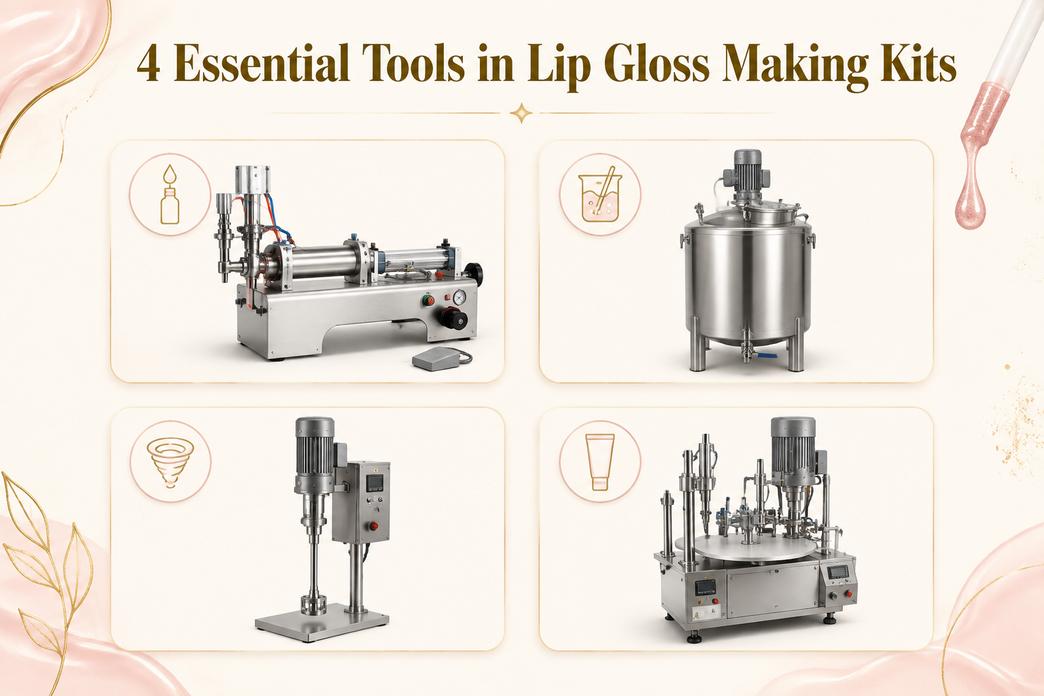
Pneumatic Filling Machine for Precise Dosing
A pneumatic filler uses compressed air to move gloss through a nozzle.
- For day-to-day production:
- Set volumetric dosing for the intended tube size.
- Adjust viscosity control when a lip gloss base becomes thicker.
- Test the accuracy before starting a full batch.
- Operate the liquid dispenser with a foot pedal, leaving both hands free for containers.
- Set volumetric dosing for the intended tube size.
For growing production, document fill settings and the first-article review in the OEM lip makeup plan.
Stainless Steel Mixing Tank for Uniform Blends
The mixing tank is a workspace for oils, mica, pigments, and moisturizers. Choose capacity and temperature control around batch processing needs.
Industrial Homogenizer to Perfectly Emulsify Oils
A homogenizer creates a high shear rate for some formulas.
- Inside the mixing head:
- A rotor stator rapidly circulates the formula.
- Smaller particle size can be assessed in trials.
- Proper emulsification is reviewed alongside texture and batch stability.
- A colloid mill can suit certain high-viscosity production setups.
- A rotor stator rapidly circulates the formula.
Tube Sealing Equipment Ensuring No Mess
After filling, match the closure method to the selected package. Thermal sealing closes compatible plastic tubes with heat, while an ultrasonic sealer uses vibration.
Some formats rely on crimping instead. ISO 22716 provides cosmetics GMP guidance covering production, control, storage, and shipment; use the selected pack and process records to support the production review.
Make scale reviewable: Precision dosing and tube sealing need one shared check around formula behavior and package fit.
Topfeel Beauty’s paste-process workflow carries sample work into first-article verification, and its formulation engineers prepare initial samples in 3-7 days. Review custom solution routes and OEM lip makeup capabilities to define the sample and pack checks needed before a production decision.
Retail Launch: Kits With Private-Label Packaging
Retail launch planning connects packaging, color, branding, and records. A clear brief supports sampling and approval.
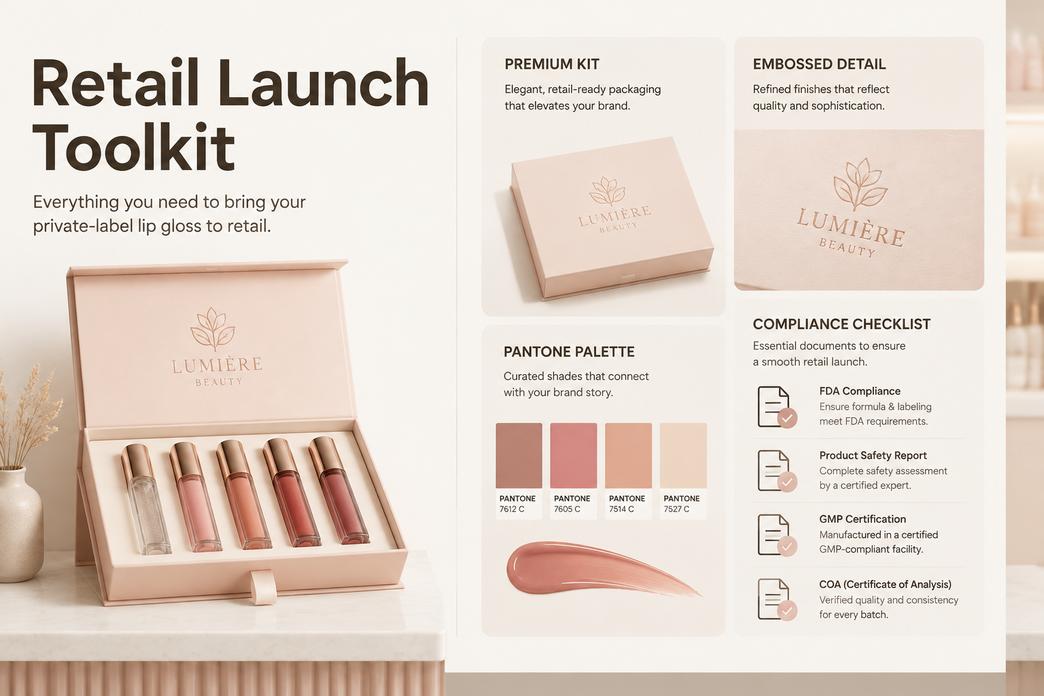
Custom Box Packaging That Tells Your Brand Story
A box communicates a brand narrative while protecting the product; white-label gloss packaging can help frame the component discussion.
- Brand presentation
- Custom typography and considered graphic design reinforce the visual identity at a glance.
- Logo printing keeps branding clear across retail displays; the FDA cosmetics labeling guide and its summary of labeling requirements are useful starting points for U.S. label planning.
- Material choices
- Eco-friendly cardboard and other sustainable materials can support packaging goals.
- A tidy layout improves the unboxing experience for gifting and social content.
Private Label Embossing for Premium Shelf Appeal
Logo debossing presses a design into the surface, while embossing raises selected details. Both create a tactile finish.
For premium retail, foil stamping, subtle metallic accents, or a luxury texture can complement custom cap finishes and signature branding.
Bespoke Color Matching to Stand Out in Retail
Signature shades need to be reviewed from sample to production.
- Shade development
- Trend analysis and color swatches establish the target.
- Pantone matching can guide packaging or shade references.
- Formula refinement
- Cosmetic pigments and mica are adjusted through controlled pigment formulation.
- Different finish types are sampled before scale-up.
- Production review
- Sample prototypes help check shade consistency before larger orders move ahead.
Regulatory Documentation Support for Easy Compliance
Retail records should be planned for the intended market.
- Ingredient disclosure and safety data sheets support product records; Great Britain notification guidance describes notification for cosmetics made available to consumers there.
- A compliance checklist can track relevant labeling requirements and cosmetic regulations; Regulation (EC) No 1223/2009 sets the EU framework, while 21 CFR Part 700 is a current U.S. cosmetics rule source.
- Safety assessment, microbial assays, heavy-metals results, and quality assurance records can support compliance review; Health Canada’s cosmetics safety resources cover cosmetics safety, advertising, labelling, ingredients, and regulation.
Requirements vary by market, so brands should confirm applicable rules with qualified local specialists before launch.
Turn a sample into a launch plan: Packaging presentation, embossing, shade matching, and market records must align before a retail kit is approved. Topfeel Beauty’s published customization process runs from consultation and sampling through packaging design, production, QC, and delivery.
Review the private-label pathway for the launch sequence. Contact Topfeel Beauty through the inquiry page with your product brief to start approvals, documents, and the next sample.
References
- Listing of Color Additives Exempt from Certification — eCFR
- ISO 22716:2007 Cosmetics – Good Manufacturing Practices — ISO
- Cosmetics Labeling Guide — FDA
- Submit a Cosmetic Product Notification — GOV.UK
- Regulation (EC) No 1223/2009 — EUR-Lex
- 21 CFR Part 700 – General — eCFR
- Cosmetic Safety — Health Canada
- Summary of Cosmetics Labeling Requirements — FDA
Post time: Aug-25-2026