
How Do You Start a Cosmetic Line With a Manufacturer?
If you’re wondering how to start a cosmetic line without blowing your budget or sanity, the real move is partnering with a manufacturer early.
Analysis from Statista and McKinsey shows contract manufacturing driving beauty brand launches, as companies prioritize speed, compliance, and scalable production over building facilities.
Pick the right partner, and you skip headaches—formulas, packaging, regulations handled—so you can focus on brand vibe and getting products on shelves.
Key Highlights: How to Start a Cosmetic Line
- Partner Early: Team up with a contract manufacturer to handle formulations, compliance, and scalable production.
- Define Core Products: Select your hero items—foundation, liticpsks, serums—aligned with market demand and brand identity.
- Budget Wisely: Account for ingredient sourcing, packaging components, stability testing, and regulatory filings in your financial plan.
- Choose Packaging: Match bottles, tubes, jars, and applicators to product viscosity, branding, and shelf-life needs.
- Enforce QA: Implement GMP standards, stability and microbial testing, and batch tracking to ensure safety, consistency, and compliance.
5 Essential Steps For Private Label Makeup Success
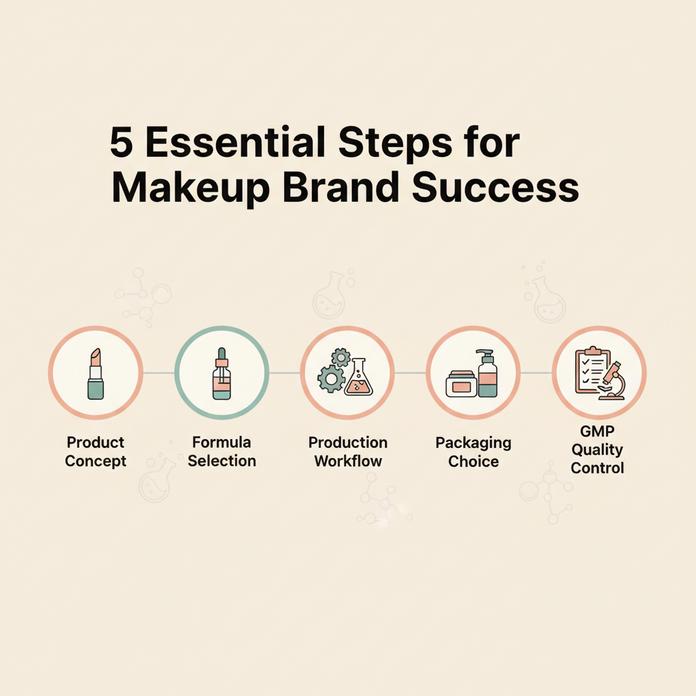
Starting strong matters. If you’re wondering how to start a cosmetic line, it’s not just about pretty packaging or trendy shades. It’s about smart planning, tight systems, and knowing exactly where your brand fits in a crowded beauty market.
Step 1: Defining Your Cosmetic Line’s Core Products
When people ask how to start a cosmetic line, the real question is: what are you actually selling?
At the core sits your product concept, shaped by clear market research and a well-defined target audience. Teen acne care? Pro-level glam? Clean beauty moms?
Key layers to lock in:
- Clarify your product categories (foundation, lip, skincare).
- Define your core offerings.
- Shape a sharp unique selling proposition.
Under each category:
-
Skin
- Coverage level
- Finish type
-
- Texture
- Wear time
A strong product differentiation strategy keeps you from blending in. If you’re exploring how to create a cosmetic brand, this is where your identity gets real.
Step 2 Selecting Serums, Foundation & Lipstick Formulas
Formula talk can sound technical, but it’s basically about feel, wear, and safety.
Your serum formulation may focus on active ingredients like niacinamide. Your foundation types range from liquid to cushion. Lipstick shades define your color palette and brand mood.
Important checkpoints:
- Smart ingredient selection
- Stable formula development
- Balanced texture
“The global beauty market continues to shift toward performance-driven and ingredient-transparent products,” notes McKinsey’s 2025 Beauty Insights report.
If you’re serious about how to start a cosmetic line, align claims with compliance. That’s how you build trust while building a makeup line that lasts.
Step 3 Developing Blending, Filling and Batching Workflows
Behind every cute bottle is a disciplined production workflow.
Break it down:
- Controlled blending process
- Accurate batching procedures
- Hygienic filling methods
Inside each stage:
-
Equipment setup
- Sanitization
- Calibration
-
Mixing
- Speed control
- Temperature checks
Strong manufacturing steps protect scalability and allow smooth process optimization. If you’re learning how to start a beauty line from scratch, operational flow makes or breaks consistency.
Step 4 Choosing Bottles, Tubes, Jars and Applicators
Packaging isn’t just cute. It’s chemistry plus function.
Consider:
- Bottle types for liquids
- Tube materials for creams
- Jar options for balms
Then go deeper:
-
Compatibility
- Material compatibility with formula
-
Branding
- Packaging design
- Shelf aesthetic
-
Use
- Smart applicator selection
- Daily functionality
If you’re mapping out how to start a cosmetic line, test packaging with real users. Leaks and clogged pumps kill repeat sales fast.
Step 5 Enforcing Quality Assurance with GMP Standards
No shortcuts here.
A solid quality assurance system rests on:
- Tight GMP compliance
- Clear documentation
- Routine testing protocols
Inside your control plan:
-
Lab checks
- Microbial testing
- pH balance
-
Production
- Batch consistency tracking
- Label verification
Meeting regulatory requirements and global safety standards protects both brand and buyer. Anyone researching how to start a cosmetic line eventually hits this truth: good quality control isn’t optional. It’s survival.
How To Start A Cosmetic Line: Budget Planning
Getting clear on numbers is the real talk behind how to start a cosmetic line. Dream formulas are fun, but cash flow keeps production alive. If you’re serious about how to start a cosmetic line, budgeting for formulation, packaging, and compliance is non‑negotiable. Let’s break down how to start your own cosmetic line without burning through capital.
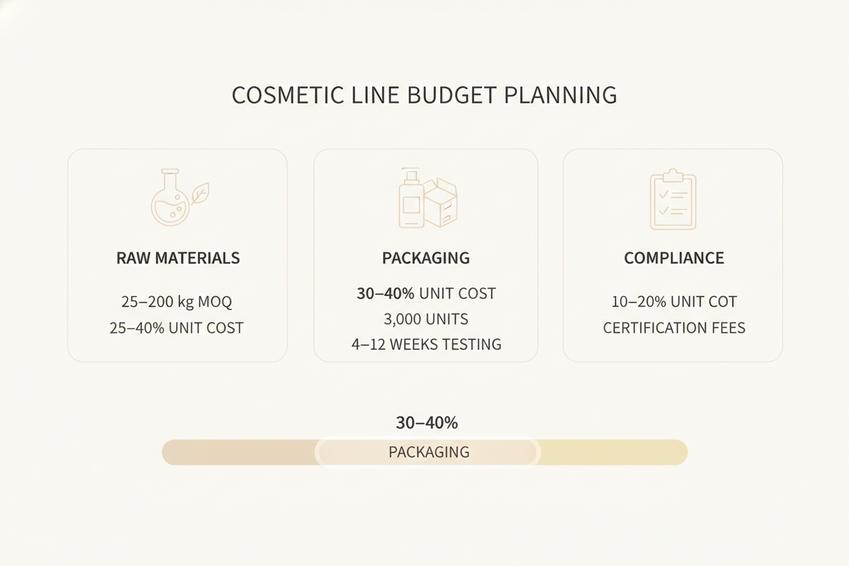
Determining Contract Manufacturing and Ingredient Sourcing Costs
When mapping out production, structure expenses in layers:
-
Raw Materials
- Base oils, actives, fragrances
- Supplier MOQs
- Price shifts in the supply chain
-
Manufacturing Agreement
- Setup fees
- Batch size pricing
- Refill or repeat order terms
-
Quality Control
- In‑house vs third‑party testing
- Documentation fees
| Cost Area | Typical MOQ | Estimated Range (USD) |
|---|---|---|
| Raw materials | 25–200 kg | 2,000–8,000 |
| Filling & assembly | 3,000 units | 0.50–1.20/unit |
| Quality control tests | Per batch | 800–2,500 |
A reliable partner like Topfeel can streamline suppliers, stabilize formulation costs, and clarify your manufacturing agreement before scaling.
Estimating Packaging Components: Caps, Cartons and Pumps
Packaging can quietly eat 30–40% of your unit cost.
- Containers: glass vs PET
- Closures and pumps: standard or custom
- Labels and cartons: print finish matters
- Stock bottles lower tooling cost.
- Custom packaging design raises brand value.
- Freight changes everything.
Quick reality: heavier containers mean higher shipping fees. Small tweak, big impact. Brands working with Topfeel often bundle sourcing for closures, labels, and cartons to cut per‑unit pricing.
Allocating Funds for Stability Testing, MSDS Sheets and Compliance
Budget compliance in tiers:
-
Product Testing
- Microbial challenge
- Basic stability studies (4–12 weeks)
-
Documentation
- Safety data sheets
- Ingredient dossiers
-
Regulatory
- US FDA listing
- EU regulatory affairs portal
- Ongoing quality assurance
Skipping compliance may save cash today, but retail buyers will ask for full documentation tomorrow. Smart founders treat testing like rent—non‑optional.
Manufacturer Vs. In-House: Which Path Wins?
If you are researching how to start a cosmetic line, this choice shapes almost every cost, timeline, and quality decision ahead. Some founders want speed and low overhead. Others want tighter control and custom production. Brands like Topfeel often discuss both paths because each one changes staffing, sourcing, compliance, and growth potential in very different ways.
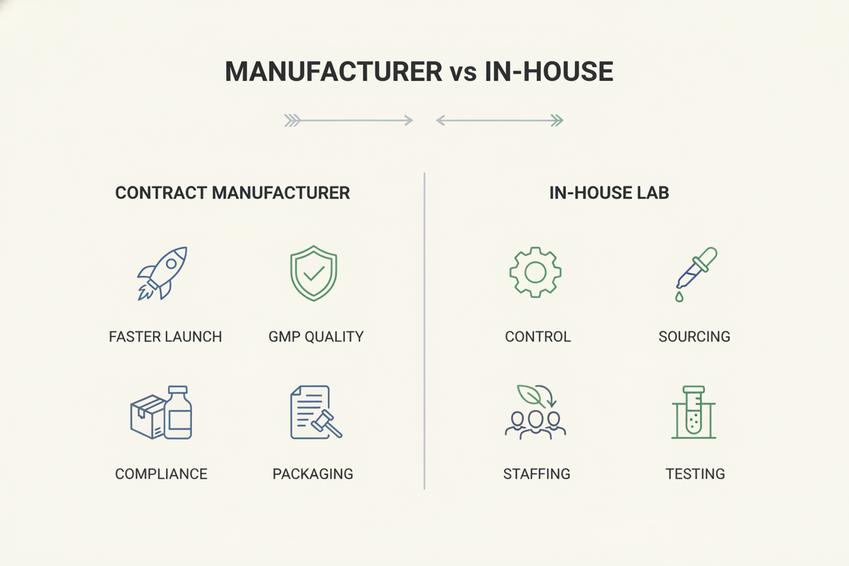
Manufacturer
For founders learning how to start a cosmetic line, contract manufacturing often removes the hardest operational headaches.
-
Product launch support
- Formulation development teams can shorten testing cycles.
- Existing quality assurance systems already follow GMP standards.
- Faster production scale helps new brands enter retail sooner.
-
Operational advantages
- Built-in packaging solutions
- Stable supply chain contacts
- Predictable lead times
-
Risk management
- Experienced labs understand regulatory adherence requirements.
- Batch tracking reduces costly recalls.
- Outside specialists usually handle stability testing and documentation.
McKinsey Beauty Insights 2025 noted that independent beauty brands increasingly rely on outsourced manufacturing to reduce launch delays and improve speed-to-market performance.
For many people asking how to start a cosmetic line, this route feels less chaotic. Topfeel supports brands that need flexibility without building a factory from scratch.
In-House
Running production internally gives deeper control, but daily operations get intense fast.
• You manage facility setup and compliance inspections.
• You handle raw material sourcing directly.
• You oversee labor recruitment, scheduling, and training.
A small team may begin with:
- Formulation creation
- Buying production equipment
- Building quality testing procedures
- Creating systems for inventory management
Some founders prefer this cosmetic business setup because product tweaks happen quickly. Others struggle with staffing pressure, maintenance costs, and evolving regulatory knowledge requirements. If your goal is learning how to start a cosmetic line with highly custom formulas, in-house production can work well, though startup costs usually rise much faster.
Shipping & Logistics: Streamline Your Makeup Rollout
Starting a beauty brand sounds fun—until boxes, customs forms, and late deliveries hit your inbox. If you’re figuring out how to start a cosmetic line, logistics can make or break the vibe. Smart shipping keeps your launch smooth and your customers happy.
Choosing Distribution Channels and Warehousing Solutions
When mapping out how to start a cosmetic line, your Distribution plan shapes cash flow and brand reach.
-
Channels
-
Direct-to-consumer
- Own site
- Social commerce
-
Retail partnerships
- Boutique stores
- Chain buyers
-
Marketplace platforms
-
-
Warehousing
-
In-house Storage
- Full control
- Higher fixed cost
-
3PL Fulfillment
- Scalable
- Lower upfront spend
-
-
Logistics Fit
- Order volume forecast
- SKU variety
- Return handling
Brands learning how to create a cosmetic line often test small-batch regional Warehousing before expanding. Topfeel supports flexible Solutions that grow with your Logistics footprint.
Managing Inventory Management and Batch Tracking
Clean Inventory Management keeps chaos away.
- Track every Batch.
- Monitor Stock weekly.
- Automate Control alerts.
- Assign lot codes.
- Sync sales channels.
- Audit monthly for Traceability.
“Beauty brands that invest early in digital inventory systems reduce compliance risk and improve recall response time,” noted McKinsey’s 2025 global beauty operations update.
If you’re serious about how to start a cosmetic line, tight tracking isn’t optional—it protects your name.
Optimizing Carrier Partnerships for Faster Delivery
Speed matters. Here’s a practical flow for Optimization:
Step 1: Compare Carrier rates across zones.
Step 2: Negotiate volume-based Freight discounts.
Step 3: Test delivery times.
Step 4: Review Transportation data quarterly.
Reliable Shipping builds trust fast. Many founders refining how to start a cosmetic line overlook this until complaints stack up.
Navigating Global Regulations Including EU Cosmetics Regulation and FDA Requirements
Going global while learning how to start a cosmetic line? Compliance drives access.
-
EU Regulations
- CPNP registration
- Ingredient review
-
FDA Requirements
- Label accuracy
- Safety substantiation
-
Import/Export Compliance
- MSDS files
- Customs codes
Miss one document and shipments stall. Topfeel helps brands align formulas and paperwork early, making global Compliance feel less intimidating and far more doable.
References
- Statista Cosmetics & Personal Care – statista.com/Statista
- Consumer Packaged Goods Insights – mckinsey.com/McKinsey
- Nicotinamide Compound Summary – nih.gov/PubChem
- Good Manufacturing Practice (GMP) Guidelines – fda.gov/FDA
- Cosmetics Laws & Regulations – fda.gov/FDA
- Cosmetics Legislation in the EU – europa.eu/European Commission
- Global Supply Chains in a Post-Pandemic World – hbr.org/Harvard Business Review
- ISO 22716:2007 Cosmetics Good Manufacturing Practices – iso.org/ISO
- Modernization of Cosmetics Regulation Act (MoCRA) – fda.gov/FDA
- Cosmetic Product Notification Portal (CPNP) – europa.eu/European Commission
- Hazard Communication Standard: Safety Data Sheets – osha.gov/OSHA
- What Is 3PL? Third-Party Logistics Explained – shopify.com/Shopify
- Global Supply Chains and Logistics – weforum.org/World Economic Forum
- European Union Cosmetics – trade.gov/International Trade Administration
- Hazard Communication Standard Safety Data Sheets PDF – osha.gov/OSHA
Post time: Jul-02-2026