

How to Apply Concealer?
When a tiny tube hides sleepless nights, true beauty brands know it’s chemistry. Perfect your private-label game with concealer that performs.
Concealer is the quiet overachiever in every makeup bag—the tiny tube that promises eight hours of sleep in eight quick dabs. Yet one wrong swipe and it cakes up like overbaked frosting, settling into lines you didn’t even clock this morning. That frustration? It’s not user error. It’s chemistry, texture, and technique colliding in broad daylight.
Application tells a bigger story. When a formula drags, creases, or fades by lunch, it signals gaps in design and testing. For private label buyers, performance shows up in the blend.
So here’s where we cut through the fluff and get to what actually works—and why.
Concealer Clarity: Quick Answers
-
Opt for a formula—liquid, cream, stick, pot or serum—based on desired coverage and skin type.
-
Match shade by undertone and depth; test on jawline to avoid gray cast or mismatch.
-
Prep with hydrating, fragrance-free primer; blend with a damp sponge or brush for seamless finish.
-
Set lightly with translucent powder and avoid over-application to prevent creasing and build–up.
Types Of Concealer Formulas Explained
Concealer sounds simple, right? Just swipe and go. But the world of con-ceal-er formulas is actually stacked with options. From liquid concealer to balm corrector, each concealer type hits differently. If you want smoother under-eyes and spot-on blemish control, this breakdown keeps it real and easy.
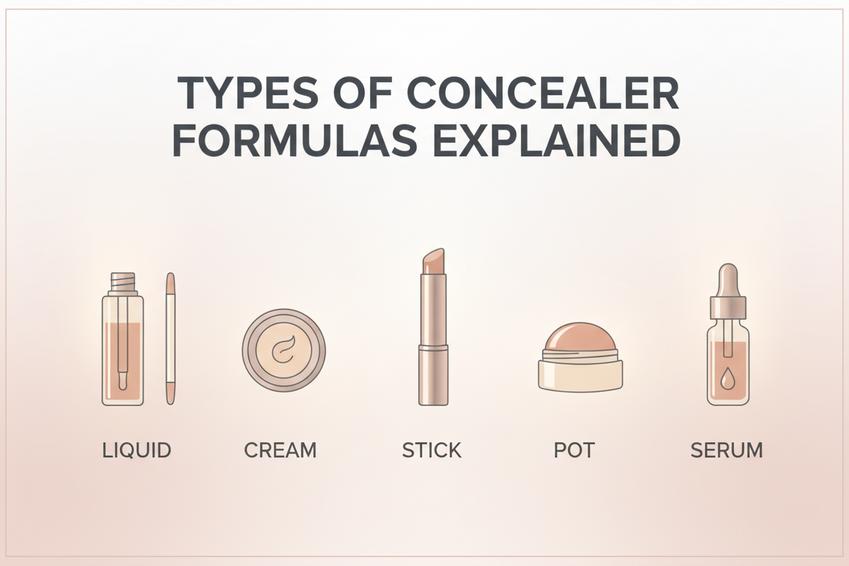
Liquid Concealer with Buildable Coverage and Doe-Foot Applicator
When it comes to liquid concealer, versatility is the vibe.
-
Core Formula Traits
-
Texture & Finish
-
lightweight formula that feels breathable
-
blendable consistency for seamless edges
-
Soft natural finish that doesn’t cake
-
-
Coverage Control
-
True buildable coverage from light to medium-full
-
Layers smoothly without cracking
-
-
-
Application Design
-
Tool Advantage
-
doe-foot applicator allows precise dotting
-
Works for under-eye concealer placement
-
-
Target Areas
-
Dark circles
-
Redness around the nose
-
Minor blemishes needing flexible cover
-
-
For brands like Topfeel Beauty, this con ceal er style stays popular because it suits beginners and pros. A solid liquid cover-up adapts to fair and deep tones, making everyday makeup feel effortless.
Cream Concealer in a Compact: Hydrating, Medium Coverage
A cream concealer in compact packaging feels classic but still current. The hydrating formula works great on dry patches and under-eye lines. Skin looks smoother, not heavy.
Why people reach for this concealer:
-
Medium payoff with a creamy texture
-
Easy tap-and-press blending
-
Soft radiant finish that brightens dull areas
-
Swipe finger or brush.
-
Warm product slightly.
-
Press onto hyperpigmentation.
This type of cover stick alternative gives balanced correction without going full glam. It’s a smart face concealer choice when you want even tone but not thick layers.
Stick Concealer: Long-Wearing, Crease-Resistant Formula
The stick concealer is all about control and staying power.
-
Performance Features
-
Wear & Finish
-
long-wearing hold for busy days
-
crease-resistant under movement
-
Soft matte finish for shine control
-
-
Pigment Strength
-
Reliable full coverage for acne marks
-
-
-
Practical Benefits
-
Packaging
-
Twist-up tube
-
Travel-friendly
-
-
Application
-
Direct glide for easy application
-
Ideal for spot concealer touch-ups
-
-
For on-the-go routines, this concealer pen style format keeps things quick. Topfeel Beauty designs stick options that lock in place without drying out the skin.
Pot Concealer Balm for Targeted Full Coverage
A pot concealer with a balm formula means business.
-
Texture & Density
-
rich texture built for strong pigment
-
Designed for targeted coverage
-
-
Best Use Areas
-
Under-eye discoloration
-
Stubborn blemish correction
-
Deep hyperpigmentation
-
Application flow:
-
Pick up small amount with brush.
-
Tap onto concern area.
-
Blend edges only.
This concealer works like a precision corrector. When full glam is the goal, this full coverage style keeps everything locked and flawless.
Serum-Based Concealer: Lightweight, Non-Comedogenic Finish
A serum concealer blends makeup and skincare in one smooth move. The lightweight texture feels barely there, yet it still offers gentle cover.
Key highlights:
-
non-comedogenic formula for breakout-prone skin
-
Flexible sheer coverage that evens tone
-
Subtle hydrating effect for fresh glow
-
Real skin-like finish that moves naturally
-
Tap under eyes.
-
Blend with sponge.
-
Add thin layer if needed.
This concealer type is perfect for no-makeup makeup days. Topfeel Beauty keeps this con-ceal-er option breathable, so skin looks like skin—just brighter and more awake.
3 Steps To Flawless Concealer Blending
A good concealer can totally change your vibe. But flawless blending? That’s the real glow-up. From picking the right concealer shade to setting your under eye concealer so it lasts all day, here’s how to get that smooth, no-crease finish without the drama.
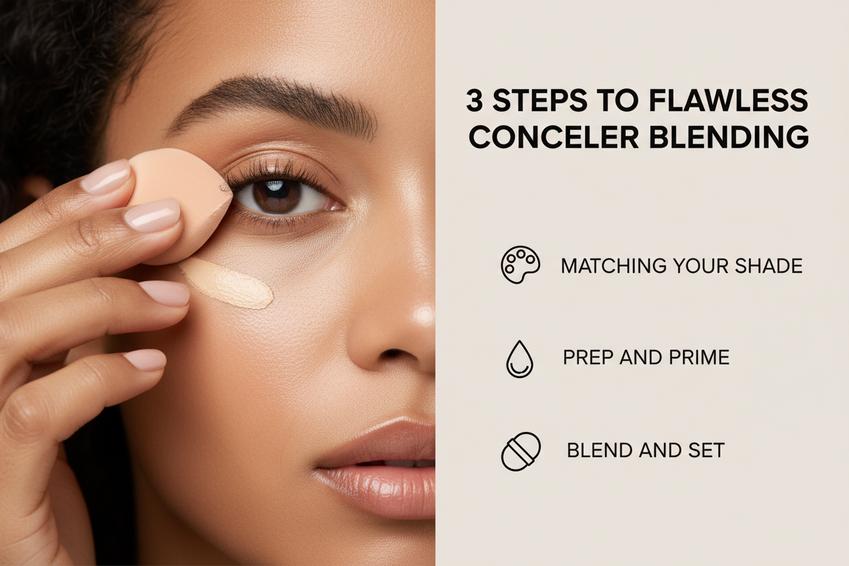
Step 1 Matching Your Shade: Undertone and Depth Selection
Getting your concealer shade right isn’t guesswork. It’s strategy.
-
Start with undertone identification
-
Cool: pink, red, or bluish hints under the skin tone
-
Warm: golden, peachy, or yellow tones
-
Neutral: a balanced mix of both
-
Quick tip: check veins at your wrist
-
Green = warm
-
Hard to tell = neutral
-
-
-
Then move to depth selection
-
Fair to light
-
Medium to tan
-
Deep to rich
-
Your foundation match matters here
-
Spot-concealing? Match foundation exactly
-
Brightening under eyes? Go 0.5–1 shade lighter
-
-
A mismatched face concealer can turn dark circles gray or make blemishes pop more. That’s not the goal. A well-matched makeup concealer blends into your natural skin tone, so it looks like skin—just better. Brands like Topfeel Beauty focus heavily on precise color matching, which makes finding your ideal concealer way less stressful.
“Consumers increasingly prioritize precise shade alignment and undertone accuracy when purchasing complexion products,” noted Mintel in its 2025 Global Beauty and Personal Care Trends report, highlighting the shift toward exact-match concealer and foundation pairings.
Step 2 Prep and Prime: Hydrating, Fragrance-Free Base
Blending starts before the concealer even touches your face.
-
Build a smooth base
-
Apply a hydrating moisturizer suited to your skin type
-
Tap in lightweight eye cream under the eyes
-
Focus on fine lines
-
Let it absorb fully
-
-
-
Choose the right prep layer
-
Use an under eye primer if creasing is common
-
Keep it fragrance-free to avoid irritation
-
Especially important for sensitive under-eye areas
-
-
-
Check formula compatibility
-
Liquid concealer + lightweight primer
-
Cream concealer + slightly gripping base
-
The goal: a smooth base without pilling
-
-
Good skin preparation keeps your concealer from cracking or sliding off by noon. When skin feels balanced—not dry, not greasy—your under eye concealer glides on easily. Topfeel Beauty formulas are designed to sit comfortably over skincare, which makes layering simple and fuss-free.
Step 3 Blend and Set: Cream-to-Powder Techniques for Longevity
Now for the magic: concealer blending.
-
Apply strategically
-
Dot, don’t drag
-
Focus on inner under-eye corners and blemish centers
-
-
Blend with intention
-
Use a damp makeup sponge or beauty blender
-
Press and bounce
-
Avoid wiping motions
-
-
Prefer tools? Try brush application
-
Small, dense brush for spot coverage
-
Fluffy brush for diffused edges
-
-
-
Lock it in with cream-to-powder balance
-
Lightly tap setting powder
-
Concentrate on crease-prone zones
-
Under eyes
-
Smile lines
-
-
True concealer blending is about thin layers. Build slowly. Let each layer settle. A cream formula that softly sets into a powder finish boosts longevity without making texture obvious.
When your makeup concealer melts into the skin and stays put for hours, that’s the sweet spot. With the right tools and a well-formulated concealer like those from Topfeel Beauty, blending feels less like work and more like a quick flex before you head out the door.
Why Is My Concealer Creasing?
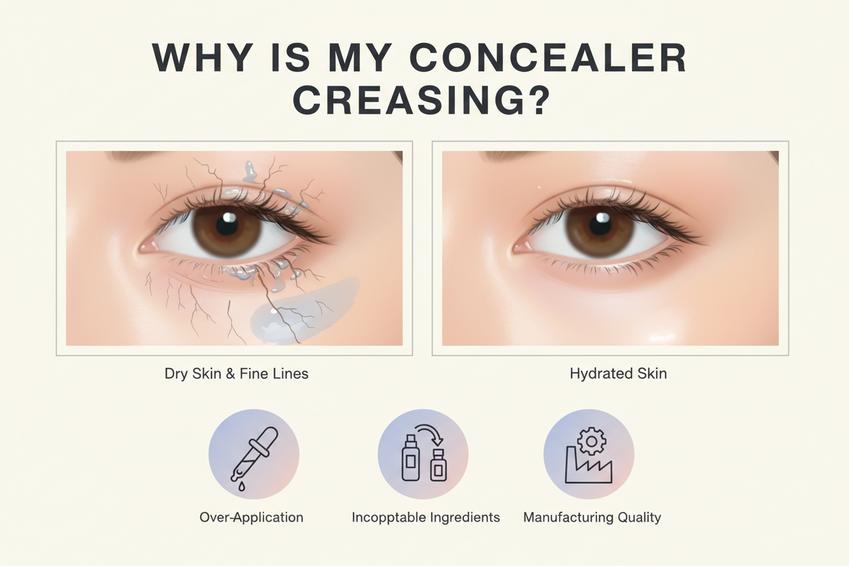
A good concealer should smooth things out, not call attention to every tiny line. If your under-eye concealer keeps cracking or settling, the issue usually isn’t random. It’s skin prep, formula choice, or even how the concealer was made.
Dry Skin or Fine Lines Causing Patchy Settling
When a concealer starts separating, look closely at your skin condition.
-
Core skin factors
-
-
Low moisture weakens the moisture barrier
-
Pigment grips onto dry patches
-
-
-
Natural folds in the under-eye area
-
Deepened by dehydration
-
-
Crepey texture
-
Thin skin exaggerates settling
-
Leads to visible patchiness
-
-
-
Why this affects your cover-up
-
Liquid concealer seeps into micro-lines
-
Cream concealer clings to rough texture
-
Even a brightening concealer can look dull
-
A hydrating base helps your concealer glide instead of bunching up.
Over-Application of Full Coverage Formulations
Too much product is a common slip-up.
-
Product load issues
-
Excess concealer amount
-
Creates product buildup
-
Increases visible texture
-
-
Thick layers of heavy coverage formulas
-
Limit flexibility
-
Speed up creasing
-
-
-
Technique fixes
-
Apply minimal dots
-
Tap and press for better blending
-
Build only where needed
-
A lighter hand keeps your concealer and corrector looking fresh instead of cakey.
Incompatible Primer or Moisturizer Ingredients
Not all formulas play nice.
-
Base conflicts
-
Skincare ingredients mismatch
-
Silicone-rich primer formula
-
Water-heavy moisturizer base
-
-
Oil vs water-based concealer clashes
-
Leads to product interaction
-
Triggers pilling
-
-
-
Result on wear
-
Reduced grip
-
Uneven spread
-
Shorter-lasting concealer finish
-
Pair similar bases so your under-eye concealer stays smooth.
Skipping Quality Control: How Manufacturing Impacts Wear
Sometimes the issue isn’t your routine.
-
Behind-the-scenes factors
-
Weak concealer formula structure
-
Poor pigment dispersion
-
Inconsistent manufacturing process
-
Uneven texture consistency
-
Reduced product stability
-
-
-
Wear performance impact
-
Shorter wear time
-
Increased settling
-
Shade inconsistency
-
Reliable production keeps your concealer from sliding, cracking, or fading halfway through the day.
FAQs
What concealer formulations work best for different skin concerns?
The right concealer starts with texture and purpose:
-
Liquid (with doe-foot applicator or wand): buildable, blendable, ideal for dark circles and uneven skin tone.
-
Cream in compact: hydrating, medium to full coverage for fine lines and dryness.
-
Stick: long-wearing, crease-resistant, easy on redness and blemishes.
-
Pot balm: dense full coverage for hyperpigmentation.
-
Serum with pump or tube: lightweight, non-comedogenic, natural finish for daily wear.
Each format serves a different rhythm of life—from quick morning touch-ups to professional artistry.
How should private label brands plan concealer shades for bulk production?
Shade design must feel human, not mechanical. A balanced range includes:
-
Depth levels: fair, light, medium, tan, deep
-
Undertone balance: cool, warm, neutral
-
Consistent pigment dispersion through strict quality control
Strong formulation development, stable ingredient sourcing, and reliable OEM processes keep every bulk batch aligned—so customers experience the same tone, every time.
Why does concealer crease or fade during wear?
Creasing often reflects the relationship between skin, formula, and prep:
-
✦ Dehydrated under-eyes need a hydrating, serum or cream base
-
✦ Thick full coverage layered too heavily settles into fine lines
-
✦ Mismatch between primer and formula (water vs. silicone) reduces wear
-
✦ Weak quality control affects texture stability
A well-balanced, dermatologist-tested and paraben-free formula helps maintain smooth, long-wearing performance without heaviness.
What ingredient and packaging features attract modern consumers?
Today’s buyers look beyond coverage. A successful private label concealer often combines:
-
Skin-first properties: vegan, cruelty-free, fragrance-free, non-comedogenic
-
Comfort wear: buildable yet crease-resistant texture
-
Practical packaging: tube with doe-foot applicator for precision, compact for portability, pump for serum control
When performance meets thoughtful packaging, concealer becomes more than correction—it becomes confidence in a small, carefully designed form.
References
-
Safe Makeup for Sensitive Skin – American Academy of Dermatology
-
Skin Barrier Repair and Management – Journal of Clinical and Aesthetic Dermatology
Post time: Mar-18-2026