
What are the Different Types of Powder?
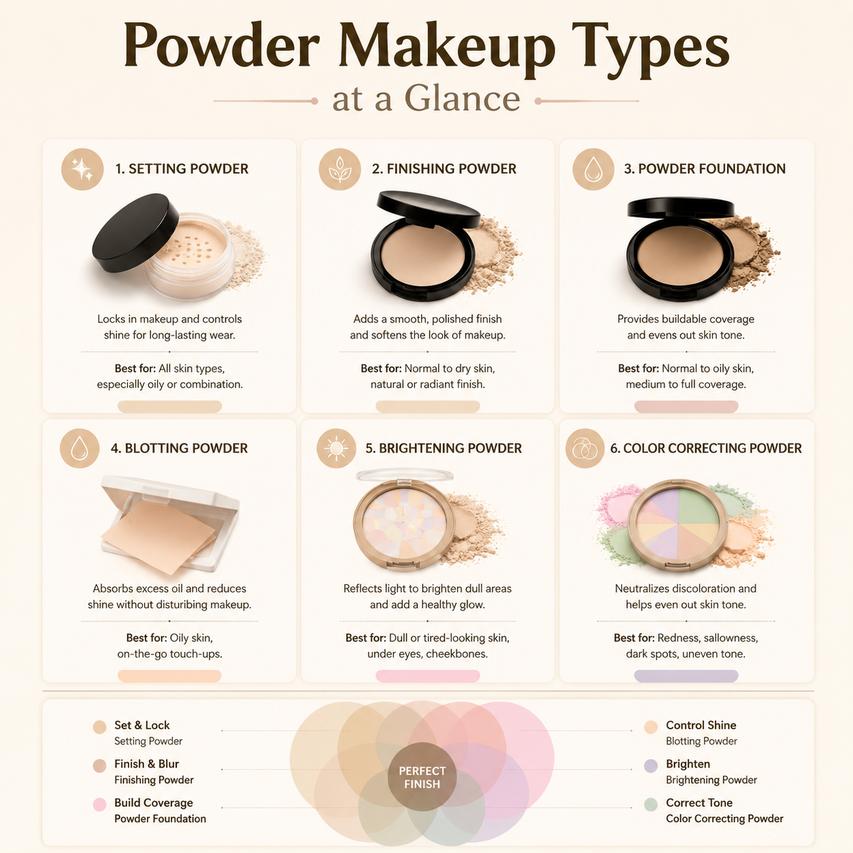
Powder makeup names may identify physical format, product job, color effect, or finish. Loose and pressed describe format; setting, foundation, and blotting describe function; translucent, matte, and radiant describe appearance.
For beauty brands and private label buyers, separating these categories helps define the formula brief, coverage, shades, packaging, applicator, and message before sampling.
Powder Makeup Types at a Glance
| Powder type | Main purpose | Usual format | Coverage | Product-development focus |
|---|---|---|---|---|
| Setting powder | Set foundation and concealer | Loose or pressed | Sheer | Finish, shade effect, powder pickup |
| Finishing powder | Refine the final complexion look | Loose or pressed | Sheer | Soft-focus or radiance direction |
| Powder foundation | Add visible complexion coverage | Usually pressed | Light to buildable | Shade range, pan performance, applicator |
| Blotting powder | Control shine during touch-ups | Usually pressed | Minimal | Compact portability and clear payoff |
| Brightening powder | Add a lighter-looking effect to selected areas | Loose or pressed | Sheer | Undertone, placement guidance, shade testing |
| Color-correcting powder | Balance the appearance of selected complexion tones | Loose or pressed | Sheer | Color role, application guidance, claims review |
The categories can overlap: a product can be pressed, translucent, and designed for setting with a natural finish.
First, Choose the Powder Format
Loose Powder
Loose powder is a free-flowing product that is commonly packed in a jar with a sifter or dispensing insert. It is often used for setting makeup, baking, light finishing, or loose mineral foundation.
This format can support a fine application, but the package needs to control powder flow. Review the sifter opening, closure fit, puff space, and pickup amount during development. A loose setting powder guide can help teams compare dispensing requirements before sampling.
Loose powder is commonly selected for:
- Translucent setting powder
- Tinted setting powder
- Brightening powder
- Loose mineral foundation
- Lightweight finishing powder
Pressed Powder
Pressed powder is compressed into a solid pan or cake. It is usually placed in a compact, often with a mirror and an applicator. This makes it practical for portable use and makeup touch-ups.
For a pressed formula, the pan and compact are functional components. Check powder pickup, pan hardness, applicator compatibility, and closure performance during sampling. A pressed powder route gives a brand a place to review compact and setting-product requirements.
Pressed powder is commonly used for:
- Powder foundation
- Compact setting powder
- Blotting powder
- Pressed finishing powder
- Bronzer, blush, and highlighter
Format clarity first: Loose and pressed powders create different dispensing, pan, applicator, and portability decisions. Topfeel Beauty’s one-stop service connects formula development with packaging design and manufacturing.
Explore custom solutions and the setting powder route to decide which format is ready for sampling.
Next, Define What the Powder Is Designed to Do
Setting Powder
Setting powder is applied over liquid or cream complexion makeup, including foundation and concealer. It is designed to set the makeup layer and help reduce an overly fresh or shiny appearance.
Loose setting powders are often used for full-face application and detailed work around the under-eye area. Pressed setting powders are more commonly used for touch-ups. A product brief should state whether the intended result is translucent, tinted, natural, soft matte, or more visibly shine-controlled. Brands can settreview ing powder options while defining the intended finish.
Finishing Powder
Finishing powder is generally used as the last complexion step. Its role is to refine the overall visual result rather than provide significant coverage.
Depending on the formula, a finishing powder may support a softer-looking surface, less visible shine, or a subtle radiant effect. Position it clearly as a setting product, finishing product, or hybrid.
Powder Foundation
Powder foundation is a complexion product designed to provide more coverage than setting or finishing powder. It is usually offered in skin-tone shades and may be worn on its own, over liquid foundation, or for touch-ups.
Shade development is central to this category. The formula needs to suit planned undertones and skin depths, while the compact supports the application method. A face makeup manufacturing route helps buyers organize shade, coverage, applicator, and compact decisions.
Before sampling, define:
- Target coverage: sheer, light, medium, or buildable
- Intended application tool: brush, puff, sponge, or more than one option
- Shade-range plan and undertone strategy
- Dry-use or damp-sponge use, when the formula is designed for it
- Compact format, pan size, and refill concept
Blotting Powder
Blotting powder is intended for on-the-go shine control. It is commonly pressed and supplied in a slim compact because portability is central to its use.
Unlike powder foundation, blotting powder is generally applied lightly over existing makeup rather than built for complexion coverage. Product descriptions should state this distinction clearly. It helps customers choose the right product and prevents a touch-up compact from being mistaken for a full-coverage face powder.
Brightening and Color-Correcting Powders
Brightening powders are usually tinted to create a lighter-looking effect in selected areas, such as the under-eye area or high points of the face. Color-correcting powders use a specific color direction, such as yellow, peach, pink, lavender, or green, for a defined makeup step.
These products need careful communication. The shade, intended placement, and expected coverage should be stated clearly on the product page and outer packaging. Application guidance should match the formula’s actual effect.
Then, Specify Color Effect and Finish
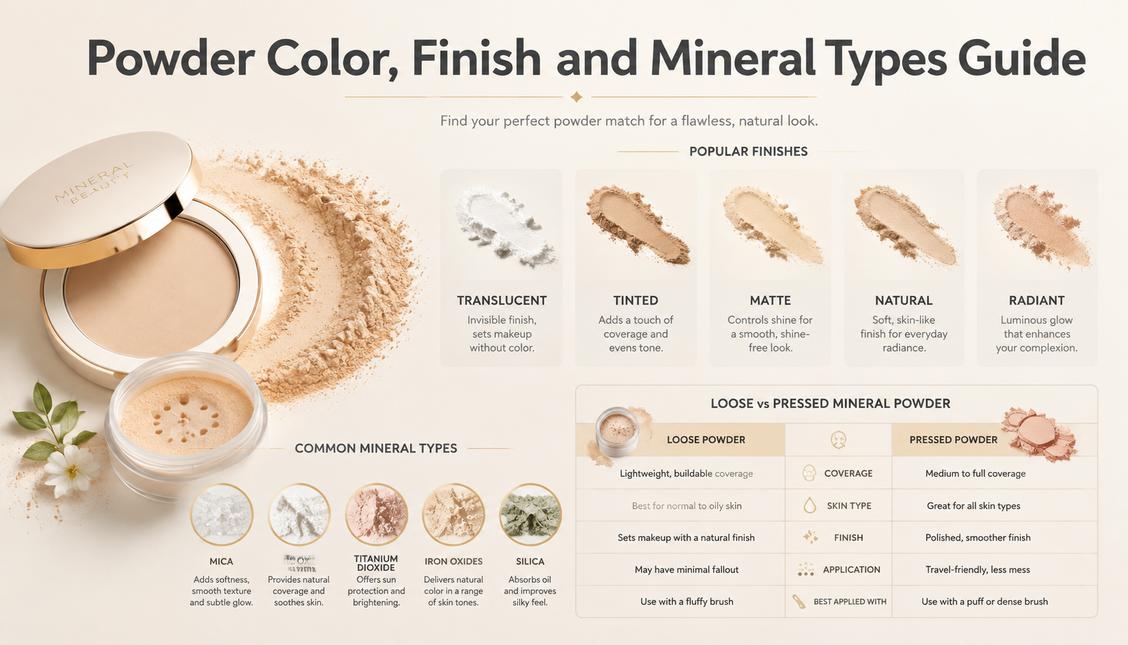
These terms define how the powder looks after application rather than replacing its function.
Translucent and Tinted Powder
Translucent powder is made to apply with little visible color coverage. It is commonly used to set makeup without substantially changing the foundation shade underneath.
Tinted powder contains visible pigment. It may support a particular complexion shade, add a brightening effect, or provide a small amount of additional coverage. A translucent or tinted product can be supplied in either loose or pressed form.
For both types, test the intended shade range and normal application levels. Product claims and ingredient statements should match the FDA cosmetics framework and cosmetics labeling guide.
Matte, Natural, and Radiant Finish
Matte powders are designed for a more shine-reducing look. Natural-finish powders aim for a balanced complexion result without looking strongly matte or visibly luminous. Radiant powders include light-reflecting components that create a glow effect.
Finish selection should match the product’s role; a finishing powder and highlighter need different payoff and application guidance.
Mineral Powder
Mineral powder is a formula category rather than a single format, coverage level, or finish. It may be supplied as a loose foundation, pressed foundation, setting powder, or finishing powder.
Because the term can be interpreted differently, state whether the product is loose or pressed, its coverage, and intended use. Review claims and ingredient communication against the actual formula using a relevant cosmetic ingredient safety review. For titanium-dioxide concepts, review public ingredient safety literature; for talc-containing concepts, use specific talcum powder information.
How to Select the Right Powder Category for a Brand
Start with the product job rather than the broad label “face powder.”
- Choose a loose translucent setting powder for a lightweight full-face setting step.
- Choose a pressed blotting powder for portable shine-control touch-ups.
- Choose a powder foundation for a shade-based complexion product with visible coverage.
- Choose a brightening powder for a targeted under-eye or high-point application.
- Choose a radiant finishing powder for a light-reflecting final complexion effect.
Brands should decide the target customer, coverage, shade strategy, applicator, and whether to launch a single SKU or coordinated range. A base-makeup planning guide helps carry that decision into packaging and production.
Packaging Planning for Different Kinds of Powder
Powder packaging should be selected around application behavior, formula format, and the desired customer experience.
Loose powder usually needs a controlled jar, secure cap, and room for a puff where appropriate. Pressed powder needs a compatible pan, reliable closure, and an applicator layout that protects the product surface.
For a color cosmetics project, define market files as well as packaging. Review the EU cosmetics framework, EU claims criteria, Health Canada guidance and labeling rules, Great Britain guidance, and ISO 22716 with its public text. Packaging discussions may include:
- Compact shape and pan configuration
- Mirror, puff, sponge, or brush options
- Custom color and surface-decoration direction
- Logo placement
- Refillable or replaceable pan concepts
- Secondary packaging aligned with the product range
Less packaging rework: Align the package before production.
A powder range has to coordinate formula format, pan or sifter behavior, applicator space, decoration, and market-facing claims. Topfeel Beauty’s one-stop service combines packaging design with manufacturing and quality control. Sampling is documented as approximately 3-7 days. Review the custom-solutions process with the face-makeup route to prepare a complete packaging brief.
Build a Clearer Powder Product Brief
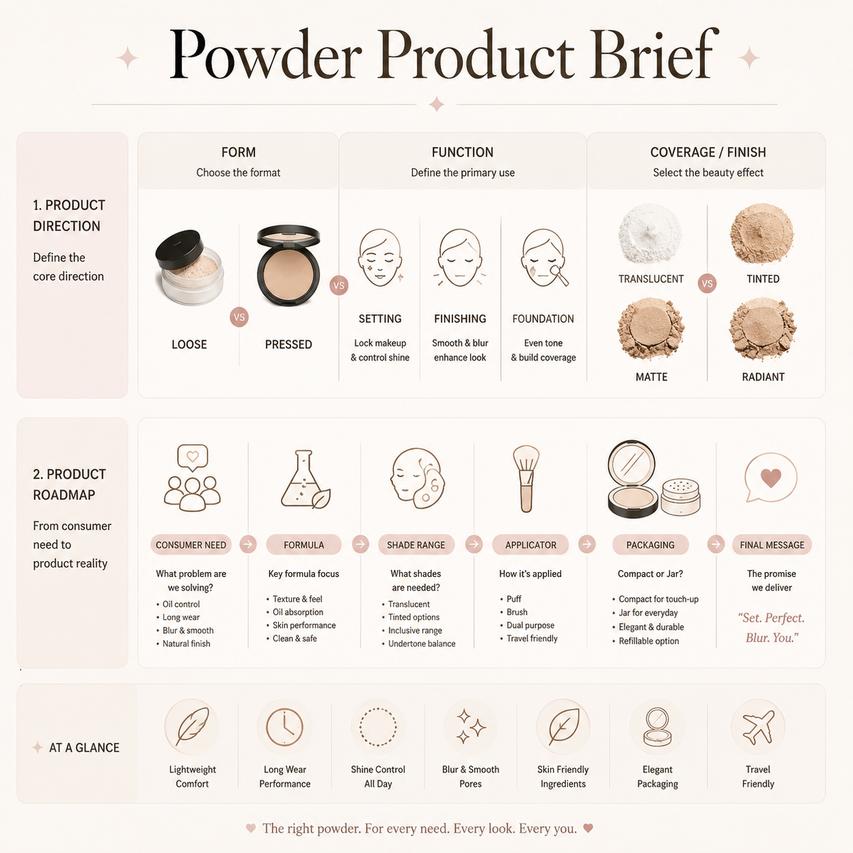
The different kinds of powder become easier to manage when format, function, color effect, and finish are defined separately. Loose and pressed describe physical form. Setting, finishing, foundation, blotting, brightening, and color-correcting describe the product job. Translucent, tinted, matte, natural, and radiant define how the product appears after application.
For a new powder project, begin with the use case and work outward to the formula, shade range, applicator, package, and product message.
Contact a color cosmetics manufacturing partner with the category, finish, coverage, shade plan, and packaging preference before sampling.
FAQs
What is the difference between loose powder and pressed powder?
Loose powder is free-flowing and usually packed in a jar. Pressed powder is compressed into a pan, commonly inside a compact. Either format can be used for setting, finishing, or complexion products.
Is setting powder the same as finishing powder?
Not always. Setting powder is primarily used to set foundation and concealer. Finishing powder is generally used at the end of the routine to refine the final complexion appearance.
Which powder type provides the most coverage?
Powder foundation is the type most commonly developed for visible complexion coverage. Tinted powders may add light coverage, while translucent setting and finishing powders are generally intended for a lighter effect.
Can a powder be pressed and translucent at the same time?
Yes. Pressed describes the format, while translucent describes the powder’s color effect. A translucent powder may be loose or supplied in a pressed compact.
Which powder is best for a portable touch-up product?
Pressed blotting powder or pressed setting powder is often selected for touch-ups because the compact format is easier to carry. The final choice depends on whether the product is intended mainly for shine control, setting, or light complexion coverage. Brands can also review this pressed and loose powder comparison when preparing a format brief.
Clearer brief, faster start: Organize the core decisions first.
Could your brief distinguish loose from pressed format and setting from finishing function? It should also connect shade, applicator, packaging, and market claims before sampling. Topfeel Beauty’s customization process covers consultation, sampling, packaging design, production, quality control, and delivery. Submit your powder requirements to start a consultation with those decisions organized.
References
- Cosmetics — FDA
- Cosmetics Labeling Guide — FDA
- Cosmetic Products Regulation — EUR-Lex
- Common Criteria for Cosmetic Claims — EUR-Lex
- ISO 22716:2007 — ISO
- ISO 22716 Online Browsing Platform — ISO
- CIR Reports — Cosmetic Ingredient Review
- Cosmetics — Health Canada
- Labelling of Cosmetics — Health Canada
- Safety of Titanium Dioxide Nanoparticles in Cosmetics — PubMed
- Making Cosmetic Products Available to Consumers in Great Britain — GOV.UK
- Talcum Powder and Cancer — American Cancer Society
Post time: Aug-28-2026