
What Does a Cosmetics Factory Do for Beauty Brands?
Minimalist packaging design looks calm on the shelf, but behind that clean face, brands are sweating bullets over leaks, spoilage, and scaling production without chaos creeping in.
The fix sits in smart airless systems and factories that act like partners, keeping formulas safe, costs steady, and launches from going off the rails completely.
Harmony Notes: Minimalist Packaging Design Essentials
→ Streamlined Production: Leverage injection and blow molding automation for fewer parts, faster cycles, and consistent quality.
→ Material Optimization: Screen PP, PET, PCR, and biodegradable plastics for durability, clarity, and eco-friendly credentials.
→ Airless Innovation: Integrate piston-seal bottles to prevent contamination, control dosage, and extend shelf life.
→ Surface & Sustainability: Evaluate matte, frosted, or soft-touch finishes alongside PCR content, recyclability, and waste reduction.
5 Secrets Behind A Factory’s R&D Process
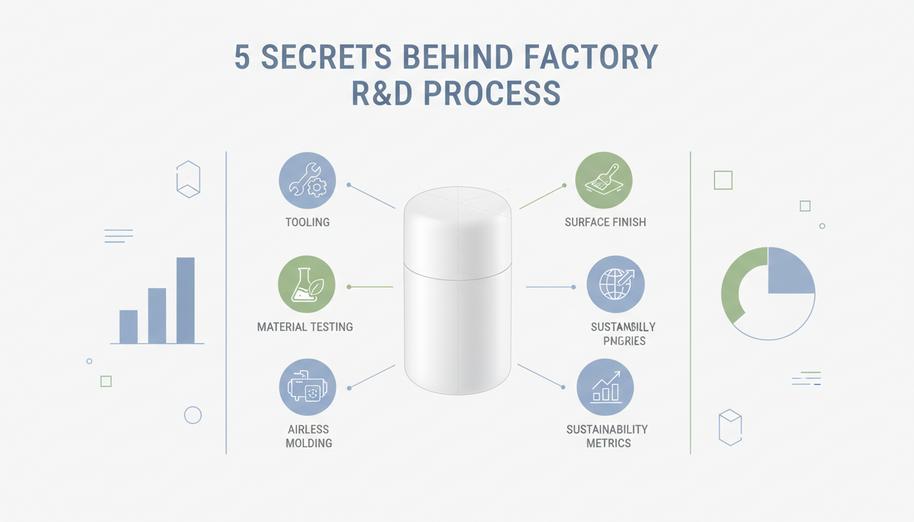
R&D inside a packaging factory isn’t lab-coat mystery stuff. It’s practical, fast-moving, and tightly linked to minimalist packaging design trends. From tooling tweaks to sustainability math, every move shapes cleaner lines, lighter forms, and smarter packaging design decisions.
Advanced Tooling Design for Injection Molding Prototypes
When engineers talk about mold design, it often connects directly to minimalist packaging design goals—thin walls, fewer parts, clean geometry.
- Faster prototype development
- Reduced draft angles in injection molds
- Precision alignment of mold cavities
- Concept sketch aligned with minimal packaging design intent
- CAD refinement by tooling engineering
- Trial runs for critical plastic parts
- Adjustment within the manufacturing process
Under tooling optimization:
-
Core structure
- Single-cavity pilot mold
- Multi-cavity scaling plan
-
Surface detailing
- Micro-texture control
- Gate mark minimization
-
Automation fit
- Robotic arm clearance
- Assembly torque testing
Good tooling quietly supports minimalist packaging design by cutting excess ribs and snaps. Less clutter. Better flow. Rapid prototyping keeps updates quick without blowing the budget.
Material Screening: PP, PET, and Biodegradable Plastic Trials
Material selection drives both feel and footprint. In polymer science labs, teams compare:
- Polypropylene
- Polyethylene terephthalate
- Emerging bioplastics
Testing often covers:
- Drop resistance
- Chemical stability
- Transparency retention
- Compatibility with sustainable packaging design
Nested evaluation logic:
-
Performance
- Stress crack testing
- UV exposure cycles
-
Sustainability
- Recyclability of plastic resins
- Carbon score of sustainable materials
-
Cost balance
- Resin yield per gram
- Scrap recovery rate
Minimalist packaging design benefits from lighter resin loads and fewer material blends. That makes recycling easier and keeps the look sharp and simple.
Customized Airless Bottle Prototypes with Blow Molding Automation
In airless packaging, function and clean aesthetics meet. The blow molding process shapes smooth walls ideal for minimalist packaging design.
Key checkpoints:
- Piston seal precision
- Even wall thickness
- Vacuum retention stability
Process flow:
- Preform heating
- Automated expansion
- Trim and leak testing
- Integration into automated production
Under packaging solutions planning:
-
Structure
- Inner pouch integrity
- Valve calibration
-
Design
- Slim bottle design profile
- Label-free surface options
-
Manufacturing
- Cycle time control
- Scrap ratio tracking
The result? Custom containers that protect serums while keeping packaging design minimal and sleek.
Surface Finish Assessments in Matte, Frosted, and Soft-Touch Variants
Texture shapes perception. For minimalist packaging design, subtle wins over flashy.
- Matte finish
- Frosted finish
- Soft-touch coating
Evaluation layers:
-
Aesthetic properties
- Light diffusion levels
- Color depth consistency
-
Tactile experience
- Friction coefficient
- Smudge resistance
-
Production fit
- Ink adhesion
- Hot stamping tolerance
A soft-touch coating can elevate simple packaging design without adding visual noise. The trick is balance—quiet style, durable execution.
Evaluating Sustainability Metrics like PCR Content and Waste Reduction
Sustainability assessment now sits at the core of minimalist packaging design.
Core metrics:
- Percentage of post-consumer recycled content
- Material weight reduction
- Energy use per unit
- Waste management efficiency
Structured review:
-
Environmental impact
- CO₂ per thousand units
- Water usage
-
Circular economy alignment
- Mono-material design
- Ease of disassembly
-
Green manufacturing controls
- Regrind reuse rate
- Resource efficiency audits
Less material. Fewer layers. Smarter forms. Minimalist packaging design isn’t just a style—it’s a measurable shift toward eco-friendly materials and long-term circular thinking.
In-House Vs. Contract Production
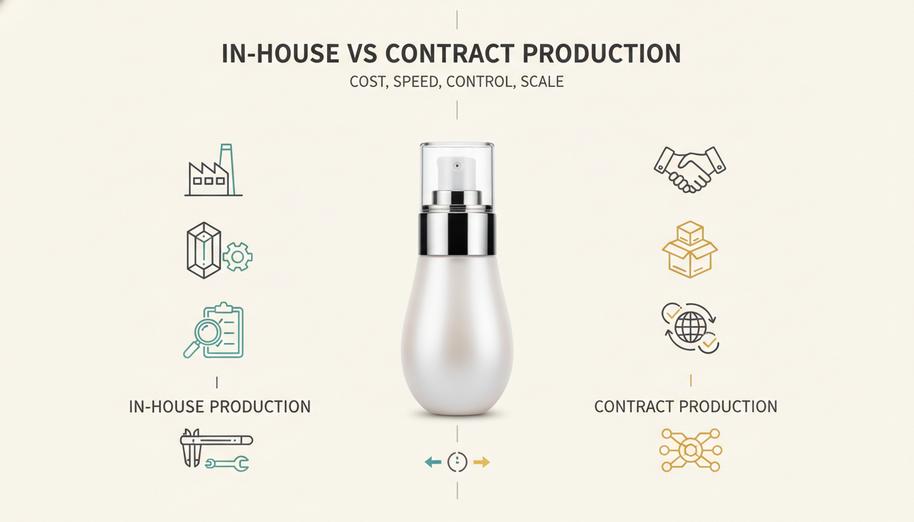
Smart brands know that minimalist packaging design is not just about clean looks; it’s about how and where production happens. When your packaging design is sleek, minimal, and purpose-driven, the production model shapes cost, speed, and creative freedom. Let’s break it down in plain terms.
In-House Production
Brands pursuing minimalist packaging design often prefer internal control. Clean lines and minimal packaging design demand precision; one flaw in molding or finishing shows immediately.
- Control over tooling and surface finish
- Tighter quality assurance loops
- Direct link between research and development and factory output
At the operational level:
- Manufacturing facility alignment with design goals
- Streamlined supply chain management
- Protection of proprietary formulas
When production sits under one roof, vertical integration supports minimalist packaging design in layered ways:
-
Design Phase
- Concept sketches for minimalist packaging
- Engineering checks for wall thickness and pump fit
-
Tooling Phase
- Precision mold calibration
- Surface treatment testing
-
Production Phase
- Injection molding
- Inline inspection
- Assembly of airless systems
A 2025 McKinsey packaging outlook noted that brands investing in internal production saw “greater agility in premium packaging innovation cycles.”
For brands like Topfeel, this model keeps minimal packaging design consistent, from cap torque to final gloss.
Contract Production
Contract production suits brands that want minimalist packaging design without building a factory from scratch. It’s practical. It’s lighter on capital.
• Outsourcing reduces upfront risk
• Access to specialized expertise
• Built-in scalability
Here’s how it typically unfolds:
- Select a third-party manufacturer with airless system know-how
- Align on formulation development and compatibility
- Confirm regulatory compliance across markets
Under the hood, strong partners offer:
-
Cost Structure
- Reduced overhead
- Flexible MOQs
-
Technical Depth
- Advanced automation
- Material innovation
-
Market Readiness
- Global certifications
- Fast sampling cycles
In 2025, Deloitte’s global manufacturing study observed that outsourcing partners are increasingly chosen for speed-to-market in premium beauty packaging.
Topfeel works within this flexible model to support minimalist packaging design that feels sharp, modern, and ready for scale—without locking brands into heavy fixed assets.
4 Benefits Of Minimalist Packaging Design
Minimalist packaging design is not just about clean looks; it shapes cost, speed, sustainability, and product safety in real life. When packaging goes minimal—simple packaging design, clean packaging style, reduced packaging—it often performs better. Below, we break down how minimalist packaging design supports efficiency, brand image, eco goals, and formula protection.
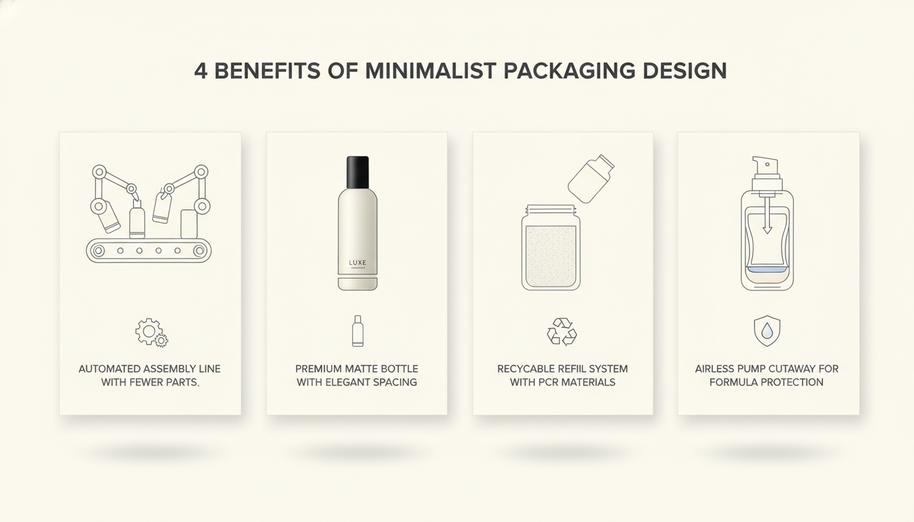
Streamlined Production with Assembly Automation
Minimalist packaging design cuts excess parts. Fewer springs, collars, and decorative shells mean higher efficiency on the assembly line.
- Fewer components
- Simplified pump structure
- Standardized molds
- Reduced tooling swaps
- Faster calibration of automated systems
- Smoother process optimization
In real manufacturing settings, this flows like:
-
Component Design
- Integrated actuator and cap
- Snap-fit closures
-
Automation Setup
- Robotic arm alignment
- Sensor-based torque control
-
Output Control
- Inline leak detection
- Defect rate tracking
The result? Better production speed, fewer rejects, and true lean manufacturing. For brands working with Topfeel, minimalist packaging design supports robotics-ready formats that make scaling feel easy, not chaotic.
Enhanced Brand Perception through a Sleek Profile
Minimalist packaging design shapes brand image fast. Clean surfaces, quiet colors, balanced spacing—this is strong visual identity without shouting.
- Neutral palette
- Matte finish
- Precise typography
A simple packaging design often signals a premium feel and modern design thinking. Consumers link reduced packaging with transparency and trust. A recent 2025 McKinsey retail insight noted:
“Consumers increasingly associate pared-back packaging with higher quality and responsible sourcing.”
That line explains today’s market perception shift. Minimal packaging design creates consumer appeal because it feels confident. Topfeel supports this through refined molds that deliver a sophisticated look without decorative overload.
Reduced Waste via Reusable Components and Recyclability
Minimalist packaging design supports sustainability through smart material science and reusable packaging systems.
- Mono-material pumps
- Refillable cartridges
- PCR resin bottles
Below is a material comparison used in eco-friendly packaging programs:
| Material Type | Recyclability Rate (%) | PCR Content Option (%) | Carbon Footprint (kg CO₂/unit) | Reuse Cycles |
|---|---|---|---|---|
| Virgin PET | 90 | 0 | 0.120 | 1 |
| PCR PET | 90 | 30–100 | 0.085 | 1 |
| PP Mono | 85 | 0–50 | 0.095 | 1–2 |
| Glass | 75 | 0 | 0.200 | 3–5 |
| Refill Pod | 92 | 50–100 | 0.060 | 5+ |
Within a circular economy model:
-
Material Selection
- Recycled materials integration
- Lightweight wall thickness
-
System Design
- Detachable pump
- Reusable packaging base
-
End-of-Life
- Easy separation
- Lower environmental impact
Minimalist packaging design reduces waste without feeling cheap. It’s practical eco-friendly packaging, not greenwashing.
Improved Product Protection with Airless Dispensing
Minimalist packaging design often pairs with airless systems for serious product integrity.
Here’s how it works:
- Step 1: Vacuum piston rises as formula is dispensed
- Step 2: Internal chamber limits air intake
- Step 3: Tight seal ensures oxidation protection
Inside the structure:
-
Barrier Technology
- Dual-wall chamber
- Oxygen-restrictive materials
-
Hygiene Control
- One-way valve
- Contamination prevention
-
Performance
- Stable dosage control
- Extended shelf life
Airless minimalist packaging design protects sensitive serums by maintaining formula preservation and hygienic dispensing. Clean outside. Smart inside.
For brands aiming at high-performance skincare, Topfeel integrates barrier technology into minimal packaging design so protection and simplicity work together, not against each other.
Brand Launch: From Lab To Shelf
Bringing a serum from benchwork to store display takes more than a good formula. It’s about tight control, smart scale‑up, and a clean look rooted in minimalist packaging design—where minimalist, packaging, and design work as one clear brand signal.
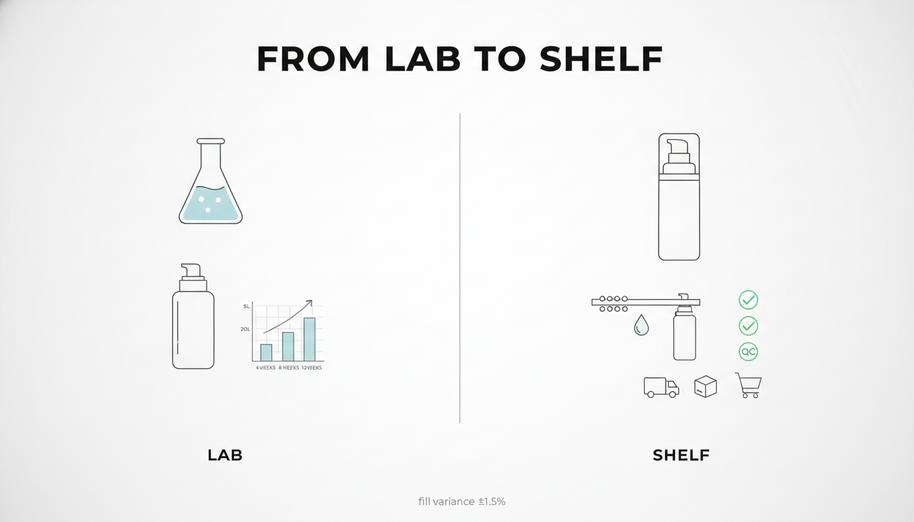
Lab-Scale Serums: Prototype to Pilot Batch
Early Formulation begins inside focused R&D cycles:
- Texture balance
- Active Ingredients stability
- Airless pump compatibility
- Prototype Development validates piston fit and material safety.
- Stability Testing tracks viscosity shifts.
- Sample Production confirms repeatability before a Pilot Batch.
Key pilot metrics:
| Test Stage | Batch Size (L) | Temp Range (°C) | Stability (Weeks) |
|---|---|---|---|
| Lab Proto | 5 | 4–40 | 4 |
| Pre-Pilot | 20 | 4–45 | 8 |
| Pilot | 100 | 4–50 | 12 |
Long bench hours refine not only formula safety but also alignment with minimalist packaging design, ensuring minimalist design supports ingredient clarity and a simple packaging aesthetic.
Small notes matter:
• pump rebound speed
• serum-air exposure
• packaging design stress tests
Scaling Up with Precision Dosage and Vacuum Seal Systems
Scaling shifts into structured layers within the Manufacturing Process:
-
Core Controls
- Precision Dosage calibration
- Automated Filling Equipment checks
- Inline weight sensors
-
Protection Systems
- Vacuum Sealing validation
- Cleanroom air pressure logs
Production scale expands across the Packaging Line, where minimalist packaging and minimalist packaging design reduce excess components and contamination risk.
Topfeel integrates automation that keeps fill variance under ±1.5%, keeping packaging design aligned with performance.
Shelf Readiness through Quality Control and Logistics Planning
Market readiness runs on discipline:
- Quality Control sampling
- Regulatory Compliance audits
- Accelerated Product Testing
- Carton compression review
- Barcode scan accuracy
- Warehousing humidity mapping
- Distribution Network timing checks
A 2025 McKinsey beauty report noted:
“Brands adopting minimalist packaging design see stronger consumer trust tied to clarity, sustainability cues, and visible product integrity.”
With controlled Shelf Life data and sharp Logistics Planning, Topfeel ensures every unit lands retail‑ready—clean labeling, minimalist packaging design consistency, and a packaging design that feels honest the second it hits the shelf.
References
- Injection Molding vs. Blow Molding – thomasnet.com/Thomas
- Frequently Asked Questions about Plastic Recycling – epa.gov/EPA
- Polypropylene Overview – chemicalsafetyfacts.org/Chemical Safety Facts
- What is PET? – napcor.com/NAPCOR
- Association of Plastic Recyclers – plasticsrecycling.org/APR
- Circular Economy Concept – ellenmacarthurfoundation.org/Ellen MacArthur Foundation
- Sustainability in Packaging – mckinsey.com/McKinsey
- Manufacturing Industry Outlook – deloitte.com/Deloitte
- What is Lean? – lean.org/Lean Enterprise Institute
- What Is Your Brand’s True Value? – hbr.org/Harvard Business Review
- Responsible Industry – unep.org/UNEP
- Cosmetics Stability and Oxidation – ncbi.nlm.nih.gov/NIH
- Shelf Life and Expiration Dating of Cosmetics – fda.gov/FDA
- ISO 9001 Quality Management – iso.org/ISO
- Supply Chain Logistics Distribution – weforum.org/World Economic Forum
Post time: Jul-02-2026