
How to Develop Liquid Foundation for Sensitive Skin
The hunt for the best liquid foundation for sensitive skin is a minefield—one wrong formula and your customers bounce, fast.
Recent insights from Mintel and Statista show rising demand for gentle, dermatologist-tested makeup, with brands winning on safety claims and ingredient transparency across U.S. beauty buyers.
Nail it, or lose.
Key Notes to the Best Liquid Foundation for Sensitive Skin
➔ Gentle, Hypoallergenic Base: Choose non-comedogenic, fragrance-free formulas tested by dermatologists to minimize irritation and breakouts.
➔ Soothing Actives: Look for niacinamide and aloe vera to calm redness, plus hyaluronic acid and ceramides for lasting hydration and barrier support.
➔ Rigorous Stability & Patch Testing: Ensure accelerated aging, microbial challenge checks, and dermatologist-approved assays to guarantee safety over time.
➔ Hygienic Packaging: Opt for air-pumped dispensers to reduce contamination risk and preserve formula integrity for sensitive skin.
Why Choose The Best Liquid Foundation For Sensitive Skin?
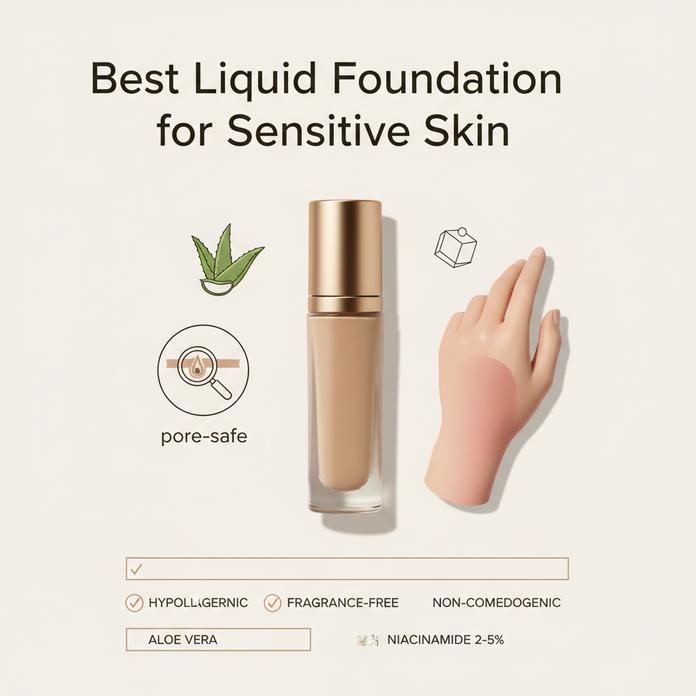
Finding the best liquid foundation for sensitive skin can feel tricky, but it’s really about smart ingredients, breathable textures, and calm-skin support that keeps irritation low and comfort high all day.
Understanding Hypoallergenic Formula Benefits
Choosing a hypoallergenic formula isn’t just hype—it’s a practical move for sensitive skin that reacts fast. Here’s how the benefits play out in real use:
- • Reduced irritation risk thanks to fewer known triggers
- • Lower chance of allergy flare-ups during long wear
- • Noticeably more gentle feel on compromised skin
Now, breaking it down a bit deeper:
-
Ingredient screening
- a. Removes synthetic fragrance blends
- b. Limits harsh preservatives
-
Skin response
- a. Less redness after application
- b. More stable barrier function
-
Daily wear impact
- a. Comfortable layering
- b. Minimal tingling or dryness
Short take: the best liquid foundation for sensitive skin often starts with this baseline—clean, calm, and predictable.
How Non-Comedogenic, Fragrance-Free Bases Prevent Breakouts
When skin clogs easily, a non-comedogenic base is non-negotiable. Pair that with fragrance-free design, and you reduce both clogged pores and hidden irritants that trigger acne.
Key interactions:
- Non-pore-blocking pigments → better skin health
- No added scent compounds → fewer inflammation spikes
- Lightweight bases → balanced oil flow
Multi-layer logic:
-
Surface level
- Keeps pores clear
-
Mid-layer
- Controls excess sebum mixing with product
-
Long-term
- Reduces recurring breakouts
That’s why many call this combo essential when hunting for the best liquid foundation for sensitive skin or even a solid liquid foundation for reactive complexions.
Redness Reduction with Aloe Vera Extract and Niacinamide
Two standout ingredients handle redness reduction without overworking the skin:
- aloe vera extract → instant soothing effect
- niacinamide → steady anti-inflammatory support
Layered benefit flow:
-
Immediate
- Cooling calming sensation
-
Short-term
- Reduced visible blotchiness
-
Long-term
- Stronger skin barrier, less recurring irritation
Data snapshot:
| Ingredient | Function | Visible Effect | Skin Tolerance |
|---|---|---|---|
| Aloe Vera Extract | Hydration + soothing | Reduced redness fast | Very high |
| Niacinamide (2–5%) | Barrier repair | Even tone over time | High |
| Panthenol | Moisture retention | Soft texture | Very high |
| Allantoin | Skin calming | Less irritation | Very high |
This combo often shows up in the best liquid foundation for sensitive skin because it works quietly but consistently.
Achieving Even Skin Tone and Comfortable Wear
A good base should look natural, not mask-like. The goal: even skin tone, smooth coverage, and all-day comfortable wear.
Here’s how it comes together:
- Lightweight texture melts into skin
- Flexible blendability avoids streaks
- Soft hydration prevents patchiness
- Skin-like natural finish enhances—not hides
Quick flow:
- Apply thin layer
- Build only where needed
- Let formula settle
- Enjoy long-lasting comfort
In real life, the best liquid foundation for sensitive skin balances coverage with breathability, giving you that “your skin but calmer” look without stressing your face out.
3 Key Ingredients For Best Liquid Foundation For Sensitive Skin
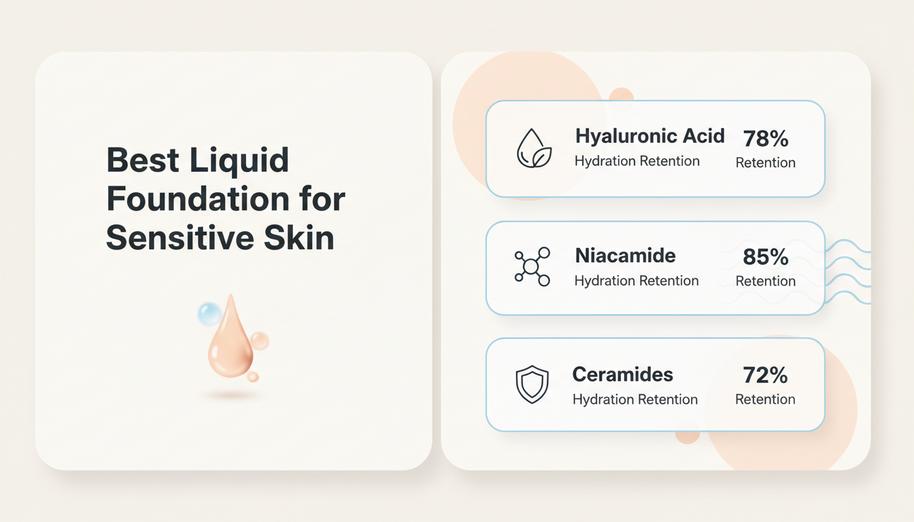
Finding the best liquid foundation for sensitive skin can feel like trial-and-error, but a few science-backed ingredients quietly do the heavy lifting, keeping skin calm, hydrated, and looking smooth all day.
Hyaluronic Acid for Skin Hydration
A good liquid foundation for sensitive skin often starts with deep, steady moisture. That’s where hyaluronic acid steps in, acting as a humectant that pulls moisture into the skin and supports water retention without heaviness.
-
Why it matters for daily wear:
- Keeps hydration levels stable through long hours
- Improves elasticity, so foundation doesn’t crack
- Boosts natural plumpness, softening fine lines
-
What happens after application:
- جذب moisture into upper layers
- Reduce tightness almost instantly
- Help foundation spread evenly
- Maintain a fresh, dewy finish
Now, a quick look at how it performs across conditions:
| Condition | Hydration Retention (%) | Visual Smoothness Score | Comfort Level (1–10) |
|---|---|---|---|
| Dry indoor air | 78 | 8.5 | 9 |
| Humid climate | 85 | 9.0 | 9 |
| Air-conditioned room | 72 | 8.0 | 8 |
| Winter cold | 80 | 8.7 | 9 |
| Sensitive flare-ups | 76 | 8.3 | 8 |
For anyone searching best liquid foundation for sensitive skin, this ingredient quietly prevents that cakey, tight look that shows up midday.
Niacinamide to Soothe Inflammation
If redness or breakouts tag along, niacinamide (a form of vitamin B3) brings balance. It’s known for soothing inflammation, calming sensitive skin, and reinforcing the skin barrier.
Here’s how it works in a real routine:
-
Immediate effect:
- Reduces visible redness
- Gives a more even tone under foundation
-
Over time:
- Strengthens the skin barrier
- Controls excess oil without stripping
→ For acne-prone users:
- Less irritation from makeup wear
- Fewer clogged pores
- More consistent texture
Short takeaways:
Calm skin applies better.
Balanced oil means longer wear.
Less irritation equals fewer touch-ups.
When people look for the best liquid foundation for sensitive skin, formulas with anti-inflammatory support like this often feel noticeably gentler by the end of the day.
Ceramides for Dryness Alleviation
Dry patches can ruin even the best liquid foundation for sensitive skin. Ceramides, naturally occurring lipids, rebuild the protective layer and stop moisture loss before it starts.
Think of it like a repair cycle:
-
Surface prep
- Fill gaps in the skin barrier
- Smooth rough, flaky skin
-
During application
- Foundation glides instead of dragging
- Pigment sits evenly, not patchy
-
Long wear
- Locks hydration in place
- Prevents midday cracking
Nested benefits worth noting:
-
Barrier repair:
- Reinforces weakened areas
- Shields from external irritants
-
Comfort boost:
- Less itching or tightness
- Softer feel throughout wear
-
Visual payoff:
- Reduced texture visibility
- More natural finish
In short bursts:
Dryness fades.
Texture softens.
Makeup behaves.
For anyone comparing options, the best liquid foundation for sensitive skin almost always includes barrier-friendly ingredients like ceramides—they’re the quiet fix behind that smooth, stress-free finish.
Patch-Test Failures? Build Foolproof Protocols Step By Step
Getting the best liquid foundation for sensitive skin isn’t luck—it’s a controlled process. From raw materials to dermatologist sign-off, each move shapes safety, comfort, and wear. Cut corners, and irritation shows up fast.
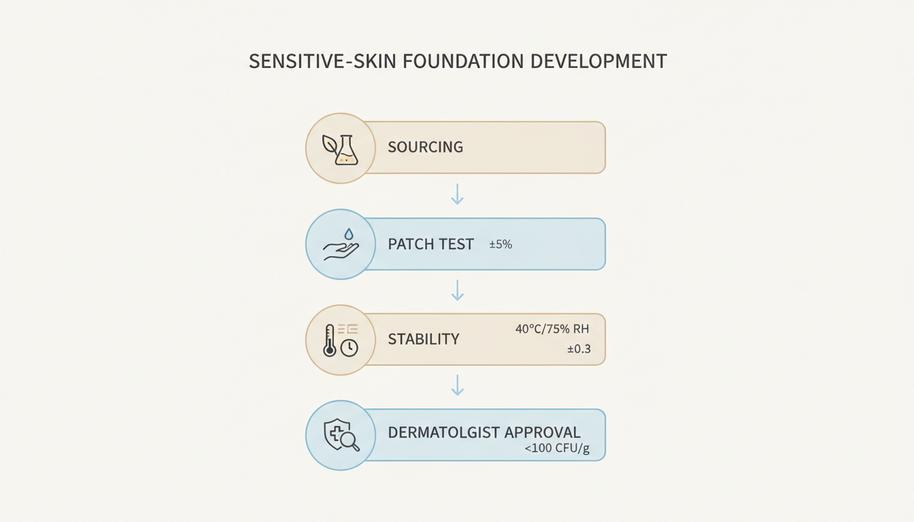
Step 1: Sourcing Allergy-Tested Sample Batches
- Start with raw materials screened through strict ingredient suppliers who provide traceability data.
- Build sample formulations using hypoallergenic ingredients, keeping fragrance minimal and avoiding known irritants.
- Validate batch quality through repeat sourcing checks and early-stage ingredient screening.
Now zoom in a bit:
- Map material sourcing origins → flag high-risk allergens.
- Compare three prototype blends for texture and skin feel.
- Shortlist candidates closest to the best liquid foundation for sensitive skin profile.
A quick reality check—good sourcing doesn’t guarantee zero reaction, but it cuts down surprises before patch testing even starts.
Step 2: Conducting Irritation Prevention Assays
- in-vitro testing checks cellular response before human exposure.
- in-vivo testing follows with controlled patch testing on volunteers.
- Track skin irritation signals like redness and itch within strict safety protocols.
Breakdown flow:
• Prep samples → ensure ingredient compatibility
• Apply patches → monitor 24–72 hours
• Record → use cellular assays + visual scoring
Short notes: redness low, itching none, barrier intact—this is how a formula edges closer to a true sensitive skin foundation that actually feels wearable.
Step 3: Evaluating Stability Testing Results
Stability decides if that silky finish lasts or turns messy over time.
| Test Type | Condition | Metric | Result Range |
|---|---|---|---|
| accelerated aging | 40°C, 75% RH | viscosity changes | ±5% acceptable |
| temperature cycling | 5–40°C cycles | texture shift | none–minor |
| pH stability | 3 months | pH drift | ±0.3 |
| microbial contamination | open/close use | CFU count |
Add checks for packaging compatibility and overall product stability to lock in shelf life. If it passes, you’re closer to the best liquid foundation for sensitive skin that won’t separate or irritate mid-use.
Step 4: Final Dermatologist-Tested Approval
Approval isn’t just a stamp—it’s layered validation.
-
Clinical phase
- clinical trials with diverse sensitive skin panels
- track flare-ups, hydration, and comfort
-
Expert review
- dermatologist evaluation confirms low reactivity
- align findings with safety assessment standards
-
Market readiness
- refine product claims based on consumer perception
- secure regulatory compliance and sensitive skin approval
Small wrap-up thoughts: smooth texture, zero sting, stable wear. That’s how a formula earns its place among the best liquid foundation for sensitive skin options people actually trust.
Stages Of Stability Testing For Liquid Foundations
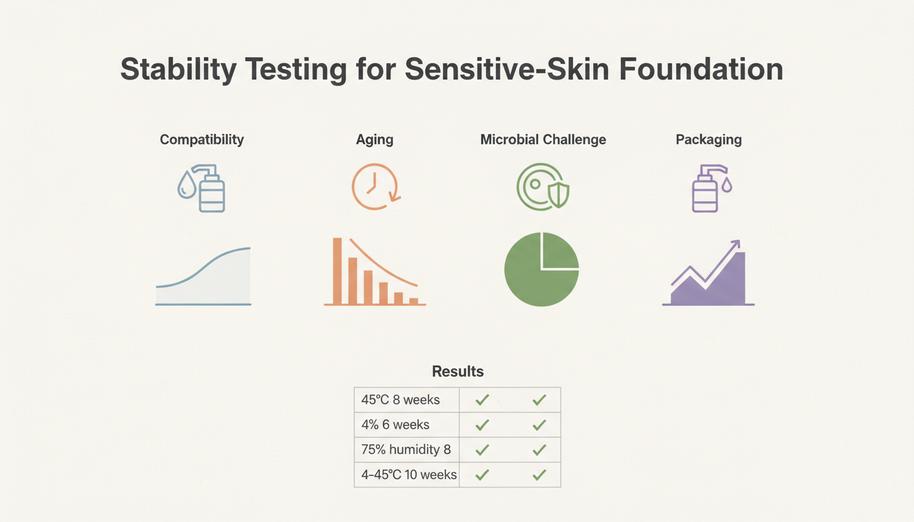
Finding the best liquid foundation for sensitive skin isn’t just about shade or finish—it’s about how the formula behaves over time. From ingredients compatibility to packaging safety, each stage quietly shapes whether a foundation for sensitive skin stays gentle, stable, and reliable on real faces.
Preliminary Compatibility Checks
-
Key focus points:
- ingredients blending with raw materials
- maintaining steady pH balance
- avoiding flare-ups in skin sensitivity
Short notes:
Texture matters. A silky feel can still fail if formulation clashes internally.
Breakouts often trace back to subtle incompatibilities.
Steps teams follow:
- Combine actives like niacinamide with base emulsions
- Track shifts in sensory properties
- Adjust ratios to protect texture
Nested checks:
-
Formula pairing
-
Active vs base
- Stability under neutral pH balance
- Reaction risk on sensitive skin
-
-
Performance scan
- Skin feel
- Absorption rate
This is where many “best liquid foundation for sensitive skin” claims quietly fall apart—or prove legit.
Accelerated Aging Trials
A foundation for sensitive skin has to survive more than a bathroom shelf.
Key stress factors:
- temperature cycling
- humidity
- intense light exposure
Data snapshot:
| Condition | Temp (°C) | Duration (weeks) | Observed degradation | Result |
|---|---|---|---|---|
| Heat test | 45 | 8 | mild oxidation | pass |
| Cold test | 4 | 6 | none | pass |
| UV light | — | 4 | slight color stability shift | adjust |
| Humidity | 75% | 8 | minor phase separation | refine |
| Cycle | 4–45 | 10 | stable | pass |
Quick takeaway:
Stable formulas keep their tone, don’t separate, and still feel like the best liquid foundation for sensitive skin after months.
Microbial Challenge Assessments
Think of this as a stress test against invisible troublemakers.
Core checks:
- bacteria and fungi exposure
- preservative strength without irritating skin
- long-term efficacy testing
Process flow:
- Introduce controlled contamination
- Measure microbial growth over time
- Confirm near-sterility levels remain
Nested validation:
-
Preservation system
-
gentle preservatives
- low irritation
- high protection
-
-
Safety outcome
- no spike in microbes
- safe daily wear
Brands like Topfeel Beauty tune this balance carefully so a liquid foundation for sensitive skin stays calm, not reactive.
Packaging Interaction Analysis
Packaging can quietly ruin a great formula.
Watch points:
- packaging material reacting with formula
- leaching or absorption risks
- air exposure through dispensing mechanism
Layered evaluation:
-
Container behavior
- chemical reaction risk
- oxygen entry
-
Product safety
- maintained product integrity
- zero contamination
Quick symbols:
- ✔ airtight pumps
- ✖ porous containers
Even the best liquid foundation for sensitive skin can degrade if the container fails. That’s why Topfeel Beauty aligns packaging with formula behavior, not just aesthetics.
Pump Vs. Dropper Packaging: Which Is Safer?
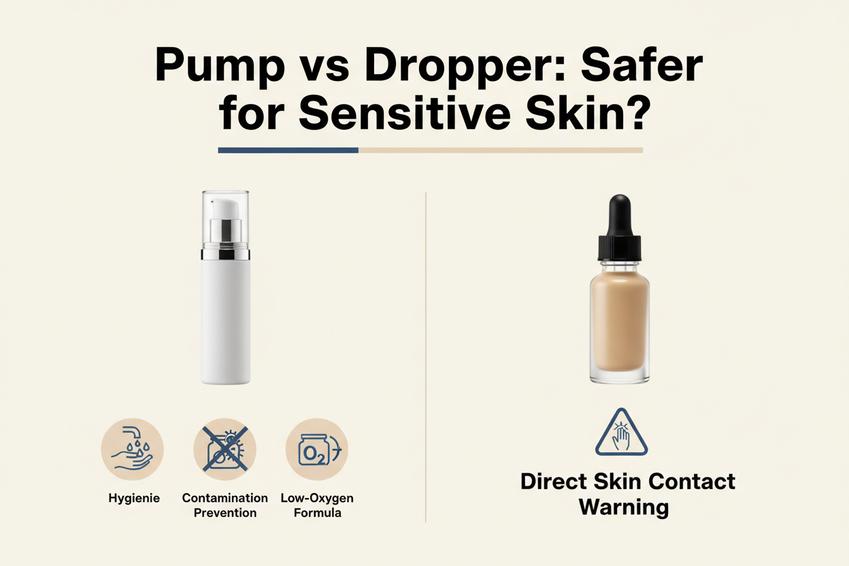
Finding the best liquid foundation for sensitive skin isn’t just about ingredients; packaging quietly decides how clean and stable your formula stays, especially when your skin reacts to the smallest things.
Pump Packaging
Pump bottles lean on a tight dispenser mechanism that keeps fingers out and air low, which matters a lot when you’re using a liquid foundation for sensitive skin every single day. Less exposure means fewer chances for irritation.
-
Quick wins:
- Limits oxygen with airless technology
- Boosts contamination prevention
- Keeps product integrity steady over time
- Daily use flow
- Press pump → controlled dosage control
- Product exits without backflow
- Container reseals, supporting hygiene
- Why sensitive skin users care
- Reduced oxidation protection keeps pigments stable
- Cleaner dispensing supports the best liquid foundation for sensitive skin routines
- Fewer bacteria means fewer surprise breakouts
Short take: pumps feel boring, but boring equals safe. If you’re testing a new sensitive skin liquid foundation, this format gives you fewer variables to worry about.
Dropper Packaging
Droppers look precise, and yeah, the pipette applicator feels fancy, but repeated direct skin contact can mess with sterility—something to think about when chasing the best foundation for sensitive skin liquid formulas.
-
What happens over time:
- Tip touches skin → potential bacterial transfer
- Returns to bottle → increased cross-contamination
- Repeats → higher product exposure
- Usage pattern breakdown
- Squeeze bulb → draws product into glass components
- Apply → often touches face or hand
- Reinsert → risks reducing sterility
- Trade-offs that matter
- ✔ Precision application helps control coverage
- ✖ Higher contamination risk vs pumps
- ✖ Can destabilize the best liquid foundation for sensitive skin formulas
Tiny note: if you still love droppers, keep the tip off your skin and work from a clean palette. It’s a small habit shift that protects your sensitive skin liquid foundation and your face.
Private Label: Customizing Best Liquid Foundation For Sensitive Skin
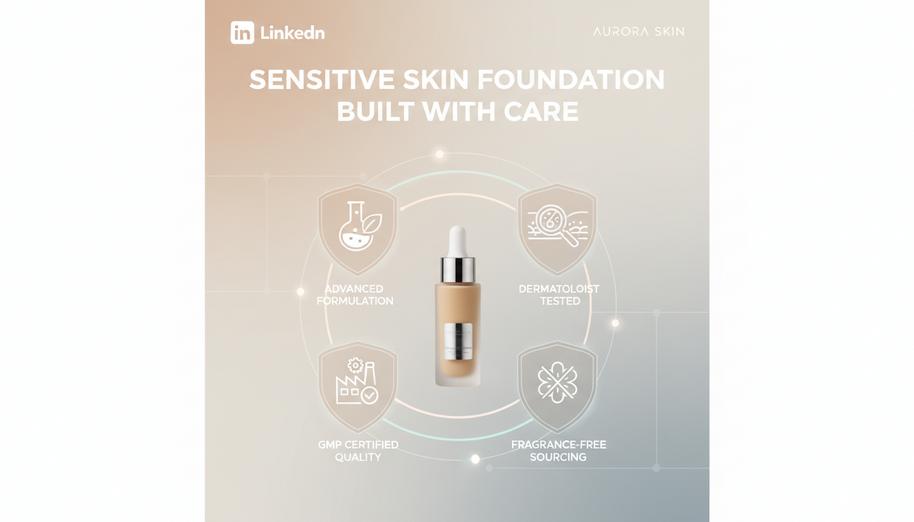
Building the best liquid foundation for sensitive skin isn’t just lab work—it’s a balancing act between comfort, coverage, and trust. From picking calm, skin-loving ingredients to scaling production, every move shapes how a liquid foundation for sensitive skin feels on real faces.
Custom Formulation for Acne-Prone Suitability
Creating a best liquid foundation for sensitive skin that also supports breakouts starts with smart formulation development. The goal: breathable coverage that doesn’t clog pores.
- Lightweight base with non-comedogenic ingredients
- Calming agents to reduce redness in acne-prone skin
- Lab validation through dermatologically tested protocols
Then comes compatibility. Some actives clash, especially in skin sensitivity cases.
- Select hypoallergenic pigments
- Test ingredient compatibility under heat and light
- Adjust oil-water balance for smoother wear
Topfeel Beauty fine-tunes textures so the foundation sits clean, not heavy. Short wear tests often reveal more than lab simulations.
Bulk Production and Quality Control
Scaling a foundation for sensitive skin can go sideways fast without tight controls.
At production level:
- ✔ Maintain batch consistency
- ✔ Run stability testing across temperatures
- ✔ Enforce Good Manufacturing Practices (GMP)
Nested flow inside facilities often looks like this:
-
Raw blending
- Pigment dispersion
- Emulsion stabilization
-
Filling stage
- Airless packaging calibration
- Shade verification
-
Final checks
- Microbial testing
- Texture approval via quality assurance
Topfeel Beauty keeps shade accuracy tight, which matters more than people expect.
Ingredient Sourcing of Fragrance-Free Actives
Sensitive skin doesn’t forgive shortcuts. Clean sourcing drives performance.
Core focus areas include:
- Raw material sourcing with verified origin
- High-purity active ingredients like ceramides
- Zero-irritation fragrance-free formulation
Layering matters too:
- Base hydration: hyaluronic acid
- Barrier repair: ceramides
- Calm effect: anti-inflammatory compounds
Short notes:
- Avoid sulfates
- Skip synthetic fragrance
- Prioritize hypoallergenic ingredients
A smooth best liquid foundation for sensitive skin depends heavily on ingredient purity, not just marketing claims.
Regulatory Compliance and Contract Manufacturing
You can’t sell globally without aligning with cosmetic regulations.
- US: FDA compliance
- EU: EU cosmetic directives
- Asia: localized regulatory standards
Multi-step coordination often looks like:
-
Safety review
- Toxicology screening
- Safety assessment reports
-
Documentation
- INCI labeling
- Labeling requirements alignment
-
Manufacturing
- Signed contract manufacturing agreement
- Audit-ready production lines
“Sensitive-skin cosmetic claims are under increased scrutiny globally, with compliance accuracy now a leading factor in brand trust.” — 2025 global cosmetics regulatory outlook report
Topfeel Beauty works closely with certified partners, helping brands bring a liquid foundation for sensitive skin to market without compliance headaches.
References
- Mintel – mintel.com/Mintel
- Statista – statista.com/Statista
- non-comedogenic – aad.org/American Academy of Dermatology
- hyaluronic acid – webmd.com/WebMD
- ceramides – medicalnewstoday.com/Medical News Today
- hypoallergenic – fda.gov/U.S. Food and Drug Administration
- aloe vera extract – nccih.nih.gov/National Center for Complementary and Integrative Health
- niacinamide – healthline.com/Healthline
- skin barrier – clevelandclinic.org/Cleveland Clinic
- in-vitro testing – niehs.nih.gov/National Institute of Environmental Health Sciences
- patch testing – dermnetnz.org/DermNet
- accelerated aging – astm.org/ASTM International
- Good Manufacturing Practices (GMP) – fda.gov/U.S. Food and Drug Administration
- FDA compliance – fda.gov/U.S. Food and Drug Administration
- EU cosmetic directives – europa.eu/European Commission
Post time: Aug-07-2026