
Makeup Laboratories: Why Choose Topfeel Beauty?
In today’s beauty gold rush, makeup laboratories are the quiet power brokers behind every viral blush and bestselling foundation. Brands want clean formulas, fast turnarounds, and zero regulatory drama—but cutting corners is like baking a wedding cake in a toaster. One slip, and the whole party’s ruined. Labs step in with precision tools, safety testing, and production muscle so your brand doesn’t end up learning the hard way.
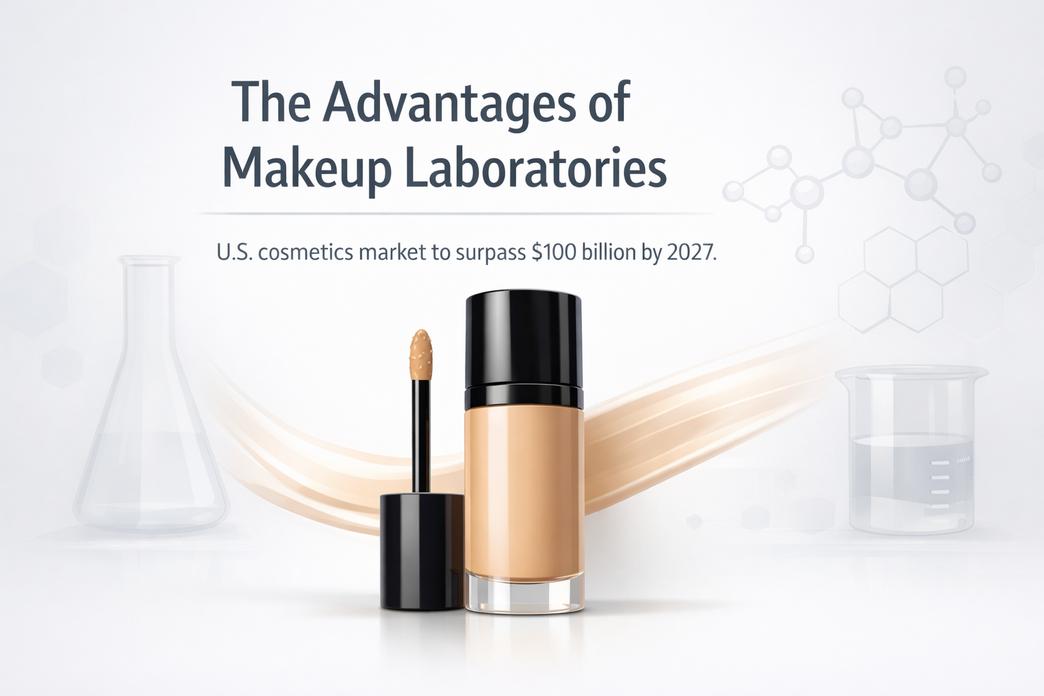
The U.S. cosmetics market is projected to surpass $100 billion by 2027, according to Statista. Competition isn’t cute—it’s cutthroat.
That’s why smart founders partner up. A seasoned lab keeps batches consistent, costs in check, and paperwork airtight. As FDA guidance makes clear, manufacturers are responsible for product safety. The right lab doesn’t just mix pigments; it protects your name on the label.
Key Points to Know About Makeup Laboratories
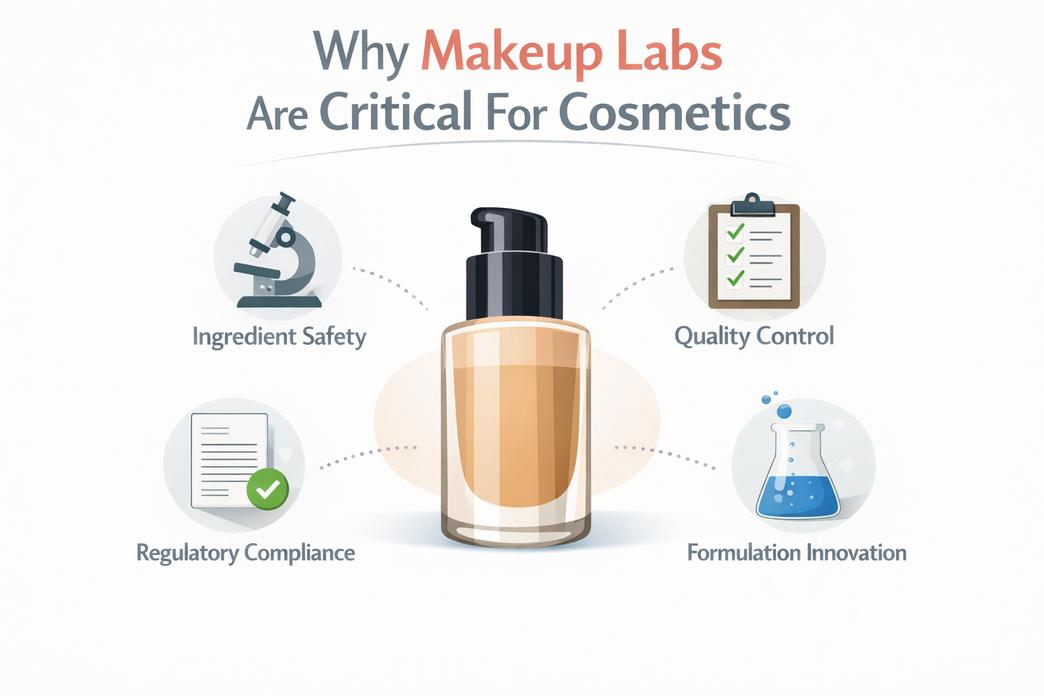
1. Ensuring Ingredient Safety: Makeup laboratories conduct rigorous microbial and allergen testing to guarantee the safety and purity of products like foundations, lip glosses, and mascaras.
2. Consistent Product Quality: Laboratories use raw material inspections and batch consistency checks to maintain uniformity across products, ensuring consistent performance in items such as cream blushes and liquid foundations.
3. Regulatory Compliance and Testing: Makeup labs ensure products meet all regulatory requirements through stability tests and documentation accuracy, ensuring shelf life and packaging compatibility.
4. Innovative Formulation Techniques: Advanced methods like emulsification and milling enable the creation of cutting-edge products such as mousse blushes and serum foundations with enhanced texture.
5. Reducing Production Costs: Labs reduce costs by optimizing mixing processes, sourcing ingredients in bulk, and using automated filling lines to lower labor and packaging expenses.
Why Are Makeup Laboratories Critical For Cosmetics?
Makeup laboratories sit at the core of safe, high-performing beauty products. From testing pigments to checking shelf life, these labs shape what ends up in your compact. Reliable makeup laboratories turn creative ideas into stable formulas people can trust daily.
Ensuring Ingredient Safety with Comprehensive Microbial Testing
In professional makeup laboratories, safety starts long before a product hits the shelf. Inside a dedicated cosmetic lab, the workflow usually unfolds like this:
● Ingredient Entry Control
● Verification of supplier documents
● Initial ingredient safety screening
● Sampling for microbial testing
● Laboratory Testing Phase
● Advanced pathogen detection to identify harmful bacteria or fungi
● Preservative efficacy testing to confirm protection over time
● Active contamination control procedures in controlled environments
● Stability & Monitoring
● Ongoing shelf-life testing under heat, light, and humidity
● Retesting after formulation adjustments
A trusted makeup laboratory doesn’t cut corners. Makeup labs that skip these layers risk recalls and damaged reputations. Topfeel Beauty relies on experienced makeup laboratories to ensure every formula passes strict ingredient safety and contamination checks before scaling production. That’s how cosmetic laboratories keep foundations, mascaras, and glosses safe for real-life use.
Consistent Quality Through Raw Material Inspection and Batch Consistency
Quality in makeup laboratories feels a bit like baking—small changes can ruin the vibe. That’s why cosmetic labs focus hard on:
● Careful raw material inspection
● Detailed ingredient analysis
● Tight quality control checkpoints
Here’s how many makeup labs handle it:
1. Inspect pigments, oils, and waxes upon arrival.
2. Run lab tests to confirm purity and performance.
3. Record results to protect batch consistency.
Short check. Quick adjustment. Test again.
A reliable makeup laboratory tracks texture, shade match, and scent to protect product uniformity. If one batch of cream blush feels airy and the next feels dense, customers notice fast. Good manufacturing standards inside makeup laboratories prevent that drama.
Topfeel Beauty works closely with makeup laboratories that document every variation, keeping shades and textures steady from launch day to the thousandth unit.
Meeting Regulatory Compliance and Stream Stability Testing
Strong makeup laboratories operate with layered oversight that protects brands and buyers alike.
● Regulatory Foundation
● Alignment with global regulatory compliance requirements
● Review of banned and restricted substances
●Documentation aligned with current safety standards
● Formula Assessment
● Detailed product formulation review
● Study of ingredient interaction to avoid instability
● Lab-based performance evaluation under stress conditions
● Long-Term Stability
● Controlled stability testing in various environments
● Packaging compatibility checks
● Periodic re-evaluation during product lifecycle
A professional makeup laboratory keeps records tight and audit-ready. Makeup laboratories that ignore compliance often face shipment delays or product withdrawal. In contrast, experienced cosmetic laboratories build formulas that survive shipping, storage, and daily use without separating or fading.
Topfeel Beauty partners with makeup laboratories that treat compliance as a living process, not a last-minute checklist.
Innovating Formulations: From Liquid Serums to Cream Mousses
Innovation inside makeup laboratories is part science, part obsession with texture.
● Creative formulation development sessions
● Careful ingredient compatibility trials
● Repeated texture analysis for that smooth, blendable feel
The flow usually looks like this:
1.Concept sketch inside the cosmetic lab.
2.Prototype built through cosmetic science research.
3.Lab testing of performance characteristics like spread, glow, and wear time.
4.Refinement based on feedback.
Some days it’s a lightweight serum foundation. Other days it’s a whipped mousse blush that feels like air. Skilled makeup laboratories experiment with emulsifiers, pigments, and binders until the formula just clicks.
Makeup labs that invest in true product innovation create items that stand out in crowded stores. With the support of advanced makeup laboratories, Topfeel Beauty continues to push textures and finishes that feel modern, wearable, and a little addictive.
4 Advantages Of Choosing Cosmetic Laboratories
Makeup laboratories sit at the heart of modern beauty production. From formulation tweaks to final packaging checks, these makeup labs shape how products look, feel, and last on skin.
Rapid Emulsification and Milling for Smoother Foundations
In professional makeup laboratories, high-speed systems transform raw formulation ideas into silky foundations that actually behave on the skin.
A. Emulsification Control
1.Shear Rate Adjustment
2.Fine-tunes emulsification speed to stabilize oil-water ratios.
3.Improves product consistency across pilot and bulk batches.
4.Temperature Monitoring
5.Keeps viscosity stable during blending.
6.Protects active ingredients from breakdown.
B. Precision Milling Process
1.Particle Size Reduction
2.Refines pigments for enhanced texture and visible smoothness.
3.Uniform Distribution
4.Prevents sedimentation in liquid foundations.
5.Supports even spread and longer wear.
C. Measured Performance Outcomes
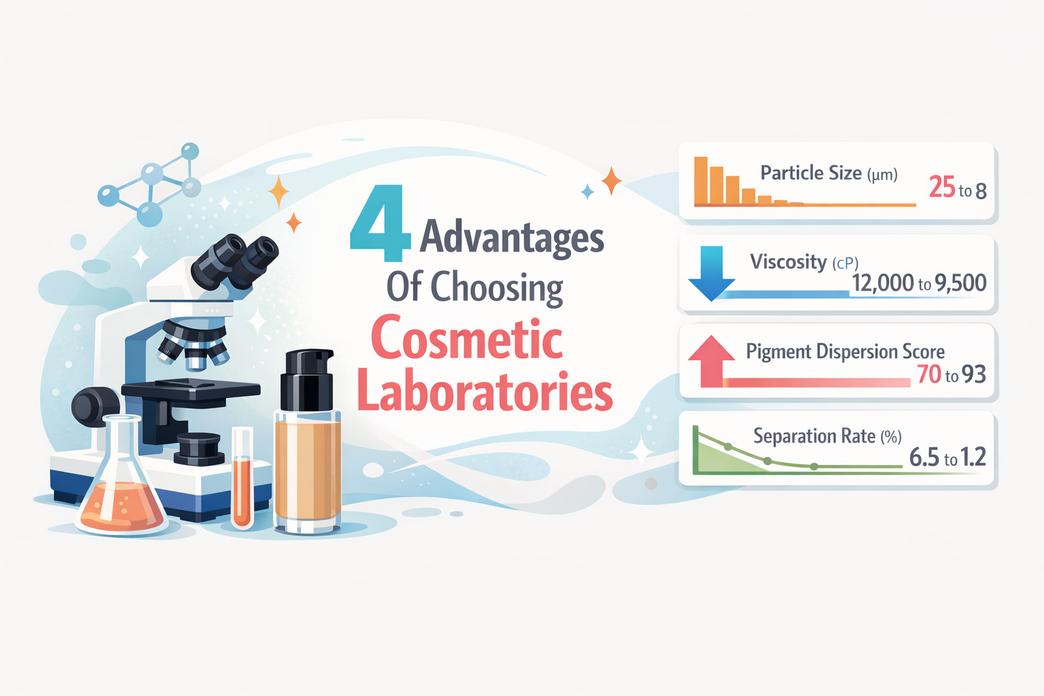
| Parameter | Pre-Milling Avg | Post-Milling Avg | Stability (30 days) | Shade Uniformity Index |
|---|---|---|---|---|
| Particle Size (µm) | 25 | 8 | 98% | 92% |
| Viscosity (cP) | 12,000 | 9,500 | 97% | 95% |
| Pigment Dispersion Score | 70 | 93 | 96% | 94% |
| Separation Rate (%) | 6.5 | 1.2 | 99% | 97% |
That’s why seasoned brands rely on cosmetic laboratories and dedicated makeup labs when chasing flawless base products.
Advanced Pigment Dispersion in Lipstick and Eyeshadow
Color is everything. In makeup laboratories, tight control over pigment dispersion defines how lipstick and eyeshadow perform in real life.
Here’s what happens inside busy beauty labs:
● Controlled blending boosts color intensity without clumping.
● Triple-roll milling increases vibrancy in high-impact shades.
● Vacuum mixing limits air bubbles, improving uniformity.
Then the technical rhythm kicks in:
1.Raw pigments are pre-wetted.
2.Oils and waxes are gradually incorporated.
3.Milling cycles refine particle distribution.
4.Lab testing evaluates payoff and application drag.
Quick checks inside laboratories for makeup often focus on:
● Swipe smoothness
● Fallout levels
● Heat resistance
The payoff? Lipstick glides instead of tugging. Eyeshadow builds without patchiness. Makeup laboratories make bold shades feel effortless, not heavy.
Streamlined Filling & Packaging with Airless Pumps and Glass Bottles
Production speed matters, but so does product integrity. In advanced makeup laboratories, filling lines are engineered with layered control.
A. Filling Accuracy
1.Servo-Driven Nozzles
2.Maintain tight tolerances during filling.
3.Reduce product waste.
4.Volume Calibration
5.Ensures consistent dosing across SKUs.
B. Packaging Compatibility
1.Airless pumps
2.Limit oxidation.
3.Improve hygienic dispensing.
4.Glass bottles
5.Support formula stability.
6.Enhance premium positioning.
C. Efficiency Metrics
● Automated packaging reduces contamination risks.
● Inline weight checks protect batch accuracy.
Well-equipped makeup laboratories and cosmetic laboratories keep production flowing while protecting what’s inside the bottle. No drama. Just steady output.
Robust Documentation, Traceability, and Certification Processes
Behind every launch from makeup laboratories sits paperwork that keeps everything legit.
A. Documentation Layers
1. Ingredient Files
2. Full documentation of sourcing and safety data.
3. Manufacturing Logs
4. Detailed batch records tied to lot numbers.
B. Traceability Systems
1. Digital Tracking
2. Real-time traceability from raw input to shipment.
3. Recall Readiness
4. Fast isolation of affected units.
C. Compliance and Standards
1. Quality control testing protocols
2. Third-party certification audits
3. Alignment with global regulatory compliance rules
4. Ongoing validation against safety standards
Makeup laboratories that invest in this structure earn trust. Beauty labs without it struggle. In today’s market, laboratories for makeup are judged not just by shade range, but by proof, paperwork, and clean records.
How Makeup Laboratories Reduce Production Costs By 30%
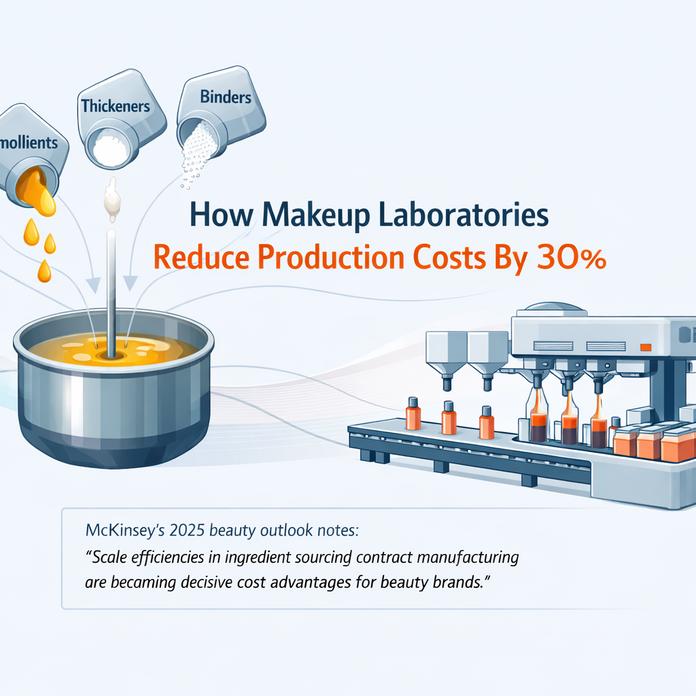
Makeup laboratories run on tight margins, and every gram of formula counts. From smarter batching to faster packaging, modern makeup labs trim costs without cutting quality. Leading cosmetic laboratories, including Topfeel Beauty, refine systems inside their makeup laboratories daily so brands get better pricing, steady output, and reliable performance from professional beauty labs.
Optimizing Mixing and Compounding to Lower Waste
In high-performing makeup laboratories, cost control starts in the tank.
● Raw stage
● Audit ingredient ratios
● Adjust micro-percentage shifts to improve material utilization
● Standardize mixing processes
● Calibrate speed, shear force, and batch timing
● Compounding stage
● Refine compounding techniques
● Pre-disperse pigments to avoid rework
● Control temperature drift to protect actives
● Track process efficiency
● Monitor viscosity checkpoints
● Flag deviations early for waste reduction
When makeup laboratories treat every batch like money in motion, scrap rates drop fast. Fewer rejected creams. Less off-shade powder. Tighter, cleaner production.
Bulk Procurement of Emollients, Thickeners, and Binders
Smart raw material sourcing inside makeup laboratories runs deeper than bulk buying.
● Supplier strategy
● Long-term supplier negotiations
● Lock pricing for emollients, thickeners, and binders
● Secure priority allocation during shortages
● Inventory control
● Tight inventory management
● Rotate stock to reduce expiry loss
● Consolidate orders for real cost savings
Recent industry analysis from McKinsey’s 2025 beauty outlook notes:
“Scale efficiencies in ingredient sourcing and contract manufacturing are becoming decisive cost advantages for beauty brands.”
Professional makeup labs that buy big and plan well protect margins without touching formula integrity.
Automated Filling Lines that Cut Labor and Packaging Expenses
Inside advanced makeup laboratories, automation changes the game.
1. Upgrade to high-speed automated filling systems.
2. Sync packaging machinery with batching output.
3. Optimize production speed to reduce idle labor.
● Lower labor costs through fewer manual touchpoints
● Standardize packaging materials use to limit overfill
● Improve operational efficiency and reduce overhead
Modern cosmetic production facilities that automate jar, tube, and tin filling don’t just move faster; they make fewer mistakes. For brands working with makeup laboratories like Topfeel Beauty, that means stable pricing, smoother launches, and real savings that stack up month after month.
FAQs
Why are makeup laboratories essential for safe cosmetic production?
Makeup laboratories stand between a beautiful product and a costly recall. Inside controlled rooms, every foundation, lipstick, mascara, or blush is tested before it touches skin.
1. Safety checks begin with raw material inspection of pigments, emollients, and preservatives.
2. Labs conduct microbial testing, allergen testing, and patch testing on liquid, cream, gel, and powder formulas.
3. During mixing and filling into jars, plastic tubes, or airless pumps, strict quality control prevents contamination.
The result: confirmed ingredient safety, regulatory compliance, and reliable shelf life—not guesswork.
How do makeup laboratories maintain consistent quality in private label cosmetics?
Consistency is what keeps customers loyal. A lipstick shade must match from the first batch to the tenth.
● Careful inspection of thickeners, binders, humectants, and antioxidants
● Controlled compounding, milling, and emulsification
● Measured filling into compacts, glass bottles, or metal tins
● Documented batch consistency and traceability
Every stick, serum, or mousse texture is reproduced with precision, protecting brand reputation through disciplined finished product testing.
What makes laboratory-emulsified foundations smoother in texture?
Texture can make or break a liquid or cream foundation.
In makeup laboratories, high-shear emulsification disperses pigments evenly through emollients and humectants. The process reduces clumping, improves glide, and stabilizes color in:
● Liquid foundation in glass bottles
● Cream concealer in jars
● Serum-based blush in airless pumps
Followed by stability testing, the formula keeps its smooth feel without separation or fading.
How can professional makeup laboratories reduce manufacturing costs?
Cost control is not about cutting corners; it is about control.
● Bulk sourcing of pigments, preservatives, and binders lowers material cost.
● Automated filling and packaging lines reduce manual labor.
● Precise mixing limits waste from failed batches.
Through disciplined quality control and documentation, waste shrinks, downtime drops, and large orders of lip gloss, eyeshadow, or mascara stay profitable.
Why is documentation critical in cosmetic manufacturing?
Behind every compact or applicator lies a paper trail.
Short description: Documentation protects both brand and consumer.
| Area | Why It Matters |
|---|---|
| Traceability | Tracks each batch of liquid, powder, or gel products |
| Regulatory compliance | Supports audits and certification |
| Ingredient safety records | Confirms approved preservatives and antioxidants |
| Stability & shelf life data | Proves long-term performance |
Without this structure, even a beautiful product lacks credibility.
How do stability tests guarantee reliable shelf life?
Time tests every cosmetic. Makeup laboratories simulate that pressure early.
● Controlled heat and humidity trials
● Monitoring pigment dispersion in foundation and eyeshadow
● Texture checks on mousse, stick, and cream formulas
● Packaging interaction tests with plastic tubes and airless pumps
Through repeated stability testing and finished product testing, labs confirm that color stays true, texture stays smooth, and performance endures long after purchase.
References
1. Statista - statista.com
2. FDA guidance - fda.gov
3. microbial and allergen testing - fda.gov
4. shelf-life testing - ich.org
5. regulatory compliance - iso.org
6. banned and restricted substances - europa.eu
7. stability testing - cosmeticsinfo.org
8. emulsification - wikipedia.org
9. pigment dispersion - sciencedirect.com
10. certification - ecocert.com
11. McKinsey’s 2025 beauty outlook - mckinsey.com
12. patch testing - aad.org
13. humectants - healthline.com
14. antioxidants - pubmed.ncbi.nlm.nih.gov
Related Products

Top Selling Products






- Related Blog
- Related Videos
- Reviews
