
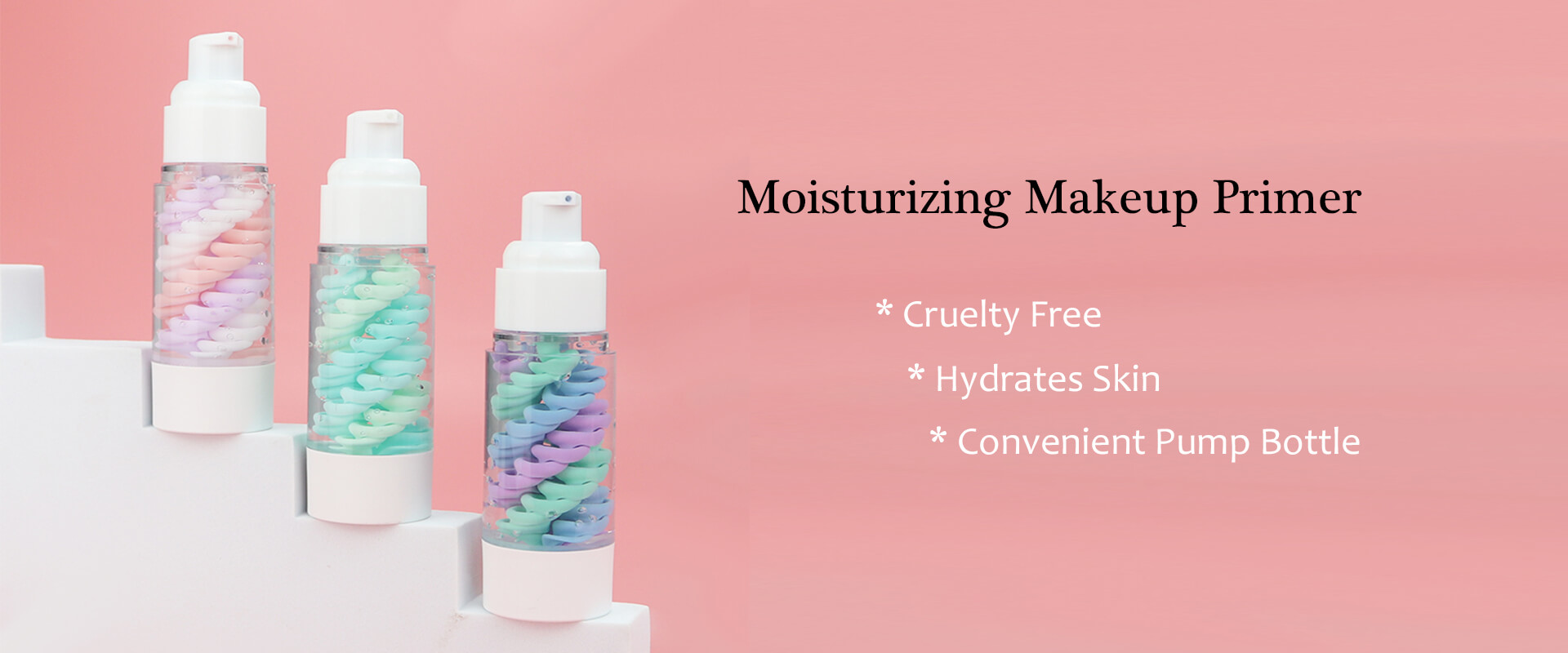
What Is Makeup Factory Cosmetics?
If you’ve ever lost sleep over late shipments, shade mismatches, or a batch that just feels… off, you’re not alone. Makeup factory cosmetics exist for one reason: to stop that chaos cold. Think of it like switching from a home kitchen to a five-star production line—same recipe, every time, no drama. For wholesalers and brand owners, consistency isn’t cute; it’s cash flow.
Behind the curtain, precision mixing, pigment milling, and airtight filling lines keep every pump and compact on script. In 2025, McKinsey noted that supply chain reliability now ranks among the top three buying factors for beauty retailers. That tracks.
As a Topfeel Beauty production manager put it in a 2024 industry roundtable, “Consistency is the real luxury.”
This is where scale meets sanity—and where your next bestseller gets built without the guesswork.
What Are Makeup Factory Cosmetics Exactly?
Makeup factory cosmetics sound technical, yet the idea is simple. In a makeup factory, cosmetics are produced at scale with tight control over shade, texture, and safety. This is how makeup factory cosmetics stay consistent, batch after batch.
Core Product Categories: Foundation, Concealer, Powder, Blush, Bronzer, Highlighter, Primer
Within makeup factory cosmetics, complexion products are engineered through controlled mixing and milling systems:
1. Base Makers
1.1 Foundation
● Types: liquid foundation, cream foundation, powder foundation
● Finish goals: matte finish, dewy finish
● Coverage range: full coverage, light coverage, long-lasting wear
1.2 Concealer
● Formats: liquid concealer, cream concealer, stick concealer
● Performance: brightening, hydrating, crease-proof for under-eye use
2. Setting & Smoothing
2.1 Powder
Color Sculpting
● Options: setting powder, translucent powder, pressed powder, loose powder
● Effects: oil control, blurring effect, finely milled texture, soft matte finish
3.3.1 Blush – powder blush, cream blush, liquid blush, from natural flush to buildable color
3.2 Bronzer – powder bronzer, cream bronzer, warm tone, cool tone, subtle sun-kissed glow
3.3 Highlighter – powder highlighter, liquid highlighter, glowy finish, from subtle sheen to intense glow
4. Prep Boosters
4.1 Primer – face primer, mattifying primer, pore-filling primer, built for makeup longevity and a smooth canvas
This structured system is why makeup factory cosmetics deliver repeatable quality across global cosmetic manufacturing lines.
Essential Skincare Prep: Cleanser, Toner, Moisturizer, Serum, Exfoliator, Face Mask
Before makeup factory cosmetics touch the skin, prep matters. A quick routine keeps results clean and pro-level:
● Clean with Cleanser
● Balance using Toner
● Lock hydration through Moisturizer
● Target concerns via Serum
● Reset weekly with Exfoliator or Face Mask
● Clean skin grips liquid foundation better.
● Hydrated skin reduces creasing in liquid concealer.
● Smooth texture improves pressed powder payoff.
According to a 2025 Statista beauty report, consumers continue prioritizing “long-wear performance paired with skin-care benefits” in factory-produced cosmetics.
That’s exactly where modern makeup factory cosmetics stand out—they blend skincare logic with factory precision.
Standard Packaging Materials: Glass Bottles, Plastic Jars, Metal Tubes, Cardboard Boxes, Applicator Wands, Pump Dispensers
In a makeup factory cosmetics environment, packaging follows a layered logic:
1. Primary Containers
1.1 Glass Bottles – protect sensitive serum-infused foundation formulas
1.2 Plastic Jars – common for cream blush or balms
1.3 Metal Tubes – ideal for eye primer or targeted products
2. Dispensing Systems
2.1 Pump Dispensers – support hygiene and measured dosing
2.2 Applicator Wands – precise use for under-eye concealers
3. Outer Protection
3.1 Cardboard Boxes – shield products during shipping
3.2 Batch coding for traceability in cosmetic factory production
Brands like Topfeel Beauty rely on this system to keep makeup factory cosmetics stable, safe, and retail-ready. In short, makeup factory cosmetics combine controlled production, tested packaging, and smart formulation—turning everyday beauty into scalable cosmetic manufacturing success.
Inside A Makeup Factory Cosmetics Production Line
A modern makeup factory cosmetics line is where color, chemistry, and clean-room control meet real-world beauty demands. From raw pigments to sealed bottles, every move inside a makeup factory shapes product safety and feel. At Topfeel Beauty, the flow of factory cosmetics production is tuned for precision, speed, and serious quality control.
Mixing Raw Materials and Pigments
In a busy makeup factory cosmetics environment, mixing sets the tone for everything that follows.
Raw Material Preparation
● Pigments are pre-checked for particle size and shade stability.
● Emollients and binders are weighed to tight tolerances.
● Actives used in a vitamin C serum, hyaluronic acid serum, or peptide serum are logged for traceability.
Controlled Blending
● Phase A: Oils for a cream cleanser or rich moisturizer are heated.
● Phase B: Water phase for hydrating toner or essence toner is stabilized.
● Phase C: Color dispersion for foundations and balms is slowly introduced.
Viscosity Adjustment
① Low shear for gel moisturizer bases
② Medium shear for daily moisturizer emulsions
③ High shear for pigment-heavy blends
Inside this cosmetics factory workflow, sensors track temperature, RPM, and mixing time in real time. A small tweak here can mean smoother payoff later. In a professional makeup production facility like Topfeel Beauty, that control keeps every batch consistent across global orders.
Milling for Uniform Texture
After blending, the semi-finished bulk heads to milling. Texture matters. No one wants streaky foundation or gritty balm.
• Particle reduction improves spreadability
• Even dispersion boosts shade accuracy
• Stable structure prevents separation
For complexion products and even base formulas used before a foaming cleanser or oil cleanser, milling refines pigment clusters. Three-pass grinding is common:
1.Coarse pass – breaks visible agglomerates
2.Medium pass – tightens distribution
3.Fine pass – enhances silky touch
In a makeup factory cosmetics plant, bead mills or triple-roll mills are calibrated based on formula type. Cream-based items, like a night cream or face balm, require different pressure than liquid blends used in micellar water or makeup remover systems.
At Topfeel Beauty, technicians sample after each cycle. If the drawdown test shows streaking, it goes back through. Simple rule: smooth in the lab means smooth on skin.
Filling and Capping Procedures
Once texture passes inspection, filling begins inside the makeup factory line.
A. Container Preparation
● Glass bottles cleaned with filtered air
● Metal tubes pressure-tested
● Pumps and droppers sterilized
B. Volumetric Filling
1.Calibration check
2.Trial fill
3.Automated high-speed run
4.Random weight verification
C. Capping and Sealing
● Torque control prevents leaks
● Induction sealing for sensitive formulas like brightening serum
● Batch coding for traceability
From sheet mask essences to thicker clay mask pastes, each product type in factory cosmetics demands specific nozzle design. Even a balancing toner or pH balancing toner needs anti-foam adjustments during high-speed filling.
In a large-scale makeup production setup, clean airflow systems reduce contamination risk while maintaining output targets.
Labeling, Assembly, and Sterilization
Final steps inside a makeup factory cosmetics facility focus on compliance and hygiene.
I. Labeling Control
● Ingredient list accuracy
● Barcode verification
● Regulatory symbol checks
II. Secondary Assembly
● Carton folding
● Insert placement
● Lot number cross-check
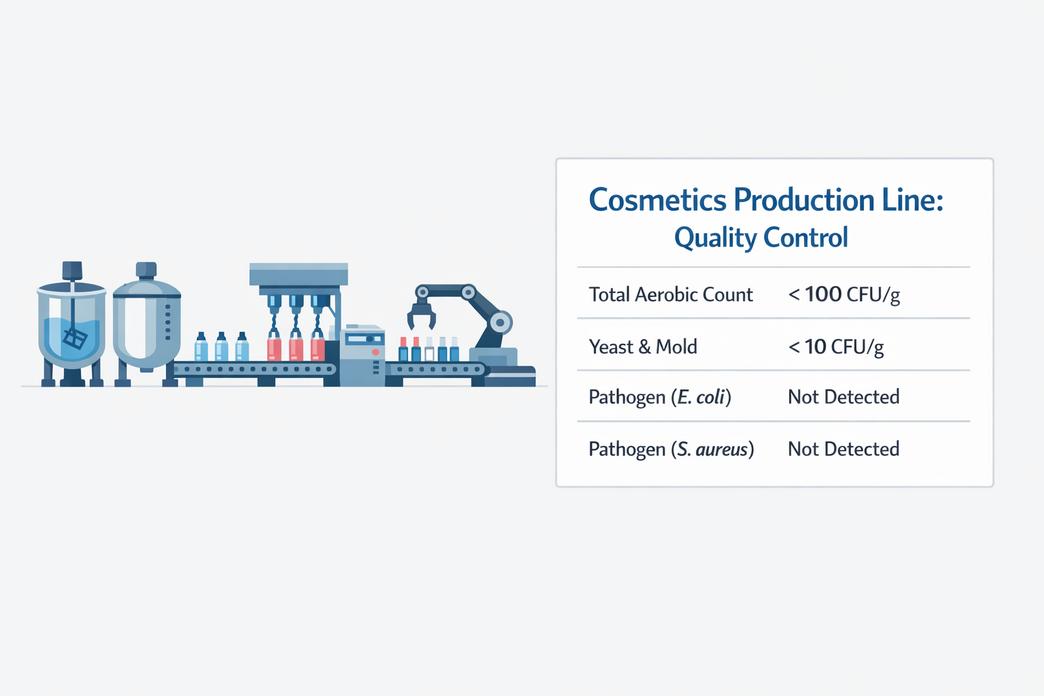
III. Sterilization & Microbial Testing
| Test Item | Acceptable Limit | Sampling Frequency | Typical Result |
|---|---|---|---|
| Total Aerobic Count | Every Batch20–60 CFU/g | ||
| Yeast & Mold | Every Batch | ||
| Pathogen (E. coli) | Not Detected | Random Lot | ND |
| Pathogen (S. aureus) | Not Detected | Random Lot | ND |
| Stability @ 40°C / 4 wks | No Separation | Per Formula | Stable |
Products like sleeping mask, detox mask, chemical exfoliant with glycolic acid, or salicylic acid blends go through extra compatibility checks.
In a tight, well-managed makeup factory, these final controls lock in safety before distribution. That’s how a trusted cosmetics factory partner turns lab formulas into shelf-ready products without cutting corners.
3 Key Ingredients That Define Factory Cosmetics
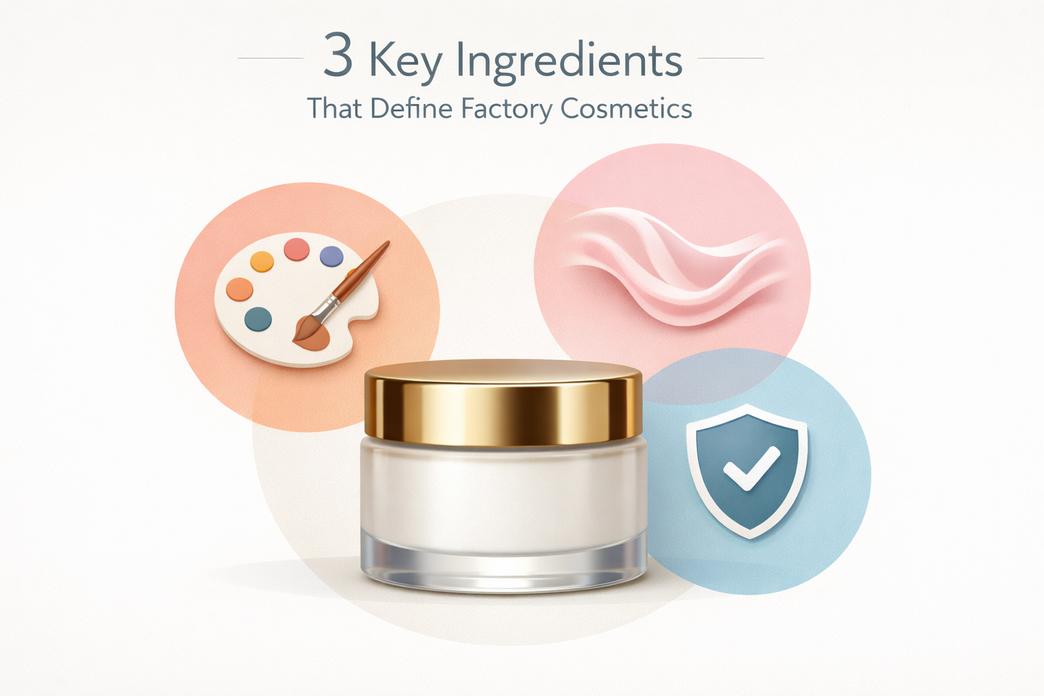
In the world of makeup factory cosmetics, ingredients are not random picks off a shelf. Every makeup factory cosmetic formula is built with purpose. From color payoff to shelf life, factory cosmetics depend on tight lab controls and repeatable systems. If you’ve ever wondered why makeup factory cosmetics feel identical batch after batch, it all comes down to three core ingredient groups working behind the scenes.
Pigments and Color Consistency
In makeup factory cosmetics, pigments sit at the core of visual identity. A makeup factory cosmetic line can’t survive if shade #02 looks different every shipment.
Raw Pigment Screening
● Purity check
● Particle size grading
● Batch Matching Process
● Lab sample creation
● Controlled lighting comparison
● Digital colorimeter verification
Packaging Compatibility
● Interaction with clear glass and amber glass containers
● Stability inside PET plastic or acrylic jars
● No staining in aluminum or tinplate components
In a makeup factory, cosmetics manufacturers log pigment ratios down to decimal points. A slight shift changes undertone. Professional makeup factory cosmetics suppliers like Topfeel Beauty maintain master shade standards so every production run aligns with archived benchmarks. That’s how a makeup factory cosmetic brand protects its signature look across global markets.
Emollients and Texture Uniformity
Texture sells. Customers don’t say “great viscosity,” but they feel it instantly.
● Silky glide in foundation
● Balanced slip in concealer
● Smooth blend with a mascara wand or doe-foot applicator
1. Light esters improve spreadability.
2. Natural oils boost comfort.
3. Synthetic emollients stabilize performance.
In makeup factory cosmetics, labs test how formulas move through a lotion pump, how they settle in a wide mouth jar, and how evenly product flows from a collapsible tube with a screw cap. If it clumps, drags, or separates, it goes back for reformulation.
A strong makeup factory cosmetic system keeps texture uniform across climates. Topfeel Beauty refines emollient ratios so factory cosmetics stay creamy in heat and stable in cooler storage.
Preservatives, Thickeners, and Stability Testing
Long shelf life isn’t luck. In makeup factory cosmetics, it’s science stacked in layers.
A. Preservation Control
1.Broad-spectrum preservative selection
2.Microbial challenge testing
3.Packaging barrier review inside frosted glass or PP plastic
B. Viscosity Management
1.Carbomer or gum thickener blending
2.Shear testing
3.Pump flow validation with airless pump systems
C. Stability Data Tracking
| Test Type | Duration (Weeks) | Pass Criteria |
|---|---|---|
| High Temp 45°C | 12 | No separation |
| Freeze-Thaw Cycle | 6 cycles | Texture unchanged |
| Light Exposure | 8 | No color shift |
| Microbial Challenge | 4 | Within safety limits |
A serious makeup factory cosmetic partner runs these tests before mass production. That’s how makeup factory cosmetics maintain structure, safety, and brand trust from warehouse to vanity shelf.
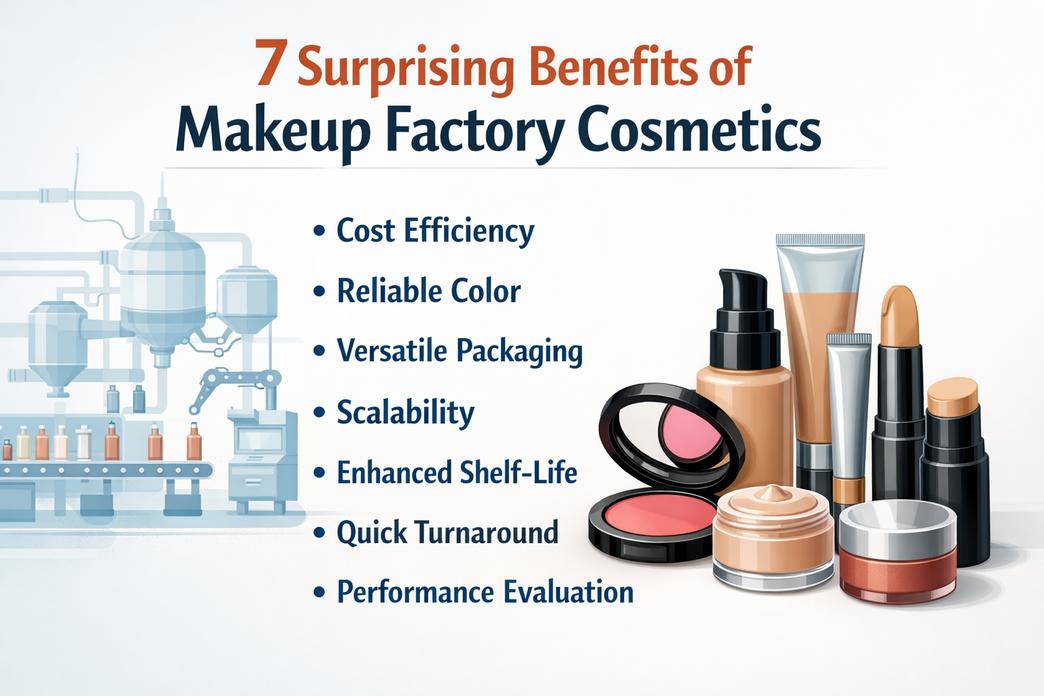
7 Surprising Benefits Of Makeup Factory Cosmetics
The world of makeup factory cosmetics isn’t just about big machines and shiny production lines. It’s where makeup, factory, and cosmetics meet smart systems, tight quality checks, and real cost control. From bulk pigment blending to automated filling, today’s cosmetic factory setup makes beauty products more stable, affordable, and consistent. If you’ve ever wondered how makeup factory cosmetics stay reliable at scale, here’s the inside scoop.
Cost Efficiency Through Bulk Mixing
In a professional makeup factory cosmetics environment, cost control starts with Bulk Mixing, and it runs deeper than people think.
Raw Material Optimization
● a) Purchasing
● Larger orders of Pigments reduce per‑unit cost.
● Bulk sourcing of Emollients locks in stable pricing.
● b) Storage
● Climate-controlled tanks prevent waste.
● Digital tracking cuts expired stock.
Production Efficiency
● a) Industrial Mixing Systems
● High-shear mixers ensure uniform blending.
● Reduced batch errors mean fewer reworks.
● b) Labor Allocation
● Automated dosing lowers manual mistakes.
● Fewer corrections save time and money.
Formula Integrity
● a) Stable Active Ingredients dispersion
● b) Consistent texture across cosmetic manufacturing cycles
Brands like Topfeel Beauty use large-scale blending to keep pricing sharp while protecting formula quality. That’s the sweet spot in modern makeup manufacturing.
Reliable Color Consistency Across Batches
Shade matching is serious business in any cosmetic factory. Customers expect today’s Foundation to match the one bought three months ago.
Below is a simplified quality control snapshot used in makeup factory cosmetics:
| Batch No. | Pigment Ratio (%) | Milling Time (min) | ΔE Color Deviation | Approval Status |
|---|---|---|---|---|
| F2301 | 12.5 | 45 | 0.8 | Pass |
| F2302 | 12.6 | 44 | 0.9 | Pass |
| F2303 | 12.4 | 46 | 1.1 | Conditional |
| F2304 | 12.5 | 45 | 0.7 | Pass |
| F2305 | 12.5 | 45 | 0.6 | Pass |
Here’s how it plays out:
● Standardized Milling keeps particle size tight.
● Routine Purity Analysis removes contamination risks.
● Digital shade libraries guide repeat production.
That’s how makeup factory cosmetics maintain real color consistency, not just good marketing talk.
Versatile Packaging: From Pump Dispensers to Metal Tubes
Packaging in a makeup factory isn’t one-size-fits-all.
● Pump Dispensers for liquid foundation
● Plastic Jars for cream blush
● Metal Tubes for concealer
Each format needs adjusted Filling pressure, sealing temperature, and torque settings. Some brands want a matte glass vibe; others prefer lightweight travel-friendly plastic.
Then there’s compliance.
Short label. Clear INCI list. Batch code printed clean.
Cosmetics manufacturing lines switch molds and nozzles fast, keeping production flexible without chaos. That flexibility gives brands room to experiment while staying efficient.
Scalability Enabled by Assembly and Labeling Lines
Growth in makeup factory cosmetics depends on smart Assembly and Labeling systems.
Small-Batch Launch
● a) Pilot Run
● Limited 1,000–3,000 units
● Manual inspection
● b) Feedback Loop
● Packaging durability test
● Shade adjustment if needed
Mid-Scale Expansion
● a) Semi-automated Labeling
● b) Barcode integration
● c) Batch traceability
Mass Production
● a) Fully automated assembly belts
● b) Real-time defect scanning
● c) Palletized distribution prep
Topfeel Beauty scales projects from indie startup runs to full retail distribution using structured cosmetic factory systems. No drama. Just clean expansion.
Enhanced Shelf-Life via Purity Analysis
Shelf life isn’t luck. It’s science inside the makeup factory cosmetics workflow.
Microbial Control
● a) Raw material screening
● b) Sterile Filling rooms
Stability Testing
● a) High-temperature storage
● b) Freeze-thaw cycling
Chemical Monitoring
● a) Routine Purity Analysis
● b) Oxidation tracking for oils
Each layer protects texture, fragrance, and pigment stability. When makeup manufacturing respects these steps, products stay fresh longer on retail shelves.
Quick Turnaround with Automated Filling and Capping
Speed matters in cosmetics manufacturing. Here’s how automation tightens timelines:
Step 1: Bulk formula enters calibrated Filling tanks.
Step 2: Sensors control exact volume output.
Step 3: Containers move to automated Capping heads.
Step 4: Torque testing ensures secure seals.
Step 5: Units proceed to inspection and boxing.
High-speed lines in a professional makeup factory reduce waste and maintain hygiene standards. Fast doesn’t mean sloppy. It means controlled.
Performance Evaluation for Consumer Confidence
Performance testing makes makeup factory cosmetics credible.
● Wear-time trials under heat and humidity
● Blendability scoring panels
● Finish analysis under studio lighting
Multiple test rounds.
Clear metrics.
Real-user feedback.
“Global demand for high-performance color cosmetics continues to rise, with consumers prioritizing long-wear and consistency,” noted Euromonitor International in its 2025 beauty and personal care outlook.
That’s why factory cosmetics now focus heavily on structured Performance Evaluation. When lab results match real-world use, trust builds naturally. And in today’s beauty market, trust sells faster than hype.
Overcoming Quality Inconsistency In Factory Cosmetics
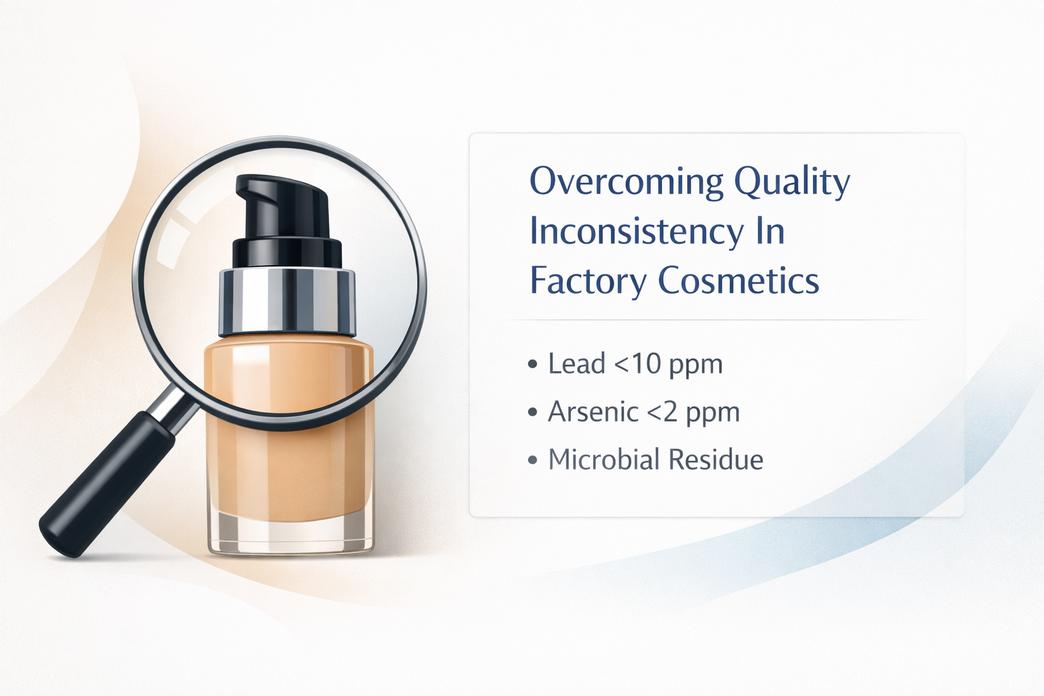
Quality slip-ups in a makeup factory cosmetics environment can ruin a launch overnight. From shade drift to odd smells, small gaps in a cosmetics factory quickly grow into brand damage. In modern makeup factory cosmetics production, tight control is not optional. Reliable beauty manufacturing keeps makeup products steady, safe, and ready for real-world shelves.
Implementing Rigorous Stability Testing
In a busy makeup factory cosmetics workflow, Stability Testing sits at the core of quality control.
1. Environmental Simulation
1.1 High-temperature chambers at 45°C
1.2 Low-temperature storage at 4°C
1.3 Humidity cycling at 75% RH
2. Physical Observation
2.1 Monitoring Color Shifting
2.2 Checking Separation in emulsions
2.3 Tracking viscosity drift
3. Time-Based Evaluation
3.1 1-month accelerated review
3.2 3-month stress tracking
3.3 6-month comparative baseline
| Test Condition | Temperature (°C) | Humidity (%) | Duration (Days) | Pass Range Deviation (%) |
|---|---|---|---|---|
| High Heat | 45 | 60 | 30 | ≤5 |
| Low Temp | 4 | 50 | 30 | ≤3 |
| Humidity High | 30 | 75 | 60 | ≤5 |
| Freeze-Thaw | -5 to 25 cycle | 50 | 14 cycles | ≤4 |
| Room Control | 25 | 50 | 180 | ≤2 |
Topfeel Beauty applies layered stress checks so every batch of makeup factory cosmetics holds up under pressure, not just in lab talk but in real shipping and storage.
Ensuring Purity Analysis Every Batch
Every cosmetics factory needs strict Purity Analysis.
● Raw material identity verification
● Heavy metal screening
● Active ingredient percentage validation
In daily practice, lab teams test for lead (makeup factory cosmetics line never skips batch coding or retention sampling.
“Beauty consumers are trading up for products that demonstrate safety, transparency, and proven efficacy,” notes McKinsey’s 2024 Global Beauty Report, pointing to quality assurance as a growth driver.
Topfeel Beauty reinforces this with supplier audits and digital traceability logs, keeping factory cosmetics clean and compliant.
Monitoring Microbial Limits in Production
Inside a cosmetics manufacturing plant, Microbial Limits depend on layered control.
1. Equipment Hygiene
1.1 Sanitized Mixing Tanks
1.2 CIP (Clean-in-Place) verification
1.3 Surface swab testing
2. Air & Water Control
2.1 HEPA-filtered airflow
2.2 Purified water conductivity checks
2.3 Routine bioburden testing
3. Personnel Discipline
3.1 Gowning protocol
3.2 Hand sanitation cycles
3.3 Entry log monitoring
This keeps makeup products safe long before packaging.
Optimizing Performance Evaluation Metrics
Great Performance Evaluation keeps factory cosmetics sharp.
1. Texture scoring (1–5 scale)
2. Texture Uniformity spread testing
3. Color Consistency delta-E measurement
4. Wear resistance over 8-hour trials
Short checks. Clear numbers. No guessing.
In makeup factory cosmetics, tight metrics help brands avoid returns and bad reviews. Topfeel Beauty aligns lab data with real-user trials, making sure each cosmetic product feels right, looks right, and lasts like it should.
Factory Cosmetics Vs. Private Label Cosmetics
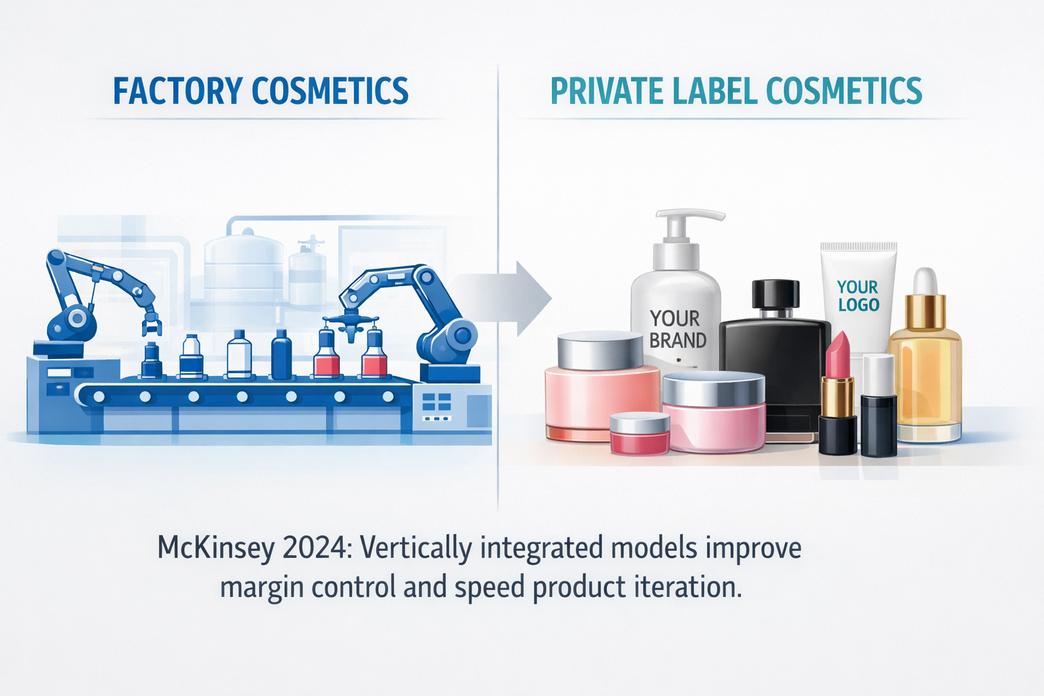
The world of makeup factory cosmetics can feel confusing at first. Some brands own the production floor, others partner up. Understanding how makeup factory, factory cosmetics, and cosmetic manufacturing work helps you choose smarter and grow faster.
Factory Cosmetics
When a brand runs its own makeup factory cosmetics operation, everything happens under one roof. A true makeup factory setup means tighter control, clearer standards, and faster reaction time.
Within Factory Cosmetics, operations usually break down like this:
● Production Control System
● Raw Material Screening
● Ingredient identity checks
● Supplier audits
● Batch coding for traceability
● Mixing & Milling
● Controlled temperature blending
● Pigment dispersion accuracy
● Texture refinement through calibrated Milling equipment
● Filling & Assembly
● Automated volume control
● Compatibility checks with Packaging Materials
● Quality Infrastructure
● Quality Control Metrics
● Microbial testing
● Stability observation cycles
● Shade consistency validation
● Internal audit loops
● Continuous improvement reviews
● Cost & Timeline Management
1. Direct labor allocation
2. Equipment utilization tracking
3. Inventory forecasting
According to McKinsey’s 2024 global beauty report:
“Brands with vertically integrated manufacturing models are improving margin control and speeding product iteration cycles.”
That’s why serious players in makeup factory cosmetics invest in their own cosmetic factory systems. A professional beauty factory setup keeps formulas safe, repeatable, and scalable.
Topfeel Beauty operates within this model mindset, aligning Manufacturing Processes and strict Quality Control Metrics to ensure each batch of makeup factory cosmetics meets export standards without drama.
In short, factory cosmetics give brands full steering power. No middle layers. No guessing games.
Private Label Cosmetics
Private Label Cosmetics work differently. Instead of owning a full makeup factory cosmetics facility, brands collaborate with an experienced third-party cosmetic manufacturer.
Here’s how it usually plays out:
● You choose a base formula from a trusted makeup factory.
● You tweak shades, scent, or finish.
● You customize Packaging Materials.
● The partner handles Stability Testing and regulatory files.
Simple, right? Kind of.
Private label within the makeup factory cosmetics world often includes:
● Pre-tested formula libraries
● Certified production lines
● Flexible minimum order quantities
Then comes the brand layer:
1.Shade selection
2.Logo placement
3.Outer box storytelling
Some companies also request small formula adjustments under controlled Manufacturing Processes, especially for trending textures in makeup factory lines.
A reliable beauty factory partner matters. That’s where experience kicks in. Topfeel Beauty supports brands that want the speed of private label but still expect serious control over pigment payoff, wear time, and compliance. The factory cosmetics backbone stays solid while the branding stays unique.
So the difference?
Factory cosmetics equal ownership and operational depth.
Private label cosmetics equal flexibility and faster market entry.
Both exist inside the wider engine of makeup factory cosmetics. The smart move depends on budget, timeline, and how hands-on you want to be in your cosmetic manufacturing journey.
FAQs
What defines makeup factory cosmetics and how are they produced?
Makeup factory cosmetics are mass-produced beauty lines crafted for steady performance and repeatable results. From Foundation and Concealer to Powder, Blush, Bronzer, Highlighter, and Primer, each formula follows a disciplined path:
1.Formulation Stage – Pigments, Emollients, Preservatives, Thickeners, Fragrances, and Active Ingredients are balanced for safe skin contact.
2.Precision Production – Mixing and Milling refine Texture Uniformity; Sterilization protects purity before Filling and Capping.
3.Final Preparation – Labeling and Assembly secure retail readiness.
Behind every smooth sweep of a Foundation Brush or soft blend with a Blush Brush lies strict control over Color Consistency and Stability Testing—so every batch feels familiar in the hand and on the skin.
How do factories maintain quality and texture consistency?
Quality control is both technical and personal—because wearers notice every flaw.
● Color Consistency keeps Foundation and Concealer shades identical across restocks.
● Texture Uniformity ensures Powder glides evenly with a Powder Brush.
● Purity Analysis & Microbial Limits guard skin safety.
● Performance Evaluation checks wear time, blendability with a Concealer Brush or Eyeshadow Brush, and finish under heat or light.
Short version: Stability Testing happens long before a customer opens the package. The result is makeup that feels dependable, not unpredictable.
What packaging and skincare preparation support makeup factory cosmetics?
Great makeup begins before application and ends with smart packaging.
Preparation enhances adhesion and finish:
● Cleanser and Exfoliator smooth the surface.
● Toner and Serum rebalance.
● Moisturizer seals hydration; a Face Mask boosts radiance.
Packaging protects that effort:
| Packaging Option | Practical Benefit |
|---|---|
| Glass Bottles | Premium feel for Foundation |
| Plastic Jars | Durable for Cream products |
| Metal Tubes | Controlled squeeze for Primer |
| Pump Dispensers | Hygienic daily use |
| Applicator Wands | Precise Concealer or Highlighter application |
| Cardboard Boxes | Structured outer protection |
From factory floor to vanity table, makeup factory cosmetics are built for real routines—steady quality, skin respect, and packaging that fits daily life.
References
1.Uncover Closes Oversubscribed Funding Round - cioafrica.co
2.ISO 22716: Good Practices to Follow During Cosmetic Products Manufacturing - chemsafe-consulting.com
3.Small Businesses & Homemade Cosmetics: Fact Sheet - fda.gov
4.FDA Authority Over Cosmetics - fda.gov
5.ISO 22716 | Good Manufacturing Practices for Cosmetics - intertek.com
6.Modernization of Cosmetics Regulation Act of 2022 (MoCRA) - fda.gov
7.ISO 22716 – Complete Guide to Good Manufacturing Practices - certiget.eu
8.Color Cosmetics Market Size, Industry Analysis - zionmarketresearch.com
9.APAC Beauty revealed: Key consumer insights for 2025 - euromonitor.com
10.Uncover Secures $1.4M in Oversubscribed Seed II Funding Round - techeconomy.ng
11.Summary of Cosmetics Labeling Requirements - fda.gov
12.Guidance for Industry - Cosmetic Good Manufacturing Practices - fda.gov
13.Europe Colour Cosmetics Market Growth Opportunities - kenresearch.com
14. Singapore Premium Beauty and Personal Care Market Insights 2030 - vyansaintelligence.com
Related Products

Top Selling Products



- Related Blog
- Related Videos
- Reviews
