The Benefits of Wholesale Beauty Supplies
Wholesale beauty supplies can feel like buying backstage passes to the cosmetics industry. You stop paying boutique prices for every pigment and pump bottle and start thinking like a brand owner, not a hobbyist. When margins are thin and trends move at TikTok speed, paying retail for ingredients is like filling a swimming pool with a teaspoon.
The global beauty market is projected to reach about $736 billion by 2028, according to Fortune Business Insights. That kind of growth isn’t for the slow or the small-minded.
Bulk sourcing cuts unit costs, speeds production, and keeps formulas consistent batch after batch. It’s the difference between hustling product and building an empire.
5 Surprising Benefits of Wholesale Beauty Supplies You Need
The beauty game moves fast, and margins can get tight real quick. Smart brands turn to wholesale beauty supplies to stay ahead. When beauty, wholesale, and supplies work together, costs drop, speed improves, and growth feels way more doable.
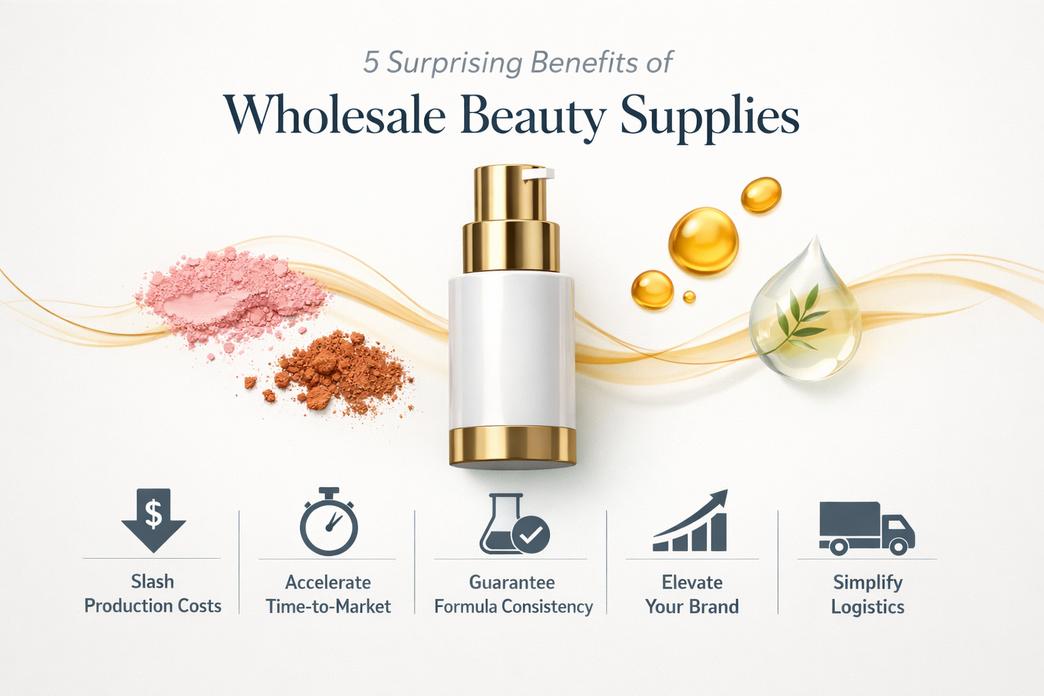
Slash Production Costs with Bulk Pigments and Oils Purchases
Working with wholesale beauty supplies starts at the source—raw materials. Bulk buying changes the math.
- Bulk purchases of pigments and oils
1.1 Lower production costs per unit
1.2 Reduce supplier markups tied to small MOQs
1.3 Stabilize long-term manufacturing expenses
- Strategic sourcing of core inputs
2.1 Iron oxides and lakes for foundation and lipstick
2.2 Plant-based oils and esters for emollient systems
2.3 Waxes for structure and payoff
- Fewer purchase orders
- Better freight consolidation
- Stronger pricing negotiations
- Cost control impact
3.1 Predictable budgeting
3.2 Improved gross margin
3.3 Room to reinvest in packaging or marketing
Brands using beauty wholesale supplies often notice something simple: buying more upfront can mean spending less overall. Topfeel Beauty supports scalable pigment and oil sourcing, helping brands align manufacturing expenses with realistic growth targets.
Accelerate Time-to-Market through Streamlined Mixing and Milling
Speed matters. In cosmetics, time-to-market can decide who trends and who gets left behind.
Here’s how streamlined mixing and milling improve production efficiency:
- Pre-dispersed pigments reduce milling cycles
- Optimized batch sizing improves manufacturing speed
- Integrated filling lines shorten product development timelines
Quick wins often look like this:
- Shorter lab-to-bulk transfer time
- Faster shade adjustments
- Less rework during scale-up
When beauty supplies wholesale partners align R&D with factory scheduling, extrusion, filling, and labeling flow smoother. That means mascara and lip gloss lines hit shelves faster, without cutting corners.
Guarantee Formula Consistency via Stability Testing and Viscosity Control
Consistency builds trust. In wholesale beauty supplies, that trust comes from data and discipline.
- Quality assurance framework
1.1 Incoming ingredient quality checks
1.2 Batch coding and traceability
1.3 Controlled storage environments
- Lab validation systems
2.1 Stability testing under heat, light, and freeze-thaw cycles
2.2 Viscosity control using calibrated rheometers
2.3 Microbial challenge tests
- Texture analysis
- Shade comparison panels
- Wear-time evaluation
- Outcome
3.1 Strong formula consistency
3.2 Protected product integrity
3.3 Compliance with global manufacturing standards
Reliable cosmetic bulk supplies reduce batch variation in foundation and mascara. That’s how brands avoid costly recalls and awkward customer feedback.
Elevate Your Brand with Customizable Foundation, Lipstick, and Mascara
Standing out isn’t luck. It’s smart customization inside your cosmetic products.
- Product formulation flexibility
1.1 Adjustable pigment loads for inclusive foundation ranges
1.2 Finish control for matte or satin lipstick
1.3 Fiber intensity options in mascara
- Packaging differentiation
2.1 Custom molds
2.2 Branded applicators
2.3 Unique surface finishes
- Shade naming strategy
- Texture storytelling
- Limited-edition drops
- Brand outcome
3.1 Stronger brand elevation
3.2 Clear unique offerings
3.3 Higher perceived value
Topfeel Beauty works with brands that want more than standard beauty supplies wholesale catalogs. Custom shades and applicators help transform basic wholesale beauty supplies into signature lines customers remember.
Simplify Logistics from Raw Material Sourcing to Distribution Channels
Growth gets messy without tight supply chain management. Smart procurement keeps things calm.
Here’s what streamlined logistics often includes:
- Centralized raw material sourcing
- Real-time inventory management dashboards
- Coordinated fulfillment planning
Then it scales:
- Consolidated warehousing
- Automated order processing
- Multi-region distribution channels integration
When beauty wholesale supplies are aligned with forecasting tools, overstocks drop and stockouts shrink. Brands gain clearer visibility from supplier to retailer. In short, logistics simplification frees up time to focus on selling, not scrambling.
Choosing the right wholesale beauty supplies partner turns daily operations from chaotic to controlled—and that shift makes all the difference.
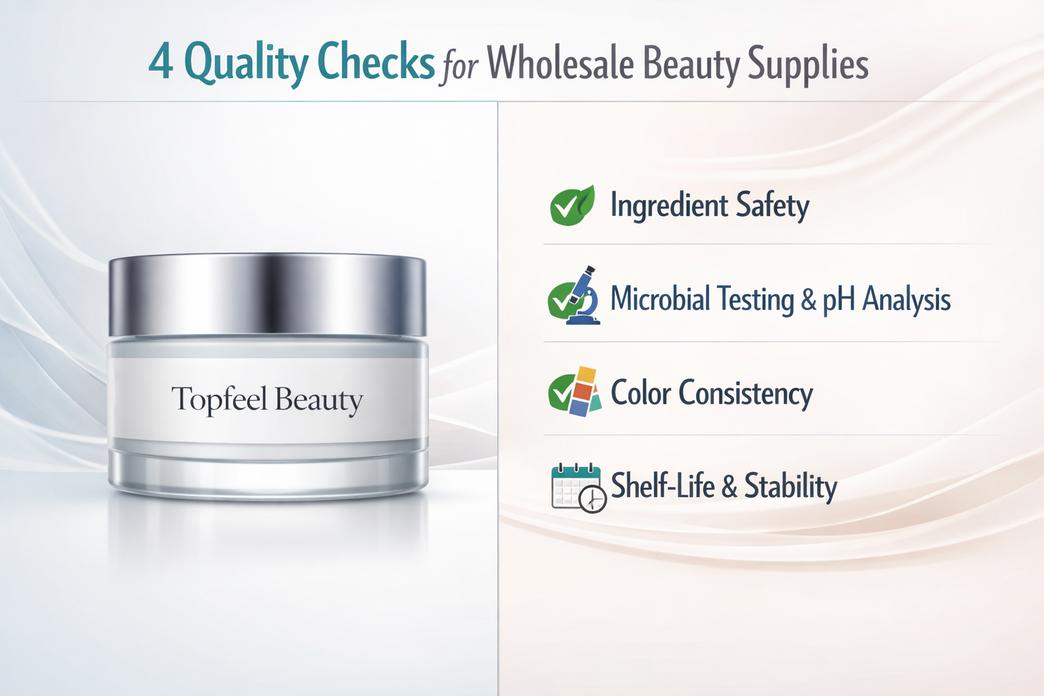
4 Quality Checks for Wholesale Beauty Supplies
Wholesale beauty supplies move fast, but quality can’t cut corners. When buying beauty supplies in bulk or sourcing wholesale cosmetics for retail, every formula, pigment, and jar has to pass strict checks. Reliable wholesale beauty supplies protect your customers and your brand rep. Trusted suppliers like Topfeel Beauty build these checks into daily production, not just final inspections.
Ensuring Ingredient Safety with FDA Regulations and Allergen Information
For wholesale beauty supplies, ingredient review sits at the core of product approval.
Ingredient Safety Review
- Verification of Cosmetic ingredients against FDA regulations databases
- Cross-check with updated Safety data sheets
- Screening for restricted colorants and preservatives
Allergen Control System
- Clear Allergen information labeling
- Raw material supplier declarations
- Batch-level traceability
Regulatory Compliance Workflow
- Documentation audit
- Formula approval
- Final Regulatory compliance sign-off
Within beauty wholesale programs, this nested system ensures that pigments, binders, and fragrances meet global rules. Topfeel Beauty integrates supplier audits and internal lab validation so bulk beauty supplies meet both U.S. and EU cosmetic standards.
Conducting Microbial Testing and pH Analysis for Skin-Friendly Formulas
Wholesale cosmetics must stay safe long after shipping.
Testing structure:
A. Microbial testing
- Total aerobic count
- Yeast and mold screening
- Pathogen absence confirmation
B. pH analysis
C. Formulation testing
- Monitoring Microbial contamination risks
- Evaluating Product stability over time
Lab Reference Data
| Test Item |
Acceptable Range |
Typical Result |
| Total Plate Count |
25 CFU/g |
| pH (Foundation) |
5.0–7.0 |
5.8 |
| Yeast & Mold |
|
For wholesale beauty supplies, these numbers matter. A balanced pH keeps concealers gentle, while tight microbial limits protect users and retailers alike.
Verifying Color Consistency in Eyeshadow Palettes and Blush Pigments
Shade drama sells. Shade variation does not.
Quality control for Color consistency in Eyeshadow palettes and Blush pigments follows layered checks:
- Raw pigment inspection
- Milling time calibration
- Batch-level Batch testing
- Final Visual inspection under standardized lighting
Inside bulk beauty supplies production:
- Pre-mix color check
- Pressed pan density test
- Randomized shade comparison for Color accuracy
This nested workflow reduces mismatch between sample swatches and mass production. For retailers sourcing wholesale beauty supplies, consistent pink means consistent pink—no surprises on shelf.
Performing Shelf-Life Determination and Stability Testing on Concealer Jars
Cream formulas can shift under heat, light, and air.
Stability protocol for Concealer jars includes:
I. Accelerated testing
- 40°C heat exposure
- 75% humidity chamber
- UV light simulation
II. Real-time monitoring
- Texture change
- Odor shift
- Early Product degradation signs
III. Documentation
- Confirmed Shelf-life determination
- Printed Expiration dates
- Final Stability testing approval
For wholesale beauty supplies, this step protects inventory during shipping and storage. Topfeel Beauty validates packaging compatibility, ensuring jars and pumps maintain formula integrity across global distribution.
Private Label Vs. White Label Cosmetics
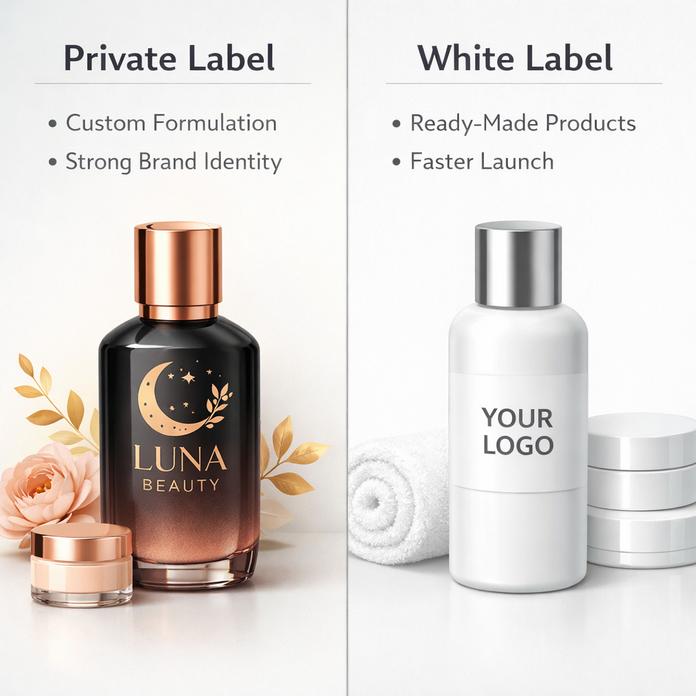 Choosing between private label and white label isn’t just industry talk. It shapes how you source wholesale beauty supplies, control branding, and grow profit margins in a competitive beauty supplies wholesale market that moves fast.
Private Label Cosmetics
Private label works best for brands that want control from formula to shelf. When sourcing wholesale beauty supplies, this route gives deeper ownership over what goes inside the bottle and how it looks outside.
- Core advantages
- Product Creation
- custom formulation allows full ingredient control
- Built around a specific target market
- Supports long-term product development planning
- Brand Positioning
- Strong brand identity with unique branding elements
- Fully exclusive products not shared with other retailers
- Supply Chain
- Integrated with bulk beauty supplies ordering
- Flexible MOQs for scaling beauty wholesale strategies
- What this means for buyers of wholesale beauty supplies
- Higher upfront investment
- Longer sampling cycles
- Greater differentiation in crowded beauty supplies wholesale catalogs
For retailers building premium lines through wholesale beauty supplies, private label feels personal. You own the formula story. You control packaging, from glass droppers to luxury compacts. With partners like Topfeel Beauty, brands can align formulation labs with packaging design, keeping their beauty supply wholesale pipeline smooth while still standing out.
In short, private label turns wholesale beauty supplies into signature collections rather than stock inventory.
White Label Cosmetics
White label fits brands that want speed. In the world of wholesale beauty supplies, speed often equals shelf presence.
- Operational structure
- Product Base
- ready-made products built on existing formulas
- Pre-tested shades and textures
- Branding Layer
- Light brand customization
- Mostly generic packaging with logo swaps
- Commercial Edge
- faster launch timelines
- Typically more cost-effective
- Broad product selection from beauty supplies wholesale catalogs
- Practical impact for wholesale beauty supplies buyers
- Shorter production lead times
- Lower R&D spending
- Easier entry into beauty wholesale markets
White label keeps things simple. Pick from ready stock. Add your branding. Launch fast. For startups browsing wholesale beauty supplies for the first time, this model lowers risk while still offering shelf-ready cosmetics.
Many growing brands begin with white label through Topfeel Beauty, test demand in beauty supply wholesale channels, then shift to private label once sales data supports deeper customization.
Both paths rely on smart sourcing of wholesale beauty supplies. The difference comes down to how much control—and how much identity—you want to own.
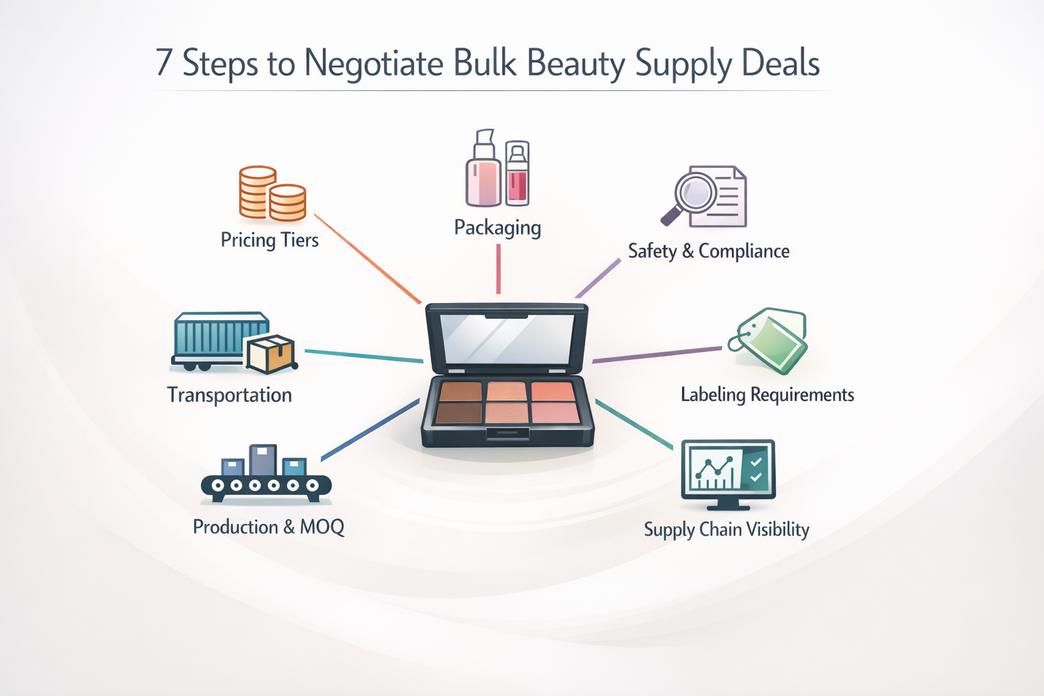
7 Steps to Negotiate Bulk Beauty Supply Deals
Negotiating wholesale beauty supplies isn’t just about shaving cents off a unit price. It’s about protecting margin, keeping beauty supplies flowing, and making sure your brand doesn’t get stuck with dead stock. Smart buyers treat wholesale beauty supplies like strategy, not errands.
Step 1 – Assess Minimum Order Quantities and Pricing Tiers
When reviewing Minimum Order Quantities and Pricing Tiers, break it down into two layers:
- Cost Layer
- Base Wholesale Pricing
- Available Volume Discounts
- Hidden fees affecting Cost Structure
- Planning Layer
- Storage impact on Budget Allocation
- Cash tied up in beauty wholesale orders
- Reorder frequency for wholesale beauty supplies
Ask suppliers to show tier jumps clearly. A small increase in units can unlock stronger volume discounts, but only if your sell-through rate supports it.
Step 2 – Compare Packaging Options from Glass Bottles to Airless Pumps
Packaging affects cost and brand vibe.
- Review Packaging Options: Glass Bottles, jars, tubes, Airless Pumps.
- Check Material Compatibility with active formulas.
- Evaluate Product Preservation and oxygen exposure.
- Match Aesthetic Appeal with your target retail price.
For wholesale beauty supplies, the right Dispensing Mechanisms reduce waste and returns, which quietly protects profit.
Step 3 – Verify Ingredient Safety, Microbial Testing, and Manufacturing Practices
Under supplier review, organize requirements like this:
- Compliance
- Ingredient Safety dossiers
- Proof of Regulatory Compliance
- Production
- Assurance
- Internal Quality Control
- Clear Formulation Standards supporting Product Integrity
McKinsey’s 2024 global beauty outlook noted that “regulatory scrutiny and ingredient transparency now directly influence brand trust and repeat purchase behavior.”
That insight hits hard in wholesale beauty supplies. Skipping paperwork is not an option.
Step 4 – Negotiate Transportation Costs and Warehousing Solutions
Break logistics into parts:
- Freight
- Transportation Costs by sea, air, rail
- Backup Shipping Methods
- Storage
- Local vs. bonded Warehousing Solutions
- Capacity of Storage Facilities
- Flow
- Realistic Delivery Timelines
- Strength of Distribution Networks
Small tweaks in Logistics Management can lower total landed cost across bulk beauty supplies.
Step 5 – Clarify Labeling Requirements and Claim Substantiation Details
Keep it tight and documented:
- Labeling Requirements aligned with Regulatory Guidelines
- Clear Ingredient Disclosure
- Proof for Marketing Claims and Claim Substantiation
Missing Compliance Standards can stall wholesale beauty supplies at customs. Nobody wants that.
Step 6 – Align on Assembly, Filling, and Capping Processes
Organize production talks:
- Line Setup
- Assembly Processes
- Filling Processes
- Capping Processes
- Control
- In-line Quality Assurance
- Monitoring the Manufacturing Line
Tight Production Workflow equals fewer delays and better operational efficiency.
Step 7 – Secure Supply Chain Visibility and Inventory Management
Think in three tracks:
- Visibility
- Real-time Supply Chain Visibility
- Shared dashboards with suppliers
- Planning
- Accurate Demand Forecasting
- Linked Production Planning
- Control
- Smart Inventory Management
- Balanced Stock Levels
- Smooth Order Fulfillment
Reliable Supplier Relations turn wholesale beauty supplies into a steady engine. Brands like Topfeel Beauty focus heavily on visibility systems, making beauty supplies sourcing feel less risky and a lot more predictable.
FAQs
How can buying wholesale beauty supplies cut makeup production costs?
Bulk purchasing shifts the math in your favor.
- Lower unit pricing on pigments, emollients, waxes, and oils
- Reduced cost per foundation, lipstick, or eyeshadow palette batch
- Fewer small-lot shipping fees across raw material sourcing and transportation
When milling and mixing happen at scale, filling and capping lines run longer with fewer interruptions. The result: steadier margins without sacrificing ingredient quality.
What tests ensure formula consistency for private label cosmetics?
Consistency is the line between a loyal customer and a return.
- Stability testing — checks how foundation or mascara performs under heat and light.
- Viscosity measurement — keeps concealer and lip gloss smooth, not runny.
- Color consistency — protects blush and eyeshadow palette shades from batch shifts.
- Microbial testing — guards against contamination during filling and assembly.
Together, these quality control steps protect texture, tone, and wear from production to shelf.
Why are FDA regulations critical when sourcing cosmetic ingredients?
Compliance is not paperwork—it’s protection.
- Ingredient verification confirms pigments, preservatives, and binders meet FDA regulations.
- Clear labeling requirements support allergen information transparency.
- Documented manufacturing practices reduce delays during distribution.
One missing document can stall warehousing and fulfillment. Strong regulatory discipline keeps products moving.
What’s the difference between private label and white label cosmetics?
The choice shapes your brand story.
| Aspect |
Private Label Cosmetic Products |
White Label Products |
| Formula |
Custom foundation, mascara, or blush formulations |
Pre-developed standard formulas |
| Packaging |
Tailored glass bottles, airless pumps, compacts |
Standard jars or plastic tubes |
| Timeline |
Longer due to formulation and stability testing |
Faster launch cycle |
| Control |
Greater say in ingredients and claim substantiation |
Limited customization |
Private label demands more coordination in mixing, extrusion, labeling, and assembly—but it builds stronger identity.
How do manufacturers guarantee color consistency in large orders?
Shade variation can damage trust overnight.
Manufacturers control it through:
- Precise pigment dispersion during milling
- Controlled mixing speeds and temperature
- Texture analysis and pH testing before filling
- Shelf-life determination under humidity and light exposure
Supply chain visibility then tracks inventory management and distribution channels, ensuring the same blush or lipstick tone arrives intact—batch after batch.
References
[1] Cosmetics Market Size, Share & Growth - Fortune Business Insights
[2] Beauty Industry News and Trends - Vogue Business
[3] Product Development in Cosmetics - Cosmetics Design
[4] ISO 22716 Cosmetics Good Manufacturing Practices - ISO
[5] Supply Chain Management News - Supply Chain Dive
[6] Ingredient Safety Review - Cosmetic Ingredient Review
[7] FDA Cosmetics Regulations - FDA
[8] Cosmetic Ingredients Information - Personal Care Products Council
[9] EU Cosmetics Regulation - European Commission
[10] Skin-Friendly Formulas Database - Environmental Working Group
[11] Private Label Market Data - Statista
[12] Global Cosmetic Industry Wholesale Markets - GCI Magazine
[13] Good Manufacturing Practices (GMP) for Cosmetics - FDA
[14] Science and Safety of Cosmetics - Cosmetics Info
[15] The Beauty Market in 2023 - McKinsey & Company