
Better for Your Skin: What Is Vegan Makeup and How It Works
What is vegan makeup, and is it kinder to skin? Plot twist: vegan means no animal-derived ingredients—not automatically hypoallergenic, organic, or cruelty-free.
Formula matters. Minerals, botanical oils, plant pigments, and vegan waxes shape feel and performance.
Topfeel Beauty’s official materials emphasize GMP production, ISO-certified systems, formula customization, and quality control for private-label cosmetics. For brands exploring production options, Topfeel Beauty provides custom solutions formulated to meet specific texture requirements.
Key Points: What Is Vegan Makeup in a Nutshell
→ Definition: Excludes all animal-derived ingredients—does not imply hypoallergenic or organic by default.
→ Formula Focus: Relies on mineral powders, plant-based pigments, organic botanical oils, and synthetic vegan waxes for texture and performance.
→ Skin Benefits: Can nourish the barrier, even out tone, and minimize irritation when formulated with quality-controlled, allergen-aware processes.
→ Certification & Quality: Look for GMP production, ISO certification, COSMOS/Ecocert standards, and cruelty-free seals—key for transparency and safety.
3 Steps: What Vegan Makeup Means For Your Skin
So, what is vegan makeup, and what can it actually do for skin? Vegan formulas skip animal-derived ingredients, while thoughtful oils, pigments, and bases shape comfort and wear. Topfeel Beauty combines these choices with practical formulation controls, making vegan beauty a bit easier to understand.
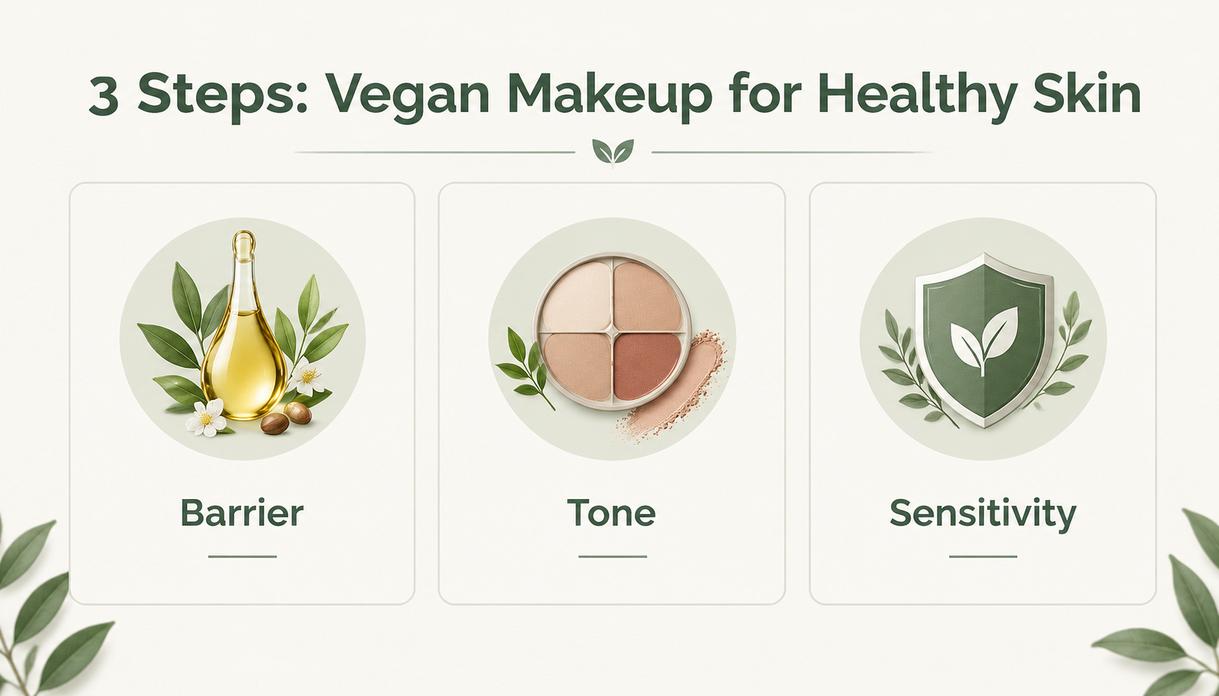
Nourish Skin Barrier with Organic Botanical Oil
A well-built vegan formula may support softer, more comfortable skin by pairing organic oil with carefully chosen botanical extract ingredients.
-
Barrier support
- Natural lipids can fill spaces between dry surface cells and limit moisture loss.
- That helps maintain hydration and the skin barrier, especially in complexion products worn for hours.
-
Ingredient choices
- A suitable plant nutrient profile can add conditioning benefits without relying on animal-derived oils.
- COSMOS Organic or Ecocert certification can also provide recognized standards for sourcing and processing.
That matters when asking what is vegan makeup beyond the label.
Even Out Tone via Plant-Based Pigment Blend
Good color needs more than a vegan claim. It needs consistency.
-
Color design
- A plant-based pigment system can work alongside mineral tint ingredients to create natural color.
- Careful blending helps the formula sit evenly across the complexion.
-
Shade control
- Batch testing checks color consistency.
- Custom matching from Topfeel Beauty can tune coverage for a target skin tone, while compatible botanical extract ingredients support the formula concept.
In simple terms, vegan makeup can deliver practical shade variety without animal-derived colorants.
Shield Sensitivity through Cruelty-Free Base
Vegan and cruelty-free are related ideas, but they are not the same claim.
-
Comfort priorities
- A gentle formula or soothing base may support skin protection and reduce avoidable discomfort.
- Allergen-aware ingredient reviews can help with sensitivity and potential irritation relief.
-
Claim clarity
- A cruelty-free formulation refers to animal-testing practices; vegan refers to animal-derived ingredients.
- Neither automatically means hypoallergenic, so safety dossiers and careful formulation still count.
That distinction gives “what is vegan makeup” a clearer, skin-focused meaning.
What Is Vegan Makeup Ingredient Categories?
What is vegan makeup? It is makeup made without animal-derived ingredients, using mineral, plant, or synthetic substitutes instead. Learning what is vegan makeup means checking each formula carefully; Topfeel Beauty can support vegan makeup development with ingredient-focused formulation choices. As a cosmetics packaging supplier, Topfeel Cosmetic offers related packaging solutions ranging from stock components to custom molds.
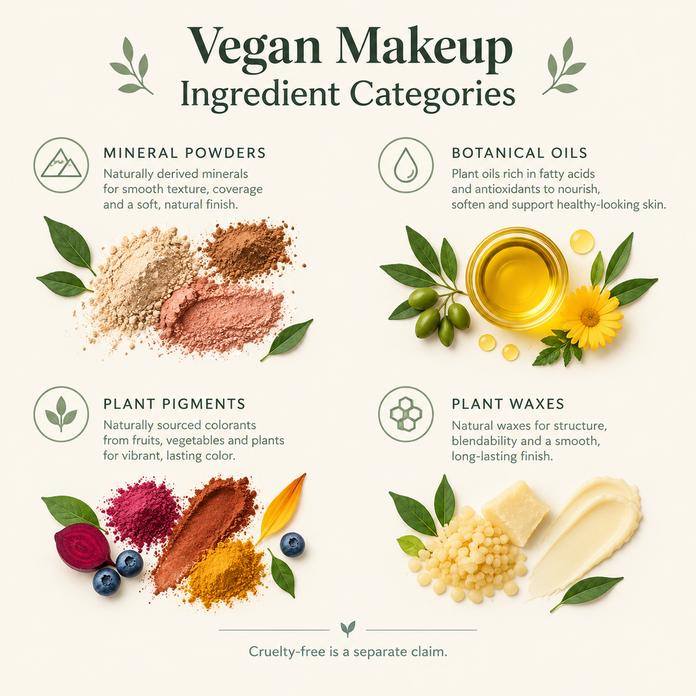
Mineral Powder and Its Benefits
Minerals give many formulas their familiar feel and finish.
-
Color and coverage
- mica adds shimmer or slip.
- iron oxides create earthy shades.
-
Finish and function
- silica supports oil control and a matte finish.
- zinc oxide and titanium dioxide may provide opacity.
Typical particle specifications vary by cosmetic grade:
| Material | Example size (µm) | Example use level (%) |
|---|---|---|
| Mica | 10–60 | 5–40 |
| Iron oxide | 0.1–10 | 1–20 |
| Silica | 2–15 | 1–10 |
| Zinc oxide | 0.1–5 | 1–25 |
| Titanium dioxide | 0.2–5 | 1–20 |
Actual specifications depend on supplier and formula.
Organic Botanical Oils Explained
In asking what is vegan makeup, oils matter too. Jojoba oil offers smooth slip, while argan oil, rosehip seed oil, and coconut oil can support hydration.
Organic status does not automatically mean vegan. Certification and batch records help trace sourcing; claims such as non-comedogenic should also have suitable testing behind them.
Plant-Based Pigment Varieties
Plant colors can be pretty versatile.
-
beetroot powder can contribute red tones.
- Stability may change with pH or light.
-
spirulina can supply blue-green color.
- Testing should confirm permitted cosmetic use.
-
cocoa powder, caramel, and fruit extracts can broaden hue intensity.
These natural colorants still require safety and regulatory review.
Synthetic Wax Alternatives Overview
A vegan makeup formula needs animal-free structure as well as color.
-
Plant wax options
- candelilla wax
- carnauba wax
- sunflower seed wax
- bayberry wax
-
Formula roles
- support texture binding
- influence glide and stability
- assist emulsification in suitable systems
That helps explain what is vegan makeup in practical terms: ingredient origin matters, while a cruelty-free formulation is a separate claim requiring its own verification.
Vegan Vs. Conventional Makeup: Which Feels Lighter?
Asking what is vegan makeup often leads to another practical question: does it actually feel lighter on skin? Vegan status tells you where ingredients come from, not how weightless a product feels. Texture is shaped by powders, oils, waxes, pigments, and other formula choices, so both vegan and conventional makeup can feel surprisingly light.
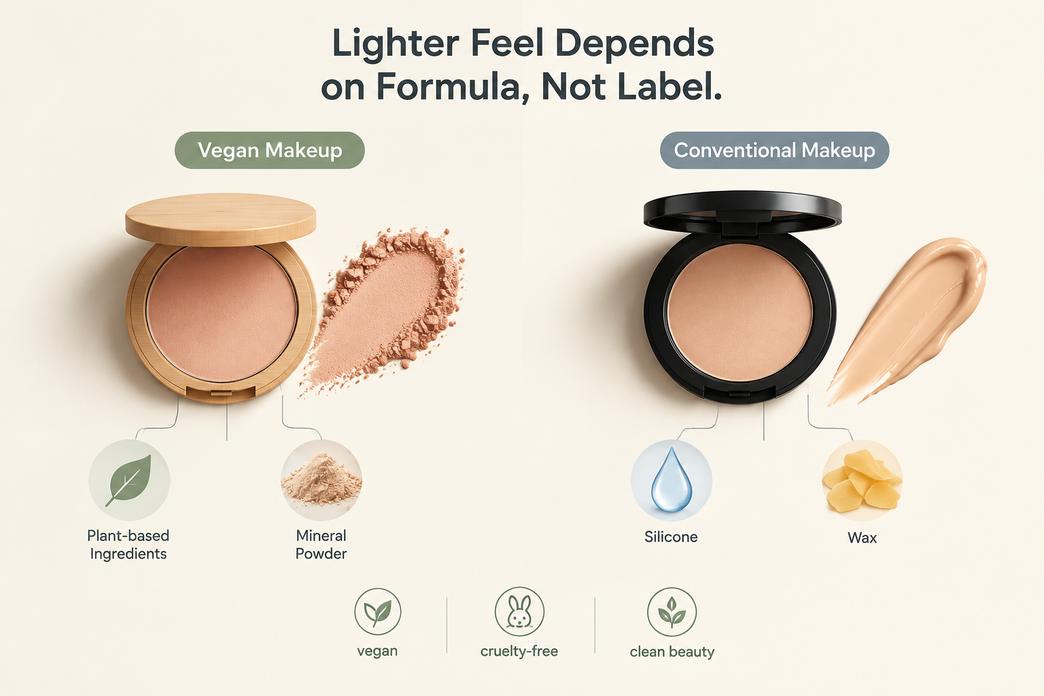
Vegan Makeup
When shoppers ask what is vegan makeup, the simple answer is makeup made without animal-derived ingredients. A vegan formula can use plant-based ingredients, natural minerals, and botanical extracts, but those choices do not automatically create a featherlight finish.
-
Texture depends on the full recipe.
-
Powder formulas
- Fine mineral particles may support a breathable texture without piling on a thick layer.
- Light binders can keep application smooth and comfortable.
-
Cream and liquid formulas
- Botanical oils may improve skin hydration, yet richer oils and wax alternatives can feel heavier.
- Thin emulsions can feel barely there, which is pretty handy for everyday wear.
-
-
Labels need a closer look.
- Cruelty-free formulation refers to animal-testing practices and is not the same as vegan makeup.
- clean beauty also lacks one universal regulatory definition and does not necessarily mean vegan.
So, what is vegan makeup in terms of feel? Ingredient origin alone cannot tell you.
Conventional Makeup
Conventional makeup covers a huge range of textures, from fluid skin tints to dense stage foundation. Some formulas use silicones or synthetic polymers to create a silky, thin film, while others are designed for heavy coverage and naturally feel more substantial.
- Check texture before judging the label: lightweight liquids often spread more easily than wax-rich creams.
- Consider the formula details. Petroleum derivatives, chemical preservatives, or artificial fragrances do not automatically make makeup heavy, just as vegan ingredients do not guarantee lightness.
- Pay attention to your own skin. Certain rich ingredients may behave like pore-clogging agents for some people, while working perfectly well for others.
For anyone comparing conventional products with vegan makeup, finish, coverage, and formulation design are better clues to lightness than the vegan label itself. To discuss manufacturing options or review formulation capabilities, please contact us.
References
- hypoallergenic – fda.gov/FDA
- cruelty-free – fda.gov/FDA
- skin barrier – healthline.com/Healthline
- COSMOS Organic – cosmos-standard.org/COSMOS
- mica – webmd.com/WebMD
- iron oxides – byrdie.com/Byrdie
- zinc oxide – byrdie.com/Byrdie
- titanium dioxide – fda.gov/FDA
- Jojoba oil – healthline.com/Healthline
- argan oil – healthline.com/Healthline
- coconut oil – healthline.com/Healthline
- beetroot powder – healthline.com/Healthline
- silicones – healthline.com/Healthline
- chemical preservatives – fda.gov/FDA
- artificial fragrances – fda.gov/FDA
Post time: Sep-24-2026