
Powder, Liquid, or Stick Foundation: What’s the Difference?
“Ask what is powder foundation: powder feels light and buildable, liquid brings flexible finishes, while sticks pack concentrated coverage into portable packaging.
Format is shaped by skin type and finish. Start with skin-type guidance before choosing textures.
For private labels, formulation and packaging make powder worth a closer look.”
Quick Insights: What Is Powder Foundation
➔ Coverage & Finish: Powder foundation offers lightweight, buildable pigment with oil-control benefits and a matte finish.
➔ Application Tips: Prep with squalane, press on matte formula, bake with translucent powder, then buff.
➔ Key Ingredients: Look for micronized mica for slip and luminosity, silica absorbers for shine control, and talc-free powder guidance when developing a custom compact.
Powder Vs. Liquid Vs. Stick Foundations
Choosing a base gets easier when texture and skin needs line up. Powder offers dry pigment; liquid supports blendable coverage; stick concentrates a cream base. Foundation development guidance can shape the brief.
Powder Foundation
So, what is powder foundation? It’s dry pigment designed to even skin tone.
- For daily wear:
- Pressed powder gives lightweight coverage.
- A brush application keeps layers thin and natural.
- Micronized mica can support a smooth matte finish.
- For combination or oily skin:
- Powder provides useful oil control.
- Quick touch-ups can cut midday shine.
- Pressed powder gives lightweight coverage.
Liquid Foundation
Liquid bases mix pigments with water, oils, or other emollients, making blendability a major perk. Topfeel Beauty liquid formulas can support flexible skin tone matching. A foundation formulation article adds context.
- Pick the finish around your skin:A pump dispenser also keeps the liquid formula convenient and controlled.
- Need moisture? Look for hydration and a dewy finish.
- Want stronger correction? Build toward full coverage.
Stick Foundation
Stick makeup packs pigment into a portable solid base.
- Swipe on areas needing high coverage.
- Blend the cream texture around edges.
- Use it for spot concealing around marks or redness.
- Add deeper shades for contouring.
- The format offers easy application with little mess.
- Its travel-friendly design makes on-the-go fixes simple.
Choose the right format: Powder, liquid, and stick foundations involve different coverage, finish, skin-needs, and packaging decisions. Topfeel Beauty’s pressed powder offering gives brands a route to compare formats, while its liquid foundation offering helps shape a specification.
Review both routes to decide which format and pack should move into sampling.
4 Steps To Apply Powder Foundation
If you’re asking what is powder foundation, it’s a dry complexion base that adds color and helps even out skin tone. Good powder distribution keeps the result smooth rather than heavy or patchy. Tips for avoiding clumping foundation reinforce thin, even layers.
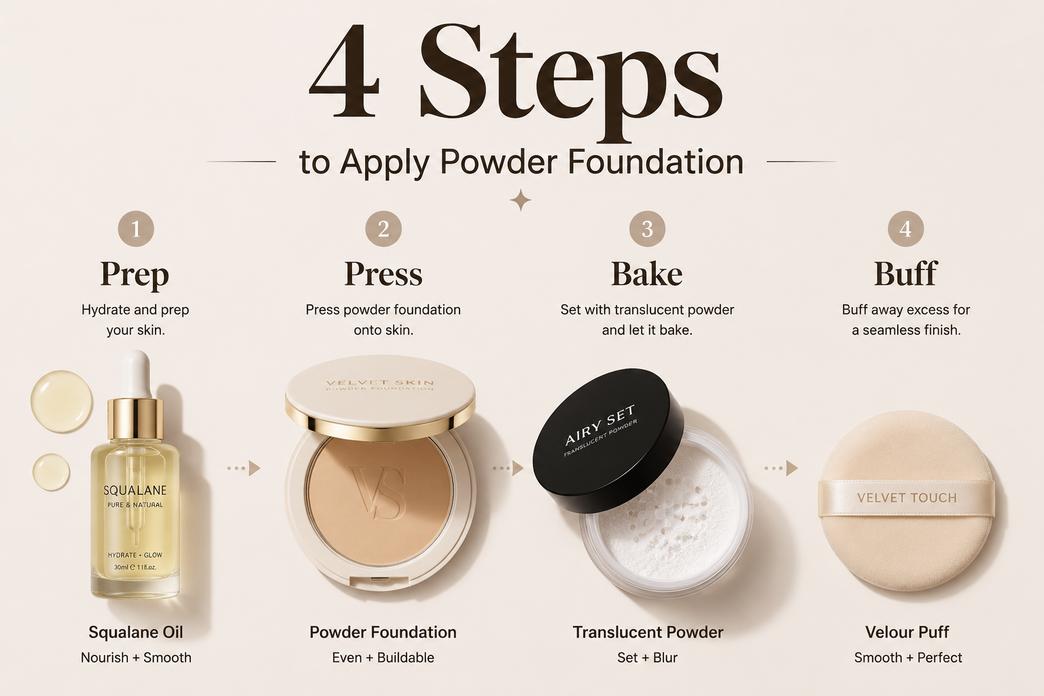
Step 1 – Prep Skin with Plant Derived Squalane
For comfortable skin preparation, start small.
- Apply a few drops of plant derived squalane.
- Focus on dry spots where hydration is needed. For ingredient sensitivities, review cosmetic contact-reaction guidance alongside the complete formula.
- Give the facial oil time to sink in.
- This supports the moisture barrier and helps powder sit neatly.
Step 2 – Apply Matte Finish Formula via Press Molding Technique
A powder foundation with a matte finish works best when pickup stays controlled.
- Tap the tool lightly onto the compact.
- Press onto the complexion instead of dragging.
- Add coverage gradually where needed.
The press molding technique keeps powder compact, helping formula application feel controlled while reducing uneven texture.
Step 3 – Bake Setting with Translucent Setting Powder
• Bake setting: Press translucent setting powder onto oily areas and leave it briefly.
• Dust off: Remove excess finishing powder.
• Check: This supports oil control, makeup longevity, and a clean complexion set. Review the FDA cosmetics labeling guide before finalizing pack copy.
Step 4 – Buff Seamlessly Using Velour Powder Puff
Finish with a clean velour powder puff.
- Use a light buffing technique.
- Press across visible edges for a seamless blend.
- Keep the application tool moving gently.
- Even powder distribution creates a softer finish.
Make application repeatable: Prep, press, bake, then buff.
This four-step powder foundation application plan gives a brand a complete brief. Explore custom solutions to define it, then use OEM face makeup to compare how the chosen format should be sampled.
Struggling With Shine? Powder’s Your Answer
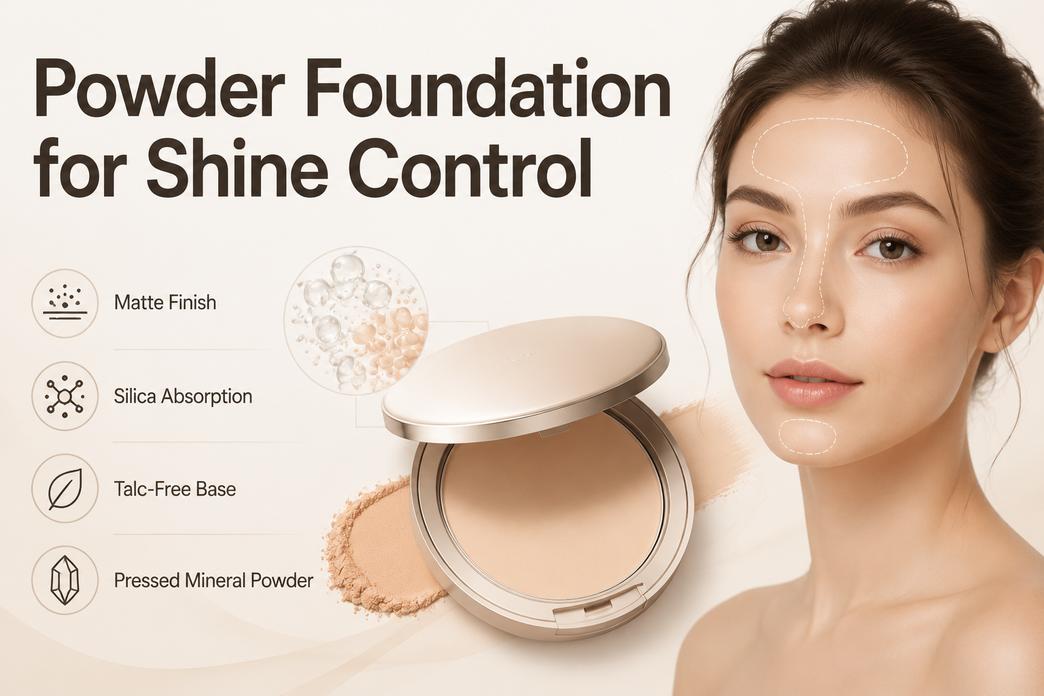
For anyone asking what is powder foundation, it’s complexion makeup that adds color and coverage while managing shine.
Oil Control Coverage for All-Day Matte
A good matte finish balances coverage with oil control, especially where the forehead, nose, and chin get slick.
- During wear:
- Sebum absorption manages excess oil sitting on the skin.
- Shine reduction keeps touch-ups simple.
- For appearance:
- Pore-blurring can soften visible texture.
- Long-wear makeup helps coverage stay put.
So, what is powder foundation good at? A less shiny look. Pressed and loose powder guidance frames the choice.
Silica Absorption Agent’s Role in Shine Regulation
Silica is used in powder formulas to support moisture absorption and surface-oil control. Review choices against the complete formula and intended finish with face-powder ingredient information.
Review suitability and stability with foundation ingredient information and FDA guidance.
Talc Free Base and Pressed Mineral Powder Benefits
A talc-free base offers another route for powder makeup.
- Pressed powder
- Packs neatly and allows controlled pickup.
- Makes everyday touch-ups less messy.
- Mineral makeup
- Can use natural minerals, including mica, for color and slip.
- A gentle formula may feel comfortable, while a non-comedogenic claim should be checked on the specific product.
- “Skin-friendly” depends on the full ingredient list.
In short, powder foundation is a convenient base for managing shine and building coverage.
Turn the brief into samples: A shine-focused brief must connect coverage to silica selection and a talc-free base. Topfeel Beauty develops custom foundation formulas around texture, color, and finish.
Start with the foundation offering to define the specification, then contact Topfeel Beauty with your requirements; initial samples are prepared in 3-7 days.
References
- Pick the Right Moisturizer for Your Skin — American Academy of Dermatology
- Cosmetics — U.S. Food and Drug Administration
- Cosmetics Labeling Guide — U.S. Food and Drug Administration
- Cosmetics Allergy: Causes, Symptoms, and Treatment — DermNet
- Face Powders — Cosmetics Info
- Foundations — Cosmetics Info
Post time: Sep-09-2026