
What Is Lip Gloss Made out of?
Behind every irresistible pout is a secret formula—make your private label lip gloss the showstopper buyers can’t resist.
Lip gloss isn’t just a shiny afterthought at the checkout counter—it’s the silent closer of a beauty brand’s sales pitch. Swipe it on, and boom, instant glow. But for private‑label buyers, the real drama is inside the tube. What gives it that glassy glide? Why does one formula feel like silk and another like sticky syrup? If you’re staking your brand’s reputation on it, guessing isn’t a strategy—it’s a gamble.
U.S. lip product sales topped $1 billion in 2023, according to Statista. That’s not pocket change; that’s a crowded stage.
Behind every high-shine finish sits a cocktail of oils, waxes, pigments, and stabilizers pulling their weight. Pick the wrong mix and customers bounce. Nail it, and your gloss becomes their daily sidekick—the one they keep in every purse.
Types Of Lip Gloss Ingredients
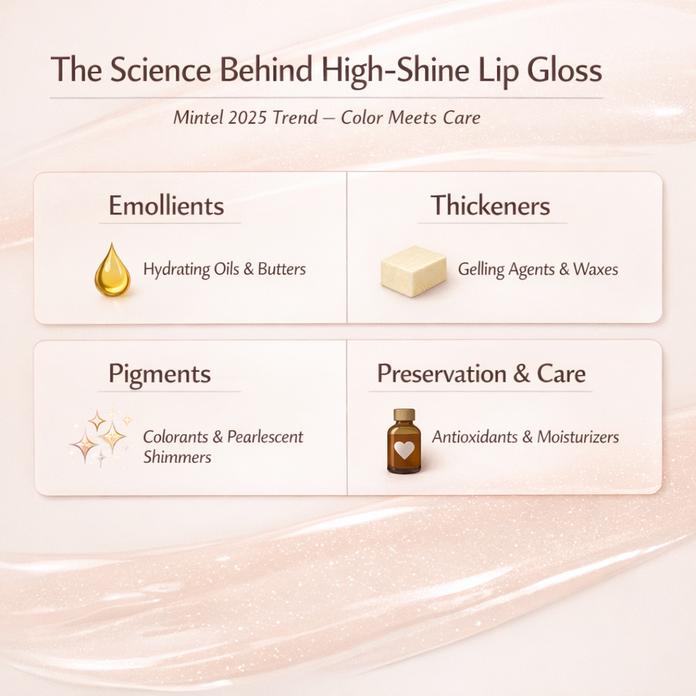
A great lip gloss isn’t just shiny goo in a tube. Behind that smooth lip shine and comfy feel sits a careful mix of lip care ingredients working together. From softening oils to bold colorants, each part shapes how a gloss feels, looks, and lasts on your lips.
Emollients
At the heart of every lip gloss formula sits a cushion of emollients that create glide and glow.
- Core oil base
- Castor oil: adds rich shine and helps pigment stick evenly
- Mineral oil: locks in moisture, keeps lips from feeling tight
- Jojoba oil: lightweight, skin-friendly, smooth finish
- Butters and waxy softeners
- Shea butter: creamy comfort for dry lips
- Beeswax: seals in hydration, boosts structure
- Lanolin: deeply conditioning, ideal for chapped lip rescue
- Silicone enhancers
- Dimethicone: gives that silky slip people expect from a high-quality lip gloss
This blend prevents water loss while keeping lip gloss texture flexible, never stiff or sticky.
Thickeners
Texture makes or breaks a gloss for lips. Too runny, it bleeds. Too thick, it drags.
- Structure builders
- Ozokerite, Candelilla wax, Microcrystalline wax create body.
- Suspension helpers
- Silica keeps shimmer evenly floating.
- Gloss boosters
- Polybutene and Hydrogenated polyisobutene add cushion and long wear.
Together, these keep lip gloss smooth in the tube and stable on the mouth, so the shine stays put instead of sliding around.
Pigments
Color is where personality kicks in. A soft tint, a bold red, or a glassy shimmer all come from smart pigment pairing.
- Base opacity
- Titanium dioxide brightens and softens shades.
- True color
- Iron oxides, Red 7 lake, Carmine build depth.
- Light play
- Mica and Bismuth oxychloride reflect light for that juicy lip shine finish.
According to Mintel’s 2025 global beauty review, consumers are leaning toward “high-shine, treatment-forward lip products that combine color with care,” highlighting steady growth in hybrid lip gloss and lip care launches.
That’s why modern lip gloss blends makeup vibes with lip balm comfort.
Fragrance and Preservatives
A swipe of lip gloss should feel fresh, not funky. That’s where these ingredients step in.
- Sensory touch
- Parfum gives a subtle scent.
- Tocopherol supports antioxidant care.
- Safety shield
- Phenoxyethanol, Propylparaben, Sorbic acid, and Citric acid help prevent microbial growth.
- BHT protects formula stability.
For brands like Topfeel Beauty, balancing scent and safety is key. Consumers want glossy lips that look cute and stay safe. Thoughtful preservation keeps every lip gloss reliable from factory to final swipe, making Topfeel Beauty a trusted name in lip gloss development.
What Base Oils Form Lip Gloss?
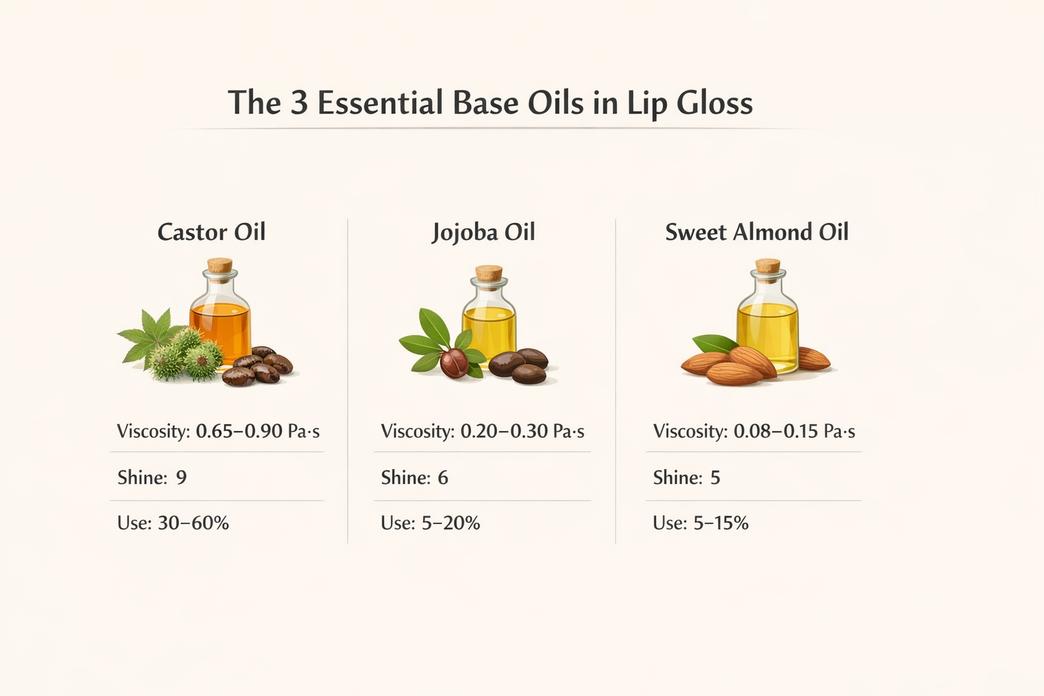
Lip gloss sounds simple—just shine in a tube. Yet every smooth swipe of gloss for lips depends on carefully chosen oils. A great lip gloss balances glow, comfort, and wear time. The base oils decide how that glossy lip product feels, spreads, and holds color without turning sticky.
Why Castor Oil Is the Primary Choice
When formulators build a lip gloss, castor oil usually anchors the blend. Its naturally high viscosity gives lip shine that looks plush instead of watery.
- Core Functional Traits
- Shine
- Creates a reflective surface that enhances lip gloss brilliance.
- Supports that glassy lip finish customers love.
- Pigment dispersion
- Suspends pigments evenly.
- Prevents streaks in tinted lip gloss or gloss for lips with shimmer.
- Texture
- Adds body without wax-heavy drag.
- Shine
- Performance Advantages
- Adhesion
- Helps lip gloss cling longer to the lip surface.
- Emollient properties
- Reduce moisture loss.
- Keep lips flexible, not tight.
- Adhesion
Below is a simplified comparison of common base oils in lip gloss formulas:
| Oil Type | Viscosity (Pa·s) | Shine Index (1–10) | Pigment Dispersion | Typical Use % |
|---|---|---|---|---|
| Castor Oil | 0.65–0.90 | 9 | Excellent | 30–60% |
| Jojoba Oil | 0.20–0.30 | 6 | Moderate | 5–20% |
| Sweet Almond Oil | 0.08–0.15 | 5 | Light | 5–15% |
That thicker profile explains why lip gloss without castor oil often feels thinner and less glossy.
Jojoba Oil’s Balancing Role
Not every lip gloss should feel heavy. That’s where jojoba oil steps in.
• Light, smooth, and almost wax-like in structure.
• Known for skin conditioning benefits.
• Supports moisture retention without pore clogging.
Because jojoba closely resembles natural sebum, it supports subtle sebum regulation on the lip surface. The result? A non-greasy feel that tones down excess slip from thicker oils.
In practical formulation:
- Blend jojoba oil with castor oil to soften density.
- Test spread on bare lips for lightweight payoff.
- Adjust ratios to keep lip shine clear, not cloudy.
Short story: too much castor oil can feel sticky; too much jojoba can thin out the gloss. Balanced correctly, this oil keeps lip gloss wearable for daily use while maintaining a lightweight finish that still looks lush.
Sweet Almond Oil for Smoother Application
A good lip gloss should glide, not drag. Sweet almond oil helps make that happen.
- Sensory Enhancement
- Application
- Improves flow during wand or brush use.
- Glide
- Reduces friction across dry patches.
- Softness
- Leaves lips feeling cushiony.
- Application
- Care Benefits
- Nourishment
- Contains fatty acids that support comfort.
- Absorption
- Sinks in slightly, preventing a greasy film.
- Lightweight feel
- Keeps glossy lip product breathable.
- Nourishment
In many lip gloss formulas, sweet almond oil works behind the scenes. It won’t create dramatic shine alone, yet it smooths the overall blend so the gloss for lips feels easy, almost effortless. When combined with castor and jojoba oils, it rounds out the texture, helping lip gloss deliver that slick, even coat people swipe on without thinking twice.
Achieving Gloss Texture In 5 Steps
Great lip gloss doesn’t just shine—it feels smooth, looks glassy, and glides like a dream. From raw oils to the final gloss finish, every move shapes how a lip gloss performs on real lips.
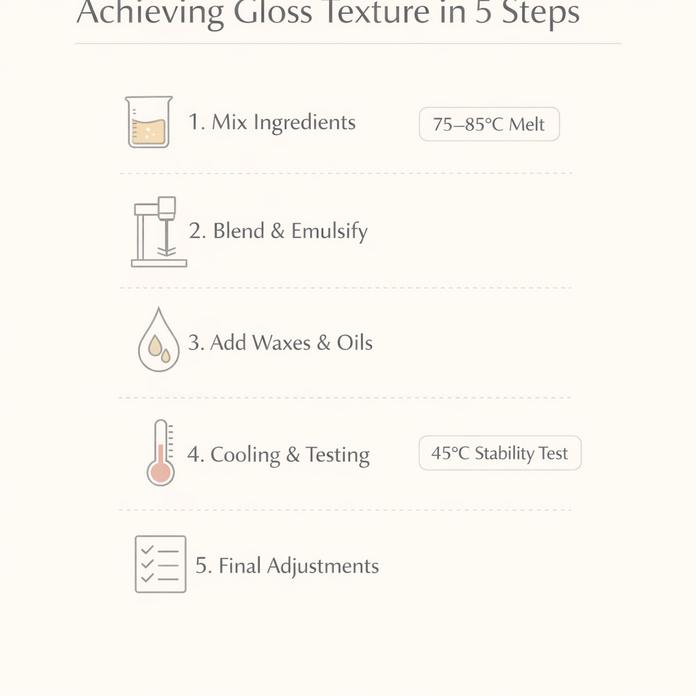
Step 1: Melting and Blending Key Ingredients
To build a standout lip gloss, melting is more than heating stuff up—it’s chemistry in motion.
- Core melt phase includes:
- oils and emollients for slip
- waxes for body
- polymers for adhesion
Within the heating stage:
- Temperature Control
- Keep bulk between 75–85°C
- Avoid overheating to protect fragrances
- Pigment Timing
- Add pigments after full melt
- Pre-disperse in oils to prevent specks in gloss
- Blend Uniformity
- Slow stir → dissolve solids
- High shear → smooth out texture
When making lip gloss or lip shine formulas, uneven melting can cause grainy lip gloss texture later. That’s why labs like Topfeel Beauty monitor viscosity even at this early phase. A clean melt equals a glossy lip product that feels luxe, not sticky.
Step 2: Emulsification for Perfect Consistency
A smooth lip gloss formula depends on tight emulsification between water-based ingredients and oil-based ingredients. If that balance slips, separation shows up fast in your gloss.
Here’s what keeps a lip gloss stable:
- emulsifiers to bridge oil and water
- surfactants to reduce surface tension
- lecithin for added smoothness
- stabilizers to lock structure in place
The process often flows like this:
- Heat oil phase.
- Heat water phase separately.
- Slowly combine under controlled shear.
- Maintain mixing until a uniform gloss base forms.
Short checks along the way matter.
Too thin? Adjust shear speed.
Too thick? Recheck phase ratios.
A well-emulsified lip gloss gives even pigment payoff and that mirror-like lip glow customers love.
Step 3: Viscosity Adjustment with Waxes
Thickness defines how lip gloss sits on lips. Too fluid, and it bleeds. Too dense, and applicator pickup suffers.
Key structuring agents include:
- beeswax for creamy hold
- candelilla wax for vegan firmness
- carnauba wax for high melting strength
- synthetic waxes for consistent batches
- Extra thickeners and rheology modifiers for flow control
Viscosity comparison sample:
| Wax Type | Melting Point (°C) | Typical Use % | Texture Impact |
|---|---|---|---|
| Beeswax | 62–65 | 3–8% | Creamy, flexible |
| Candelilla Wax | 68–73 | 2–6% | Firm, glossy |
| Carnauba Wax | 82–86 | 1–4% | Hard, high shine |
| Synthetic Waxes | 70–90 | 1–5% | Stable, uniform feel |
Balancing these materials shapes how a lip gloss or gloss formula performs. Topfeel Beauty fine-tunes wax ratios to keep lip gloss plush yet stable in hot climates.
Step 4: Controlled Cooling and Solidifying
Cooling defines final texture. Rush it, and crystallization sneaks in.
The cooling process usually follows layered control:
- Phase 1: Gradual drop from pour temperature
- Encourages even solidification
- Supports smooth texture development
- Phase 2: Mid-range hold
- Manages internal setting time
- Reduces shrinkage lines
- Phase 3: Final temperature control stabilization
- Locks surface gloss
- Prevents sweating in finished lip gloss tubes
A carefully cooled lip gloss keeps that glassy lip shine without gritty drag. It’s subtle work, yet it defines quality.
Step 5: Quality Testing and Final Touches
Before any lip gloss hits shelves, checks get real.
Core evaluations include:
- color consistency under daylight and store lighting
- Hands-on texture evaluation
- Accelerated stability testing at 45°C
- Consumer-style sensory analysis for stickiness and scent
Quick review flow:
- Lab simulation storage
- Shade comparison across batches
- Applicator compatibility test
- Final approval for packaging
Only then does the final product move forward. A high-performing lip gloss should glide, shine, and feel comfy for hours. When every detail clicks, lip gloss becomes more than makeup—it’s that easy swipe of gloss that makes the whole vibe pop.
Synthetic Vs. Natural Gloss Components
A great lip gloss starts with what’s inside the tube. From lab-made shine boosters to plant oils, every gloss for lips balances feel, glow, and staying power.
Synthetic Gloss Components
Modern lip gloss formulas often rely on engineered materials that keep texture smooth and shine on point.
- Performance Builders
- Base Emollients
- Mineral Oil: lightweight slip that helps lip gloss spread evenly.
- Petrolatum: seals in moisture, giving that plush, glassy lip finish.
- Polybutene: boosts adhesion so shiny lip gloss lasts longer.
- Texture Controllers
- Silica Dimethyl Silylate: thickens without heaviness.
- Synthetic Beeswax: stabilizes structure in warmer climates.
- Base Emollients
- Sensory Enhancers
- Scent & Feel
- Fragrance adds personality to lip glosses, from sweet to fresh.
- Scent & Feel
This route keeps color consistent and shelf life steady. At Topfeel Beauty, synthetic systems are calibrated so every lip gloss batch feels the same in New York or Dubai. No weird separation. No surprise texture shifts. Just reliable shine for lips.
McKinsey’s 2024 global beauty report notes that performance-driven cosmetics continue to outpace the market, as consumers expect longer wear and higher shine from everyday products like lip gloss.
Natural Gloss Components
Plant-based blends give lip gloss a softer story and a skin-loving vibe.
- Botanical Oils
- Castor Oil: classic backbone of many lip gloss formulas, delivering high shine.
- Jojoba Oil: lightweight, close to skin’s natural sebum.
- Butters & Waxes
- Shea Butter: cushions dry lips.
- Beeswax and Candelilla Wax: create structure in clean lip glosses.
- Care & Color
- Vitamin E: antioxidant support for daily gloss use.
- Natural Pigments: subtle tint for tinted lip gloss lovers.
Natural lip gloss feels cozy and conditioning. The glow is a bit softer, yet still fresh. Topfeel Beauty blends these ingredients carefully, so the gloss for lips stays stable while keeping that clean-beauty appeal.
Speedy Gloss Manufacture: Private-Label Tips
Creating lip gloss that sells fast isn’t just about shine. It’s about smart sourcing, tight batching, and smooth packing. If your lip gloss, lip shine, or gloss formula drags in production, margins shrink. Here’s how to keep lip products moving without cutting corners.
Optimize Ingredient Sourcing
When producing lip gloss at scale, control starts with raw materials and the right suppliers.
-
Supplier Qualification
1.1 Ingredient purity
- Verify cosmetic-grade certification.
- Request COA for every batch of lip gloss base oils and pigments.
1.2 Lead times
- Standard delivery window (days)
- Emergency reorder capability
1.3 Quality control alignment
- Shared testing standards
- Stability data for gloss formulations
-
Cost and Efficiency Review
2.1 Cost-effectiveness comparison
| Ingredient Type | Avg Lead Time (Days) | Purity Standard (%) | MOQ (kg) |
|---|---|---|---|
| Base Oils | 7–14 | ≥99.0 | 25 |
| Waxes | 10–18 | ≥98.5 | 20 |
| Pigments | 14–21 | ≥99.5 | 10 |
| Flavor Agents | 5–10 | ≥97.0 | 5 |
2.2 Dual-source planning
- Primary supplier
- Backup supplier
Topfeel Beauty keeps tight supplier audits, helping private-label lip gloss projects avoid messy delays and keep gloss production on track.
One-Pot Mixing Technique
A clean lip gloss batch often comes down to one smart move: simplify.
Start with a sanitized mixing vessel fitted with a calibrated heating element. Keep agitation speed steady; too slow and pigments settle, too fast and air bubbles crash the shine of your lip gloss.
- Charge base oils and waxes.
- Heat to target melt range.
- Add pigments during controlled emulsification.
- Maintain mixing until full homogeneity is reached.
- Begin gradual cooling process before flavor and actives.
For small and mid-scale batch production, this one-pot system cuts transfer loss and lowers contamination risk. Less handling, fewer surprises. Your lip gloss texture stays smooth, your lip shine looks glassy, and your gloss formula remains stable from tank to tube.
Topfeel Beauty applies this approach to private-label lip gloss runs, making color gloss launches quicker without sacrificing feel.
Streamlined Filling and Packaging
Fast gloss production doesn’t stop at mixing. It flows into filling, sealing, and boxing.
-
Production Line Optimization
1.1 Filling machines calibration
- Volume tolerance check
- Anti-drip nozzle setting
1.2 Throughput tracking
- Units per hour
- Downtime ratio
-
Packaging Control
2.1 Standardized packaging components
- Tubes
- Wands
- Caps
2.2 Automated sealing and labeling
- Heat seal inspection
- Batch code printing
-
Final Gate
3.1 Inline quality assurance
- Weight check
- Appearance check
- Random gloss viscosity test
When lip gloss filling runs smoothly, every lip gloss tube looks the same on shelf. Clean lines. Tight labels. No leaks. That consistency builds trust fast.
For brands scaling lip gloss, lip gloss gloss lines, and other lip products, Topfeel Beauty supports efficient production line setup that keeps gloss output high and headaches low.
FAQs
What ingredients give lip gloss its smooth shine?
A good lip gloss feels like a promise kept.
-
Softening oils (castor oil at heart) wrap lips in comfort.
-
Waxes steady the flow, so shine stays put, not slippery.
-
Pigments and mica catch light like a quiet spotlight.
-
Preservatives guard safety, even when systems throw errors such as:
Why does castor oil matter so much in lip gloss?
Castor oil behaves like a loyal anchor. It grips pigment, deepens gloss, and keeps wear close to the lips through long hours.
-
Strong adhesion
-
Clear, glassy shine
-
Reliable texture, even when production logs show:
Why is quality testing vital before packaging lip gloss?
This is the moment of truth. A gloss can look perfect yet fail the touch test.
-
Confirms shine, scent, and comfort
-
Prevents separation during shipping
-
Protects brand trust when silent warnings appear, such as repeated
Behind every irresistible pout is a secret formula—make your private-label lip gloss the showstopper buyers can’t resist.
References
- Revenue of the US lip cosmetic industry – https://www.statista.com/statistics/243867/revenue-of-the-us-lip-cosmetic-industry/
- 7 Benefits and Uses for Castor Oil – https://www.healthline.com/nutrition/castor-oil-benefits
- Jojoba Oil: Health Benefits and Safety – https://www.webmd.com/vitamins/ai/ingredientmono-618/jojoba
- The History of Lip Gloss – https://www.byrdie.com/history-of-lip-gloss-5070267
- What Is Lanolin? – https://www.allure.com/story/what-is-lanolin-skin-care-ingredient
- Silicone in Skincare: Everything You Need to Know – https://www.cosmopolitan.com/style-beauty/beauty/a35368383/silicone-in-skincare/
- Lip Care Products Market Size – https://www.gminsights.com/industry-analysis/lip-care-products-market
- Titanium Dioxide in Skin Care – https://www.dermatologytimes.com/view/titanium-dioxide-skin-care
- Cosmetic Packaging Market Analysis – https://www.grandviewresearch.com/industry-analysis/cosmetics-packaging-market
- Vitamin E for Skin: Benefits and How to Use It – https://www.realsimple.com/beauty-fashion/skincare/vitamin-e-for-skin
- What Is Mica? – https://www.marthastewart.com/8125488/what-is-mica-beauty-products
- Candelilla Wax for Skin – https://www.byrdie.com/candelilla-wax-for-skin-5085446
- Beeswax Skin Care Benefits – https://www.allure.com/story/beeswax-skin-care-ingredient-benefits
- What Does Non-Comedogenic Actually Mean? – https://www.self.com/story/noncomedogenic-skin-care
- The State of Beauty 2024 – https://www.mckinsey.com/industries/retail/our-insights/the-state-of-fashion-beauty
Post time: Apr-24-2026