
What Is Cosmetic Baking Powder? Understanding Setting Powder in Makeup
cosmetic Baking Powder isn’t a cute trend; it’s the fix for makeup that melts, cakes, and quits before lunch.
Recent insights from Mintel and Euromonitor show sustained demand for oil-controlling, clean-label face powders, with buyers prioritizing performance, safety, and reliable manufacturing standards across global markets.
Brands that nail this win shelf space fast.
Beauty Briefs: cosmetic Baking Powder
➔ Micronized Base: Delivers a lightweight, breathable finish with silica and kaolin for spreadability and minimal caking.
➔ Oil Control Powerhouse: Corn starch and sodium bicarbonate absorb excess sebum, ensuring a long-lasting matte look.
➔ Skin-Safe Formula: Talc-free, fragrance-free blend meets clean beauty standards and supports non-comedogenic wear.
➔ Easy Baking Steps: Prep balanced pH skin, apply with a sifter and soft puff, let powders set, then dust off excess for a pore-blurring finish.
Wow! What Makes Cosmetic Baking Powder Irresistible
Cosmetic Baking Powder has become that low-key hero in daily makeup bags. From shine control to a soft-focus finish, this cosmetic Baking Powder trend blends skincare thinking with pro-level results, making baking powder makeup more wearable than ever.
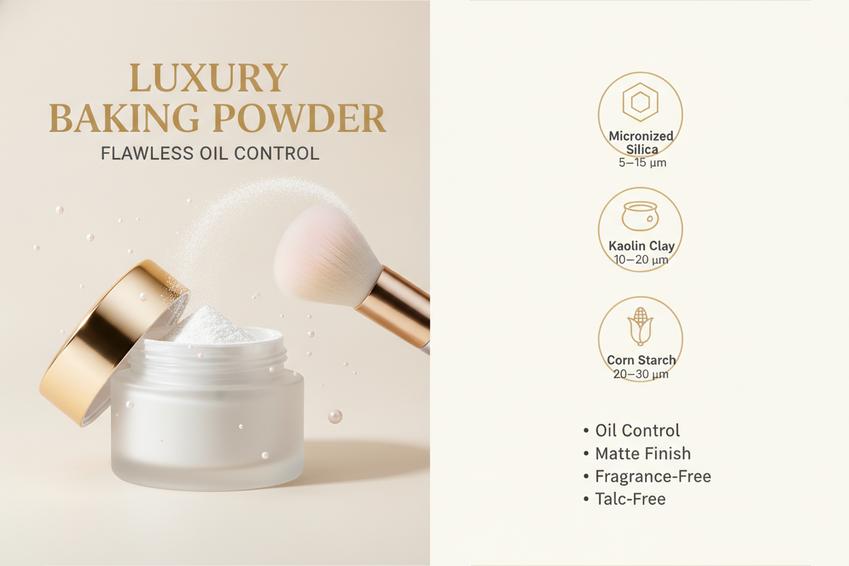
Lightweight Texture from Micronized Silica and Kaolin Clay
When cosmetic Baking Powder feels almost weightless, the magic usually starts with micronized ingredients. Ultra-fine silica and kaolin clay are milled down so the powder spreads evenly without turning chalky.
• Soft-touch texture that glides
• Airy, breathable finish
• Reduced caking in humid climates
- Raw minerals are purified.
- Particles undergo micronization.
- The lightweight blend is sifted for uniformity.
| Ingredient | Particle Size (µm) | Oil Absorption (%) | Skin Feel Rating (1–5) |
|---|---|---|---|
| Micronized Silica | 5–15 | 150 | 5 |
| Kaolin Clay | 10–20 | 120 | 4 |
| Corn Starch | 20–30 | 110 | 4 |
| Magnesium Stearate | 5–10 | 90 | 5 |
| Rice Powder | 15–25 | 100 | 4 |
At Topfeel, refinement standards keep particles consistent, so cosmetic baking powder formulas stay silky instead of dusty. That’s the difference you notice the second it hits your brush.
Oil Control and Mattifying Effect via Corn Starch & Magnesium Stearate
Shine shows up fast. Good oil control keeps it in check.
- Corn starch targets excess sebum.
- Magnesium stearate boosts slip and adhesion.
- The mattifying effect reduces midday shine.
Here’s how it works in baking powder makeup routines:
- Apply cosmetic Baking Powder to high-oil zones.
- Let the absorption phase sit briefly.
- Lightly dust away excess for a smooth face powder finish.
The result feels balanced, not flat. Quick touch-ups stay smooth because the mattifying layer bonds gently with foundation. Cosmetic Baking Powder designed this way avoids patchiness and keeps pores looking refined.
Fragrance-Free, Talc-Free Formulation for a Non-Comedogenic Finish
Sensitive skin deserves calm formulas.
- Fragrance-free base
- Talc-free mineral system
- Tested for non-comedogenic performance
A clean formulation reduces irritation risks while helping prevent clogged pores. For daily setting powder wear, that matters. Cosmetic Baking Powder built without unnecessary additives feels safer for reactive complexions.
Topfeel aligns these standards with modern clean beauty expectations. The final finish looks soft, natural, and breathable—exactly what people want from cosmetic Baking Powder today.
Do You Really Need Baking Powder?
The phrase cosmetic Baking Powder sounds a little odd at first. We know baking powder from the kitchen, yet in beauty labs, cosmetic, baking, and powder take on a whole new vibe. From shine control to long-wear setting, let’s break it down in real talk.
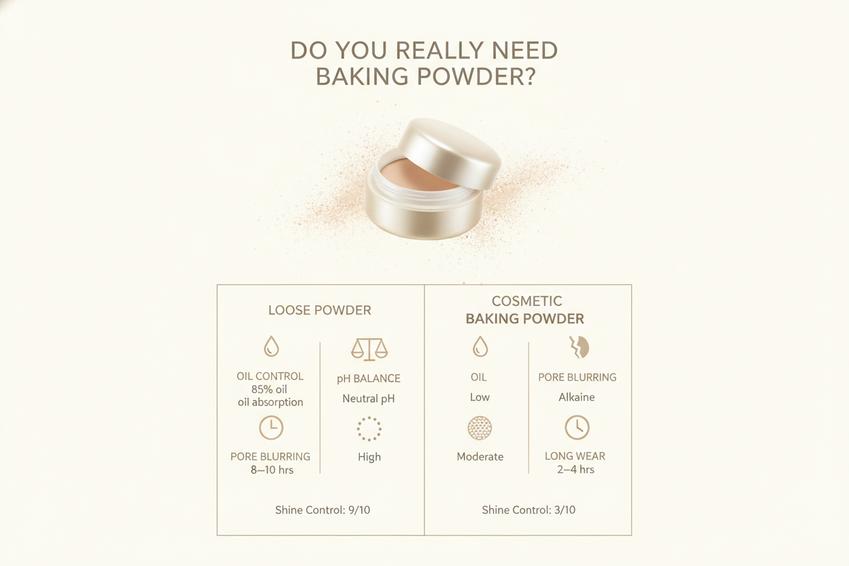
When Loose Powder Falls Short: The Power of Sodium Bicarbonate
Basic loose powder works fine—until oil production goes into overdrive. That’s where sodium bicarbonate, a multifunctional cosmetic ingredient, steps in.
- Excess sebum overwhelms regular makeup base
- Uneven skin texture becomes obvious
- Midday shine ruins shine control
In advanced cosmetic Baking Powder formulations, performance hinges on ingredient behavior:
- Oil interaction rate
- Surface adhesion
- pH buffering ability
- Comfort during long wear
Functional Comparison of Powder Types
| Property | Loose Powder | Setting Powder | Sodium Bicarbonate Blend | Cosmetic Baking Powder |
|---|---|---|---|---|
| Oil Absorption (%) | 45 | 62 | 78 | 85 |
| pH Stabilization | Low | Medium | High | High |
| Wear Time (hrs) | 4–5 | 6–8 | 7 | 8–10 |
| Shine Control Score (10) | 5 | 7 | 8 | 9 |
In high-sebum conditions, cosmetic baking powder outperforms generic powder because:
- It strengthens oil absorption capacity
- It improves application issues linked to caking
- It balances surface acidity without irritating skin
Think of it as upgrading from basic flour to precision-milled cosmetic Baking Powder designed for makeup chemistry, not cupcakes.
Achieving a Smooth Finish with a Dedicated Setting Powder
A true setting powder does more than sit on top of foundation. It refines, diffuses, and locks everything in.
Here’s how cosmetic Baking Powder and professional makeup setting products differ in finish strategy:
- Particle Engineering
- Micro-milled texture
- Controlled particle size
- Even light diffusion
- Surface Refinement
- Noticeable pore blurring
- Soft-focus fine line reduction
- Balanced matte effect
- Wear Extension
- Improved makeup longevity
- Reduced oxidation
- Stable application method results
Now, let’s stack the finishing hierarchy:
- Standard finishing powder → light smoothing
- Professional setting powder → enhanced durability
- Hybrid cosmetic Baking Powder → oil control + structure + diffusion
A smooth finish isn’t just about adding more product. It’s about formula math. When cosmetic baking powder integrates optimized blending ratios, it grips foundation evenly, preventing patchiness while maintaining breathable comfort.
In short, if loose powder feels basic and your shine keeps breaking through, upgrading to a scientifically balanced cosmetic Baking Powder formula may be the glow-up your routine’s been waiting for.
3 Key Ingredients in Baking Powder Setting Powders
Cosmetic Baking Powder might sound like something from the kitchen, but in makeup bags it’s a serious oil-fighting hero. When formulating cosmetic Baking Powder, chemists balance absorption, texture, and skin feel. From baking soda to advanced slip agents, every cosmetic baking powder formula shapes how your base sets, blurs, and lasts.
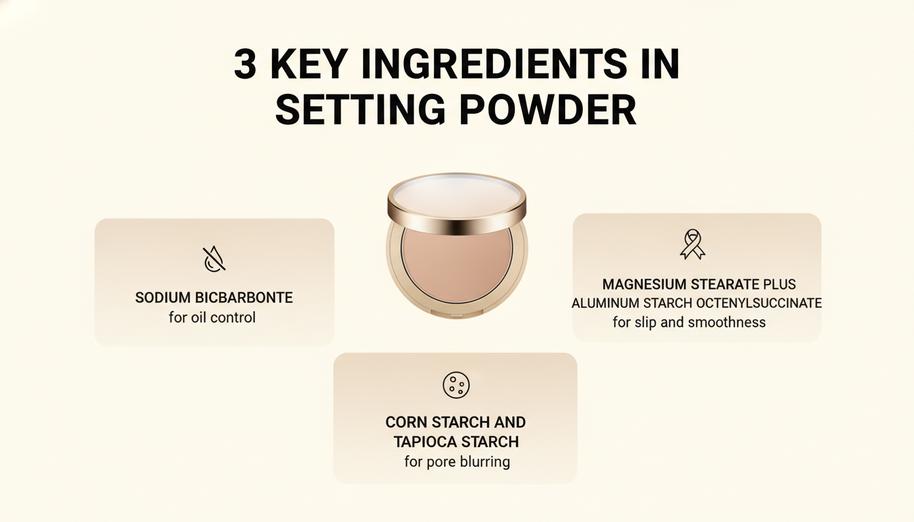
Sodium Bicarbonate: The Oil-Absorption Champion
At the core of many cosmetic Baking Powder formulas sits sodium bicarbonate, better known as baking soda. In makeup labs, it’s valued for steady oil absorption and reliable sebum control, helping skin stay fresh instead of greasy.
- Controls surface skin oil
- Supports a soft matte finish
- Stabilizes formula pH as a trusted cosmetic ingredient
In batch evaluation for cosmetic Baking Powder:
- Raw material purity is verified.
- Oil absorption testing measures grams of oil per gram of powder.
- pH stability is monitored under heat and humidity.
Deep inside formulation logic:
- Absorption Performance
- Surface Binding
- Sodium bicarbonate particles attract excess sebum.
- Oil is trapped within micro-spaces.
- Finish Control
- Reduced shine reflection.
- Longer-lasting matte effect.
- Surface Binding
The vibe? Clean, simple, effective. That’s why brands like Topfeel rely on controlled-grade baking soda when developing high-performance cosmetic baking powder lines.
Corn Starch vs. Tapioca Starch Pore-Blurring Showdown
When building cosmetic Baking Powder, starch choice changes everything. Corn starch and tapioca starch are both natural starch options, yet their skin payoff feels different.
Quick breakdown:
- Corn starch → stronger mattifying agent
- Tapioca starch → smoother glide
- Both support pore blurring and balanced skin texture
Formulation comparison inside setting powder development:
- Oil Control Layer
- Corn starch
- Higher oil binding capacity
- Ideal for mattifying agent focus
- Corn starch
- Optical Blurring Layer
- Tapioca starch
- Soft-focus pore blurring
- Silky after-feel in setting powder
- Tapioca starch
Texture speaks loudly. Corn feels slightly drier. Tapioca feels airy. In cosmetic Baking Powder blends, chemists often combine both to fine-tune payoff.
A smart cosmetic baking powder doesn’t pick sides—it blends strengths for smoother selfies and real-life wear.
Magnesium Stearate & Aluminum Starch Octenylsuccinate for Slip-Enhancing Smoothness
If absorption handles oil, slip agents handle touch. Magnesium stearate and aluminum starch octenylsuccinate are key texture enhancer materials in cosmetic Baking Powder systems.
• Improves press strength
• Enhances flow as a flow agent
• Supports adhesion as a subtle binding agent
Inside performance structuring:
- Application Glide
- Magnesium stearate
- Boosts skin smoothness
- Reduces drag during brush sweep
- Magnesium stearate
- Wear Stability
- Aluminum starch octenylsuccinate
- Absorbs residual shine
- Maintains lightweight hold
- Aluminum starch octenylsuccinate
Multi-layer benefit mapping:
- Powder Pick-Up
- Even brush loading
- Skin Contact
- Slip agent reduces patchiness
- Long Wear
- Balanced oil control + adhesion
The result feels silky, not chalky. That’s the sweet spot modern cosmetic baking powder aims for. Topfeel integrates these slip-enhancing materials with controlled particle sizing, ensuring every cosmetic Baking Powder batch keeps texture consistent from first press to final dusting.
How to Bake with Cosmetic Baking Powder
Getting that bright, crease-free look with cosmetic Baking Powder isn’t magic—it’s method. When your cosmetic baking powder routine is dialed in, skin looks smoother, pores fade back, and shine chills out. Let’s break down how cosmetic Baking Powder really works in everyday makeup life.
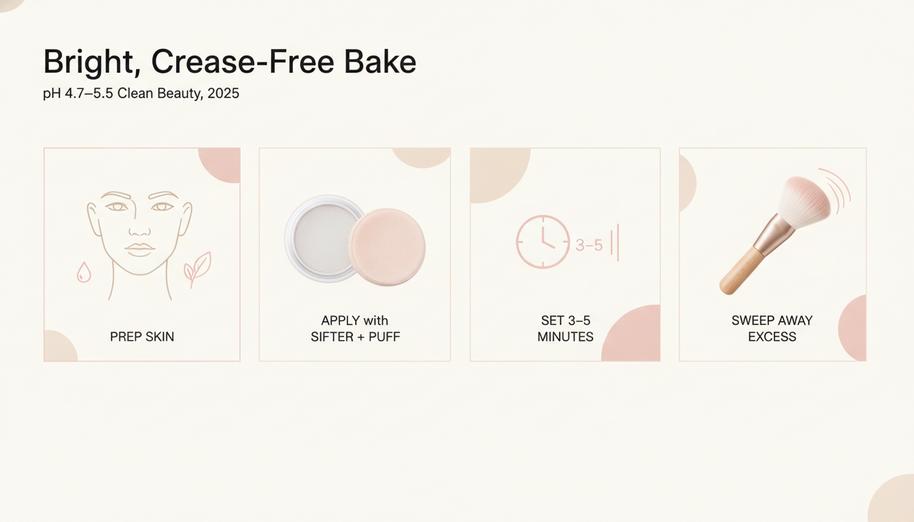
Step 1 Prep Skin under Clean Beauty Standards and pH Stability
Healthy Skin makes or breaks how cosmetic Baking Powder sits. Think of Prep as setting the vibe before the powder even touches your face.
- Core Preparation checklist:
- Cleanse with Skincare that respects pH Stability (around 4.7–5.5).
- Use lightweight moisturizer aligned with Clean Beauty claims.
- Let products absorb fully before any baking powder makeup goes on.
- Why this matters
- Balanced Standards in formulation reduce patchiness.
- Stable pH improves grip of cosmetic powder particles.
- Smooth texture prevents caking.
- Quick tip: blot excess oil, don’t over-layer serums.
- Keep it simple. Calm skin holds powder better.
“Consumers in 2025 continue to prioritize ingredient transparency and pH-balanced skincare as part of daily routines,” notes Mintel’s Global Beauty & Personal Care Trends report (2025).
Brands like Topfeel align product development with these expectations, pairing cosmetic powder systems with skin-friendly bases that respect modern clean beauty demands.
Step 2 Apply Using Sifters and Soft Applicator Puffs
Application of cosmetic Baking Powder is all about control, not dumping product everywhere.
- Tools matter:
- Sifters help regulate flow.
- Soft Applicator Puffs press powder precisely.
- Clean Tools protect hygiene.
-
Technique flow
- Tap small amount from sifting jar.
- Load Puffs evenly.
-
Press—don’t swipe—into under-eyes and T-zone.
- Focus zones:
- Under-eye crease line
- Sides of nose
- Chin center
- Focus zones:
Short press. Light build. Repeat if needed.
This approach ensures baking powder makeup settles evenly without thick buildup. With Topfeel packaging systems, tamper-evident sifters help keep cosmetic powder fresh and easy to dose.
Step 3 Let Silica and Starches Set for Optimal Oil Control
Once applied, let Silica and Starches do the quiet work.
- Ingredient function:
- Silica = oil diffusion
- Starches = surface smoothing
- Fine Ingredients = softer blur
-
Setting phase
- Leave Set time: 3–5 minutes.
- Allow Absorption of sebum.
-
Avoid facial movement during peak Oil Control window.
- What’s happening underneath:
- Sebum binds to porous particles.
- Shine diffuses under light.
- Texture appears refined.
- What’s happening underneath:
Good cosmetic Baking Powder balances absorption without overdrying. That’s the sweet spot for long wear.
Step 4 Sweep Away Excess with a Soft Brush for a Smooth Finish
Now comes the satisfying part—removal.
- Use a fluffy Soft Brush.
- Gently Sweep Away loose product.
- Avoid dragging foundation underneath.
-
Removal method
- Start at under-eye.
- Move outward in light circles.
-
Blend edges for seamless Finish.
- Final check:
- No visible Excess
- Even tone
- True Smooth Finish
- Final check:
The result? Refined, pore-blurred skin that still looks like skin. A well-formulated cosmetic Baking Powder, especially from brands like Topfeel, makes the whole routine feel easy—less mess, more polish.
Why Cosmetic Baking Powder Outperforms Traditional Powders
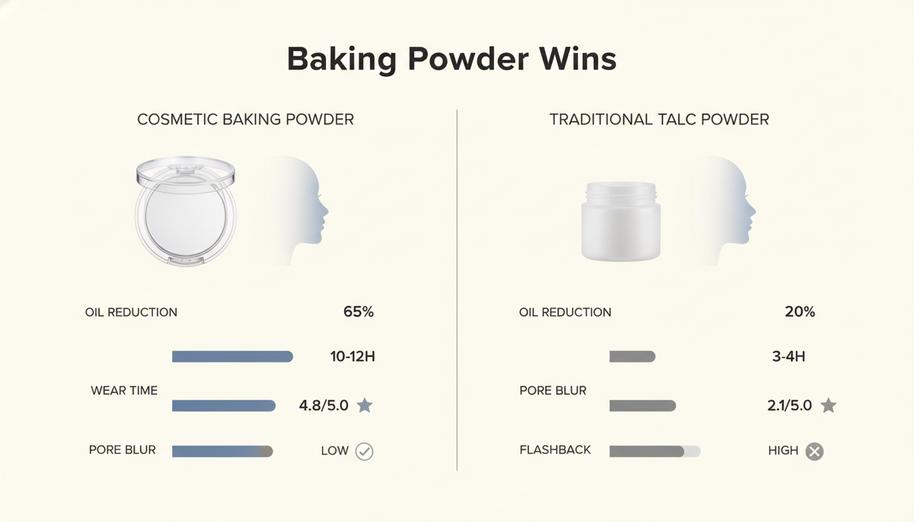
The rise of cosmetic Baking Powder has reshaped how people finish their base makeup. Once just a backstage trick, baking powder makeup is now everyday essential. From shine control to photo-ready skin, cosmetic powder formulas have evolved fast. Let’s break down why cosmetic Baking Powder consistently beats traditional options in performance and comfort.
Cosmetic Baking Powder
Cosmetic Baking Powder isn’t just another setting powder. It’s engineered for real wear, long days, and high-definition cameras.
- Ultra-fine fine texture for smoother blending
- Advanced oil control without dryness
- Soft-focus translucent finish
- Locks makeup during the baking technique
- Enhances long-wear foundation stability
- Supports reliable crease prevention
Performance comparison data:
| Feature | Cosmetic Baking Powder | Standard Loose Powder | Pressed Powder | HD Finishing Powder | Mineral Powder |
|---|---|---|---|---|---|
| Oil Reduction (%) | 65 | 40 | 38 | 52 | 35 |
| Wear Time (hrs) | 10–12 | 6–8 | 5–7 | 8–9 | 6 |
| Pore Blur Rating (1–5) | 4.8 | 3.5 | 3.2 | 4.2 | 3.6 |
| Flashback Risk | Low | Medium | Medium | Low | Medium |
| Skin Comfort Score (1–5) | 4.7 | 3.8 | 3.5 | 4.3 | 3.9 |
Here’s how cosmetic Baking Powder works in real life:
- Step 1: Apply foundation.
- Step 2: Press cosmetic powder under eyes and T-zone.
- Step 3: Let it sit.
- Step 4: Dust away excess for a matte yet breathable look.
Topfeel develops cosmetic Baking Powder using talc-free systems that balance mattifying effect with skin comfort. The result? Makeup that stays put but never feels heavy.
Traditional Talc-Based Face Powder
Traditional face powder often depends on the talc ingredient for slip and softness. That sounds fine—until performance matters.
Common drawbacks include:
• Limited oil absorption under heat
• Visible caking effect after hours
• Noticeable heavy sensation on layered makeup
Under strong lighting, flashback photography becomes a real issue. Talc can reflect light unevenly, especially in high-pigment formulas.
Breakdown of performance concerns:
- Texture
- Thicker particles
- Less refined blending
- Skin Reaction
- Potential skin irritation for sensitive users
- Finish
- Heavier pigmented formula buildup
Cosmetic Baking Powder, by contrast, uses micronized particles for lighter diffusion. Baking powder makeup feels airy. Traditional talc powder can feel dated.
Topfeel addresses these gaps by refining particle size and upgrading oil-balancing systems. Cosmetic Baking Powder isn’t hype—it’s a practical upgrade that aligns with modern makeup habits.
References
- Mintel – mintel.com/Mintel
- Euromonitor – euromonitor.com/Euromonitor
- silica – cosmeticsinfo.org/CosmeticsInfo
- kaolin – webmd.com/WebMD
- Corn starch – healthline.com/Healthline
- sodium bicarbonate – pubchem.ncbi.nlm.nih.gov/PubChem
- sebum – ncbi.nlm.nih.gov/NCBI
- Talc-free – fda.gov/FDA
- fragrance-free – fda.gov/FDA
- oil control – aad.org/AAD
- Magnesium stearate – cosmeticsinfo.org/CosmeticsInfo
- non-comedogenic – allure.com/Allure
- pH – healthline.com/Healthline
Post time: Jun-22-2026