

What Does Primer Do?
Flawless faces don’t happen by chance—our private label Primer turns makeup mayhem into moneymaking magic for beauty brands that mean business.
Primer is the backstage crew of every flawless face—the quiet overachiever that makes foundation behave and highlighter glow like it means it. Skip it, and makeup can slide off by lunch. Include it, and suddenly everything looks airbrushed. No wonder Grand View Research reports the global face primer market growing steadily as consumers chase longer wear and smoother skin.
For beauty brands, that’s not small talk—that’s money on the table. Shoppers crave products that keep up with 10-hour workdays and sweaty subway rides. A private label Primer lets you answer that call fast, without pouring years into R&D.
As Allure editors often say, “Great makeup starts with great prep.” And prep starts here.
Why Do You Need A Cosmetic Primer?
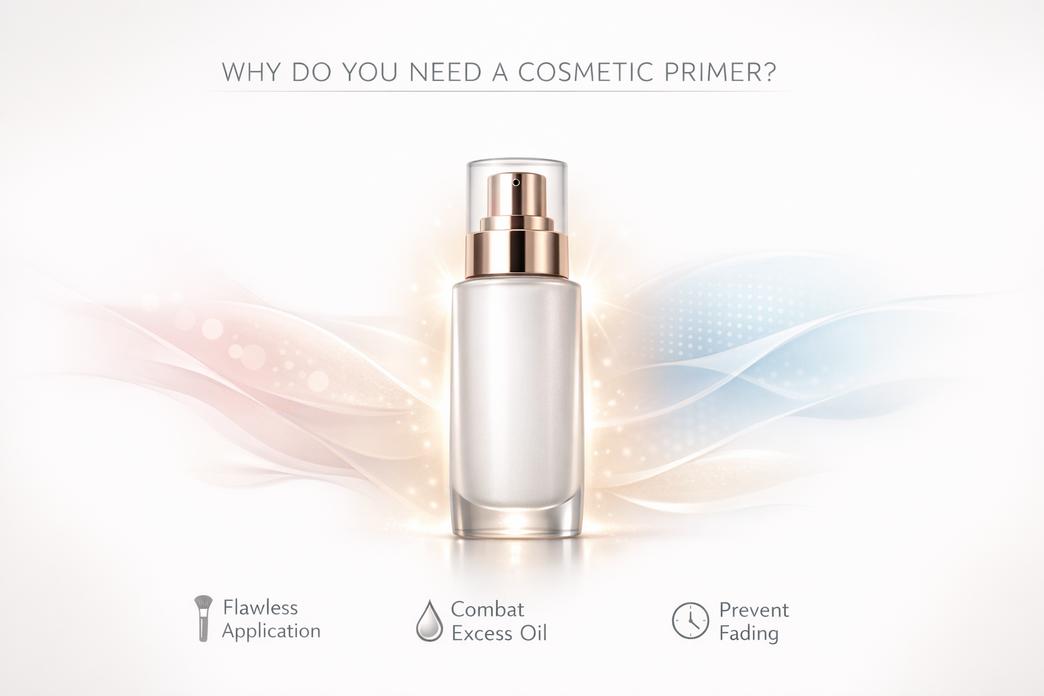
Makeup can look flawless at 9 a.m. and tired by noon. That’s where a good Primer steps in. A face primer, makeup base primer, or foundation primer preps your skin so everything layered on top just behaves better. Let’s break it down in real talk.
Achieve Flawless Foundation Application
A Primer works as the bridge between skincare and foundation. When your skin feels uneven, foundation clings in weird spots. A proper makeup primer fixes that.
- Creating the Base
- Builds a smooth base so foundation doesn’t drag
- Encourages an even skin tone appearance before coverage
- Supports seamless blend during application
- Refining Surface Details
- Helps with pore minimization around the T-zone
- Softens lines through fine line blurring
- Boosts makeup longevity from the start
- How It Plays Out
- Apply skincare and let it settle.
- Smooth a thin layer of face Primer.
- Press foundation on top, not swipe.
The result? Your foundation primer locks things in so coverage looks clean, not cakey. Topfeel Beauty designs each Primer formula to sit light on skin while still giving that filtered finish.
Combat Excess Oil and Shine
If your forehead turns glossy fast, a mattifying Primer is your new best friend.
- Oil Management Layer
- Targets oil control without drying
- Supports sebum regulation through balancing ingredients
- Reduces midday glare with real shine reduction
- Skin Behavior Over Time
- Promotes a soft matte finish
- Helps limit clogged pores tied to greasy skin
- Assists in blemish prevention by keeping makeup stable
- Smart Application Tips
- Focus on T-zone.
- Use less on cheeks.
- Pair with oil-free foundation.
A solid makeup base primer keeps shine from breaking through, so your Primer does more than just prep—it controls the vibe of your whole look.
Prevent Foundation from Fading All Day
Foundation fading usually means poor grip. A long-wear Primer changes that.
-
Adhesion Support
- Strengthens long-lasting wear
- Increases makeup durability in heat or humidity
- Helps maintain color vibrancy
-
Wear Resistance
- Improves smudge-proof performance
- Adds light transfer resistance
- Extends coverage with true extended wear
-
Layering Logic
- Skincare
- Primer
- Thin, even layer
- Wait 30–60 seconds
- Foundation
When the foundation primer grips correctly, oxidation slows down and your tone stays truer for hours.
Answered: Does Primer Improve Skin Texture?
Short answer: yes, a good Primer absolutely improves how skin looks and feels.
- Surface Enhancement
- Encourages visible skin smoothing
- Supports texture refinement across rough patches
- Improves overall surface evenness
- Skin Comfort Factors
- Adds light hydration
- Shields the skin barrier from heavy pigments
- Boosts subtle radiance
- Overall Skin Appearance
- Creates softer skin appearance under makeup
- Makes foundation look thinner, not thicker
- Helps your face primer act like a soft-focus filter
A well-formulated makeup primer doesn’t change your skin overnight, but it upgrades how it looks instantly. That’s the quiet power of a reliable Primer in your daily routine.
5 Benefits Of Private-Label Cosmetic Primers
A good Primer can totally change how makeup sits on the skin. From smoothing pores to boosting glow, primer products have become the base layer brands can’t ignore. Private-label face primer solutions now give beauty companies a faster, smarter way to build their primer line and stand out.
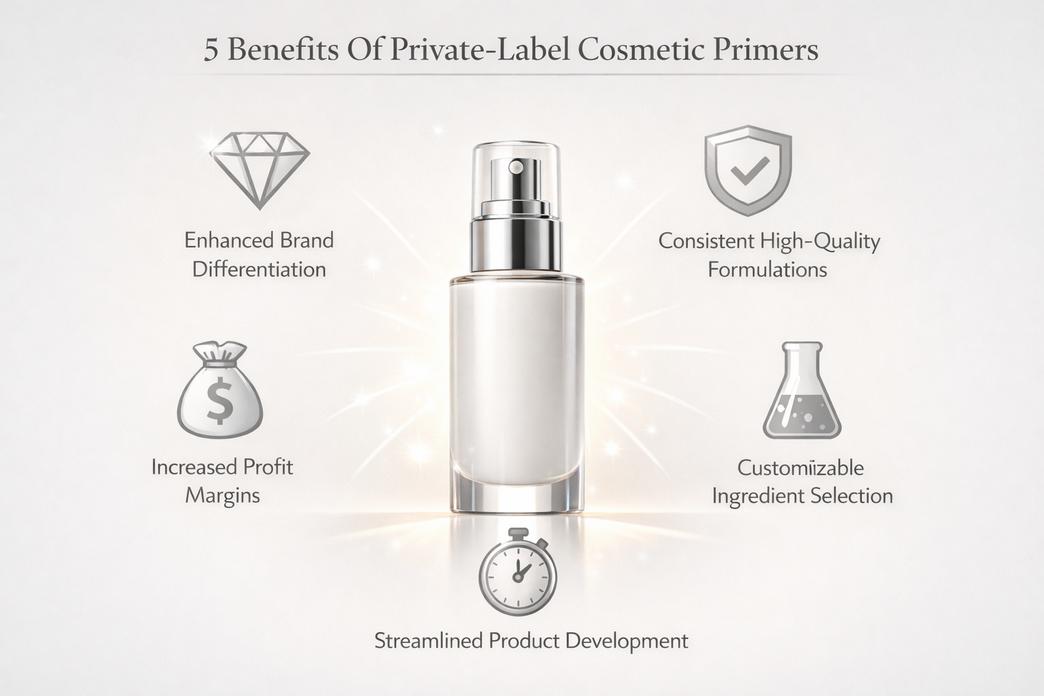
Enhanced Brand Differentiation
Building a private-label Primer line supports strong brand recognition and sharper market identity.
- Product Positioning
- Texture choices: matte primer, hydrating makeup primer, pore-blurring base primer
- Finish claims: glow, soft-focus, oil-control
- Target users: oily skin, dry skin, sensitive skin
- Visual Identity
- Custom tubes, airless pumps, glass bottles
- Signature color palettes
- Distinctive product line extensions
- Messaging Strategy
- Clear unique selling proposition
- Defined consumer perception
- Long-term brand loyalty building
With support from Topfeel Beauty, brands craft a primer makeup base that feels exclusive, not generic, strengthening their competitive advantage in crowded shelves.
Consistent High-Quality Formulations
Reliable Primer performance depends on strict quality control and tight formulation standards.
A. Manufacturing Foundation
- Controlled raw material sourcing ensures ingredient consistency
- Lab-tested stability for heat and transport
- Batch tracking for product reliability
B. Performance Metrics
- Smooth spreadability
- Long wear adhesion
- Reduced oxidation
C. Outcome
- Noticeable performance excellence
- Higher customer satisfaction
- Trust built through manufacturing precision
Topfeel Beauty maintains stable primer production, so every face primer delivers the same silky base, time after time.
Increased Profit Margins
Private-label Primer development drives real business profitability.
- Lower R&D spending = better cost efficiency
- Bulk production = stronger operational savings
- Flexible pricing = higher financial gain
When brands reduce factory overhead, revenue growth follows. A well-priced makeup primer with strong market value turns steady demand into measurable economic benefit.
Streamlined Product Development
Launching a new Primer doesn’t need to drag on.
Step 1: Concept alignment
Step 2: Sample refinement
Step 3: Stability and compatibility tests
Step 4: Packaging confirmation
This tight production workflow improves development efficiency and shortens time to market. Clear timelines, smart project management, and simplified design reduce waste while supporting a smoother innovation process.
Customizable Ingredient Selection
Modern consumers read labels closely. Ingredient choices matter.
I. Hydration Boosters
- Hyaluronic acid
- Glycerin
- Aloe extracts
II. Texture Modifiers
- Silicone blends
- Natural esters
- Oil-absorbing powders
III. Active Add-Ons
Such ingredient flexibility allows full formulation customization, matching specific skin needs. From lightweight primer base gels to rich smoothing cream primers, brands can design tailored formulations using diverse raw material options.
In short, a smart private-label Primer strategy helps brands move faster, earn more, and create a base product customers actually repurchase.
Silicone Vs. Water-Based Primers
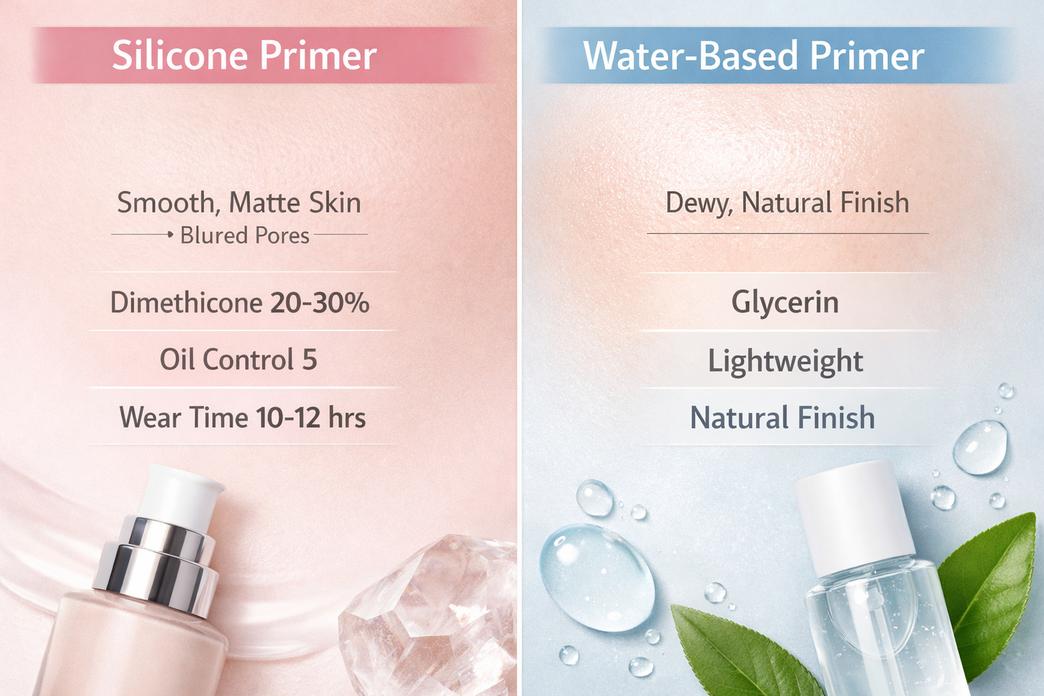
Primer sounds simple, yet this tiny layer can totally change how your base makeup behaves. Break the word down—Prime + r—and you get the idea: it prepares. A face primer, makeup base, or foundation primer sets the tone before foundation even touches skin.
Silicone Primer
A Silicone Primer is all about surface control. Think of it as a flexible mesh that sits between skincare and foundation, helping your face primer create that camera-ready base.
- Key texture traits
- Creates a smooth texture across uneven areas
- Offers visible pore-filling effects
- Leaves a soft-focus, matte finish
-
Core ingredient structure
1.1 Primary silicone base
- Often powered by dimethicone
- Gives that signature slippery feel
1.2 Functional performance
- Enhances long-lasting makeup wear
- Supports oil control for shine-prone skin
1.3 Finish outcome
- Blurred pores
- Reduced fine line visibility
- Improved foundation grip
Here’s a simplified comparison of common silicone levels in face primer formulas:
| Formula Type | Dimethicone % | Oil Control Rating (1–5) | Wear Time (hrs) | Finish Type |
|---|---|---|---|---|
| Light Silicone Blend | 5–10% | 3 | 6–8 | Soft matte |
| Standard Smoothing | 10–20% | 4 | 8–10 | Matte |
| High Silicone Blur | 20–30% | 5 | 10–12 | Velvet matte |
| Hybrid Silicone Mix | 8–15% | 4 | 8–9 | Natural matte |
Application flow with this makeup primer usually goes like this:
- Cleanse
- Moisturize (let it absorb)
- Press a pea-sized amount of primer onto T-zone
- Gently smooth outward
- Wait 30–60 seconds before foundation
Quick reality check: too much silicone-based primer can cause pilling. A thin layer works best.
Water-Based Primer
A Water-Based Primer leans into comfort. This type of foundation primer absorbs fast and feels more like skincare than a coating.
Core identity of this primer makeup base:
- Texture: lightweight and quick-absorbing
- Skin feel: fresh, never greasy
- Finish: soft natural finish
-
Hydration-driven formula logic
1.1 Main humectants
- Glycerin draws water into the skin
- Boosts a hydrating effect
1.2 Skin compatibility
- Ideal for sensitive skin
- Frequently labeled non-comedogenic
1.3 Breathability factor
- Supports a breathable makeup layer
- Reduces heavy buildup under foundation
Use sequence for best payoff:
- Apply skincare fully
- Add a thin layer of water-based primer
- Tap, don’t rub
- Pair strictly with water-based foundation
- Blend while primer is still slightly tacky
A few fast notes:
- Works great in dry climates
- Less shine control than silicone options
- Better for everyday wear than extreme long shifts
When comparing primer types, it’s not about which is “better.” It’s about what your skin needs that day. Oily and textured? Silicone face primer might win. Dry or reactive? Water-based primer keeps things calm and easy.
FAQs about Primer
How does a primer improve makeup wear throughout the day?
Primer acts like a quiet shield between skincare and foundation, helping makeup stay true for hours.
It works in three key ways:
- Creates a thin barrier that reduces oxidation and color change.
- Controls excess oil, limiting midday shine.
- Boosts foundation grip so coverage fades slower.
The result feels simple but visible—smoother skin, steadier color, less touch‑up stress.
Why do brands choose private-label primer manufacturing?
For beauty businesses, speed and control matter. Partnering with a professional manufacturer offers:
- ✔ Ready-to-scale production
- ✔ Managed compliance and safety testing
- ✔ Lower R&D investment
- ✔ Stronger profit margins
Instead of building formulas from scratch, brands focus on identity, marketing, and customer connection.
What is the difference between silicone and water-based primer?
Both serve distinct skin needs, and choice often reflects customer lifestyle.
| Type | Skin Feel | Best For |
|---|---|---|
| Silicone-Based | Silky, pore-blurring | Oily or textured skin |
| Water-Based | Light, breathable | Dry or sensitive skin |
Silicone formulas smooth and mattify.
Water-based options hydrate while keeping skin fresh and flexible.
Does primer visibly improve skin texture?
Yes—and the effect is immediate.
• Blurs enlarged pores
• Softens fine lines
• Evens surface texture
• Helps foundation glide evenly
Makeup appears more polished, almost airbrushed, without feeling heavy.
How can a custom primer line increase brand profit margins?
Private-label production reshapes the cost structure:
- No internal lab development expenses.
- Faster launch timelines.
- Controlled per-unit pricing.
Add targeted actives like hyaluronic acid for hydration or mattifying blends for oil control, and the product speaks directly to customer needs. When formula and branding align, margins grow naturally alongside loyalty.
References
[1] Makeup Primer Market Size & Share Report – Grand View Research
[2] What Is Makeup Primer and Do You Really Need It? – Allure
[3] The Best Makeup Primers to Perfect Your Base – Vogue
[4] Best Primers for Large Pores - Allure
[5] Sebaceous gland – Wikipedia
[6] The 20 Best Makeup Primers of 2023 - Harper’s Bazaar
[7] Stratum corneum – Wikipedia
[8] Hyaluronic acid – Wikipedia
[9] Glycerol – Wikipedia
[10] Vitamin C – Wikipedia
[11] Nicotinamide – Wikipedia
[12] Peptide – Wikipedia
[13] Polydimethylsiloxane – Wikipedia
[14] Skincare Pilling: Why It Happens and How to Stop It - Healthline
[15] Comedo – Wikipedia
Post time: Mar-13-2026