
Water-Based Lip Stain vs. Lip Gloss: Which Fits Your Needs?
Your beauty brand’s lip product needs a clear purpose. A water based lip stain emphasizes tint, while lip gloss brings shine. Which deserves shelf space?
For private label buyers, the question is which formula fits customers best.
Reading Notes for a Water Based Lip Stain Guide
- Long-Wear Appeal: Compare buildable color and transfer during customers’ usual routines.
- Comfort Factor: Compare lightweight textures and moisturizing ingredients alongside wear.
- Brand Positioning: Compare with lip gloss for shine, hydration, and sensory appeal; choose the finish that fits your target customer.
- Quality Checks: Review color payoff, wear time, smudge resistance, and manufacturing documentation before selecting a private label formula.
Water Based Lip Stain Vs. Lip Gloss
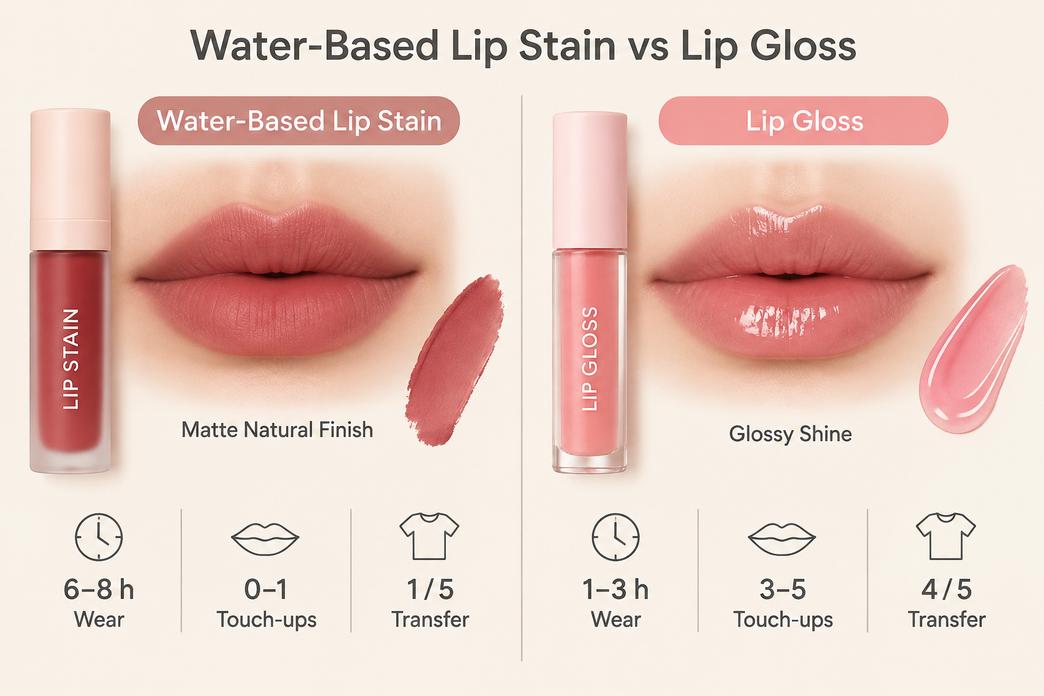
Torn between a water based lip stain and a glossy swipe? Start with the finish you want. A tint emphasizes color; gloss emphasizes shine. The formula determines how each feels and wears.
Water Based Lip Stain
- How the color works
- Plant-based pigment blends for the US market need lip colorants permitted for their intended use.
- The tint can be assessed in layers
- One coat shows the initial coverage
- Two or three coats show the build-up
- What you’ll notice
- A lightweight feel is part of the sample review
- A soft matte finish creates a different natural look from shine
- Wear and the catch
- Long-lasting color needs wear and transfer checks
- Only light hydration may leave dry lips needing additional lip care
Quick tip: compare blending time with a water-based lip tint before it sets.
Lip Gloss
Gloss is the opposite move: it puts shine on top for a juicy look.
Glycerin contributes to moisturization as a humectant ingredient, while fruit extracts belong in the feel and scent brief.
▸ High gloss or a sheer shine, your call
▸ Shimmer shades bring sparkle for nights out
▸ Plumping formulas need a separate comfort assessment
▸ A doe-foot applicator gives you a way to compare touch-ups
| Feature | Water Based Lip Stain | Lip Gloss |
|---|---|---|
| Typical wear time (hours) | 6 to 8 | 1 to 3 |
| Touch-ups per day | 0 to 1 | 3 to 5 |
| Transfer level (1 to 5) | 1 | 4 |
| Shine level (1 to 5) | 1 | 5 |
The trade-off? Compare sticky texture alongside shine during application.
Which Finish Matches Your Daily Routine?
Coffee, calls, and meals give buyers useful contexts for comparing a water based lip stain with gloss. The right choice depends on customers’ routines and finish preferences.
All-Day Wear for Busy Schedules
Wear checks track color retention. Transfer checks examine what ends up on a cup or tissue.
- Stain side
- A water based lip stain needs evidence for long-lasting, transfer-proof claims
- Quick-drying, lightweight formula preferences belong in the sample brief
- Gloss side
- Feels and hydration should be reviewed together
- Not every formula needs the same reapplication schedule
Packed calendar? Compare touch-up needs before choosing.
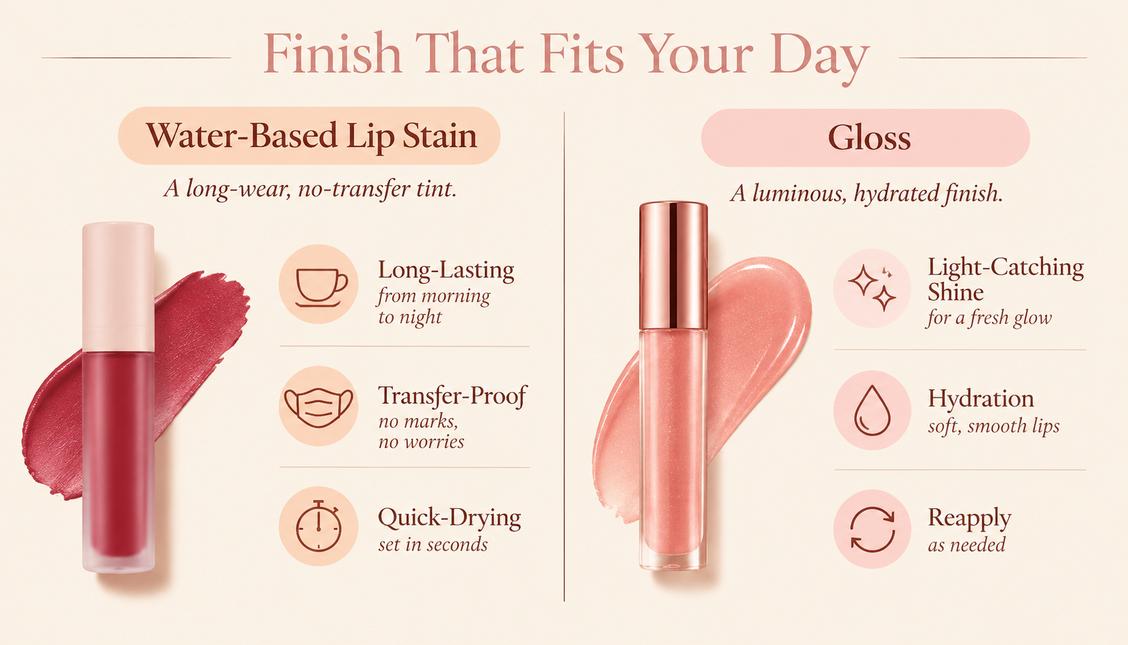
Finish Gloss Variation for Every Look
Gloss may offer mirror-like gloss, sheer coverage, or a plumping effect; compare the actual samples.
➤ High shine and glossy texture create a reflective look
➤ Dimensional color adds another finish choice
➤ A water-based lip tint can be compared alone and with balm
Topfeel Beauty develops lip color in customized formats, so buyers can discuss their preferred looks.
Scent Profile Infusion for Daily Comfort
- Sweet and cozy
- Fruity aroma or vanilla scent for a preferred scent profile
- Fresh and clean
- Refreshing mint needs a comfort check
- Natural extracts need the same ingredient review as other ingredients
- Low-key
- Subtle fragrance or none at all
Scent shapes the sensory experience. Fragrance and mint can irritate dry, chapped lips; consider scent alongside wear and finish.
Match the whole routine: Wear, finish, and scent belong in one customer brief.
Topfeel Beauty’s custom formulation work starts with texture, color, and finish requirements. Compare its OEM/ODM services to prepare that combined brief, rather than choosing a format on shine alone. Its lip gloss offering gives gloss-focused buyers a relevant starting point.
Water Based Lip Stain: Key Benefits
A good water based lip stain needs a balance of color and feel. Ingredient choices and sample testing help buyers compare that balance.
Hyaluronic Acid Infusion for Comfortable Wear
- Why it matters
- Hyaluronic acid helps retain water, making hydration part of the ingredient discussion.
- Lips need a separate comfort review alongside moisture retention.
- What you’ll notice
- A smooth texture is a sample characteristic to compare.
- Built-in lip care can be considered alongside a lip serum approach.
Botanical Pigment Blend with Strong Color Payoff
A botanical formula needs a clear ingredient brief. Compare natural extracts and plant-based ingredients alongside the desired color, rather than assuming botanical origin determines performance. Review each shade through the same steps:
- Swatch tests compare pigmentation on relevant skin tones.
- Pantone matching provides a reference for the requested color.
- Batch reviews compare color intensity against the approved sample.
Alcohol Free Base for Sensitive Lips
- The base
- A gentle formula needs ingredient review, including potential lip allergens and the role of cosmetic alcohols.
- A nourishing base should be assessed for comfort.
- The checks
- Patch tests help investigate allergy to cosmetics.
- Microbial testing belongs in the quality review.
Wear Time Duration Check for Long-Lasting Results
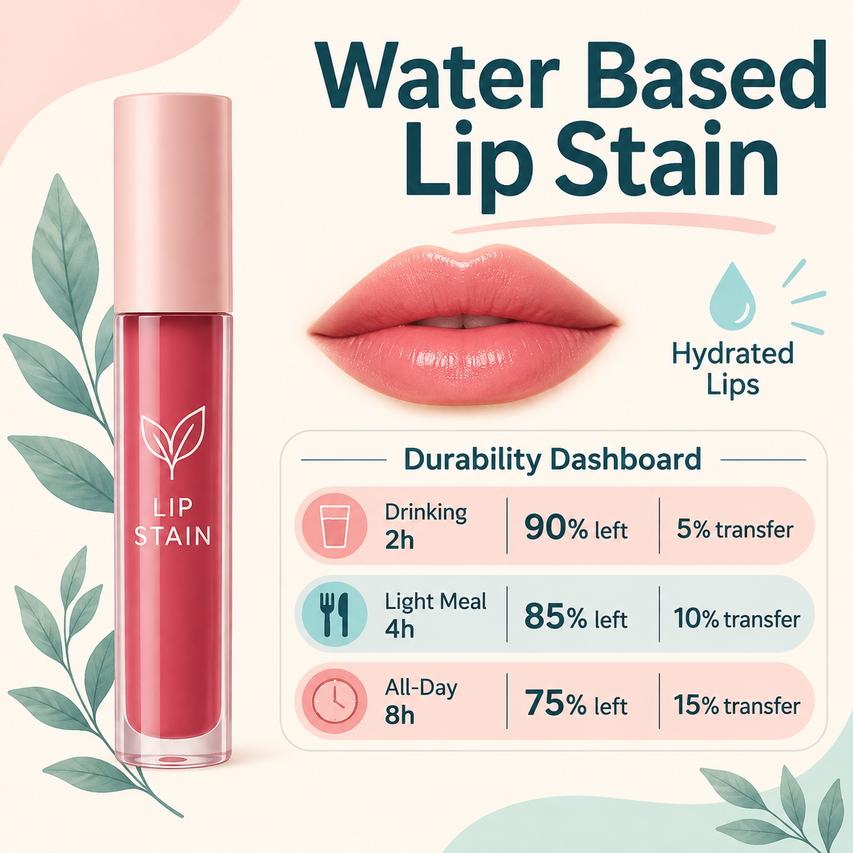
Compare a stain through set tests before choosing a sample:
➤ Transfer-resistant checks with cups, napkins, and tissues
➤ Rub checks for smudge-proof claims
➤ Timed reviews of color retention and fading
| Test | Check Point (hrs) | Target Color Left (%) | Max Transfer (%) |
|---|---|---|---|
| Drinking | 2 | 90 | 5 |
| Light Meal | 4 | 85 | 10 |
| All-Day Use | 8 | 75 | 15 |
Lip Gloss: Shine, Comfort, and Trade-Offs
Shine, comfort, packaging, and wear all belong in a gloss comparison.
Glycerin Moisturizing Agent for Smooth Application
- Why it works
- Glycerin is a moisturizing agent to consider in the formula brief.
- Pair it with an emollient when discussing texture.
- Watch-outs
- Thick formulas need a stickiness assessment.
- Lighter blends can be compared for glide and lip texture.
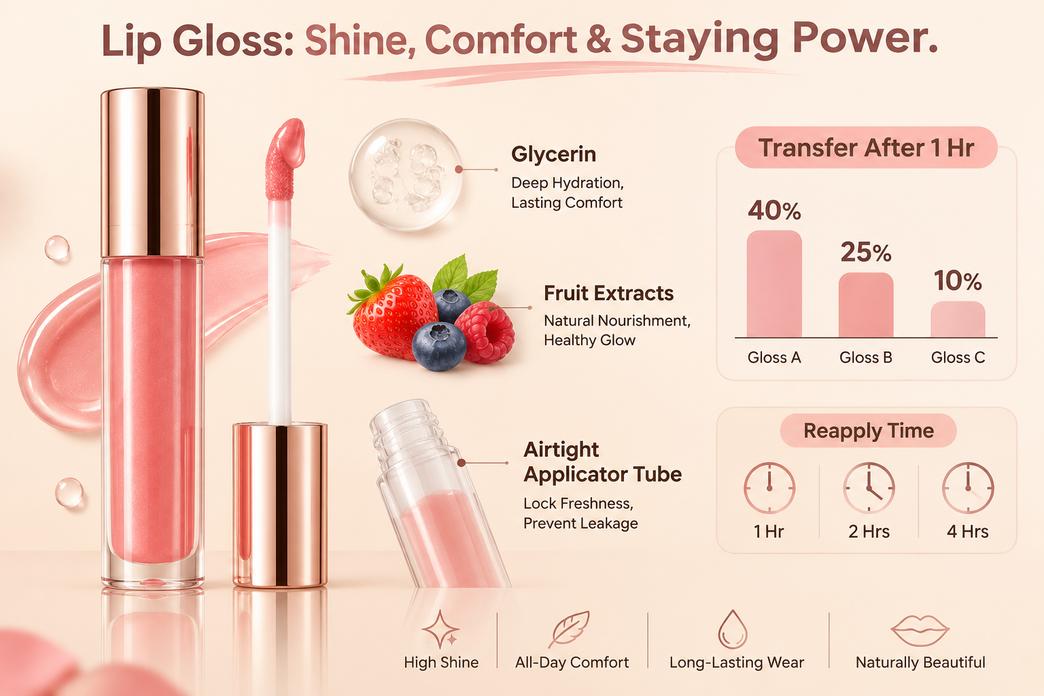
Fruit Extract Complex for a Cushioned Feel
A fruit extract complex is an ingredient choice, not the whole sensory brief.
Blend in a soft oil or butter when discussing the desired texture.
Compare lip comfort and softness with the brand’s hydrating lipstick guidance as another lip-format reference.
Precision Tip Brush and Airtight Applicator Tube
- Getting color on
- A precision tip brush or flocked wand changes the application experience.
- Controlled dispensing belongs in sample checks.
- Keeping it fresh
- An airtight applicator tube needs formula-and-package review alongside contamination risks.
- Leak-proof packaging claims need testing. Topfeel Beauty provides packaging compatibility considerations alongside custom formulation work.
Smudge Resistance Assay for Everyday Performance
A smudge resistance check compares marks after contact. A wear test tracks color retention, while transfer checks examine product left on other surfaces.
| Sample formula | Viscosity | Transfer after 1 hr (%) | Typical reapply time (hrs) |
|---|---|---|---|
| Thin gloss | Low | 40 | 1 |
| Classic gloss | Medium | 25 | 2 |
| Water-based tint | Low | 10 | 4 |
3 Key Differences You Need to Know
A water based lip stain and gloss need comparison on color, texture, and comfort rather than packaging alone.
Color Payoff Test vs. High-Shine Reflection
- Stain side
- Pigment concentration belongs in the color brief.
- Payoff tests compare color saturation after application.
- Gloss side
- The emphasis is light reflection and a glossy finish.
- Testers can compare shine level separately from color.
Custom Viscosity Level vs. Glossy Slip
Compare fluid texture, gel consistency, and slippy feel in samples. Formula thickness and spreadability belong in the same brief.
| Product type | Typical viscosity (cP) | Set time (sec) |
|---|---|---|
| Water based lip stain | 500–3,000 | 30–60 |
| Gel lip tint | 5,000–15,000 | 60–120 |
| Gloss-stain hybrid | 10,000–30,000 | 90–180 |
| Classic lip gloss | 50,000–150,000 | Stays wet |
Topfeel Beauty’s custom texture development lets buyers discuss their preferred feel.
pH Balance Stability vs. Immediate Cushioning
- Stain priorities
- A steady pH belongs in the formula’s stability assessment.
- A light hydration layer can be compared for feel.
- Gloss priorities
- Rich oils contribute another texture to compare.
- Less emphasis on a matte result, more on immediate cushioning.
Compare a tint’s finish with gloss’s cushioning and matte lipstick preferences.
Turn differences into specifications: Color payoff, viscosity, and pH stability versus cushioning need a coordinated sample review. Topfeel Beauty combines custom lip-color development with compatibility and stability assessments, giving buyers a framework for taking those differences into formulation discussions.
Review custom solutions to prepare a color-and-texture specification with stability requirements for sample evaluation.
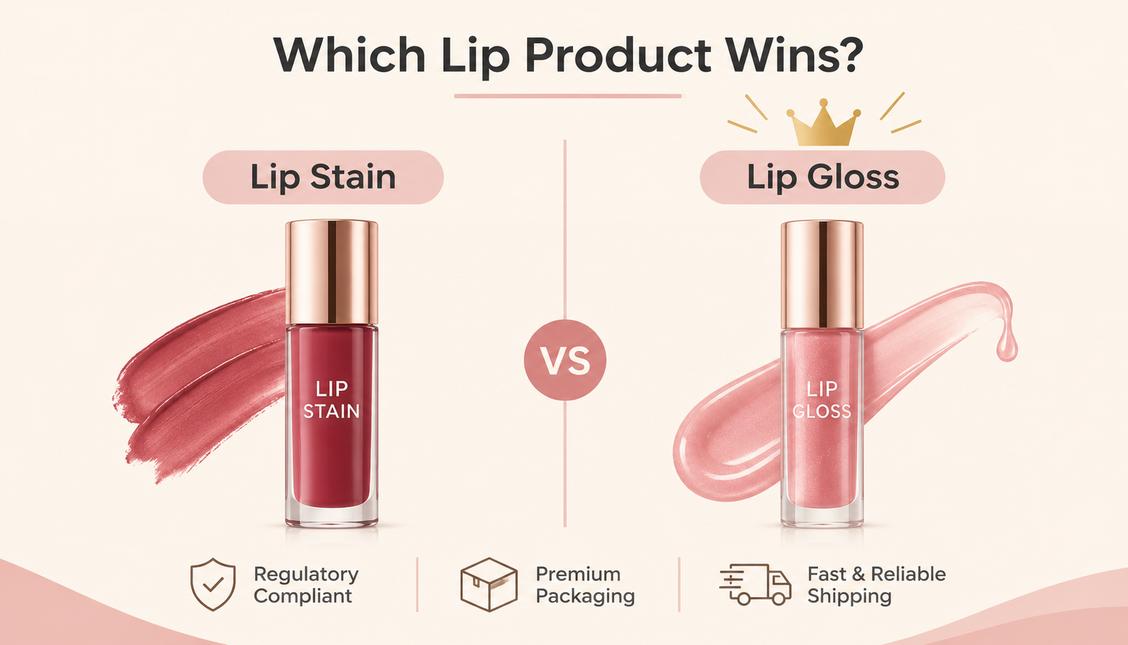
Final Verdict: Which Lip Product Wins?
The choice depends on buyers, budget, and the product brief. Compare formula, compliance, packaging, and shipping before ordering a water based lip stain or gloss.
Best Fit for Private Label Lip Stain Buyers
A water-based formula needs the same sample-led product selection as other lip formats.
- Go with lip stain when:
- Your beauty brand serves buyers seeking tint
- Consumer preference favors reduced transfer
- Choose lip gloss when:
- Shine is the priority
Solid cosmetic formulation and sample review support that choice.
GMP Certified Facility and FDA Cosmetic Compliance
Review manufacturer and importer obligations alongside the product brief for UK sales.
- GMP certification
- An audited manufacturing facility with production records for cosmetic GMP review
- FDA compliance
- MSDS sheets, microbial checks, and heavy metal test documentation
- Labels that meet the destination market’s cosmetic product requirements
- Quality assurance
- Vegan or cruelty-free documentation alongside safety documentation
Custom Logo Embossing with Secondary Carton Design
Packaging communicates the concept before application. Discuss logo embossing alongside the component design.
✦ Airtight applicators need compatibility checks
✦ Tamper-evident seals belong in the packaging brief
✦ A printed secondary carton tells your brand identity story
Match your packaging design with the outer packaging for one coherent finish.
Bulk Freight Pallet Planning and Secure Warehousing Storage
Plan shipping before placing the order.
- Pallet planning
- Clear master carton labels on every bulk freight load
- Warehousing storage
- Temperature requirements belong in the storage plan
- Secure storage belongs in the handling brief
- Supply chain help
- Topfeel Beauty offers flexible shipping terms and can recommend freight forwarders for new importers; use its manufacturer-selection guidance alongside the supplier review.
Ready for a complete brief covering formula choice, compliance documentation, packaging, and freight planning?
Topfeel Beauty’s consultation-to-delivery customization workflow connects that decision to sampling; formulation engineers prepare initial samples in 3-7 days. That is an initial sample step, not the production timeline. Discuss your requirements with the formula, packaging, documentation, and delivery brief ready.
References
- Color Additives Permitted for Use in Cosmetics — FDA
- Glycerin — Cosmetics Info
- 7 Dermatologists’ Tips for Healing Dry, Chapped Lips — American Academy of Dermatology
- Hyaluronic Acid: What It Is, Benefits, How To Use & Side Effects — Cleveland Clinic
- Allergic Contact Cheilitis — DermNet
- Cosmetics Allergy: Causes, Symptoms, and Treatment — DermNet
- Microbiological Safety and Cosmetics — FDA
- Making Cosmetic Products Available to Consumers in Great Britain — Office for Product Safety and Standards
- Cosmetic Products Enforcement Regulations 2013 — Office for Product Safety and Standards
- ISO 22716:2007 — Cosmetics — Good Manufacturing Practices — ISO
Post time: Nov-06-2026