
Warm vs. Cool Brown Lip Liners: How to Tell the Difference
Two brown lip liners, one tricky choice! Compare peachy warmth with muted taupe before choosing a universal earth lip liner.
For private label brands, color balance, texture, and wear belong in the same development brief.
For U.S. cosmetics, color-additive permissions depend on the intended use, including whether a color is permitted for lip products.
Quick Notes for Universal Earth Lip Liner Harmony
➔ Choose Neutral Balance: Compare warm peaches and cool taupes rather than relying on a shade name.
➔ Texture Matters: Evaluate creamy matte and smooth-glide samples for comfort and precision.
➔ Durability Check: Assess liners during eating, drinking, and daily activities.
➔ Quality Assurance: Review facility credentials and ingredient documentation for the destination market.
➔ Packaging & Supply: Compare wooden barrels, retractable casings, and bulk logistics before scaling.
What Defines Warm Vs. Cool Brown Liners?
Brown lip liners vary in golden, reddish, or muted appearance. Compare ingredients, pigment direction, and texture when developing a universal earth lip liner.
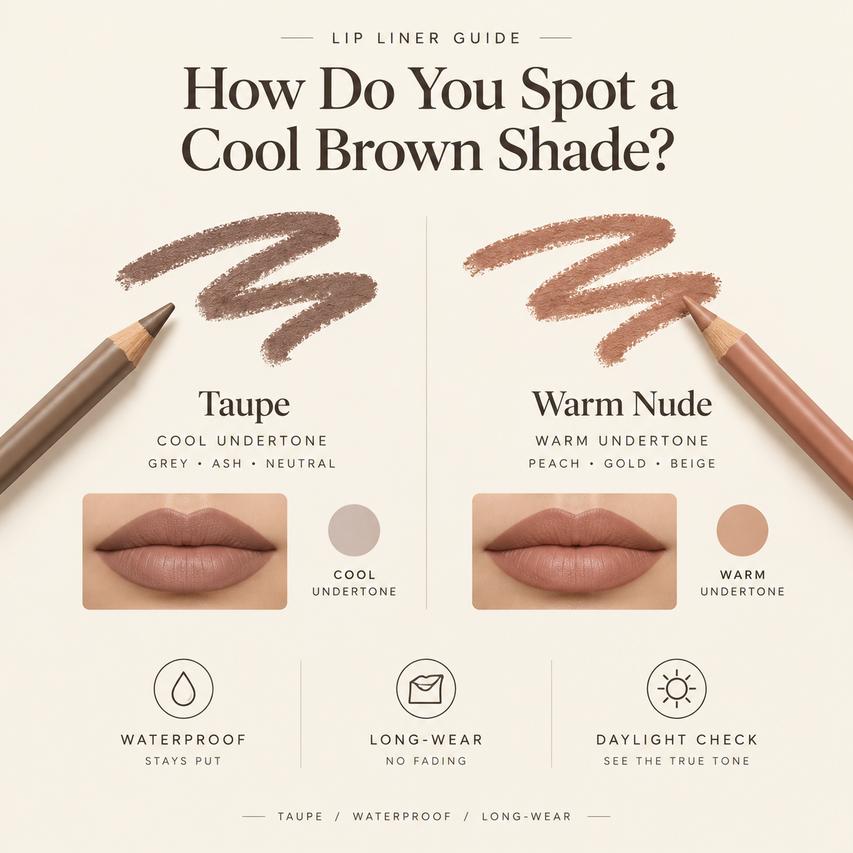
Ingredient Influence: Natural Plant Waxes and Warm Nude Shade
Review natural plant waxes alongside the complete lip liner base; evaluate the finished sample rather than choosing by ingredient name alone.
- Key ingredients and their benefits:
- Carnauba wax: Check pencil firmness and shape during application.
- Candelilla wax: Compare structure and application between samples.
- Emollient oils: Assess dragging and comfort on the lips.
A warm nude shade may appear golden, peachy, or reddish. Compare the actual sample with the intended lipstick instead of treating the shade name as a specification.
Ingredient selection and pigment approval are separate checks in a warm nude shade brief.
The Role of Pigment Temperature in Neutral Earth Tone
Pigment temperature describes a color’s warm or cool appearance.
A neutral earth tone is a useful comparison point when choosing a universal earth lip liner.
| Brown Shade | Undertone Balance | Warmth Scale (1–5)* |
|---|---|---|
| Golden brown | Strongly warm | 5 |
| Terracotta brown | Warm reddish | 4 |
| Neutral earth brown | Balanced | 3 |
| Taupe brown | Slightly cool | 2 |
| Ash brown | Strongly cool | 1 |
Illustrative scale based on basic color theory, not laboratory measurements.
- Understanding the differences:
- Warm brown: Golden, orange, or reddish appearance.
- Cool brown: Gray, mauve, or blue-leaning appearance.
- Neutral brown: Compare balanced-looking samples across the intended wearer group.
Your natural lip color is part of the comparison; review liner and lipstick shade relationships.
Texture Differences between Creamy Matte and Smooth Glide Pencil
Beyond color, texture differences belong in the comfort and precision assessment.
Compare creamy matte samples for:
- Velvety application finish to assess alongside lip definition.
- Firmer formula consistency to compare during wear testing.
Assess a smooth glide pencil for:
- Softer application to evaluate for pulling.
- Easy blending to assess for the intended earth-tone look.
Choose the finish through sample comparisons, not a texture label alone.
Keep shade approval separate from the texture decision; Topfeel’s private label lip liner guide provides a product-development starting point.
Make shade choices tangible: Coordinate wax structure, pigment direction, and application feel in one comparison brief.
Topfeel Beauty’s laboratories match specific color samples, giving your team a physical reference rather than a shade-name debate. Review its lip pencil to define warm and cool references alongside a neutral control—and the texture criteria for comparison.
How Do You Spot A Cool Brown Shade?
Identify cool brown by comparing undertones, wear, and neighboring shades. Keep the color decision distinct from the formula’s performance assessment.
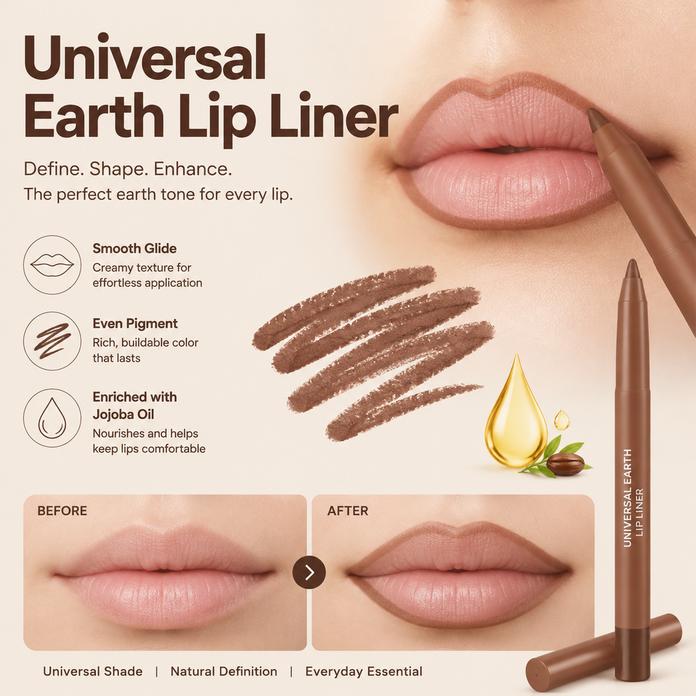
Visual Clue – Deep Taupe Color Undertones
A cool brown may look muted or smoky beside a warmer sample. Compare the undertone of each taupe shade rather than judging its name.
Look for these visual clues:
- Grayish hue: Compare gray-brown appearance beside a warmer reference.
- Ashy finish: Look for definition without obvious orange warmth.
- Muted pigment: Assess the outline at normal application strength.
- Cool color spectrum: Compare mauve, dusty rose, and gray-brown samples.
- Deep taupe is one option for softly sculpted lips.
- A universal earth lip liner should be assessed with the intended makeup looks.
Topfeel Beauty provides custom color-matching support for lip makeup development.
Smudge Proof Check with Waterproof Contour Pencil
A shade choice also needs a practical wear assessment.
Testing a waterproof contour pencil concerns performance, not color temperature. The FDA requires cosmetic claims to be truthful and not misleading.
Try this quick wear test:
- Apply the pencil to clean, dry lips.
- Allow the formula to set completely.
- Gently rub the line with your fingertip.
- Check for transfer, fading, or uneven texture.
Record both definition and dryness during the long-wear assessment.
Remember, application comfort and durability belong alongside the color decision.
Contrast Analysis against Warm Nude Shade
Still unsure? Make a direct shade comparison.
Swatch the cool brown beside a warm nude under the same lighting.
Pay attention to three details:
- Hue: Compare gray or pink appearance with peachy or golden warmth.
- Brightness: Compare samples at similar depth.
- Contrast: Use the warm nude as a baseline.
Place each color swatch beside the other for a consistent comparison.
Compare the cool-toned earthy liner’s muted appearance and lip definition with the intended lipstick pairing before approval.
Splotchy Lines? Try Universal Earth Lip Liner Accuracy
Patchy lines make shade evaluation harder. Assess smooth application, coverage, and comfort separately when sampling a universal earth lip liner.
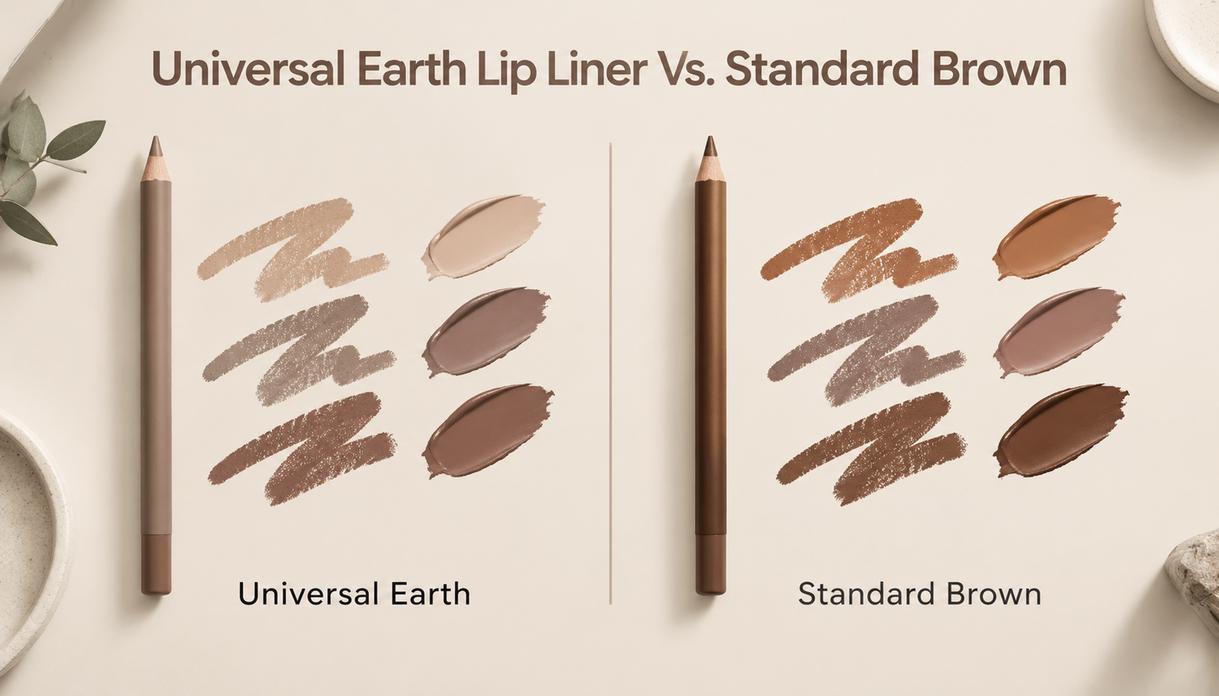
Application Assessment for Smooth Glide Pencil
A smooth glide lip liner needs evaluation at the lip corners as well as the center.
Compare its texture and controlled application without repeatedly pressing over the same area.
Key advantages include:
- Precision: Check the cupid’s bow and lip corners.
- Comfort: Note pulling during application.
- Formula: Assess movement and edge definition together.
Compare warm and cool samples at similar application strength.
Coverage Assessment for Long Wearing Formula
Uneven pigment needs a separate coverage assessment, particularly around dry patches.
Evaluate a universal earth lip liner at application and during wear.
- Reliable color performance
- Color payoff: Record the number of strokes used.
- Coverage: Inspect gaps along the lip border.
- Extended makeup performance
- Longevity: Compare definition during normal activities.
- Wear time: Record changes in the outline.
- Durability: Look for uneven fading.
- Everyday practicality
- Stain resistance: Check transfer while recording eating, drinking, and application habits.
Finish Assessment with Jojoba Oil
Dry lips deserve attention during a matte-pencil evaluation; Topfeel’s lip-care guidance addresses this preparation topic.
Assess moisture and comfort from the finished sample, including any jojoba-containing version being considered.
Compare the creamy matte finish on the intended users.
For everyday lip care, compare these practical details:
- Hydration: Record comfort during application.
- Nourishment: Assess the conditioned feel without assuming ingredient-level benefits prove finished-product performance.
- Blendability: Check how the pigment blends before setting.
Include individual tolerance in the assessment: DermNet describes contact reactions to lipsticks and lip-care products.
5 Tests For Your Universal Earth Lip Liner
Use these five checks to compare wear, shade, packaging, and manufacturing documentation before approving a universal earth lip liner.
Step 1: Smudge Resistance with Waterproof Contour Pencil
Define the wear conditions before assessing a waterproof formula.
Test your universal earth lip liner under everyday conditions:
- Application test
- Apply the contour pencil to clean, dry lips.
- Allow the stated setting time.
- Smudge resistance check
- Gently rub the outline with a tissue.
- Check pigment transfer and edge definition.
Record movement during the wear test; EU common criteria for cosmetic claims include evidential support.
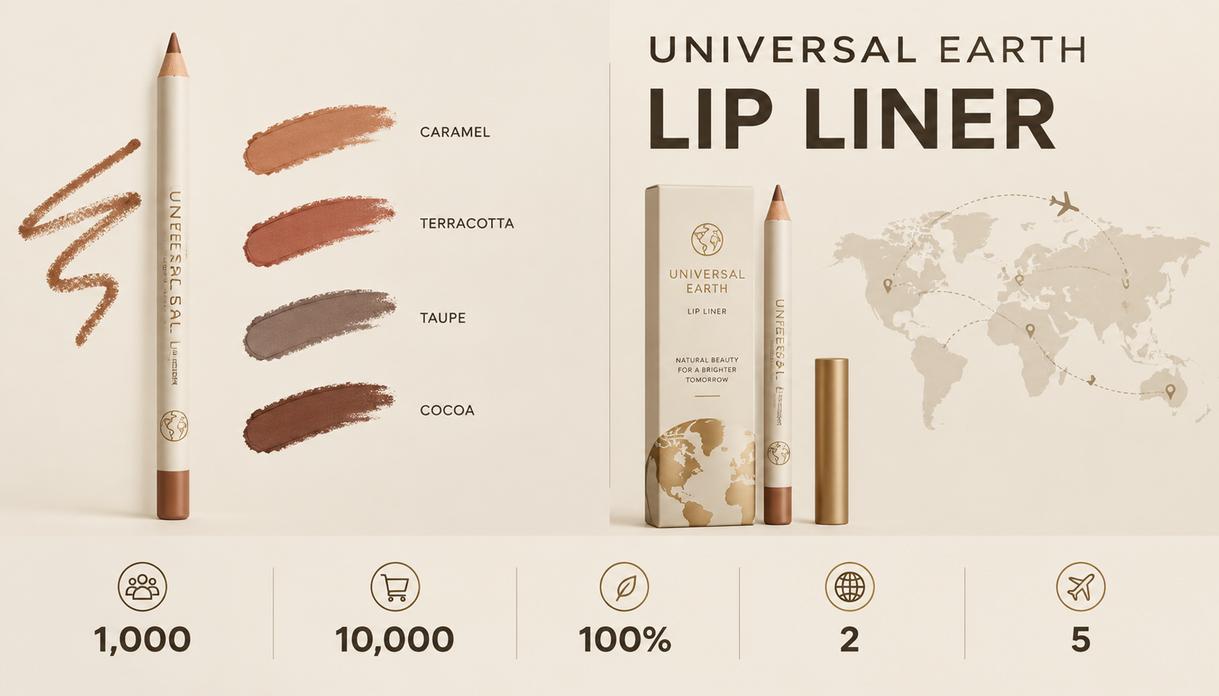
Step 2: Shade Match of Universal Brown Hue
A universal brown needs comparison beyond the pencil itself.
Compare the earth lip liner across different complexions:
- Warm undertone: Look for unwanted orange warmth.
- Cool undertone: Check for unwanted muddiness or grayness.
- Neutral undertone: Assess depth and softness.
Document the shade match under consistent conditions.
Step 3: Wear Time Trial for Long Wearing Formula
Assess a universal earth lip liner through coffee, meals, and normal activities.
Evaluate formula performance through three checkpoints:
- After 2 hours: Examine initial color changes.
- After 4 hours: Check transfer following drinks or meals.
- After 8 hours: Complete the fading test and inspect feathering.
Record actual wear time, conditions, and touch-ups before choosing claim wording.
Step 4: Packaging Durability of Wooden Pencil Barrel
The wooden pencil needs a practical sharpening assessment.
Check two practical areas:
- Structural integrity
- Inspect the barrel for visible splits.
- Test sharpener compatibility using a standard cosmetic sharpener.
- Packaging design
- Check whether the core stays centered.
- Compare barrel durability with retractable plastic alternatives.
Keep the intended daily application routine in the packaging brief.
Step 5: Quality Check at GMP Certified Facility
Review documented controls alongside packaging and shade samples; Topfeel’s manufacturer-selection guide supports the supplier discussion.
Before approving wholesale orders, verify:
- Manufacturing standards
- Review ISO 22716 guidelines for cosmetics GMP.
- Confirm the facility’s GMP certified status and certification scope.
- Safety compliance
- Examine ingredient documentation and relevant safety assessments.
- Request batch records and applicable test results.
Match the facility audit and quality check to the destination market, including Great Britain’s cosmetic-product requirements where applicable.
Approve the whole pencil: Shade, wear, barrel durability, and production records belong in one five-test approval file. Topfeel Beauty’s first-article inspection checks color accuracy and texture before mass production, connecting the approved sample to the production decision.
Compare its custom development route to prepare the sample criteria, packaging checks, and documentation questions your team needs to take forward.
Universal Earth Lip Liner Vs. Standard Brown
Compare undertones, color depth, and intended looks rather than treating either label as a performance guarantee.
Universal Earth Lip Liner
A universal earth lip liner can be a development concept for a balanced-looking brown. Evaluate its earth tone on the intended wearers rather than assuming universal compatibility.
Compare the neutral undertone with warmer and cooler references.
- 1. Balanced Color Characteristics
- Neutral pigment balance
- Combines beige, taupe, and muted brown references in one comparison.
- Maintains a record of balanced warmth, unwanted orange, or gray.
- Everyday versatility
- Creates a reference for the intended natural finish.
- Pairs to compare include nude lipstick, clear gloss, and lip balm.
- Neutral pigment balance
- 2. Complexion Compatibility
- Fair to medium skin
- Adds an outline-contrast check to the comparison.
- Supports recording the intended complexion match.
- Tan to deep skin
- Enhances the comparison with natural lip contour references.
- Creates a record of natural lip pigmentation.
- Fair to medium skin
- 3. Application Flexibility
- Works as a multi-use liner only if outlining, shading, and filling meet the brief.
- Blends into nude lip colors: assess the intended combinations.
Use the same comparison looks for every sample.
Standard Brown Lip Liner
Standard brown samples may lean warm, cool, or reddish.
Compare shade contrast against natural lip color.
Common brown liner variations include:
- Warm caramel brown: Compare its warm undertone with golden complexions and peachy lipstick.
- Cool ash brown: Assess its cool undertone in muted looks and lip contouring.
- Deep cocoa brown: Compare pigmentation and definition in stronger lip combinations.
During makeup application, assess blended and unblended outlines separately.
Use Topfeel’s lip liner and lipstick pairing guide to compare the intended everyday and statement looks.
Future Of Brown Liners In Private Label
Private label planning brings shade development, packaging, and supply decisions together. Define the intended customer and launch brief before developing a universal earth lip liner.
OEM Makeup Production Planning for Universal Earth Lip Liner
Start cosmetic manufacturing discussions with physical references and a written finish brief.
Key development priorities include:
- Shade Development
- Warm undertones: Compare caramel and terracotta browns.
- Cool undertones: Compare taupe and soft cocoa shades.
- Shade matching: Test with the intended wearer group.
- Formula Customization
- Universal formulation: Define application and pigmentation criteria.
- Vitamin E enrichment: confirm the proposed ingredient list.
- Mineral oil-free and cruelty-free options: define the requested claims and documentation.
Topfeel’s private label lip liner overview is a starting point for the product brief.
Innovations in Custom Logo Packaging Solutions
Consider practical use alongside visual identity.
Popular options include:
- Wooden pencil barrels: Specify the material and any proposed environmental wording.
- Retractable casings: Compare application without sharpening.
- Dual-ended designs: Assess complementary shades or blending tools.
- Matte finish containers: Review the custom logo on a physical sample.
For U.S. environmental copy, the FTC’s Green Guides summary explains qualifications for claims such as recyclability.
Scaling with Bulk Production Run and Global Logistics Delivery
Plan manufacturing capacity and supply chain requirements before committing to a launch date.
Topfeel Beauty provides OEM/ODM development, sampling, and production coordination.
| Production Metric | Small Batch | Bulk Order |
|---|---|---|
| Order quantity (units) | 1,000 | 10,000 |
| Quality inspection target (%) | 100 | 100 |
| Packaging variations (options) | 2 | 5 |
Figures are illustrative planning examples, not verified factory specifications.
Define batch consistency criteria for repeat orders.
Coordinate inventory management, international fulfillment, and global distribution with the target market’s documentation and Canadian labeling requirements where applicable.
Ready to connect lip liner development, packaging, and delivery?
Topfeel Beauty’s customization process connects consultation through QC and delivery; initial sample preparation is listed at 3-7 days, not complete launch qualification. Discuss your project with shade references, packaging requirements, destination market, and target schedule to establish the next sampling decision.
References
- Color Additives and Cosmetics: Fact Sheet
- Cosmetics Labeling Claims
- Contact reactions to lipsticks and other lipcare products
- Regulation – 655/2013 – EN – EUR-Lex
- ISO 22716:2007 – Cosmetics — Good Manufacturing Practices (GMP) — Guidelines on Good Manufacturing Practices
- Making cosmetic products available to consumers in Great Britain
- Environmental Claims: Summary of the Green Guides
- 7 dermatologists’ tips for healing dry, chapped lips
- Labelling of Cosmetics – Consumer product safety
Post time: Oct-30-2026