
How Does Hyaluronic Acid Affect Hydration and Fullness in Lip Makeup?
Buyers expecting permanent pout volume may drive avoidable returns, so product copy should set realistic expectations.
As a humectant, it binds water at the lip surface, making dry lines look smoother and lips appear temporarily fuller. Sourcing for a private label line? Grade, format, and claims can make or break a batch, so here is what to check before ordering.
Quick Answers: Hyaluronic Acid for Lip Plumping, Fullness Drawn From Water
- Mechanism: Hyaluronic acid pulls water to the lip surface, so lips look fuller for a while. It is a hydration effect, not added volume.
- Form: Sodium hyaluronate is a salt of hyaluronic acid. Molecular size influences where it sits in the upper skin layers and how it behaves in a formula.
- Formulation: Match the grade to the format, evaluate compatible supporting ingredients, and approve a sample before filling.
- Claims: Plumping and long-lasting hydration claims need test evidence.
- Sourcing: Write specifications and required quality documents into every purchase agreement, then confirm which certifications or registrations apply to the manufacturing site.
What Is Hyaluronic Acid for Lip Plumping, Exactly?
The key questions are ingredient identity, water binding, and product format.
Hyaluronic acid vs. sodium hyaluronate: Is there a difference?
Not much separates them in practical cosmetic use, though sodium hyaluronate is the sodium salt of hyaluronic acid.
- Hyaluronic acid
- The original cosmetic ingredient, known for moisture retention
- Bigger molecules sit on top of the lips and hold in hydration
- Sodium hyaluronate
- The salt form, selected for its formulation and sensory properties
- Often available in multiple molecular weight grades for different product formats
Either may appear in lip formulas; the grade and finished-product evidence must match the claim.
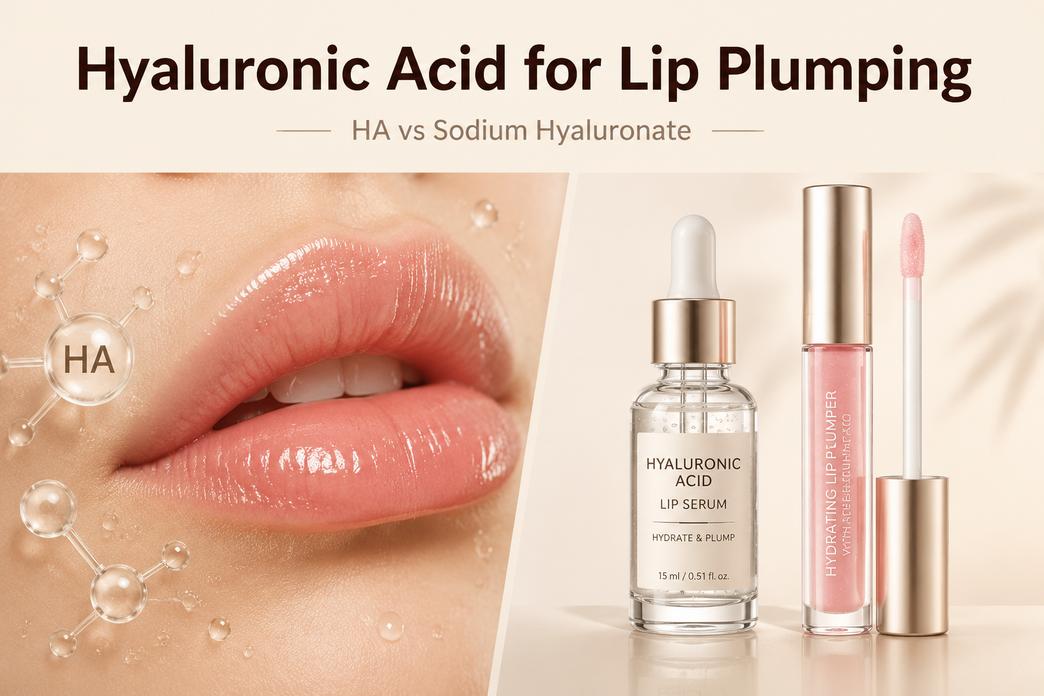
How moisture retention creates the look of fuller lips
Hyaluronic acid is a water-binding polymer. At the surface, hydration can soften dry texture:
- Fine lines get smoothed out
- Skin elasticity feels more supple
- Lip volume can look smoother and more defined
The visible effect lasts while the formula remains on the lips. An HA-focused lip serum can emphasize comfort and conditioning.
Where it works best: lip plumping gloss and hydrating lip serum
Two common formats suit an HA lip product:
▸ Gloss: A plumping lip gloss provides cushiony shine for quick touch-ups.
▸ Serum: A hydrating lip serum can sit under color for daily wear.
Packaging must remain compatible with the formula. Compare a private-label lip gloss route with serum delivery, then test the selected component.
Hydration that reads as fullness: Match hyaluronic acid or sodium hyaluronate to its water-binding effect; moisture retention creates the fuller look. Then decide whether gloss or serum best expresses temporary fullness. Topfeel Beauty’s lip-color lab co-creation turns that framework into a testable brief.
Review a plumping-gloss product format and the lip-serum guide to decide which format fits the claim.
Instant Plumping vs. Long-Term Hydration
Hyaluronic acid supports surface hydration and conditioning, not permanent volume.
Instant Plumping
The change comes from hydration, smoothing, and finish.
- The first few minutes
- Hyaluronic acid binds water at the lip surface, supporting an immediate smoothing effect.
- Tiny dry lines look less obvious, which improves surface smoothing.
- Why your lips look bigger
- Smoother lips reflect light better. It’s partly an optical illusion, and a lip gloss finish adds to it.
- The hydration and shine can make the lip contour appear fuller.
- What it won’t do
- It won’t cause temporary swelling from tingly add-ins like menthol or cinnamon, unless the formula includes them.
- It should not be presented as permanently changing lip structure.
Once the product wears off, the plump goes with it.
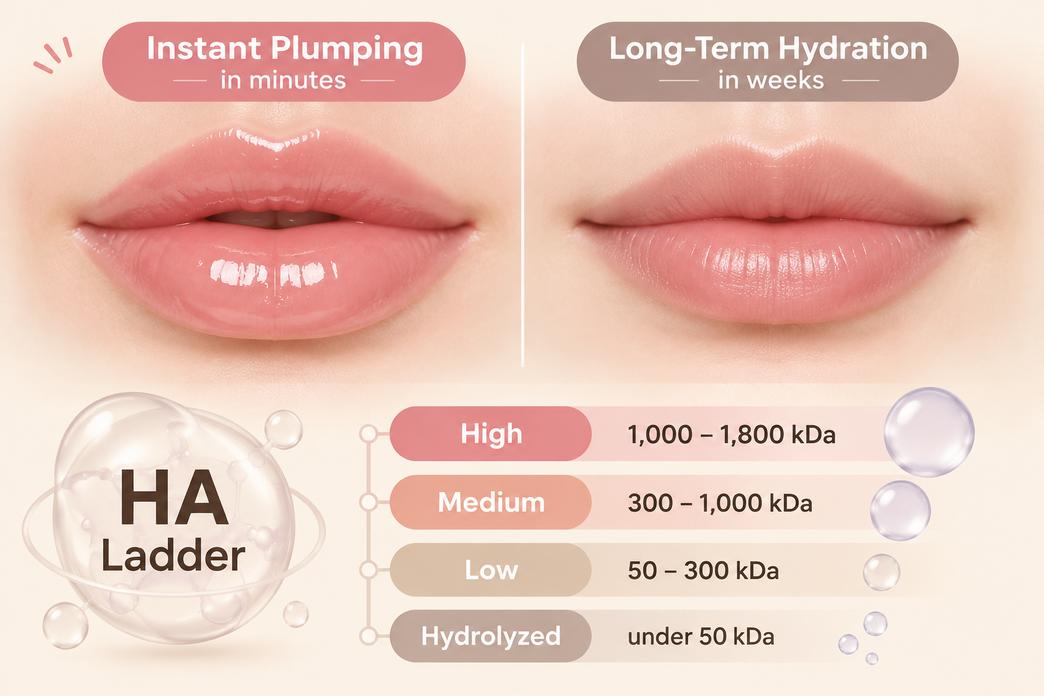
Long-Term Hydration
Regular use focuses on moisture retention and comfort. A dry-lip care routine can reduce flakes that disrupt color. Different hyaluronic acid molecules behave differently in upper skin layers.
| HA Type | Approx. Molecular Weight (kDa) | Where It Works | Main Job |
|---|---|---|---|
| High | 1,000–1,800 | Lip surface | Forms a film that slows water loss |
| Medium | 300–1,000 | Upper skin layers | Binds moisture |
| Low | 50–300 | Slightly deeper | Supports barrier repair |
| Hydrolyzed | Under 50 | Deepest reach | Deep penetration |
Smaller molecules still do not create injected-style volume. A blend may support film formation and conditioning, but duration needs finished-product testing.
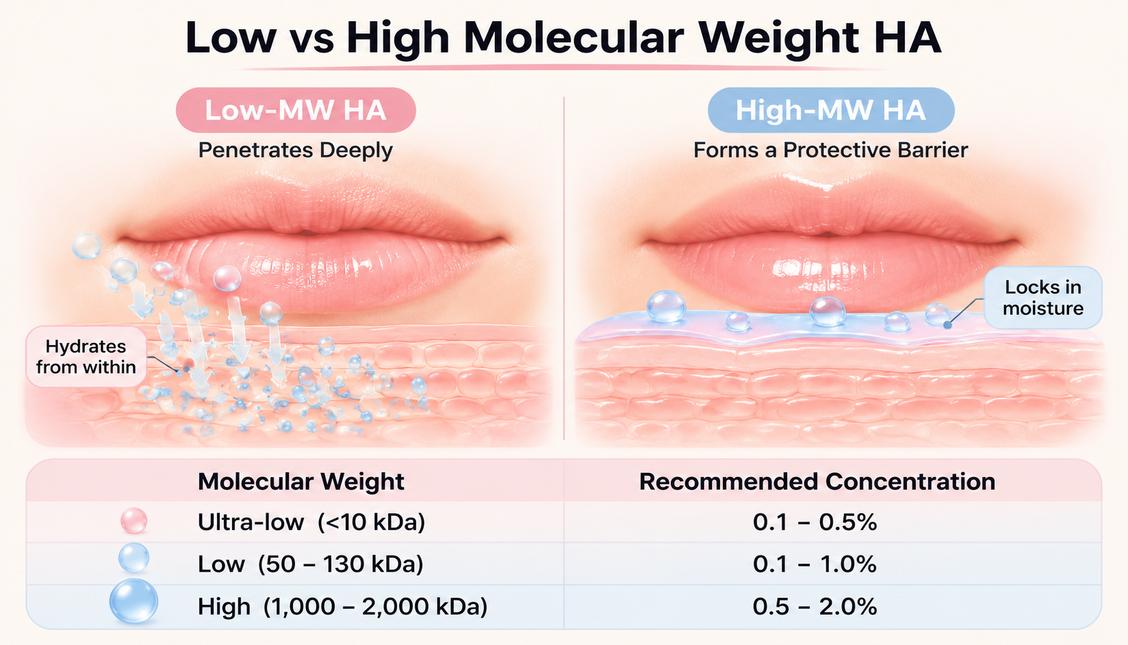
Low vs. High Molecular Weight Hyaluronic Acid
Molecular size influences placement, feel, and performance.
Low Molecular Weight Hyaluronic Acid
Lower-molecular-weight material may interact with upper layers, depending on the vehicle.
- What happens below the surface
- Deep penetration: smaller fragments may move beyond the immediate surface, though the term should be used carefully.
- Moisture retention: the formula helps bind water where lips feel dry.
- Wrinkle smoothing: fine vertical lines may look softer while hydration improves.
- What it may support over time
- Dermal hydration should not be implied by surface data; measure the finished product’s actual hydration effect.
- Cellular repair is not an appropriate cosmetic promise without specific evidence; focus on conditioning.
- Collagen stimulation requires specific evidence and should not be assumed from hyaluronic acid alone.
- Best match
- Hydrating lip serums with a light, zero-sticky feel.
High Molecular Weight Hyaluronic Acid
High-molecular-weight HA remains near the surface, where film formation supports a cushioned appearance. It suits a hydrating lipstick or gloss concept built around comfort and shine.
| HA Type | Molecular Weight (kDa) | Where It Works | Typical Use Level (%) |
|---|---|---|---|
| Ultra-low | Under 10 | Upper layers | 0.1–0.5 |
| Low | 50–130 | Upper layers | 0.1–1.0 |
| Medium | 300–800 | Surface and just below | 0.2–1.0 |
| High | 1,000–2,000 | Lip surface | 0.5–2.0 |
- Moisture lock: slows water loss between coats.
- Lip smoothing: fills tiny cracks for a glossy, smooth texture.
A multi-weight system can combine film formation with conditioning; choose the ratio through bench and stability testing.
4 Formulation Steps for Hyaluronic Acid for Lip Plumping
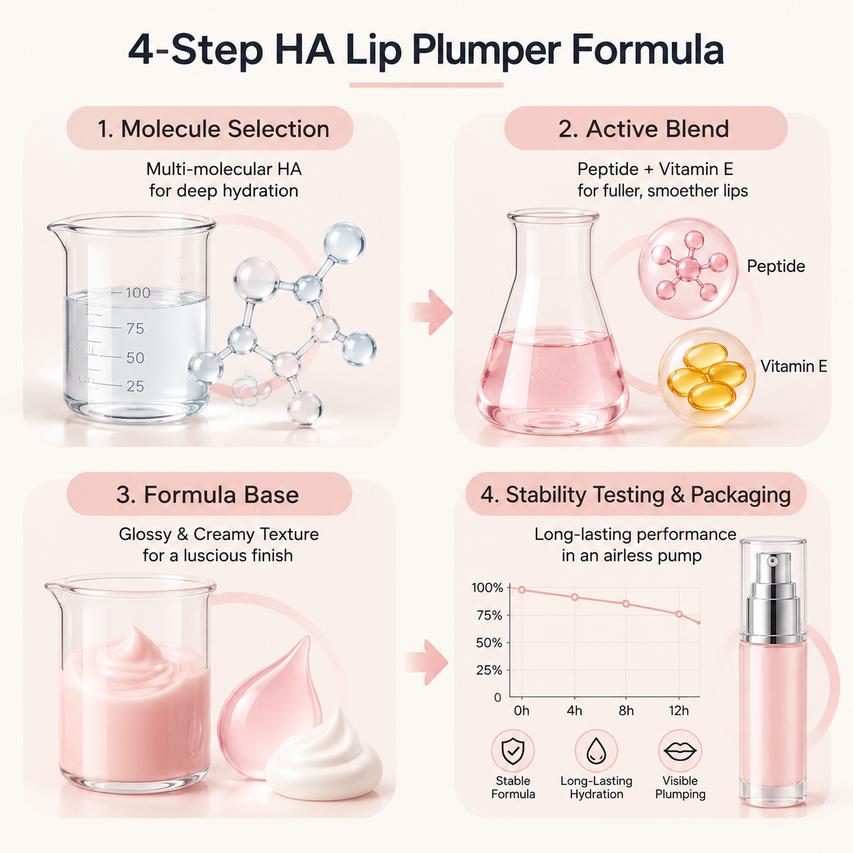
A credible product starts in the lab. These steps connect grade selection, supporting ingredients, base design, testing, and packaging.
Choosing the right hyaluronic acid grade and dosage
- Size matters
- Low molecular weight sodium hyaluronate may suit lightweight systems, subject to compatibility and performance testing.
- High molecular weight HA sits on the surface and boosts moisture retention.
- Getting the amount right
- Your concentration level affects viscosity, feel, and hydration performance. Set it using supplier specifications and stability data.
- Stick with cosmetic-grade HA that plays nice with your base.
Adding peptide complex and vitamin E for lip contour enhancement
If using a palmitoyl tripeptide, confirm that the specific grade, use level, and finished-product evidence support the intended appearance claim.
Tocopherol (vitamin E) pulls double duty:
- Antioxidant protection that keeps the oils from going rancid
- Barrier repair should be framed as conditioning support for dry-feeling lips
Test each ingredient with your HA lip plumper before you scale up.
Building a stable base for a volumizing lip cream or lip plumping gloss
- The gloss route
- A film former gives that glossy finish; compare it against the intended lip-gloss format.
- A rheology modifier handles viscosity control, so the gloss doesn’t run.
- The cream route
- An emulsifier system keeps oil and water together.
- A soft emollient blend creates a moisturizing base that holds hyaluronic acid for lip plumping evenly in place.
Check pH and preservation on both.
Running the sample testing phase before packaging in an airless pump container
Don’t rush this part. Every sample should clear:
◆ Stability testing and shelf-life assessment
◆ Viscosity measurement and pH level checks
◆ Preservative efficacy and sensory evaluation for wear and feel
Once a sample passes its agreed tests, run a packaging-compatibility trial before filling. Topfeel Beauty’s published customization process moves from consultation and sampling through packaging design, production, quality control, and delivery.
Shorten the route to a viable sample: Topfeel Beauty says formulation engineers prepare initial samples in 3-7 days.
Start with HA grade and supporting ingredients, then build the right gloss or cream base. Use the custom-solutions route to plan testing and packaging together, and compare a plumping-gloss format before approving the component and formula.
How Should Brands Word Plumping Claims Compliantly?
A fuller-looking result can sell, but every word on the box needs support. The ingredient can anchor a cosmetic hydration story, while the wording must match evidence for the finished product.
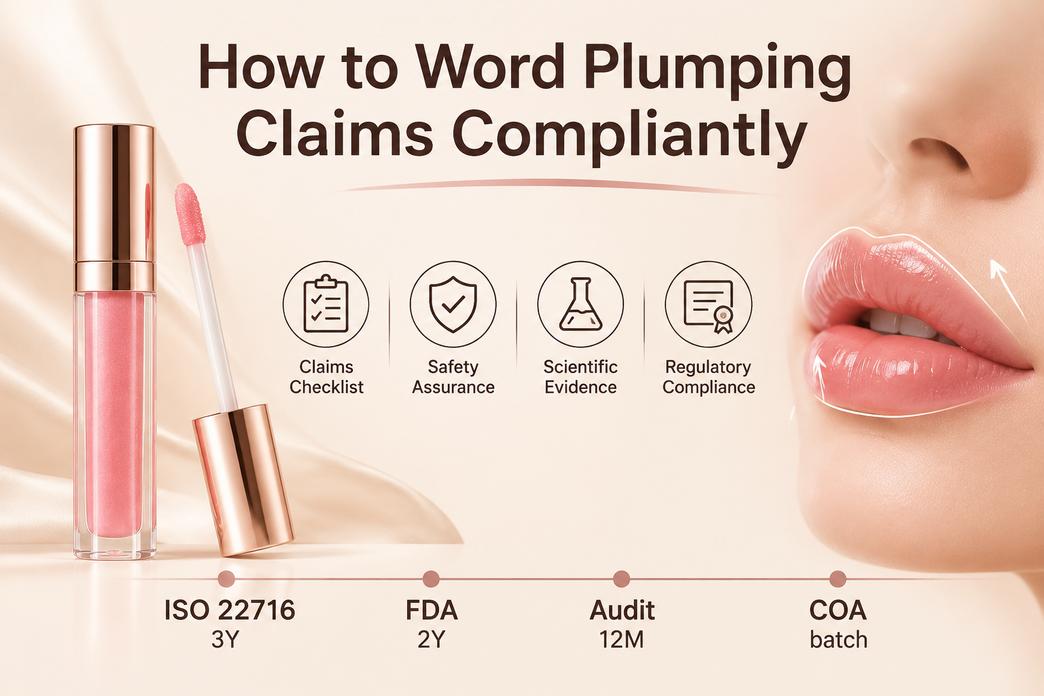
Which plumping and long-lasting hydration claims need supporting evidence?
U.S. regulators distinguish cosmetics from drugs by intended use, so cosmetic marketing must not imply an unapproved drug use. The FTC expects reliable health-advertising substantiation and says objective claims need a reasonable basis. Sort cosmetic claims like this:
- Plumping claims
- “Instantly fuller-looking lips” needs finished-product evidence suited to the exact wording.
- “Smoother-looking lips” still needs appropriate substantiation, which may include instrumental or well-designed consumer testing.
- Hydration claims
- “Hydrates” needs instrumental readings that show hydration efficacy.
- “8-hour moisture” needs moisture retention readings taken at the 8-hour mark.
- Ingredient claims
- “With hyaluronic acid” only needs proof the ingredient is in the formula.
- “Hyaluronic acid for lip plumping” means the finished product has to show the lip plumping effect, not just the raw ingredient.
Under the EU common criteria, claims require adequate and verifiable evidence. Great Britain similarly requires brands to prove cosmetic marketing claims are correct. If substantiation data covers 6 hours, do not print 24.
Cruelty-free and vegan formulation claims buyers can verify
A self-created bunny logo is not third-party certification. Buyers should confirm the certification owner, scope, supplier-monitoring requirements, and current status.
Vegan claims require a documented vegan formulation review. A clean-beauty brief should define exclusions rather than assume that one label settles the formula. Confirm the manufacturing source on paper and check ingredient sourcing for every raw material:
- Get a signed declaration for each ingredient.
- Confirm the HA is fermentation-derived.
- Make sure the paperwork meets your ethical standards before the label goes to print.
GMP compliant and FDA registered facility: documents to request from suppliers
These are the papers to ask for:
| Document | What it proves | How often it updates | When to ask |
|---|---|---|---|
| ISO 22716 GMP certificate | GMP compliance at the site | Every 3 years, with yearly audits | Before signing |
| FDA facility listing | FDA registration under MoCRA | Renewed every 2 years | Before signing |
| Audit report | Recent quality assurance findings | Every 12 months | Once a year |
| Certificate of analysis | The batch meets its specs | Every batch | Every shipment |
Ask for batch records and quality procedures. ISO 22716 covers cosmetics GMP, while the EU Cosmetics Regulation requires GMP and a product information file. The FDA manages U.S. facility registration. Ensure each document names the responsible manufacturing facility.
Inconsistent Batches? Demand Strict Hyaluronic Acid Specifications.
Got a lip plumper that feels amazing one month and sticky the next? Tight specs, smart sourcing, and a real sample sign-off keep hyaluronic acid for lip plumping acting the same in every tube.
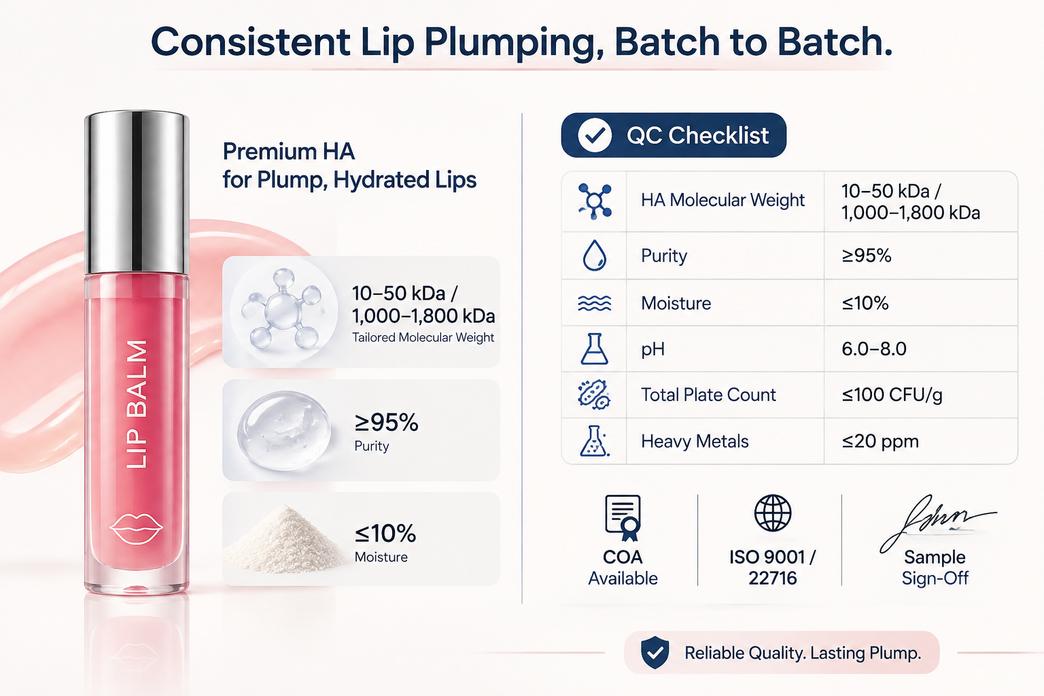
Sodium hyaluronate specs to write into every purchase agreement
Vague contracts make lot decisions inconsistent. Put agreed acceptance criteria on paper so every delivery is judged the same way.
| Spec | Target to write in | How it’s checked | Why it matters |
|---|---|---|---|
| Molecular weight | 10–50 kDa or 1,000–1,800 kDa | Intrinsic viscosity | Deep plump vs. surface film |
| Purity level | ≥ 95% assay | Lab assay | Fewer fermentation leftovers |
| Moisture content | ≤ 10% | Loss on drying | Wet powder clumps and weighs wrong |
| pH range | 6.0–8.0 (0.1% solution) | pH meter | Stays gentle on lips |
Also define particle size, a viscosity band for the selected test solution, microbiological limits, and relevant impurity limits using the raw-material supplier’s specification and your market requirements. Require a COA with every lot of hyaluronic acid.
Raw material sourcing checks that keep bulk manufacturing consistent
- Origin
- Name the actual maker, not just the trading company.
- Ask for the manufacturing source and process used for the raw material.
- Paperwork
- A certificate of analysis for each lot, checked line by line for specification compliance.
- The supplier’s audit history and any past recalls.
- Your own tests
- Incoming batch testing for viscosity, hydration, and plumping feel.
- Yearly or risk-based third-party analytical testing, depending on supplier history.
Tight quality control across the supply chain keeps batch 12 feeling just like batch 1.
Why ISO certified suppliers deliver steadier private label production
An ISO certificate shows that a defined system was audited within its stated scope.
→ ISO 9001 specifies quality-management-system requirements, while ISO 22716 gives cosmetics GMP guidance for production, control, storage, and shipment.
→ Lot-by-lot traceability supports investigations, release decisions, and regulatory compliance.
→ Buyers should still review the certificate scope, audit evidence, and their own supplier audit requirements.
For private label lines, a documented system supports consistent release decisions. Topfeel Beauty’s factory overview can help buyers frame questions about process control and records.
Approving a pre-production sample against your custom formulation
Sample day is where problems are cheap to fix.
- Set the pre-production sample right next to your approved custom formulation standard.
- Match shade the way textile brands handle a lab dip: same light, same swatch card.
- Run a quick sensory evaluation for texture, tack, wear time, and that tingly plump.
- Check hydration and viscosity against your target numbers.
- Sign a written product approval before bulk starts.
A signed standard makes later batch comparisons clearer and gives both parties a defined basis for approval.
Make every approval comparable: Specifications, supplier records, facility scope, and the signed pre-production sample should point to the same acceptance criteria. Topfeel Beauty provides COA and MSDS documentation and uses first-article inspection before mass production.
Contact the Topfeel Beauty team to discuss your target texture, claim, packaging, and release tests, then request a sample plan for the lip-plumper route before bulk approval.
References
- Hyaluronic acid: a key molecule in skin aging — National Library of Medicine
- Is It a Cosmetic, a Drug, or Both? — U.S. Food and Drug Administration
- Commission Regulation (EU) No 655/2013 — EUR-Lex
- Regulation (EC) No 1223/2009 on cosmetic products — EUR-Lex
- ISO 22716:2007 Cosmetics — Good Manufacturing Practices — ISO
- Registration & Listing of Cosmetic Product Facilities and Products — U.S. Food and Drug Administration
- ISO 9001:2015 Quality management systems — ISO
- Health Products Compliance Guidance — U.S. Federal Trade Commission
- Making cosmetic products available to consumers in Great Britain — GOV.UK
- Advertising FAQs: A Guide for Small Business — U.S. Federal Trade Commission
Post time: Nov-11-2026