

Does Makeup Expire?
When makeup turns from silky to sour, private label brands face scandal—not sparkle. Guard your reputation before it curdles.
Makeup doesn’t last forever. It’s not a vintage wine—it’s more like milk in a silk dress. One day that foundation is flawless; a few seasons later, it’s separating, smelling off, quietly plotting a breakout scandal. For private label brands, expired product isn’t just gross—it’s a reputation grenade.
The U.S. beauty market topped $100 billion in 2023, according to Circana. That’s a crowded party. And nobody invites the brand known for rancid lip gloss.
Shelf life is chemistry with a clock ticking. Oxygen sneaks in. Preservatives weaken. Packaging either protects your formula—or betrays it. Get this wrong, and customers won’t just walk. They’ll talk.
Quick Keys to Makeup Longevity
→ Choose airless pumps and refillable systems to minimize oxygen exposure.
→ Enforce GMP Certified stability trials on both opened and unopened stock.
→ Opt for proven preservative blends or stabilized paraben-free formulas to curb bacterial risks.
→ Utilize UV-shielding packaging for mineral pigments to keep hues vibrant.
4 Factors That Speed Makeup Spoilage
Makeup looks flawless on your vanity, yet small daily habits quietly shorten its life. From air exposure to light damage, each detail affects your make up routine and the safety of cosmetics. Let’s break down how makeup products spoil faster than expected.
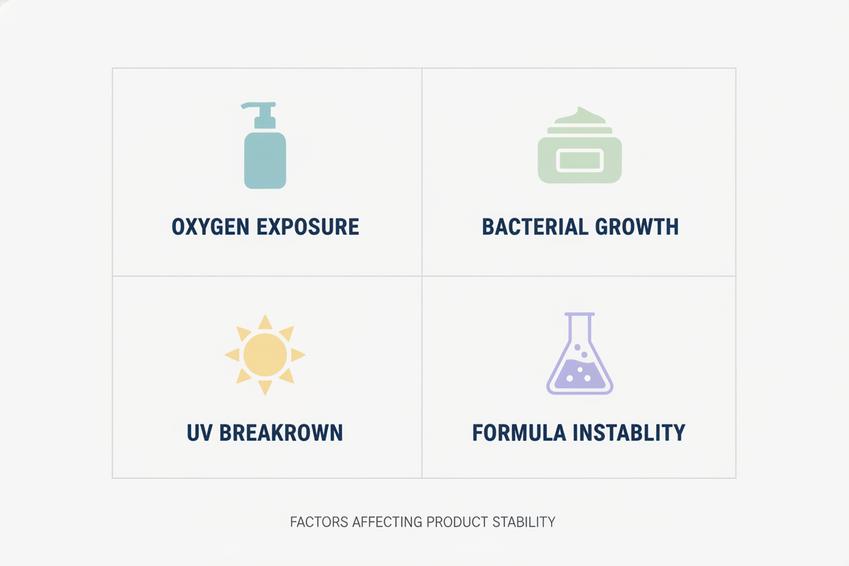
Oxygen Exposure in Airless Pumps
Even with airless pumps, oxygen still sneaks in. Over time, subtle oxygen exposure leads to silent oxidation, which causes steady product degradation and cuts down shelf life.
-
How oxidation impacts liquid makeup:
-
Active ingredients
-
Vitamin C darkens and loses strength.
-
Hyaluronic Acid thins out, affecting hydration.
-
-
Base formula
-
Liquid foundation separates.
-
Texture becomes uneven.
-
-
-
Why it still happens:
-
Micro air pockets form during pumping.
-
Weak preservatives lose efficiency after repeated use.
-
For makeup brands focused on stability, packaging testing matters. Topfeel Beauty refines pump design to reduce internal airflow, helping makeup stay fresh longer.
Bacterial Growth in Cream Foundations
Cream-based makeup is cozy for skin—but cozy for microbes too. High moisture content plus warm bathrooms equals fast bacterial growth.
-
Main contamination sources:
-
Direct finger application
-
Shared spatulas
-
Unwashed brushes
-
-
Risk breakdown:
-
Product type
-
Cream foundations in jars trap residue.
-
Stick formulas collect surface bacteria.
-
-
Skin impact
-
Acne flare-ups
-
Irritation from contamination
-
Compromised hygiene
-
-
Make up tools should stay clean. A quick wipe isn’t enough; deep cleaning keeps your makeup routine safer.
UV Breakdown of Mineral Pigments
Sunlight feels harmless on your vanity, yet sunlight exposure triggers UV breakdown in mineral pigments.
-
Light sensitivity chain reaction:
-
Step 1: Direct light hits palette.
-
Step 2: Color stability weakens.
-
Step 3: Fading appears in blush and eyeshadow.
-
Step 4: Ingredient integrity declines, including SPF boosters.
-
-
Affected makeup products:
-
Highlighter
-
Eyeshadow
-
Powder foundation
-
Keep cosmetics away from windows. Makeup storage matters more than most people think.
Formula Instability in Paraben-Free Serums
Clean beauty sounds great, yet paraben-free serums rely on alternative preservative systems that require tight pH balance control.
-
Stability depends on:
-
Emulsifiers
-
Stabilizers
-
Storage temperature
-
-
Common signs of formula instability:
-
Unexpected texture changes
-
Sour scent
-
Separation
-
In bulk production, tiny shifts during heating and cooling can affect makeup safety. That’s why brands like Topfeel Beauty invest in stability testing before launch. Good makeup isn’t just about shade—it’s about science holding everything together.
Makeup Shelf Life: Opened Vs. Unopened
Makeup is fun, creative, and sometimes pricey, so tossing it too soon feels painful. But keeping old make up around can mess with your skin. From daily makeup routines to pro cosmetic kits, knowing how long products last keeps your beauty stash safe, fresh, and performing like it should.
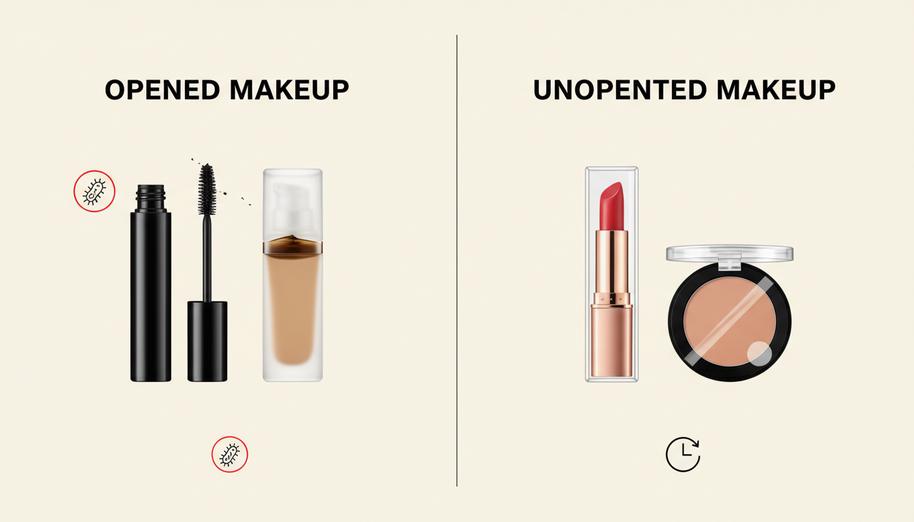
Opened Products
Once your Makeup is opened, the clock starts ticking. Air, light, and fingers all play a role in shifting the shelf life and raising the contamination risk.
-
Key changes after opening:
-
Product degradation begins as oxygen reacts with formulas.
-
Rising bacteria growth, especially in mascara and liquid make-up.
-
Noticeable performance change in texture and coverage.
-
-
How to track safety:
-
Check the expiration date and PAO symbol.
-
Monitor smell, color, and separation.
-
Note your personal usage period on the label.
-
-
High-risk categories:
-
Eye makeup
-
Mascara: dark, moist tubes encourage bacteria growth.
-
Liquid liner: frequent wand contact increases contamination risk.
-
-
Base cosmetics
-
Liquid foundation: oxidation shortens shelf life.
-
Concealer wands: repeated skin contact speeds product degradation.
-
-
Brands like Topfeel Beauty design packaging to reduce air exposure, helping opened cosmetic products stay stable longer.
Unopened Products
Unopened Makeup has a different story. With intact seal integrity, products maintain better stability and overall product longevity.
-
What protects unopened make-up:
-
Controlled manufacturing date tracking.
-
Effective preservatives in formula.
-
Proper storage conditions away from heat and sunlight.
-
-
Product types with stronger shelf stability:
-
Powders
-
Pressed blush and setting powder resist moisture.
-
-
Lip products
-
Bullet lipsticks stay stable if unopened.
-
-
Serums
-
Airtight pumps protect stability before first use.
-
-
For cosmetic buyers and private labels, Topfeel Beauty follows GMP and ISO 22716 practices, supporting consistent product longevity. Smart storage keeps your Makeup fresh, so your beauty routine stays safe and smooth.
New Private-Label Cosmetics? Check Expiry First
Private-label Makeup looks fresh on the shelf, but shelf-life is the real deal behind safe beauty. From base makeup to color cosmetics, every makeup product depends on smart formulation, tight quality control, and packaging that doesn’t mess things up.
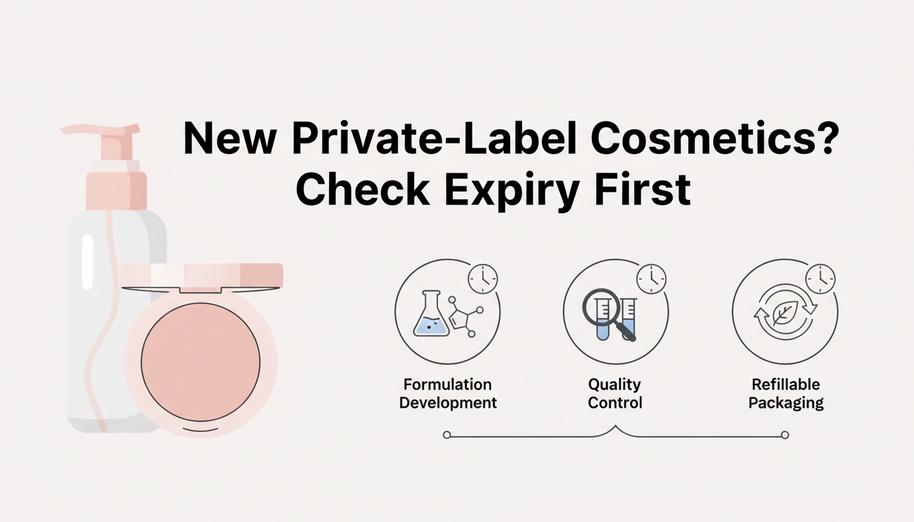
Formulation Development for Extended Stability
When building long-lasting Makeup, stability starts at the formula bench.
-
Core Formula Balance
-
Active System
-
Careful selection of active ingredients to maintain performance without speeding up oxidation.
-
Pairing with antioxidants to slow formula breakdown.
-
-
Preservation Network
-
Layered preservatives targeting bacteria, yeast, and mold.
-
Smart pH adjusters to keep the system skin-friendly yet stable.
-
-
-
Texture & Structure Control
-
Emulsion Design
-
Stable blends of oils and water supported by emulsifiers.
-
-
Powder Integrity
-
Moisture control to protect pressed powder makeup from cracking.
-
-
-
Packaging Compatibility
-
Interaction Testing
-
Checking formula reactions with packaging to protect product integrity.
-
-
Accelerated aging
-
Simulated heat and light to predict shelf-life for makeup products.
-
-
Good formulation keeps cosmetics solid, not sketchy.
GMP Certified Quality Control Protocols
Behind every safe beauty line sits strict control.
-
Raw Material Gatekeeping
-
Supplier audits
-
Incoming raw material testing for purity and safety
-
-
Production Monitoring
-
Ongoing in-process testing
-
Controls to prevent microbial contamination
-
-
Final Release Standards
-
Detailed finished product analysis
-
Documented stability testing
-
Verification of batch consistency
-
Review for regulatory compliance
-
From foundation to eye makeup, tight tracking keeps Makeup reliable and ready for retail.
Refillable Packaging and Shelf-Life Impact
Refillable beauty packaging sounds cool. It is. But it changes the safety game.
-
Material Safety
-
Evaluation of packaging materials for chemical interaction
-
Resistance to light exposure and air exposure
-
-
Hygiene Control
-
Managing contamination risk during refill swaps
-
Clear guidance on user hygiene
-
-
Longevity Protection
-
Airless systems reducing oxidation
-
Monitoring signs of product degradation
-
Balancing reusability with formula stability
-
For modern Makeup brands, smart refill design keeps cosmetics fresh while cutting waste. Clean beauty still needs clean handling.
FAQs
How does oxygen exposure impact Liquid and Serum Makeup during production?
When a Liquid Foundation or Serum Concealer meets air too often, subtle damage begins:
-
Vitamin C darkens, shifting shade accuracy for Uneven Tone coverage.
-
Hyaluronic Acid loses bounce, thinning texture meant for Dry Skin.
-
Repeated pump action in Airless Pumps still allows micro-oxygen entry.
In GMP Certified and ISO 22716 facilities, tight Quality Control and stability trials protect texture, scent, and skin feel—so the product that leaves Bulk Production still feels fresh on first application.
Why is GMP Certified manufacturing vital for private label Makeup brands?
Safety in Makeup is emotional—people trust it near eyes and lips.
-
Batch tracking secures every Foundation, Mascara, and Lipstick lot.
-
Microbial testing protects Acne-Prone and Sensitive Skin users.
-
Stable Formulation Development keeps Cream, Powder, and Gel systems consistent.
For Private Label Manufacturing, certifications such as Cruelty-Free, Vegan, or Dermatologist-Tested add credibility—but GMP discipline is what keeps returns low and customer loyalty high.
What shortens the shelf life of Cream and Stick Makeup products?
Cream Blush in Glass Jars or Stick Highlighter seems solid, yet it is vulnerable.
-
✦ Finger contact introduces bacteria.
-
✦ Humid storage weakens Paraben-Free preservative systems.
-
✦ Heat disrupts SPF or Plant Extracts stability.
For Oily Skin and Acne-Prone users, contamination can mean irritation. Clean tools, sealed Plastic Tubes, and cool storage protect both formula and face.
Do UV rays damage Powder-based Makeup like Eyeshadow Palettes?
Yes—and the fading can be heartbreaking.
| Exposure Factor | Impact on Product | Visible Result |
|---|---|---|
| Direct sunlight | Breaks down Mineral Pigments | Dull Eyeshadow Palettes, faded Blush |
| Heat in transit | Alters Powder binders | Cracking in Compact Cases |
| Long retail display | Weakens SPF blends | Reduced skin defense |
Dark packaging, controlled warehousing under ISO 22716, and careful shipment planning help preserve color intensity—so every swipe still feels alive.
Post time: Mar-18-2026