

The Benefits of Cosmetics Manufacturer
Partnering with a cosmetics manufacturer can feel like swapping a home kitchen for a five-star commercial lab. One minute you’re juggling suppliers, late shipments, and sky-high overhead; the next, you’ve got chemists, bulk pricing, and production lines humming like a well-tuned orchestra. Your brand stops babysitting batches and starts owning shelf space.
Scaling beauty isn’t just about pretty packaging—it’s about speed, compliance, and not blowing the budget. As one industry consultant put it, “Control your supply chain, or it controls you.”
This is where the real story begins: growth without the growing pains.
Essence Notes: A Cosmetics Manufacturer Quick Guide
➔ Cost Optimization: Leverage bulk ingredient sourcing and established supplier networks to scale production while reducing raw material expenses.
➔ Innovative Formulation: Partner with in-house R&D teams for access to specialty actives, custom cosmetic formulation, and performance-driven product development.
➔ Quality Assurance: Ensure regulatory compliance through cGMP manufacturing, ISO certification, stability and microbiological testing, and full ingredient traceability.
➔ Accelerated Launch: Move swiftly from benchtop formulation to pilot batch production with streamlined supply chains and one-stop filling, capping, and logistics fulfillment.
➔ Scalable Growth: Build long-term value via strategic partnerships, co-manufacturing agreements, private label packaging solutions, and global distribution support.
The Hidden Value Behind Partnering With A Cosmetics Manufacturer
Working with a reliable cosmetics manufacturer is not just about filling bottles. It shapes margins, speed to market, and brand credibility. The right cosmetics partner supports scale, controls risk, and keeps product quality tight. That’s where real value starts to show.
Unlocking Cost Savings with Bulk Cosmetic Ingredients
A seasoned cosmetics manufacturer strengthens cost control through layered operational strategy:
Ingredient sourcing optimization
● Direct factory contracts for raw materials
● Diversified vendor pools to protect supply chain efficiency
● Long-term procurement strategies that stabilize pricing
Economies built into scale
● Consolidated bulk purchasing → stronger economies of scale
● Forecast planning → measurable cost reduction
● Integrated warehousing → lower freight volatility
Production alignment
● Batch size calibration
● Waste monitoring systems
● Continuous margin analysis
An experienced cosmetic manufacturer doesn’t just buy cheaper; it buys smarter. Topfeel Beauty applies disciplined sourcing models so brands avoid surprise price spikes while keeping formulas consistent. The outcome feels simple: steady supply, predictable costs, healthier margins.
Access to Ingredient Innovation and Custom Cosmetic Formulation
A forward-thinking cosmetics manufacturer connects brands to evolving ingredient technology and serious research and development depth.
Innovation flows through:
Discovery
● Global trend analysis
● Lab screening of unique ingredients
Creation
● Prototype custom formulations
● Stability and compatibility validation
Validation
● Claims support testing
● Performance benchmarking for real product differentiation
This layered system supports faster product development cycles. A skilled beauty manufacturer blends science with market instinct. Topfeel Beauty integrates formulation labs and regulatory review early, helping brands launch products that feel fresh instead of recycled.
Building Long-Term Value through Strategic Manufacturing Partnerships
Long-term success with a cosmetics manufacturer grows from structure and trust.
Operational depth
● Documented quality control systems
● Strict regulatory compliance review
● Scalable lines aligned with rising production capacity
Growth alignment
● Flexible MOQs supporting scalability
● Joint forecasting for inventory balance
● Expansion planning tied to market expansion
Strategic connection
● Shared investment roadmaps
● Transparent cost modeling
● Stable strategic alliances
A dependable cosmetics partner becomes part of the brand’s backbone. Topfeel Beauty builds that relationship through manufacturing expertise and steady execution, turning a simple supplier agreement into a growth engine.
Cosmetics Manufacturer Vs In-House Production
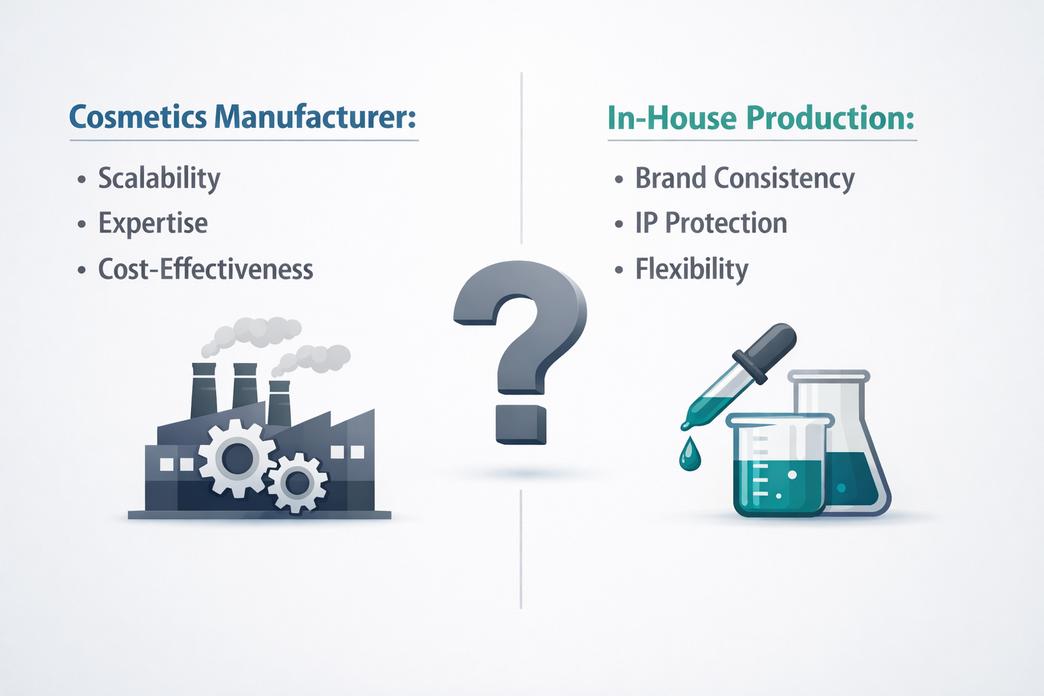
Choosing between a cosmetics manufacturer and building your own production line can feel like standing at a crossroads. One path offers outside expertise and scale. The other keeps everything under your roof. Both options shape cost, speed, and long-term brand growth in very different ways.
Cosmetics Manufacturer
Working with a cosmetics manufacturer means partnering with a professional cosmetic manufacturer or beauty manufacturer that already runs certified facilities. The structure usually unfolds like this:
1. Operational Foundation1.1 Facility Standards
● cGMP-certified workshops
● ISO-aligned systems
● Documented Quality Control checkpoints
1.2 Regulatory Systems
● Built-in Regulatory Compliance teams
● Ingredient safety documentation
● Stability and compatibility testing
2. Performance Advantages2.1 Scalable Output
● Batch flexibility for startups
● Large-scale runs for retail expansion
● Strong Scalability during peak demand
2.2 Technical Edge
● R&D labs focused on Innovation
● Experienced chemists with proven Expertise
● Streamlined processes that improve Cost-Effectiveness
3. Strategic Impact3.1 Market Speed
● Faster commercialization
● Reduced capital strain
3.2 Risk Distribution
● Shared liability
● Structured audit systems
A seasoned cosmetics manufacturer doesn’t just fill bottles. The cosmetics manufacturer becomes an extension of your supply chain, often acting as a contract manufacturer that keeps production smooth while you focus on branding and sales.
In-House Production
Running in-house production flips the dynamic. Control sits firmly with you.
1. Infrastructure Commitment1.1 Asset Investment
● Mixing tanks
● Filling lines
● Packaging systems
1.2 Workforce Buildout
● Chemists
● QA specialists
● Compliance officers
2. Operational Control2.1 Brand Direction
● Strong Brand Consistency
● Full Intellectual Property protection
2.2 Workflow Flexibility
● Real-time formula tweaks
● Greater Flexibility in scheduling
3. Strategic Outcomes3.1 Speed to Adjust
● Faster Iteration during testing
● Potential Reduced Lead Times for small batches
3.2 Responsibility Load
● Direct regulatory accountability
● Higher overhead and sourcing pressure
In-house production gives unmatched Control, but it demands capital, technical discipline, and tight management. Compared to a cosmetics manufacturer, the responsibility stack is heavier. For some brands, that autonomy is worth it. For others, partnering with an experienced cosmetics manufacturer keeps growth steady and stress lower.
4 Benefits Of Partnering With Cosmetics Manufacturers
Choosing the right cosmetics manufacturer can feel like a big leap, especially when scaling a beauty line. A skilled cosmetic manufacturer doesn’t just mix formulas; it supports growth, compliance, and branding. From lab testing to packaging shelves, a reliable cosmetics partner keeps your products consistent, cost-smart, and ready for market.
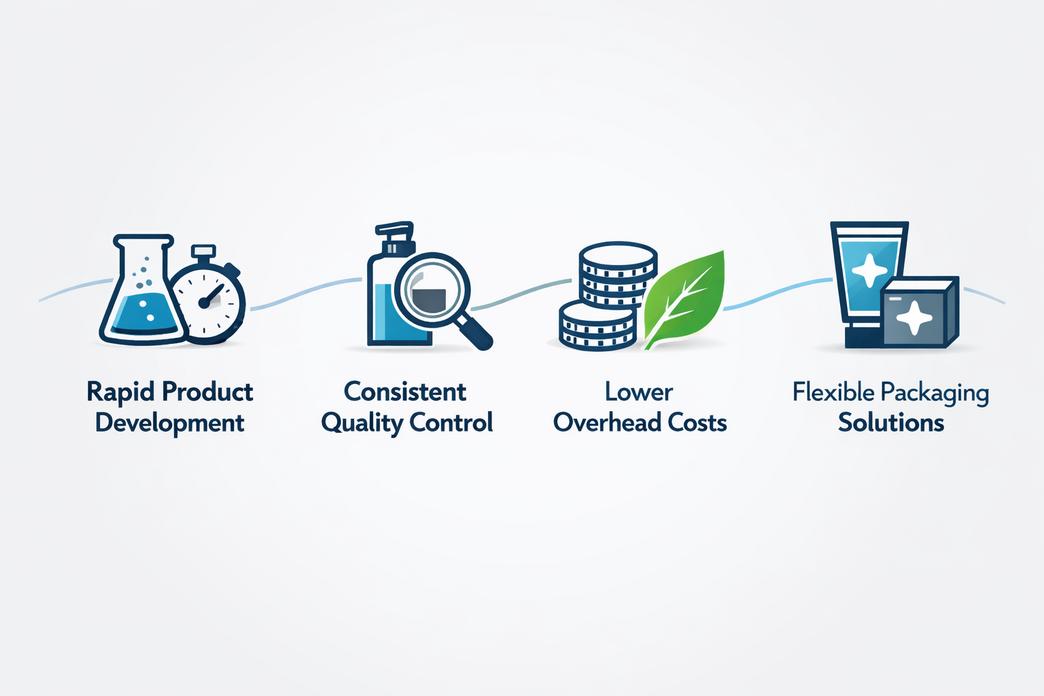
Rapid Cosmetic Product Development and Pilot Batch Production
Working with a cosmetics manufacturer streamlines product development through layered coordination:
● Concept & Cosmetic Formulation
● Market brief review
● Ingredient screening for safe cosmetic formulation
● Lab-based prototype creation
● Validation & Pilot Batch
● Small-scale pilot batch runs
● Texture, shade, and fragrance adjustment
● Early manufacturing process alignment
● Scalability Planning
● Equipment compatibility checks
● Raw material volume forecasting
● Stability review before scale-up
This structured flow reduces guesswork. A seasoned cosmetic manufacturer tests scalability early, so your formula won’t fall apart when moving from beaker to bulk production.
Consistent Quality Control and FDA-Compliant Testing
Quality isn’t a vibe; it’s controlled. A regulated cosmetics manufacturer builds quality control into every stage:
1. Incoming ingredient analysis
2. In-process product testing
3. Final batch consistency verification
That includes microbiological screening, stability monitoring, and documented FDA compliance aligned with current regulatory standards.
“Regulatory scrutiny in beauty continues to intensify, with compliance and safety validation now central to brand competitiveness,” noted McKinsey & Company in its 2025 global beauty industry update.
A responsible beauty manufacturer tracks lot numbers, keeps audit trails clean, and treats safety as non‑negotiable.
Lower Overhead through Bulk Ingredient Sourcing
Cost control happens behind the scenes:
● Centralized bulk sourcing of raw materials
● Strategic ingredient procurement contracts
● Tight supply chain management
Through economies of scale, a cosmetics manufacturer negotiates better pricing on emulsifiers, pigments, and preservatives. That built-in cost reduction frees up budget for marketing or new launches without cutting formula quality.
Flexible Private Label Packaging Solutions
Beyond formulation, a cosmetics manufacturer often organizes packaging in tiers:
● Primary Packaging
● Bottles, jars, tubes
● Airless pumps
● Material compatibility testing
● Brand-Focused Customization
● Packaging design aligned with target market
● Logo placement and labeling options
● Finish selection for strong product presentation
● Secondary & Retail Prep
● Cartons and inserts
● Barcoding and compliance text
● Shipping durability checks
With adaptable private label programs and thoughtful customization, brands gain packaging that feels premium without overcomplicating production.
Slow Product Launch? Cosmetics Manufacturers Accelerate Production
Speed matters in beauty. A reliable cosmetics manufacturer can turn a lab idea into shelf-ready stock before trends cool off. From indie founders to global brands, working with the right cosmetic manufacturer or beauty product supplier keeps timelines tight and budgets sane. Here’s how a modern cosmetics manufacturer like Topfeel Beauty keeps launches moving without cutting corners.
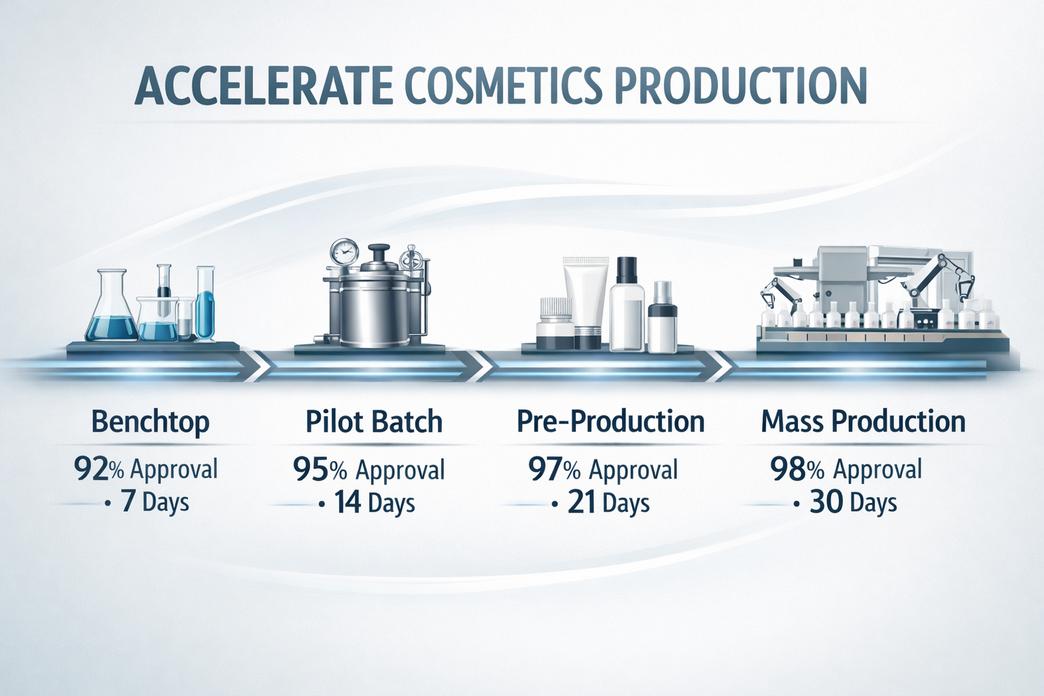
Benchtop Formulation to Pilot Batch: Speeding Up New Product Development
A serious cosmetics manufacturer starts small and scales smart. The flow often looks like this:
● Market scan and concept lock
● Formulation at benchtop scale
● Stability testing and safety validation
● Controlled pilot batch before full scale-up
Key performance indicators tracked by a cosmetic manufacturer:
1. Lab sample approval rate (%)
2. Stability pass cycles (weeks)
3. Pilot yield rate (%)
4. Scale-up deviation margin (%)
Below is a typical development data snapshot used during product development:
| Stage | Batch Size (kg) | Approval Rate (%) | Avg. Cycle Time (days) |
|---|---|---|---|
| Benchtop | 1–5 | 92 | 7 |
| Pilot Batch | 20–50 | 95 | 14 |
| Pre-Production | 100–300 | 97 | 21 |
| Mass Production | 1000+ | 98 | 30 |
Topfeel Beauty aligns R&D and production teams early, so the jump from formulation to scale-up feels smooth, not chaotic. Fewer surprises. Faster validation. Real momentum.
Streamlined Supply Chain and Inventory Management
An efficient cosmetics manufacturer keeps the back end tight.
Supply chain control
Raw materials
● Dual-source strategy for high-risk inputs
● Quality grading before warehousing
Procurement
● Forecast-linked purchasing
● Cost and lead-time tracking
Inventory management system
● Safety stock thresholds
● Real-time stock audits
● Expiry monitoring for sensitive actives
Warehousing and distribution flow
● Zoned warehousing for bulk, packaging, and finished goods
● Smart forecasting tied to sales velocity
● Coordinated distribution scheduling
A seasoned beauty manufacturer knows delays often start with materials, not machines. Topfeel Beauty syncs procurement data with production plans, so a cosmetics manufacturer can promise realistic ship dates—and actually hit them.
One-Stop Filling, Capping, and Logistics Fulfillment
Speed doesn’t end at mixing tanks. A capable cosmetics manufacturer builds efficiency into the final mile.
Production Line Execution
● Automated filling with weight checks
● Precision capping torque control
● In-line labeling inspection
Packaging & Assembly
● Custom packaging formats
● Batch coding and compliance checks
● Carton sealing and pallet stacking
Logistics & Fulfillment
● Integrated logistics booking
● Regional shipping partners
● B2B and DTC fulfillment routing
Working with a cosmetic factory that handles everything under one roof cuts handoff errors. Fewer vendors. Fewer emails. Less drama. That’s how a cosmetics manufacturer like Topfeel Beauty helps brands move from production floor to retail shelf without losing pace.
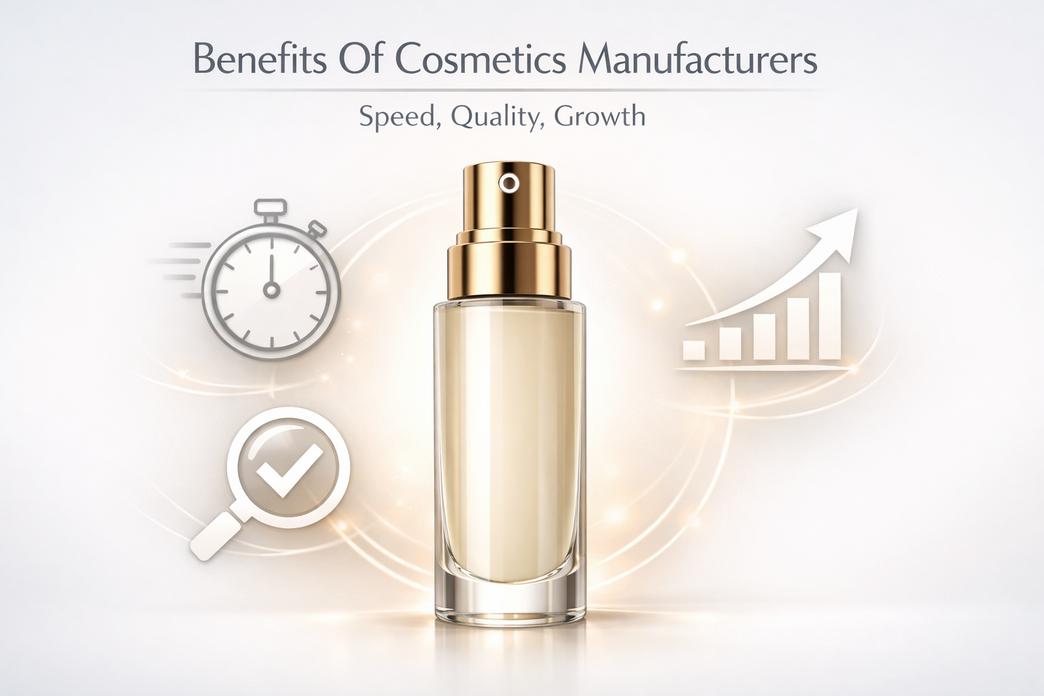
Beauty Startups: Benefits Of Cosmetics Manufacturers
Breaking into beauty isn’t just about a cool logo. A reliable cosmetics manufacturer shapes speed, quality, and growth. From formula to fulfillment, the right cosmetics manufacturing partner keeps your brand sharp, compliant, and ready for real-world demand.
White Label Cosmetics for Fast Market Entry
Working with a cosmetics manufacturer through private label programs keeps things moving without cutting corners.
● Core Advantages
● Access to ready-made products tested for safety and stability
● Faster quick launch timelines
● Built-in compliance from an experienced cosmetic manufacturer
● Brand Building Layers
1. Define strong brand identity
2. Select from an existing product catalog
3. Run small-batch market testing before scaling
● Operational Support
● Packaging aligned with regulations
● Formula documentation handled by the cosmetics factory
● Smooth coordination with your cosmetics supplier
A seasoned cosmetics manufacturer like Topfeel Beauty helps startups skip lab headaches and jump straight into selling.
Custom Cosmetic Formulation to Stand Out in Trend Analysis
If standing out matters, custom work is the move.
● Unique formulas built from smart ingredient sourcing
● Ongoing product development shaped by real market trends
● Fast tweaks based on consumer demand
A trusted cosmetics manufacturer manages:
1. Concept validation
2. Stability and safety testing
3. Regulatory compliance checks
4. Pilot production
This approach gives brands a real competitive edge. Instead of blending in, you’re offering something fresh, backed by a cosmetic manufacturer that understands both lab work and shelf appeal.
Scalable Production and Distribution for Growing Brands
Growth sounds fun—until orders spike overnight. A scalable cosmetics manufacturer keeps things steady.
● Production Backbone
● Expanding manufacturing capacity
● Tight inventory control
● Reliable supply chain management
● Distribution Engine
1. Coordinated logistics planning
2. Integrated fulfillment services
3. Regional warehousing for faster delivery
● Expansion Planning
● Clear business growth mapping
● Long-term expansion strategy support
Topfeel Beauty acts as more than a cosmetics factory; it’s a partner in cosmetics manufacturing that grows with you. When your sales double, your cosmetics manufacturer should already be ready.
FAQs
How does partnering with a cosmetics manufacturer reduce production costs?
Working with a cosmetics manufacturer shifts cost pressure away from small, scattered sourcing and into coordinated scale.
Ingredient efficiency
● Access to bulk cosmetic ingredients through established ingredient sourcing networks
● Better pricing on emulsifiers, preservatives, fragrance compounds, and active ingredients
● Stable supply of natural cosmetic ingredients and specialty cosmetic ingredients
Production economy
● Large-scale manufacturing spreads labor and equipment costs across multiple product lines
● Streamlined cosmetic production using optimized assembly lines and filling and capping systems
Operational savings
● Centralized warehousing, inventory management, and logistics
● Fewer intermediaries in contract manufacturing and private label cosmetics programs
The result is simple: lower unit costs, steadier margins, and more breathing room for brand growth.
What advantages do private label cosmetics offer compared to developing products independently?
Private label cosmetics give brands speed and structure without heavy infrastructure investment.
A cosmetics manufacturer typically provides:
● Pre-tested custom cosmetic formulation options ready for pilot batch production
● Support for private label skincare, private label makeup, and private label haircare
● Access to cosmetic packaging solutions, including bottles, jars, tubes, airless pumps, and custom packaging design
● Label printing and secondary packaging aligned with brand identity
Through white label cosmetics or tailored cosmetic product development, brands skip early R&D strain and move directly into market-ready private label beauty products. It shortens timelines while preserving room for differentiation.
How can a cosmetics manufacturer ensure consistent quality and regulatory compliance?
Consistency is built through layered control systems rather than promises.
Quality foundation:
● cGMP manufacturing under ISO certification standards
● Structured cosmetic quality control at every production stage
Testing discipline:
1. Stability testing for shelf-life assurance
2. Microbiological testing for safety
3. Efficacy testing and safety assessments aligned with FDA regulations
Traceability and transparency:
● Ingredient traceability from cosmetic raw materials to finished goods
● Documented regulatory compliance processes
● Controlled filling and capping, monitored assembly lines, and audited supply chain management
A trusted cosmetic supplier protects not only the formula but the brand’s reputation—batch after batch, shipment after shipment.
References
1. cGMP manufacturing - fda.gov / FDA
2. ISO certification - iso.org / ISO
3. economies of scale - investopedia.com / Investopedia
4. Quality Control - who.int / WHO
5. contract manufacturer - sciencedirect.com / ScienceDirect
6. Intellectual Property - wipo.int / WIPO
7. FDA compliance - fda.gov / FDA
8. McKinsey & Company - mckinsey.com / McKinsey & Company
9. supply chain management - ibm.com / IBM
10. testing - fda.gov / FDA
11. logistics - shopify.com / Shopify
12. brand identity - forbes.com / Forbes
13. manufacturing capacity - cdc.gov / CDC
14. natural cosmetic ingredients - cosmeticsinfo.org / Personal Care Products Council
15. shelf-life assurance - ich.org / ICH
Related Products


Top Selling Products



- Related Blog
- Related Videos
- Reviews
